
 Consider the Lily by Elizabeth Buchan was published in 1993.
The story begins in 1929 when cousins Matty and Daisy attend a wedding. They’ve been brought up together since Matty’s parents died. Daisy’s family is upper class but has fallen on hard times, like many, but Matty inherited a lot of money from her parents which has been quite handy for Daisy’s mother as Matty contributed to the family coffers, but Matty was never given any love or even appreciation.
Both cousins have fallen for the brother of the bride, but it’s the vibrant and vivacious Daisy that Kit is in love with. Kit is the only son, his father Sir Rupert is suffering from his experiences in World War 1 and the estate has fallen into disrepair and needs a large injection of money. When Kit is suffering from a hangover and in despair at his situation he makes a decision which pleases his father but makes everyone else unhappy. It transpires that Sir Robert and his family have experienced a lot of trauma over the years.
This was a really good read, it’s 469 pages long but it didn’t seem like that, I suppose because I was engrossed in it. There’s also quite a lot about the planning and planting of a garden in the book, and horticulture in general, but it’s done in a subtle way I think and won’t be intrusive to people who aren’t so interested in plants.
Elizabeth Buchan is married to the grandson of the author John Buchan. The only other book that I’ve read by her is Revenge of the Middle Aged Woman which I believe was dramatised for TV, but looking back at my review of it it seems that I wasn’t as impressed with that one.
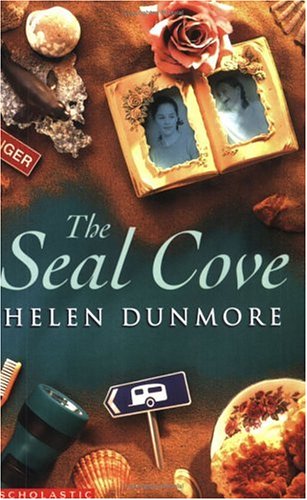 The Seal Cove by Helen Dunmore was published in 2001. It’s part of a trilogy, the others are The Lilac Tree and The Silver Bead which I’ve read. I just noticed when I started to read this one that my copy is signed by the author.
 Dimsie Head Girl by Dorita Fairlie Bruce was published in 1925. Dimsie isn’t in the running to be head girl of the school the Jane Willard Foundation, but Jean, the aspiring poet turns out to be so feckless and dippy as head girl that she eventually has to be sacked by the headmistress Miss Yorke, and Dimsire takes over.
 Dimsie Grows Up by Dorita Fairlie Bruce was published in 1924, confusingly as Dimsie has left the school. The book begins with her saying good-bye to her family home. Her father had died unexpectedly and that had scuppered Dimsie’s plans to go to university to study to become a doctor. That’s now unaffordable and she and her mother have given up their home in England and based themselves permanently at their Scottish home in the west of Scotland. It’s been in the family for generations and Dimsie’s grandmother had been well known locally as a herbalist. She had cured many illnesses in the local population in the past, but she’s now dead. Dimsie hopes to follow in her grandmother’s foosteps and sets about rejuvenating her herb gardens, with a view to setting up her own business and selling herbs to pharmacies.
 The Salt Path by Raynor Winn was published in 2018 and everybody seemed to be reading it then – which is why I wasn’t. I actually bought a jigsaw puzzle of the book cover fairly recently, the artist is Angela Harding and I really like her style.