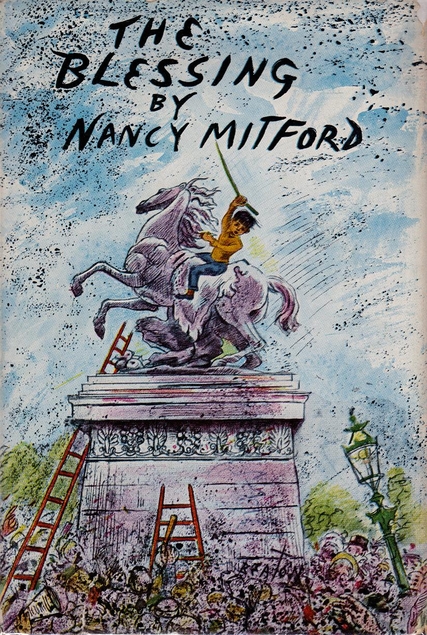
The Blessing by Nancy Mitford was first published in 1951, so I decided to read it for the 1951 Club which is being hosted by Karen of Kaggy’s Bookish Ramblings and Simon of Stuck in a Book.
The Blessing was a re-read for me but it was way back in the 1970s when I first read it and as far as I can recall – I enjoyed it just as much this time around.
It’s the beginning of World War 2 and Grace is a young upper class English woman who is engaged to Hughie. He has just gone off to war and he chose not to marry Grace before leaving, thinking it would be unfair on her if he was killed. Subsequently Grace meets Charles-Edouard a rich Frenchman who is going to join up with de Gaulle and is determined to marry Grace because he wants a son – in case he is killed during the war.
Of course Grace ends up dumping poor Hughie and marrying Charles-Edouard and she doesn’t see him for seven long years, but she did get pregnant immediately after the wedding so when her husband does get back from the war he has a six year old son Sigi who is rather spoiled and used to getting his own way.
Grace and her family move to France and so begins her education in the ways of French marriages. As predicted Charles-Edouard is far from being a faithful husband and his relatives and friends are less than impressed with his choice of wife.
When Grace leaves her husband in high dudgeon after an infidelity too far she goes back to live with her father in England and Sigi quickly realises that he can play his parents off against each other to his own benefit.
This makes it sound like rather a grim read but The Blessing is really quite hilarious in parts. When I think about Nancy Mitford’s own experiences of life in France post-war though – where she hung about for years waiting for her married lover to spare some time for her, putting her own life on hold for him, it’s actually quite sad that she knew what to expect from men of that type, but she still chose to do it – AND when his wife did die, he went off and married someone else!
As it happens over the years I’ve read and written about quite a few 1951 books, but I’ll mention those ones later.