Orkney Book Purchases

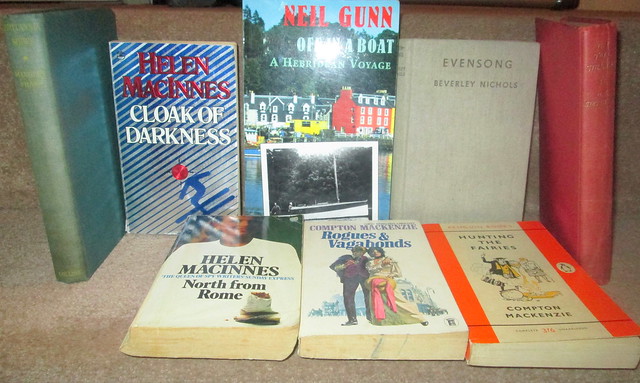
For some reason I never gave any thought to the book buying possibilities in Orkney, but as we were driving around Kirkwall looking for a place to park I spotted a sign saying those wonderful words – Secondhand Books. Luckily after visiting the town centre, Saint Magnus Cathedral and two Historic Scotland properties we were able to walk back to the car and find the bookshop not too far away. So my haul was.

Latest Book Haul

1. The Tall Stranger by D.E. Stevenson
2. Evensong by Beverley Nichols
3. Hunting the Fairies by Compton Mackenzie
4. Rogues and Vagabonds by Compton Mackenzie
5. Cloak of Darkness by Helen MacInnes
6. North from Rome by Helen MacInnes
7. Britannia Mews by Margery Sharp
8. Off In a Boat (A Hebridean Voyage) by Neil M. Gunn

Six of them are by Scottish authors so they’ll come in handy for the Reading Scotland 2017 Challenge.

Have you read any of these?

Nella Last in the 1950s by Nella Last

The last book to be published using Nella Last’s mass observations diary is Nella Last in the 1950s. By this time she and her husband are getting on in years and ill health, particularly that of her husband is a major worry for Nella. But in the wider population it was surprising to me how worried people seemed to be about the possibilty of another war beginning, and the use of a hydrogen bomb in the near future was seen as almost certain. No doubt some people were missing the wartime atmosphere of everyone pulling together against one enemy and so civil defence meetings were going on, probably being run by people who were feeling rather aimless in this new peacetime Britain.

This book is quite sad in many ways, I had hoped that Nella and Will would become closer as they got older, but Will’s mental health got worse and they seemed to spend a lot of time taking him to various hospital appointments. But Nella herself suffered from nerves and I’m fairly sure that the operation that she mentions that she had had in the first book was a hysterectomy, although she never specified it. In those days doctors were keen on diagnosing women as being in need of that operation, there was almost an epidemic of them, supposedly as a means of curing women of ‘hysteria’ or nerves. Unfortunately it seems that they just told men such as Will that there was no cure for their nerves.

Although I really like Nella she was definitely a bit odd, that usually attracts me to people anyway but I did think it was weird that she got so annoyed at her eldest son and daughter-in-law when they sent her husband a scarf for Christmas. She sent it all the way back to Ireland so they could exchange it for socks!!

Nella never did manage to get a house in her beloved Lake District and as usually happens in such cases Will outlived her, I wonder how he managed without her to look after him?

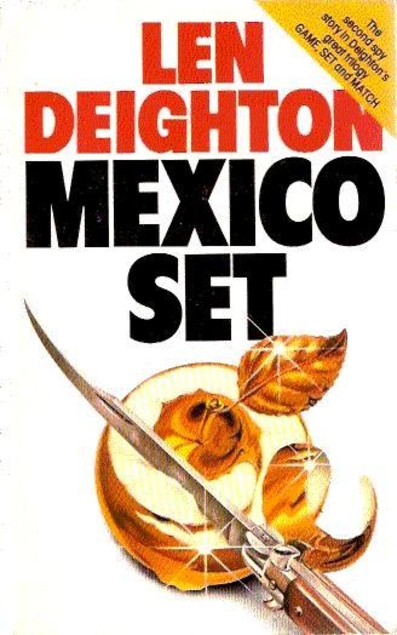
Mexico Set by Len Deighton

Mexico Set cover

Mexico Set by Len Deighton is the second of his books to feature Bernard Samson, the first one being Berlin Game which I enjoyed recently. I must say though that I found this one to be even better and I can hardly believe that it has taken me so long to get around to reading Len Deighton, especially given the fact we have had all his books since they were originally published.

It’s difficult to say too much without giving away what happened in the previous book but here goes …

Bernard Samson has been working in British Intelligence for years, as his father before him did, but he has had a shock to his system recently and he’s now a suspect figure within the world of espionage.

There’s a lot of coming and going between Mexico, Berlin and London, it’s the Cold War era and the powers that be in London want to get a particular KGB operative to defect to Britain – will he? – won’t he?

There’s also a lot of office politics going on, but it seems that the top jobs only ever go to Oxbridge candidates which is quite scary when you consider that according to another book that I read recently – Oxford and Cambridge accepted students with virtually nothing in the way of exam passes, the important thing was that your face/background fitted – up until as recently as the 1960s.

I think that the author made a good job of the atmosphere in all of the countries but particularly the situation for people living in East Berlin and unable to see their families in West Berlin. It’s a fact that in those days whenever you (I) met any people who had been originally from ‘eastern bloc’ countries, they always had a flamboyantly embroidered imagination of the past – they were always from a family that had masses of land and property – and even aristocratic titles which was/is laughable but at the same time terribly sad.

20 Books of Summer 2017

I’ve decided to take part in Cathy’s 20 Books of Summer 2017. It seems to be fairly flexible so although I’ll almost certainly be reading at least 20 books between June and the end of August my plans might go a bit awry as if I get completely caught up in Len Deighton’s Bernard Samson books I’ll be reading the ones that follow on from London Match.

Otherwise there are just seven in my list which are by Scottish authors although I’m way behind with the Reading Scotland 2017 challenge. I’m not counting Angela Thirkell as being Scottish although she was of Scottish descent.

1. London Match by Len Deighton
2. I Claudius, Claudius the God by Robert Graves
3. Highland River by Neil M. Gunn
4. The Citadel by A.J. Cronin
5. The Dove of Venus by Olivia Manning
6. City of the Mind by Penelope Lively
7. The Progress of a Crime by Julian Symons
8. Antidote to Venom by Freeman Wills Crofts
9. My Brother Michael by Mary Stewart
10. Flowers for the Judge by Margery Allingham
11. Fludd by Hilary Mantell
12. Pied Piper by Nevil Shute
13. Miss Ranskill Comes Home by Barbara Euphan Todd
14. Katherine Wentworth by D.E. Stevenson
15. No Resistance by Evelyn Anthony
16. A Memorial Service by J.I.M. Stewart
17. The Madonna of the Astrolabe by J.I.M. Stewart
18. Redgauntlet by Sir Walter Scott
19. High Rising by Angela Thirkell
20. Wild Strawberries by Angela Thirkell

I’m planning to re-read Thirkell’s Barsetshire books from the beginning – in the correct order this time, so I hope I get further than number two in that series, it just depends how much readimg time I have, but I want to concentrate on books I haven’t read first.

Have you read any of these books? I’m wondering where I should start.

The Salzburg Connection by Helen MacInnes

 The Salzburg Connection cover

The Salzburg Connection by Helen MacInnes was first published in 1968. I remember reading some books by the author way back in the 1970s but haven’t read any since then, after reading this one I’ll have to track down as many others as I can because this was a really great read with loads of twists and turns.

It’s set some twenty-one years after the end of World War 2 but there are Nazis still around, they’ve been searching for things that had been hidden by them at the end of the war. There’s a bit of a race on to track down and recover a metal box which it’s thought has been hidden in a lake called Finstersee which is surrounded by the Austrian alps. Several such boxes have been found over the years, the Russians would also like to get their hands on this one, although what it might contain is a mystery.

This is a Cold War setting with spies and double agents galore – a great read.

I read this one for the Read Scotland 2017 Challenge.

Helen MacInnes was born in Glasgow and went to Glasgow University where she got a degree in French and German before going on to get a diploma in librarianship at London. During her librarianship career she chose the books for libraries in Dunbartonshire, which happens to be where I worked in libraries, but she was there decades before my days there.

Her husband was a British agent for MI6 and no doubt his experiences helped to fuel her imagination for espionage. Her second book Assignment in Brittany (1942), was required reading for Allied intelligence agents who were being sent to work with the French resistance against the Nazis. Four of her books were made into films. Later in life she and her husband moved to the US.

Have you read any of her books?

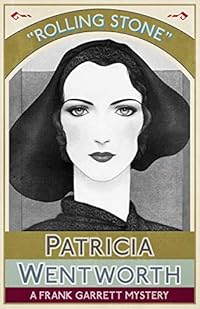
Rolling Stone by Patricia Wentworth

I’ve read and enjoyed a lot of Patricia Wentworth’s Miss Silver books but Rolling Stone (first published in 1940) is the first book that I’ve read of hers which isn’t a Miss Silver mystery. I was on a ferry sailing to Belgium when I started reading this one and coincidentally Rolling Stone begins in Belgium.

Peter Talbot has just booked into a hotel in Brussels and he realises that the man in the room next to his is in a very bad way. Spike Reilly is feverish and delirious and it’s obvious that he’s dying. Peter Talbot is intrigued by some of the things he has heard him say and despite the fact that he is on an assignment for his uncle – Frank Garrett of the Foreign Office – on the spur of the moment Peter decides to change identity with Reilly, swapping over passports and following clues that lead to a grand country house in England where a painting is stolen.

More crimes pile up and the search for Maud Millicent Simpson – England’s most deadly woman – is on. The only problem is that as she’s a master/mistress of disguise, nobody knows what she looks like.

I really enjoyed this one which has been published as an e-book by Dean Street Press. I downloaded it for free a few weeks ago and I think it’s still possible to do that now, have a look anyway if you’re interested at http://www.deanstreetpress.co.uk/books/went22

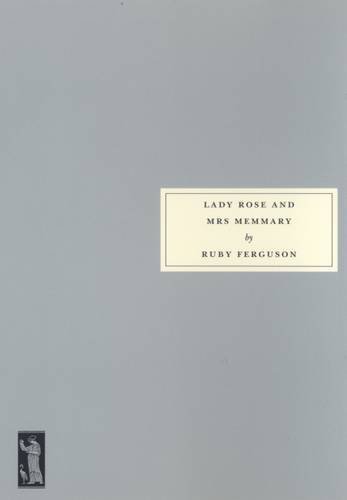
Lady Rose and Mrs Memmary by Ruby Ferguson

 Lady Rose and Mrs Memmary cover

Lady Rose and Mrs Memmary by Ruby Ferguson was first published in 1937 but it has been reprinted by Persephone Books and I was lucky enough to find it in a secondhand bookshop.

This book was apparently a favourite of the Queen as she was at that time (later the Queen Mother). I suspect that she felt very much in tune with Lady Rose, the main character in the book, as they shared very similar Scottish upbringings.

The book begins with a group of people asking if they can look around a grand house in the Scottish highlands. The old housekeeper is pleased to show them around, it’s a house that has seen better days and it’s hoped that new tenants will be found for it. Although the vistors are careful to let her know that they couldn’t afford to rent the house, the housekeeper is still happy to tell of the history of the place, the book switches from the present day to the past regularly, but is never confusing.

Like many wealthy Scots the owners of the house sent their only child – Lady Rose, to England to be educated. As she is very much a Scot, steeped in the romance surrounding the history of the country – particularly Mary, Queen of Scots – Lady Rose is very unhappy and is always happy to get back to her beloved Scotland. The story of her life is one of ups and downs and it’s an entertaining read which has been described as a love letter to Scotland. But it’s about snobbery, discrimination against women and money.

One thing did puzzle me – on page 164 wee Archie says:

“Tonight at the chair, we’ll have some battles where we beat the English.”

“We always beat the English” said Alistair hotly.

“Not at Bannockburn.”

“That was murder; Duncan says so. Wasn’t it Mamma?”

Well that is obviously wrong because Scotland did famously win the Battle of Bannockburn, I suspect that what the author meant to write was Culloden or maybe Flodden. I’m wondering if that was one of the reasons that the Queen Mother invited Ruby Ferguson to Buckingham Palace, to point out her mistake!

Ruby Ferguson was an English writer but Ferguson (her married name) is a Scottish surname, so maybe she married a Scot and fell in love with the country too.

I really dislike the endpapers though, completely inappropriate for the book, from 1937 of course but I feel that another more appropriate design must have been available for that year. The design is Masqueraders and I found an image of it on the V&A site.
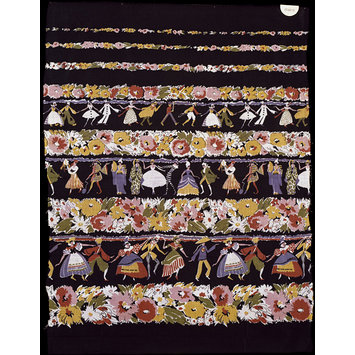
masqueraders

I read this one for the Read Scotland 2017 Challenge.

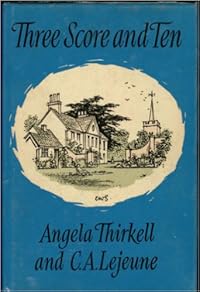
Three Score and Ten by Angela Thirkell and C.A. Lejeune

 Three Score and Ten cover

Three Score and Ten by Angela Thirkell is her last book, unfortunately she died before she was able to finish writing it, but her friend C.A. Lejeune finished it off for her, presumably she had left some notes. I think that Lejeune did a fairly good job of it although as it was the year of Princess Margaret’s marriage to Anthony Armstrong-Jones that was given a few mentions and I believe that Thirkell didn’t write about such things, although I could be completely wrong about that.

The three score years and ten belong to that famous Barsetshire novellist – Mrs Morland. Of course strictly speaking she isn’t a local as she has only been there for forty years, but she’s very popular with young and old and they’re keen to mark her big day in some way. With Mr Wickham in charge of the booze procurement her party is obviously going to be a success.

This book features many of Barsetshire’s favourites – such as Sam Adams and his wife Lucy. The dreadful bishop and his wife are kept at bay as usual and it is that swine Lord Aberfordbury who provides the conflict by planning to knock down some well-loved cottages to build a factory on their site.

I particularly enjoyed this excerpt:
It is well known that it is not safe to have books in the house as they marry and have children, so producing over-populated neighbourhoods; but attics are just as bad. So, if one comes to think about it, is one’s own desk or writing table on which letters answered and unanswered, cards of invitations to various meetings, a Christmas Card that one can’t bear to throw away because it is so pretty, a notice of a concert that took place two months ago, one or two newspaper cuttings, a newspaper which one kept because because one meant to cut something out of it and then forgot what it was, all get mixed up with one another, all lie in confusion; and old bits of furniture and other odds and ends do certainly increase and multiply.

So true!

Purists may decide not to read this one as Thirkell didn’t manage to get it finished but I think that Lejeune did manage to write in her madly rambling style and also reproduced the ways of speech employed by the ‘lower orders’, that’s probably one of the things that so annoys people who aren’t fans of Thirkell’s writing, thinking it points her out as being a horrible snob, but it’s a skill writing in what is really a dialect just as she sometimes writes in a Scots dialect, and of course, she got that right too as her father was Scottish, she spent a lot of time in Scotland and had J.M. Barrie as her godfather.

I think I’ve now read all of her Barsetshire books, except the first one Northbridge Rectory. I’m waiting for a copy of that to arrive in the post, and when it does I intend to start reading the series again, in order this time. They’re comfort reads for me, perfect reading during yet another general election campaign and what seems like a constant stream of bad news stories.

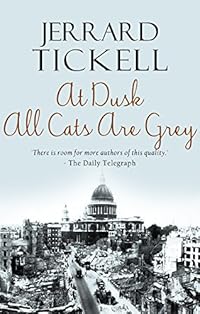
At Dusk All Cats Are Grey by Jerrard Tickell

At Dusk All Cats Are Grey cover

At Dusk All Cats Are Grey by Jerrard Tickell was first published in 1940 but it has been published as an e-book by Odyssey Press and when they asked me if I would like to review it I jumped at the chance as I’ve enjoyed reading some of his books in the past.

This is yet another book set at the beginning of World War 2, I seem to have been reading so many of them recently, I suppose the novelists of the day felt the need to write about it and how it was affecting people.

Joanna is the twenty-two year old daughter of Lady and Sir Robert Shirley. Sir Robert is a gentleman farmer in the Cotswolds but he is very poor and he is almost certainly going to have to sell off more land. Joanne decides it’s time she got out and earned a living. She has a rare talent (for a Brit anyway) in that she picks up languages very easily and as she has spent time in Austria and Germany skiing in the past she’s fluent in German.

She gets a job in an advertising agency in London but while she is socialising in the city she meets up with Colonel Seymour who offers her an undercover job when he discovers that she can pass as a native German or Austrian. Joanne isn’t at all keen to spy on Austrian refugees as she is asked to, but with mayhem ensuing across Europe she’s only one of many who have to do things they would rather not.

Of course there’s a lot more to the book than I’ve said, there’s also some romance thrown in. I’ve noticed that some other people who have reviewed this book have been disappointed that Tickell didn’t spell out exactly what Colonel Seymour’s department was up to. For me that just added to the authenticity because so many people were involved in ‘hush hush’ work, and at the time nobody questioned the fact that people couldn’t talk about the work they were doing. Walls have ears – as the slogan said.

My thanks go to The Odyssey Press who provided me with a copy of this book for my Kindle. I enjoyed it a lot, although maybe not quite as much as Tickell’s Villa Mimosa, Appointment with Venus.

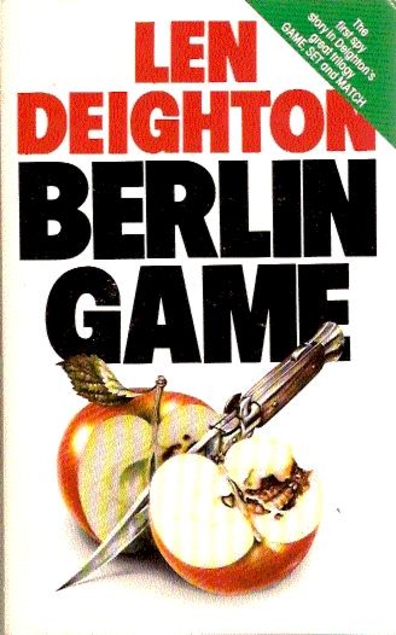
Berlin Game by Len Deighton

Berlin Game cover

Berlin Game by Len Deighton was first published in 1983. I can remember it being published, in fact as I recall it, some people seemed to be waiting with bated breath for the next Len Deighton book to be published in those days. I think we have all of his books but this is the first one I’ve ever read. I had meant to blog about it before we went away on holiday, or during the holiday, but just didn’t get around to it.

I did think as I was reading it though that it was much more straightforward than I had imagined these espionage books to be. Written during the Cold War, at a time when people were still wondering if there were more ‘Establishment’ English public school Oxbridge spies still to be discovered – or to leg it to the USSR, Berlin Game would have been quite topical when it was first published.

An agent in east Berlin wants to leave and take up a new life in the west. Bernard Samson is given the job of getting the agent out safely, it’s the sort of thing he used to do years ago before he became desk bound in London. He’s reluctant to get involved with something so dangerous and his wife who also works in British Intelligence tells him to avoid the task, but there is no alternative.

Everybody and everything in this book is suspect, Samson knows there must be a traitor in London – possibly it’s his wife, or is she just having an affair with a colleague? He’s suspicious of everyone.

I enjoyed this book but I did think that if it had been written by a woman then these books would have been unlikely to have been as wildly successful as they were – back in the day I think Helen McInnes and Evelyn Anthony wrote more suspenseful espionage books, but I must admit that it’s years since I read any of those books so I might be completely wrong about that. Do you have any thoughts on the subject?