Escape in Darkness by Kathleen Fidler

Escape in Darkness by Kathleen Fidler was first published in 1961 and was aimed at readers aged 10+. Although Fidler was born in England she moved to Edinburgh when she married and seems to have thrown herself into Scottish society. She was known for her meticulous historical research.

In 1600 King James VI (or James I if you are English) had been attacked by some members of the Ruthven family, meaning to murder him and seize his crown, but they had failed. Unsurprisingly since then James had vowed to ‘stamp out the name of Ruthven forever.’

Thirteen years later in Holland, young James Ruthven’s father has been killed in a duel, before he died he said that his heart must be buried at Culross Abbey in Fife, so his sister Barbara eventually travels to Scotland to carry out that task, along with her nephew James Ruthven’s son. If the king discovers that they are there, they’ll be done for.

This is an entertaining adventure tale which also gives a lot of information about the social history of the times as well as the commercial history of Fife which involved coal mining in very dangerous situations, such as under the River Forth, accessed via a moat in the middle of the river, an innovation. It was a miserable life for ordinary people with the miners being worse off than slaves really.

As it’s Fife accusations of witchcraft were inevitable,  the Fifers of the day were very keen on accusing people of witchcraft – especially incomers – or anyone they didn’t like. This was another very local book for me, very much enhanced by my experiences of visiting Culross. I’ve written a few posts about Culross over the years,  between 2012 and 2020 which you can see here if you’re interested.
 

St Mungo’s Churchyard Penicuik, Midlothian

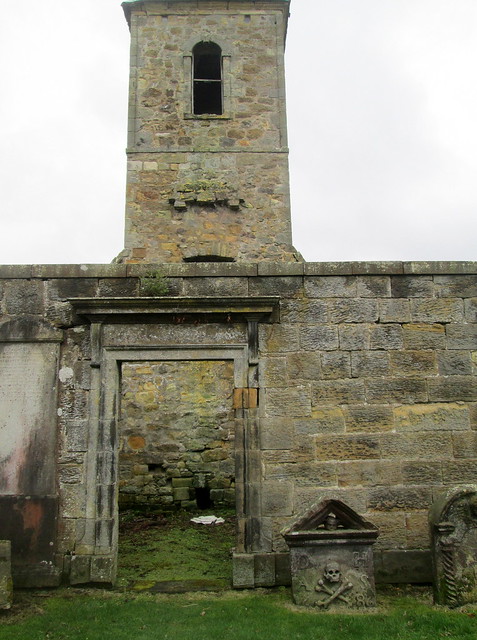
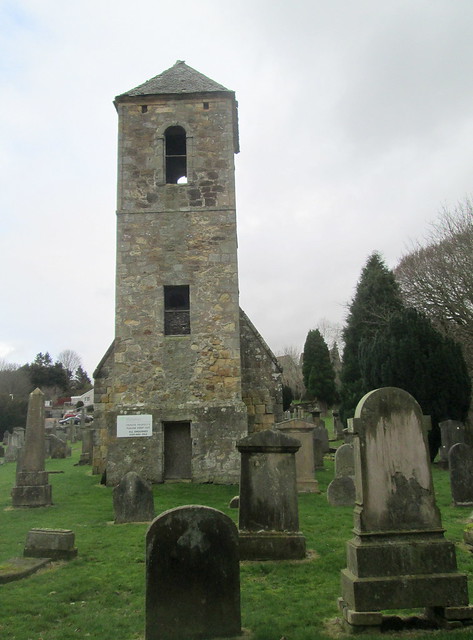
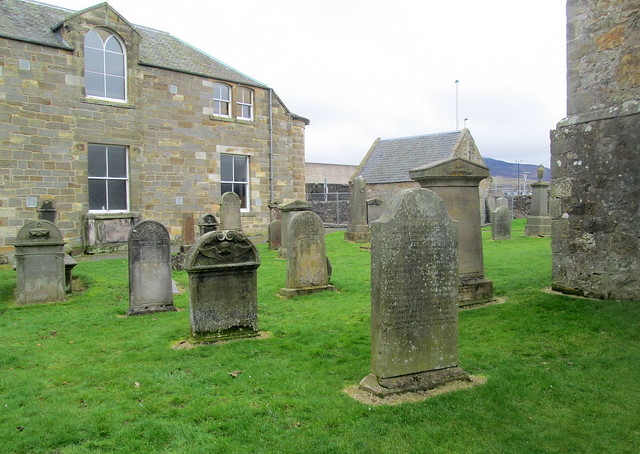
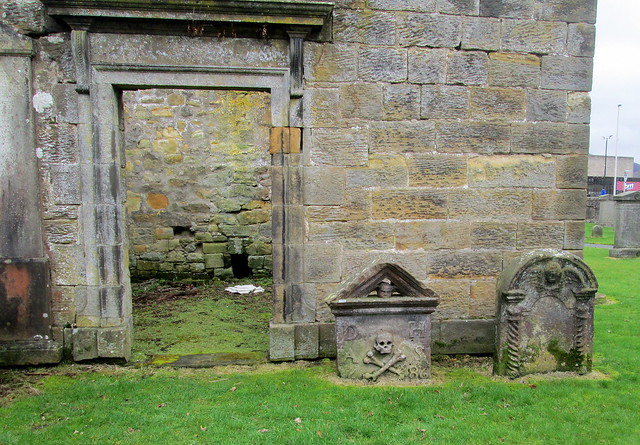
We were driving through Penicuik a couple of weeks ago when I spotted a Commonwealth War Graves sign on some old churchyard gates. There was a car park just across the road so we were able to stop for a mooch around the graveyard which is a really old one and has the remains of an ancient church in the middle of it, as well as the large replacement Victorian church which is still in use.

Penicuik St Mungo's

Penicuik St Mungo's

Penicuik St Mungo's 7

The photos above are all of the original St Mungo’s. The photo below shows part of the Victorian replacement.

Penicuik St Mungo's 4

Some of the gravestones are really ancient. There are the usual warning signs of danger from unsafe stones.

Penicuik St Mungo's 6

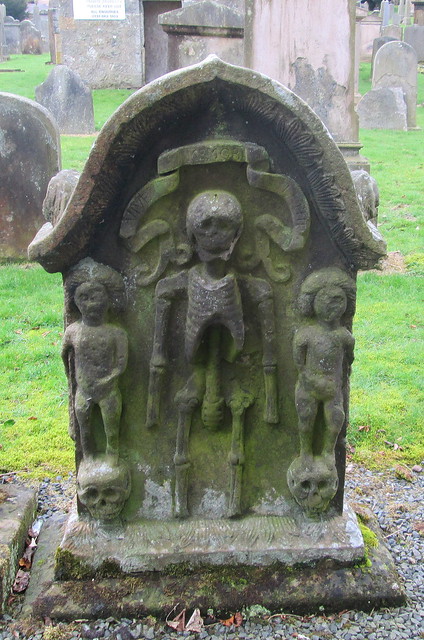
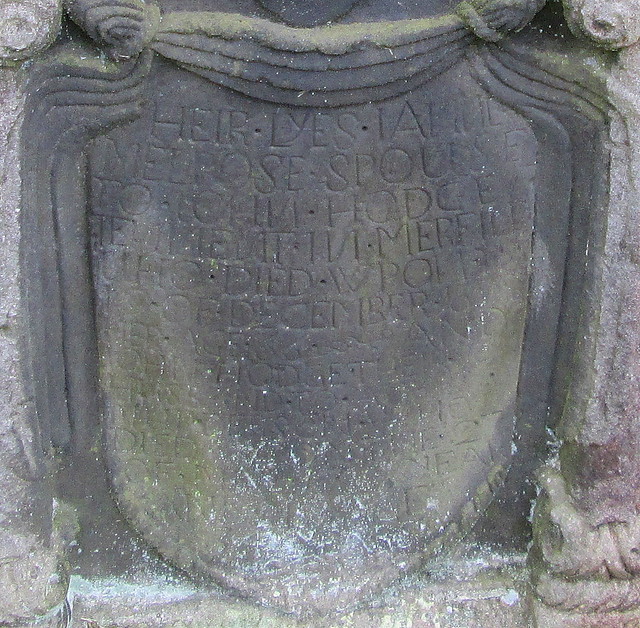
This is one from the sixteenth century, back and front – the best I’ve ever seen of that type.

Penicuik St Mungo's

Penicuik St Mungo's

From what I can make out it’s of Annie Melrose, spouse of John Hodge. In Scotland women are (or were) reverted to their maiden name after death. It makes sense because often men went through three or four wives what with women dying in childbirth or whatever.

St Mungo – or St Kentigern as he is sometimes called – is patron saint of Glasgow but was apparently born Culross which is not far from us in Fife.

Culross, Fife, Scotland

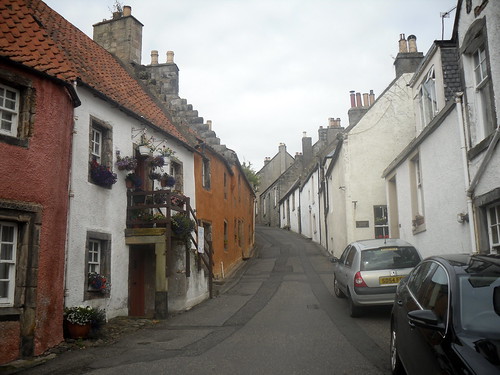
Before we went around the palace at Culross we had a guided tour of the town. It looks just as it must have when the houses were built in the 16th century, if you ignore the cars!

quaint street

In common with most coastal towns the whole town is built on a steep hill. When the National Trust took over the palace there were a lot of houses in the town which were derelict. Luckily the NT decided to take them on too otherwise they would have been demolished eventually. They rent the cottages out and apparently there is a long waiting list of people wanting to rent them. It takes about 6 years to get to the top of the list.

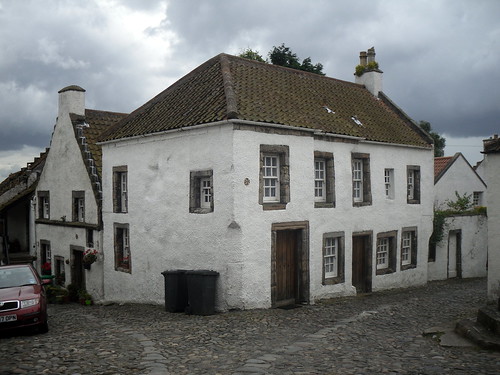
house in square, Culross

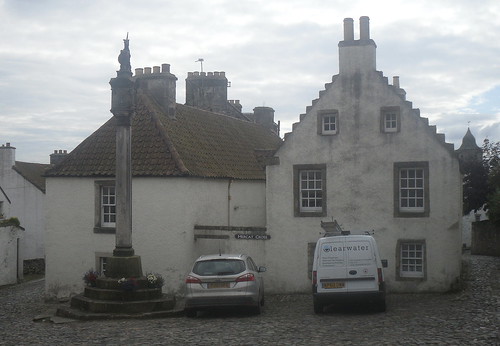
As you can see, crow stepped roofs and pan tiles are in use again, just like in Dysart. This photo has the market cross in it, there’s a unicorn on top of it. Unicorns are a symbol of Scotland.

Town square, Culross

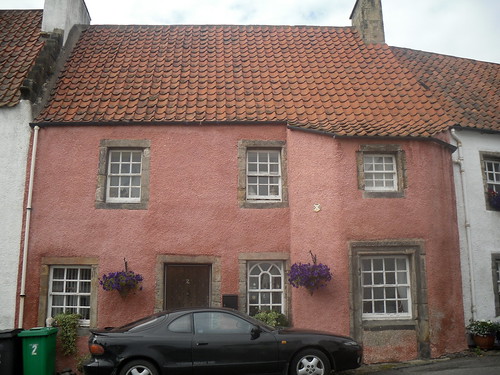
There are a lot of different designs of houses, no two are the same as far as I can see, but they’re mostly white or pink but some are orange. I suppose they’re about the same age as the timber framed Tudor houses that you see in England but these houses seem a lot more solid. My own house is about 110 years old and I can’t imagine living in a house which is 400 or 500 years old.

pink house in Culross, Fife

If you do go to visit Culross make sure you wear flat shoes because the cobble stones aren’t the easiest to walk on. Thankfully though the roads are clean which they wouldn’t have been in medieval times, there was raw sewage running down the gutters then. It can’t have been pleasant for anyone but must have got worse towards the bottom of the streets. Typically the abbey full of monks and priests was at the top of the hill!