Elgin Cathedral, Moray Scotland

Below is a photo of a Pictish carving which is in the grounds of Elgin Cathedral, it’s in not bad condition considering it’s 1100 years old.

Elgin Cathedral Carving Pictish stone

Back above and front below.

aElgin Cathedral Carving Pictish Stone 1

The statues below were never correct dimension wise  as the heads are too big.

Elgin Cathedral  statues, Moray, Scotland

The carving below is of far better quality, this is one of the carvings which is on display inside the cathedral towers.

Elgin Cathedral Carving , gargoyle

The others below are also inside the towers, out of the weather.

Elgin Cathedral Carving,


Elgin Cathedral Carvings

The carved head below didn’t come out as well as I had hoped, it’s behind glass and is blurred, in reality it looks much better and it’s rare because it depicts the head of a lovely woman. Before this women were always seen as being evil harridans, because the Catholic church was run by men who thought that way, but that changed when ideas of chivalry and knighthood became fashionable in the 1300s.

Carved Woman's Head, Elgin Cathedral

Dyce Symbol Stones, Saint Fergus’s Church, Aberdeenshire, Scotland

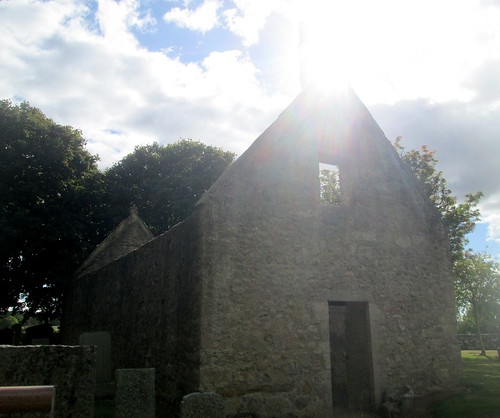
We visited several standing stones and symbol stones while we were in Aberdeenshire recently, including the stones at the ruin of Saint Fergus’s Church in Dyce.

Dyce Symbol Stones  info board, Aberdeenshire

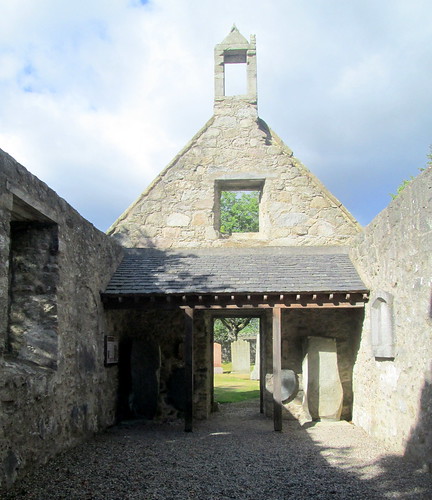
As you can see from the photo below it was a sunny day, the stones are just behind the front wall which you can see below.

Dyce Symbol Stones St Fergus's Church

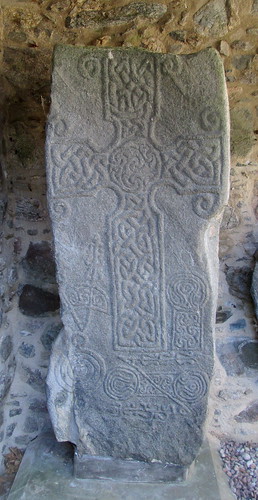
They’ve built a wee canopy to keep the worst of the weather off them. The church itself dates from the 13th century, but the Pictish symbol stones date from the 800s and they’re in remarkably good condition.
Dyce Symbol Stones , St Fergus' Church, Aberdeenshire

Dyce Symbol Stones , Aberdeenshire, Pictish

Dyce Symbol Stones, Pictish, Aberdeenshire
Dyce Symbol Stones, Aberdeenshire, Scotland

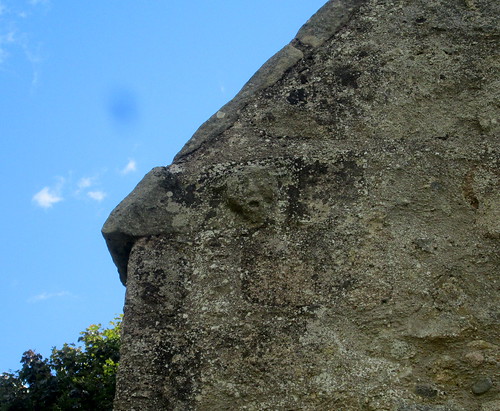
Before the 13th century church there was probably a wooden church on the site which would have had these stones as decoration, there’s also part of a broken font. We weren’t the only people looking at the stones, there was a lovely man who was a retired stonemason and he had worked on the church years before, so he pointed out things of interest to us, incuding the ‘green mannie’ on the corner of the building which you can just see in the photo below, he had actually discovered it when he was repointing the church, you might have to click to enlarge it. I always think of the green man as being a Celtic symbol, but he was also popular in England I believe, supposed to be a good luck symbol.

Dyce Symbol Stones Green Man

They certainly chose a beautiful location for the church as just across the road from it is the River Don in the photo below, there are just a few houses in this area, what a great view they wake up to in the morning!

Dyce River Don, Aberdeenshire

Dyce River Don, Aberdeenshire

Dyce River Don, Aberdeenshire

Aberlemno Pictish Stones, Angus, Scotland

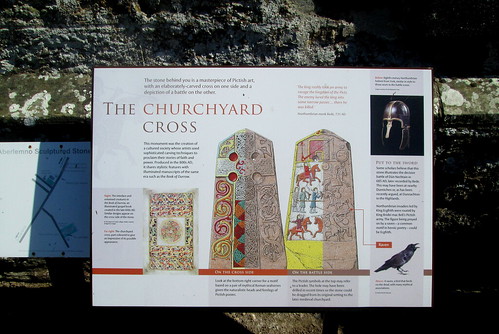
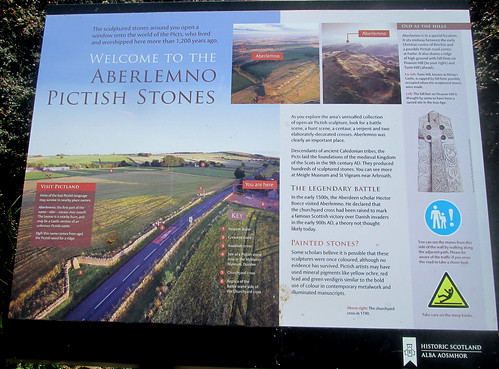
When we were up in Aberdeenshire a few weeks ago we took the time to visit some of the standing stones in the area. Actually we drove into rural Angus from Aberdeenshire. The information board below is in Aberlemno. There is one large stone in the churchyard and some others on the edge of a nearby road.

Info Board Churchyard Cross

Aberlemno, Board Pictish stones

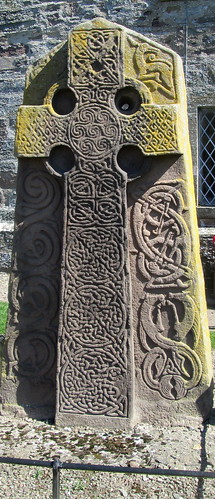
As you can see one side of the stone is Christian. The stones date from around the 800s AD,

Churchyard Cross, Aberlemno, Aberdeenshire, Pictish cross

but the other side of it has been carved with men and horses, more usual Pictish symbols.

Aberlemno Churchyard Cross

The stone below is the back of the one underneath it, the Roadside Cross.

Aberlemno Stone  reverse, Aberdeenshire, Pictish stone, standing stone

Aberlemno Stone, standing stone, Pictish, Aberdeenshire

Aberlemno Stones, The Roadside Cross Information Board

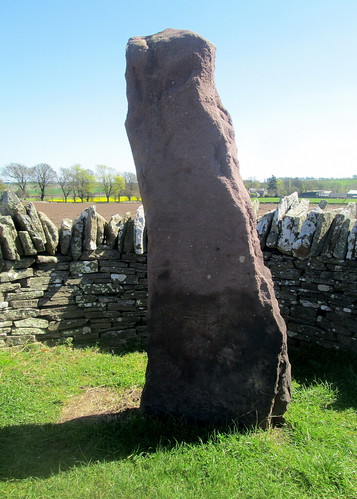
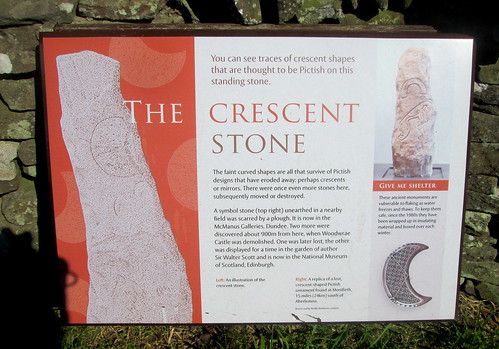
There is a very faint design on the stone below but it has not fared so well as the others. I find it amazing that the rough weather of the north-east of Scotland hasn’t eroded them all completely though. Many of the headstones in the churchyard that are just a few hundred years old aren’t in the best of condition.

Aberlemno Stone, Pictish, standing stone, Aberdeenshire

Aberlemno Stone , the Crescent Stone, standing stone, Aberdeenshire

Aberlemno Stone , standing stone, Pictish, Aberdeenshire

Information Board, the Serpent Stone, Aberlemno