
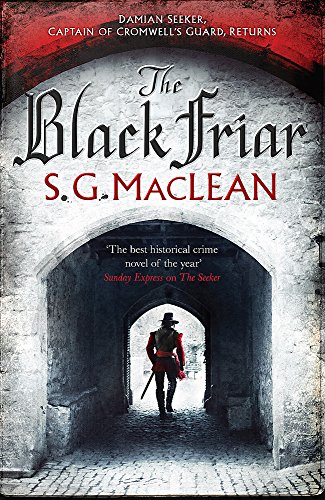
 The Black Friar by S.G. MacLean was published in 2016 and it’s the second book in the author’s Damian Seeker series which begins with The Seeker.
The date is January 1655, the seventh year of Oliver Cromwell’s ‘reign’ and the people are discontented because for ordinary folks things are no better than they had been under the rule of the Stuarts. Seeker is having to deal with rebellious Royalist plots from abroad and disgruntled one time supporters of Cromwell.
Fanatical religious sects are springing up, most of them are based on the book of Daniel and they’re all more than a bit strange. It seems like desperation to me, but it is all very authentic and historically correct.
When a perfectly preserved body in the clothing of a Dominican friar is found to have been bricked up in the crumbling Blackfriars Monastery some people think it’s some kind of miracle, but Damian Seeker knows better. He recognises the body as a man who had been working for him, and the reason the victim’s body is still fairly fresh is because he hasn’t been dead long, so it’s no miracle.
Some children have been disappearing from the streets of London, is it something to do with the murdered man? As Captain of Cromwell’s Guard Damian Seeker is kept very busy in this one, he’s well able to see that most of the ordinary people are actually worse off under Cromwell, or certainly no better off.
Shona (S.G.) MacLean has a PhD in 16th and 17th century history so presumably she gets the details correct. It’s interesting to see that women could have a prominent/ leading position as preachers in religious sects, something that seems to have gone backwards in more recent times. If I’m nit-picking I find it unlikely that so many poorer women in these books are able to read and write, but often it’s necessary for the plot so I’m willing to suspend my disbelief. I’m really enjoying this series and I think I’m learning quite a lot about the era.
 Forest Silver by E.M. Ward (Edith Marjorie) was first published in 1941 but it has just been reprinted by British Library as part of their British Library Women Writers series. I was sent a copy of the book by British Library for review.
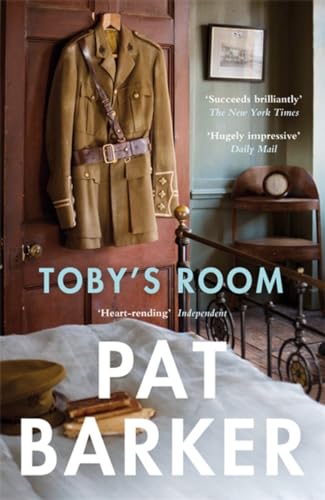 Toby’s Room by Pat Barker was published in 2012, but the book begins in 1912 at the affluent home of Toby and Elinor, a very (too) close brother and sister. They have an older sister Rachel, she’s the one who has done everything that her parents expected of her. Elinor has a difficult relationship with her rather self-centred mother, but she does manage to get to the Slade Art School, where she also studies human dissection to help with her drawing of the human body. This is all very ground-breaking for a young woman. She also rubs shoulders with some of the people in the Bloomsbury Group as well as men who became War Artists.
 The setting is the south of England, Winter 1942.
 The setting is Cornwall 1920, but the story often slips back to the World War 1 experiences of Daniel and Frederick, and their childhood together. Frederick and his sister Felicia are the children of a man who had made money in Australian mines, as Daniel’s mother had been the cleaner for the family she had become close to their mother, when the mother died Daniel’s mother helped with bringing up the children. But Frederick and Felicia go to private schools, Frederick isn’t interested in learning. It’s Daniel who is the clever one, but he knows he’s never going to be able to stay on at the village school, or have the opportunities that Frederick will have. But they still manage to have a close frienship. When war breaks out they find themselves in the same unit, but of course Frederick is an officer and Daniel isn’t. Only one of them comes back from the war.
 The House on the Hill by Eileen Dunlop was published in 1987 and the setting is Glasgow.
 The Wild Coast by Lin Anderson was published in 2023. It’s the first book I’ve read by the author, but she has written lots which feature Rhona MacLeod as a forensic scientist.
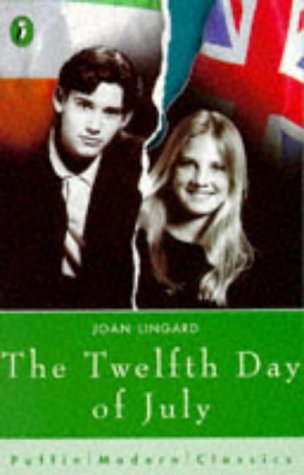 The Twelfth Day of July by Joan Lingard was first published in 1970, so it was probably written just as ‘The Troubles’ of Northern Ireland started to become really serious.
 Young Mungo by Douglas Stuart was published in 2022. Previously I have read Shuggie Bain by the same author, he won the Booker Prize in 2020 for that one.
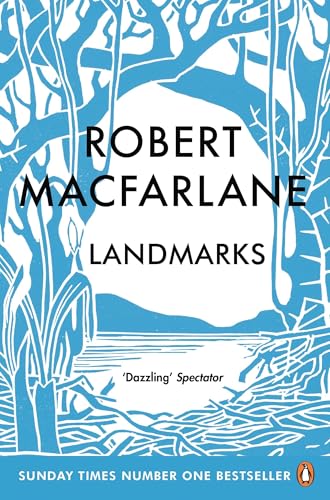 Landmarks by Robert Macfarlane is one of those books which increases your wish list of books to read as he makes so many of the books that he mentions sound so interesting.