The Years by Virginia Woolf

Previously I had read three of Virginia Woolf’s novels and I had decided that she really wasn’t my cup of tea, but I found The Years to be much more enjoyable, probably because it’s a bit of a family saga.

The chapters are headed with a date, beginning with 1880 and continuing to 1891, 1907, 1908, 1910, 1911, 1913, 1914, 1917, 1918 and ending with The Present Day (which of course was 1937.) The first and the last chapters are more novella than chapter length. The setting is London, where the Pargiter family live, they’re a middle class family headed by a father who had been in the army. Colonel Pargiter had been wounded in the Indian Mutiny so has a damaged hand. His wife is dying and is upstairs in her bedroom, strangely everyone seems just to be tired of the whole process, she’s taking too long to die, there seems to be no love there, even from the grown children. The colonel has a mistress, but that’s a rather tepid affair too.

Each chapter contains some of the members of the wider family, over the years some drop out of sight, and re-appear later on, just as often happens in families.

You would think that World War 1 would feature in those war years, but it really doesn’t, it’s still all very domestic.  I thought this one was like a mini Forsyte Saga, but that might just be because it was set in the same era.

Jack also read this and blogged about it here.


Suddenly at His Residence by Christianna Brand

Suddenly at His Residence by Christianna Brand was first published in 1946 but it was reprinted by British Library in 2023. It’s an Inspector Cockrill mystery. It’s subtitled A Mystery in Kent, but really it could have been anywhere in the south of England. In Americal this book is titled The Crooked Wreath.

The setting is Swanswater Manor, a large house owned by Sir Richard March. As World War 2 is still ongoing the manor is fuller than usual, Sir Richard’s family has gathered together, including his grandchildren. After the death of his wife Serafita Sir Richard had married his long-term mistress Bella, who had had a daughter by him, and she had had a son Edward. He’s an attention seeker and has concocted mental health issues which might come back to bite him.

The whole manor house is a shrine to the first wife Serafita, there are portraits of her everywhere, and small tables with her ballet shoes and other personal things on show, it’s a cross that Bella has to bear.  Sir Richard is cantankerous and uses his wealth to manipulate his family, he’s always changing his will, despite the fact that he has a weak heart and could pop off at any time.

This is an enjoyable classic country house mystery, although I did guess who the culprit was, but not too early on.

There’s an interesting introduction by Martin Edwards.

Redheads at the Chalet School by Elinor M. Brent-Dyer

Redheads at the Chalet School by Elinor M. Brent-Dyer was first published in 1964, but my copy is a very recent reprint by Girls Gone By.  This one is a bit of a departure from the usual Chalet School series as it’s more of a thriller than boarding school story.

It begins with Flavia and her step-father travelling on a train on the way to the Chalet School. Flavia has red hair and most people call her Copper for that reason, but her step-father explains she must use her real name at school and she has been enrolled under her original surname, instead of her step-father’s surname.

Flavia’s step-father is a policeman and one of his investigations has led to the hanging of a member of a vicious gang. The other gang members have sworn to get their own back on him, Flavia’s life is in danger, but to begin with she doesn’t know that.  The headmistress has been given all the information though.

From almost the beginning it’s obvious that there are nefarious characters hot on the track of Flavia, they know that they’re looking for a girl with red hair, but there are several such lucky girls at the school. Inevitably the wrong girl is nabbed! But of course all ends well eventually.

I enjoy these Girls Gone By reprints, there’s usually a short story at the end by a contemporary Girls Gone By writer.  In this case it’s  An Inspector Calls by Lisa Townsend. There’s also a few pages about the publishing history, notes on the text, and at the very beginning there’s a bit by Ruth Jolly about the apparently fairly regular appearance of girls with red hair attending The Chalet School,  there are more of them than would be expected in society. She also mentions other characters with red hair in literature, and that old chestnut that redheads are supposed to have a fiery temper, which of course had me rolling my eyes as a redhead myself, or as my mother described me – a strawberry blonde.

I almost feel a blogpost coming on about walking in a person’s shoes, because unless you have red hair you have no idea what it’s like! It is the only prejudice which is quite happily allowed nowadays, and features in TV adverts, where derogatory comments about skin colour definitely aren’t tolerated.


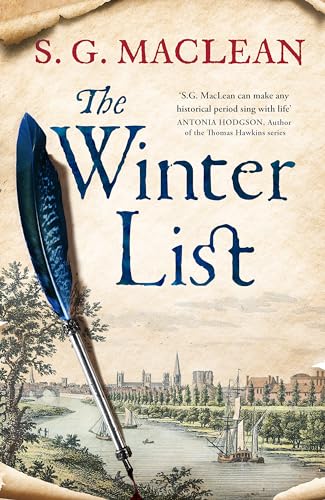
The Winter List by S.G. MacLean

The Winter List by S.G. MacLean is a sequel to The Seeker which is set in London in 1654, a time when Oliver Cromwell has taken over and had King Charles I executed.

The Winter List begins in London 1660, the Cromwell era is over and King Charles II is on the throne. Many of those who had supported Cromwell are being hunted down and executed without a trial, there’s a list of regicides who it’s believed had been instrumental in the execution of the king, and Lady Anne Winter, a Royalist spy has been tasked with discovering the innocence or guilt of the suspects.

She travels to York with her Scottish assistant Grizel, she doubles as Lady Anne’s servant but in reality Grizel is good at codebreaking, it’s a very handy talent to have. Manon is the daughter of Damian Seeker and is now married and settled in York with her husband and children. They’re terrified of being accused of being Republicans. Seeker is on the list, he terrified people in Cromwell’s times and the Royalists want to get their own back. Manon’s husband is under suspicion, Lady Anne arranges for Grizel to get work within the heavily pregnant Manon’s household, but that is the least of their problems.

I really liked this one, but I have jumped ahead in the series and will really have to go back and read the others.


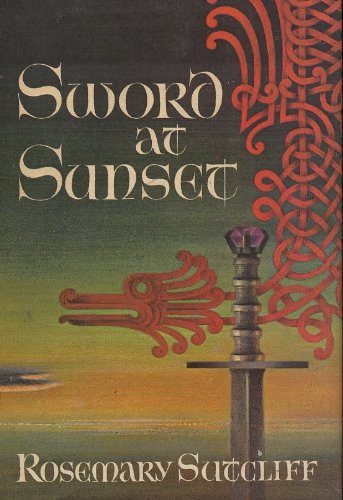
Sword at Sunset by Rosemary Sutcliff

Sword at Sunset by Rosemary Sutcliff was published in 1963. The author has written a lot of books for children but this one is for adults, I enjoyed it but felt that it was about 100 pages too long, as often happens, for me there were too many battles, but it was probably a fairly true reflection of life in post-Roman Britain which is the setting, rather than the medieval knights and ladies which have often been part of Arthurian legend. So there’s no Round Table, no Camelot and no romance, it’s a much more brutal and rougher world.  Artos is seduced by Ygerma before he realises she’s his sister. There’s no Lancelot, but Artos is betrayed by another.

Ambrosius, who may have been of royal  Roman descent is leader of the ‘Britons’ and as he has no son of his own he sees Artos (the Bear) as the closest thing he will ever have to a son.  Ambrosius is the High King, but his fighting days are over, he’s just passing on his wisdom now.  They both know that at some point there will be battles with the Saxons and they need to prepare for that. Lord Artos says that they don’t have enough horses and they need to breed bigger war horses, to take on the Saxons, it’ll take years.

This is well written and enjoyable, but as I said, it was a wee bit too long for me. Well I have so many books in my TBR pile.

One thing which sort of annoyed me is that my edition of the book is an American one,  published by Coward-McCann, it has a nice map as the endpapers, but they changed the spellings to American ones, which means that some poor soul had to trawl through the book making the changes. Why bother? Especially as there aren’t that many changes involved, but it jolted me out of  early post-Roman ‘Britain’ to the US – daft as that may seem.


Between the Acts by Virginia Woolf

Between the Acts by Virginia Woolf was published in 1941, but seems to have been written on the cusp of war.  Not long after finishing this book Woolf had filled her pockets with stones and walked into the River Ouse, depression is a terrible thing. Her husband wrote that he didn’t think that she would have made much in the way of changes to the text, if she had lived. That’s a real shame as for me the best thing about this novella was that it was only 100 pages long.  Suicide was obviously on her mind as she even mentions a man who had drowned himself.

About half of the book features a local village pageant, something which was popular in the days when people had to make their own entertainment, and also features in one of  E F  Benson’s Mapp and Lucia books, albeit briefly. A pageant is the sort of thing that people would have gone to because ‘their wee Jeannie’ or someone they knew had a bit part in it.  I found it really boring. Between the acts of the play/pageant there’s chat among the audience.

The blurb says: Between the Acts, an account of a village pageant in the summer preceding the Second World War which successfully interweaves comedy, satire and disturbing observation.

Sadly it just didn’t do it for me. I’m a bit worried about having to read her The Years for the Classics Club spin, especially as it’s a lot longer.


The Revolt of the Eaglets by Jean Plaidy

The Revolt of the Eaglets by Jean Plaidy was first published in 1977.

The year is 1171 and King Henry Plantagenet is celebrating the arrival of the New Year in Castle Argentan, he’s looking forward to returning to England soon where he’ll be reunited with his long-term mistress Rosamund Clifford. Their affair is common knowledge now since his wife of nineteen years Queen Eleanor discovered it.

When Henry gets word that Thomas a Beckett has been murdered by four of Henry’s men, in Canterbury Cathedral, he’s furious as he knows he will be blamed for it, well in truth he did more or less give the order for the argumentative Thomas to be got rid of. Within two years Thomas has been canonised by the Pope.

Queen Eleanor is a woman scorned. She was a powerful woman before she married Henry, she owns the rich lands of Aquitaine, and she’s determined to set her Plantagenet sons against their father.  Strangely the eldest son Henry has already been crowned, but he has no power and that enrages him.

Meanwhile, King Henry can’t be faithful to any woman, but shockingly he has seduced and impregnated the 11 year old girl who is to marry his son Richard, she’s also the daughter of the French King Louis and King Henry is terrified that her father will discover the secret.

I enjoyed this one although these older historical fiction books often have a more stilted style of writing.


Consider the Lily by Elizabeth Buchan

Consider the Lily by Elizabeth Buchan was published in 1993.

The story begins in 1929 when cousins Matty and Daisy attend a wedding. They’ve been brought up together since Matty’s parents died. Daisy’s family is upper class but has fallen on hard times, like many, but Matty inherited a lot of money from her parents which has been quite handy for Daisy’s mother as Matty contributed to the family coffers, but Matty was never given any love or even appreciation.

Both cousins have fallen for the brother of the bride, but it’s the vibrant and vivacious Daisy that Kit is in love with. Kit is the only son, his father Sir Rupert is suffering from his experiences in World War 1 and the estate has fallen into disrepair and needs a large injection of money. When Kit is suffering from a hangover and in despair at his situation he makes a decision which pleases his father but makes everyone else unhappy. It transpires that Sir Robert and his family have experienced a lot of trauma over the years.

This was a really good read, it’s 469 pages long but it didn’t seem like that, I suppose because I was engrossed in it. There’s also quite a lot about the planning and planting of a garden in the book, and horticulture in general, but it’s done in a subtle way I think and won’t be intrusive to people who aren’t so interested in plants.

Elizabeth Buchan is married to the grandson of the author John Buchan. The only other book that I’ve read by her is Revenge of the Middle Aged Woman which I believe was dramatised for TV, but looking back at my review of it it seems that I wasn’t as impressed with that one.

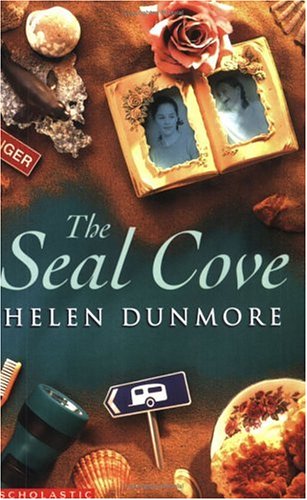
The Seal Cove by Helen Dunmore

The Seal Cove by Helen Dunmore was published in 2001. It’s part of a trilogy, the others are The Lilac Tree and The Silver Bead which I’ve read. I just noticed when I started to read this one that my copy is signed by the author.

The setting is Cornwall, Katie and her mother had moved there after the death of her father and things are going quite well for them. Katie’s mother’s paintings have been taken on by a local art gallery, and they’re selling well.

But her best friend Zillah isn’t her normal self, unusually she won’t tell Katie what is wrong with her, but eventually it transpires that her parents are planning to turn their farm into an upmarket caravan park. Two  men have been more or less grooming them and have told them that they will make a fortune, but they would have to get into a lot of debt to carry out the plans. Zillah knows that they will end up losing everything if they do as the men wish, and that they will snap up the farmland for themselves.

Zillah needs the help of Granny Carne, she’s a bit of a local wise-woman, or witch if you believe the rumours. “You go up to Granny Carne’s when you can’t see your way clear ahead.”  But Katie is worried about meeting her.

This one is aimed at older children or young adults, but whether she was writing for children or adults, Helen Dunmore was such a talented  writer,  she’s another author who died too soon.

You can read her Guardian obituary here.

Dimsie Head Girl and Dimsie Grows Up by Dorita Fairlie Bruce

Dimsie Head Girl by Dorita Fairlie Bruce was published in 1925. Dimsie isn’t in the running to be head girl of the school the Jane Willard Foundation, but Jean, the aspiring poet turns out to be so feckless and dippy as head girl that she eventually has to be sacked by the headmistress Miss Yorke, and Dimsire takes over.

It was the middle school girls who had caused all the problems, they’re always determined to bend any rules to their own advantage. They’ve been banned from keeping pets so decide to start an orphanage for animals, unfortunately this leads them to abduct (steal) a kitten from a street in the nearby town. Their antics are giving the school a bad name.

I found this quite entertaining, at almost 100 years old they’re a dip back in time to another age, but schoolgirls are much the same – whenever.

Dimsie Grows Up by Dorita Fairlie Bruce was published in 1924, confusingly as Dimsie has left the school. The book begins with her saying good-bye to her family home. Her father had died unexpectedly and that had scuppered Dimsie’s plans to go to university to study to become a doctor. That’s now unaffordable and she and her mother have given up their home in England and based themselves permanently at their Scottish home in the west of Scotland. It’s been in the family for generations and Dimsie’s grandmother had been well known locally as a herbalist. She had cured many illnesses in the local population in the past, but she’s now dead. Dimsie hopes to follow in her grandmother’s foosteps and sets about rejuvenating her herb gardens, with a view to setting up her own business and selling herbs to pharmacies.

Meanwhile, there’s a new mystery neighbour living nearby, bizarrely he wears a brown velvet mask, so cuts a bit of a sinister figure.  But after World War 1 there are lots of maimed men around. One other in the neighbourhood is a young doctor who is lame, he had befriended Dimsie on the train up to Scotland. When Dimsie’s plans seem to be hitting the buffers he encourages her to carry on, and helps her by being able to give her some business contacts. But an incident which allowed Dimsie to help a young sick girl goes a long way towards kicking her business off and she’s getting a good reputation locally as a herbalist. Of course this was all long before the NHS was set up when poorer people couldn’t afford to see a doctor.

As you can imagine this one was very different from the previous Dimsie books which are all set in the boarding school, I really enjoyed the different setting, and I couldn’t help laughing when a train strike causes a big problem with the train coming to a complete stop in Lancashire as the strike started.

I find it quite surprising that a book which is 100 years old focused on a young female school leaver and her determination to have a career, despite serious problems  being thrown in her way,  she also has a supportive mother!

Thank you again to Clodagh in London who so kindly sent me her Dimsie books as she was looking for a good home for them.