
 The Witch’s Brat by Rosemary Sutcliff was published in 1970. The setting is England in the reign of Henry I. Lovel is a young lad, just eleven years old, and his grandmother has just died. She had been the local healer and herbalist so she had been tolerated in the village. But Lovel was born with a crooked back and his mother had died when he was born, his father is dead too, so he’s all alone in the world and the villagers hound him out. They think that his crooked back means he must be a witch.
Lovel has no option, he has to keep walking, but eventually a swineherd finds him and takes him to a Benedictine Abbey where they take care of him and he finds a place as a bit of a dogsbody within the community. When Rahere the King’s Jester (jongleur) arrives he sees something in Lovel that nobody else does and he gives some hope of a different kind of life in the future for Lovel, maybe he’ll take Lovel to the king’s court one day. Soon after that Lovel is taught to read when it’s realised that he has a good knowledge of medicinal herbs and his life begins to change for the better.
This book is partially based on reality as a man called Rahere who was the King’s Jongleur founded Saint.Bartholomew’s Hospital in London and you can visit his tomb in the Church of Saint Bartholomew the Great in Smithfield, London.
This was an enjoyable read, Rosemary Sutcliff books are always good.
 I’m finding The Marriage Portrait by Maggie O’Farrell quite a difficult one to write about, but I really enjoyed it, which is the main thing. I always enjoy her books, despite or maybe because they are all different.
 The Serial Garden by Joan Aiken is The Complete Armitage Family Stories. I must admit that I had never read any of this series, nor even heard of them, but what a delight they are. Joan Aiken had such a wild imagination and a great sense of humour, these stories although aimed at younger readers, like all well written books are entertaining for all ages. I got the impression that writing these stories was the author’s happy place, and that she must have been very attached to the characters. It turns out that the family was based on her own family, she told the stories to her younger brother and the children featured in the stories were based on their older brother and sister who were away at school.
 The Stronghold by Mollie Hunter was first published in 1974 and it is a Carnegie Medal Winner.
 Cue for Treason by Geoffrey Trease was first published in 1940 but my copy is a Puffin reprint which was published in 1965.
 A Use of Riches by J.I.M. Stewart was first published in 1957. He also wrote under the name of Michael Innes, those books quite often feature the world of art, as does this one.
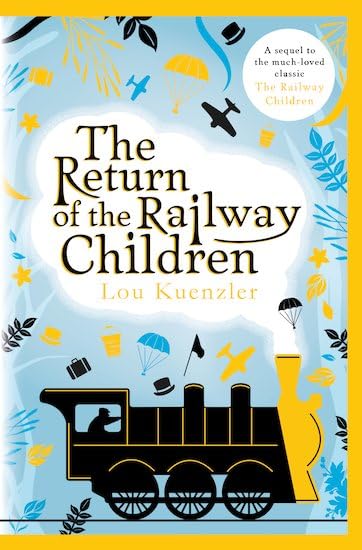 The Return of the Railway Children by Lou Kuenzler was published in 2018 and is of course a sort of sequel to E. Nesbit’s The Railway Children which was first published in 1906. I’m often quite wary of sequels like this but as this one has a World War 2 setting I thought it was worth giving it a go. I’m glad I did.
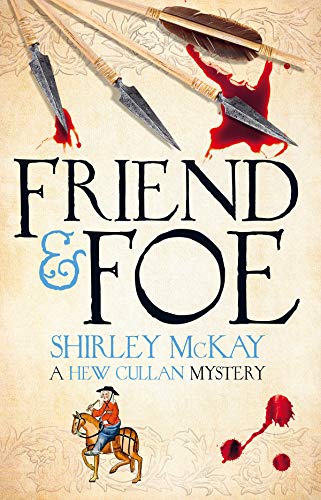 Friend and Foe by Shirley McKay is the fourth book in the author’s Hew Cullan mystery series. The setting is St Andrews in 1583. At the back of this book there is a glossary of Scots words used by the author which I imagine will be useful to some readers, I must admit there were a few that even I didn’t know, but I think they’re always easy to take a guess at from the context.