Vindolanda – a Roman Fort, Northumberland, England

Fort from Gate, Vindolanda

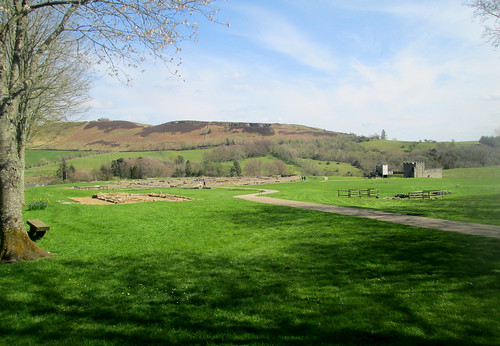
It was way back in April that we visited the Roman camp at Vindolanda, as you can see from the photo above it’s still a very rural and scenic part of the country.

There are still excavations ongoing here but the photo below is of a replica gateway, to give an idea of what it would have looked like when the Romans were here.
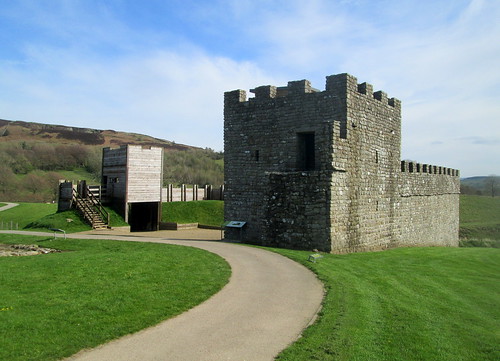
Replica Tower, Vindolanda

Below is a model of the whole camp which is in the on site museum.

Model of Roman Fort at Vindolanda

Some of the remains that have been dug out look quite well preserved as you can see below.

Remains of Fort, Vindolanda

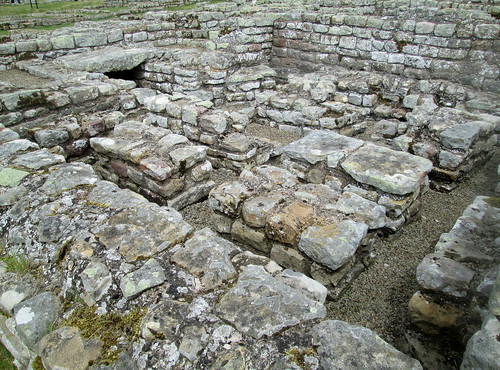
Below you can see the remains of a hypocaust, their heating system. They had all ‘mod cons’ those Romans in Britain, they needed it as it’s a really cold area of England, in the autumn and winter.
A Hypocaust at Vindolanda

Fort Ruins, Vindolanda

They’ve built a replica temple which is well situated by the wee river, a good place to rest and have a coffee.
Replica Temple, Vindolanda

You can read about Vindolanda here and here. The Romans were in this area of North East England (Northumberland) from around 85 AD to 370 AD.

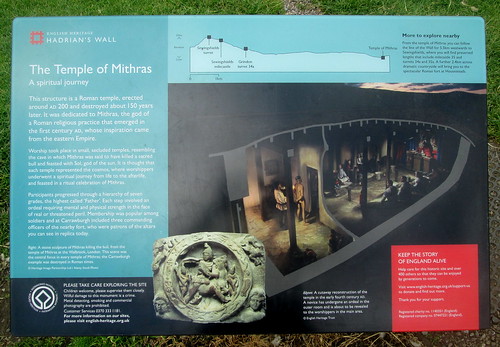
A Mithraic Temple, Carrawburgh, Northumberland

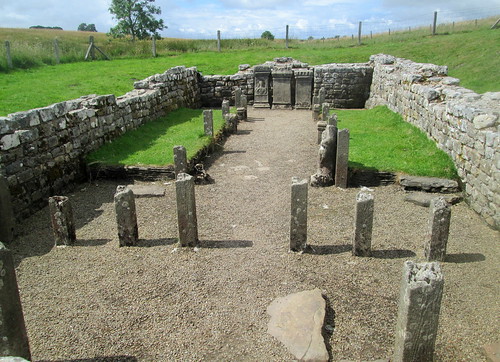
After we visited the Roman fort at Chesters we drove on to see the remains of a Mithraic temple which is in the middle of a field. I have to say though that the temple itself isn’t very well signposted, so we ended up yomping over a field full of indignant sheep towards what was definitely a ruin in the distance, but that turned out to be the ruin of a farm building. Oh well, it was all good exercise and we gave the sheep something else to think about other than grass!

We eventually got on the right track, the signpost was on a small fencepost just the width of the wood, so about 3 inches square.

This is the road by the car park at Carrawburgh, Northumberland, as you can see the road is very straight so presumably this was originally the Roman road.

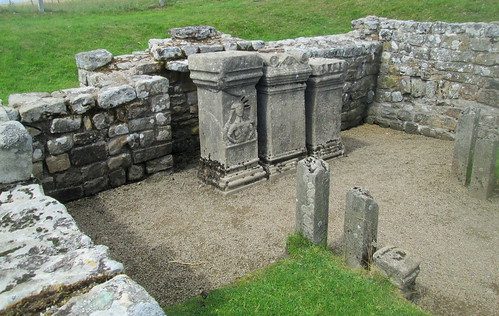
The temple is quite small but as the god Mithras was popular with soldiers it was probably quite well used by the men at Chesters Fort.

Mithraic Temple, Carrawburgh, Northumberland, Roman ruin

Temple Information Board, Mithraic temple, Carrawburgh, Northumberland</scri

You can read about Mithras here.

Mithraic Temple, Crawwburgh, Northumberland

Mithraic Temple, Carrawburgh, Northumberland

Mithraic Temple, Carrawburgh, Northumberland, Roman ruin

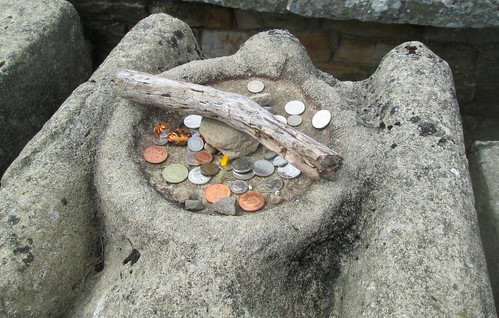
The middle column of the altar has a stone offerings dish and visitors have been leaving coins, sweets and a big piece of wood as worshippers would have done. I was a really big spender and offered up 2 pence!

Votive Offerings, Mithraic Temple, Carrawburgh, Northumberland

Chesters Roman Fort part 2

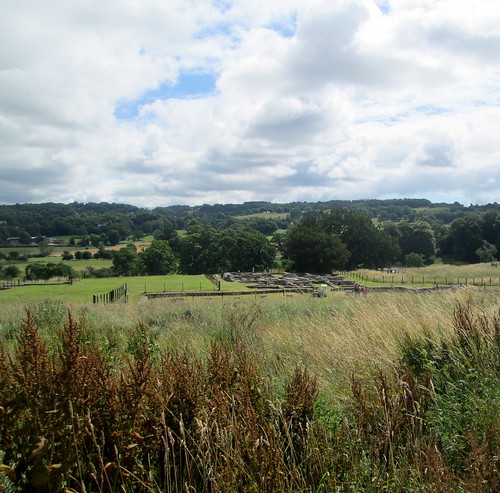
The ruins that you can see in the distance below are what remains of the camp commandant’s house. As you can see the area that the fort is set in is scenic but I imagine it would have looked a bit different in Roman times, nearly 2,000 years ago, however the land here was very fertile even back then it seems and was able to provide enough in the way of crops for humans and horses. The fort was known to the Romans as Cilurnum.

Commandant's house from distance

Closer up you can imagine that it must have been a lot more comfortable than any of the other accommodation, and at least he had central heating, I think the bricks are part of that system.

Commandant's House , Chesters fort, Cilurnum, Northumberland, Roman ruin

By Commandant's House, Chesters fort, Northumberland

The floor below would have had a mosaic pattern on it I’m sure, but what can be seen in the photo are the supports of the floor.

Commandant's House, Roman floor, Northumberland

Annoyingly I don’t seem to have an info board photo for the commandant’s house, but the HQ info board below is quite interesting.

HQ Building info board, Chesters Roman fort

But as you can see there isn’t much left of it nowadays.

HQ building, Chesters Roman fort, ruins

You need a good imagination!

HQ Building Chesters Roman fort, Northumberland

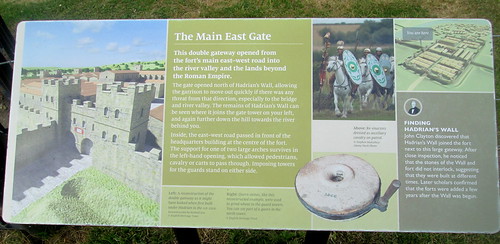
The info board below gives you an idea of how grand and imposing this area would have been – all to keep those barbarians from the north out!

Main East Gate Board, Chesters Roman fort, Northumberland