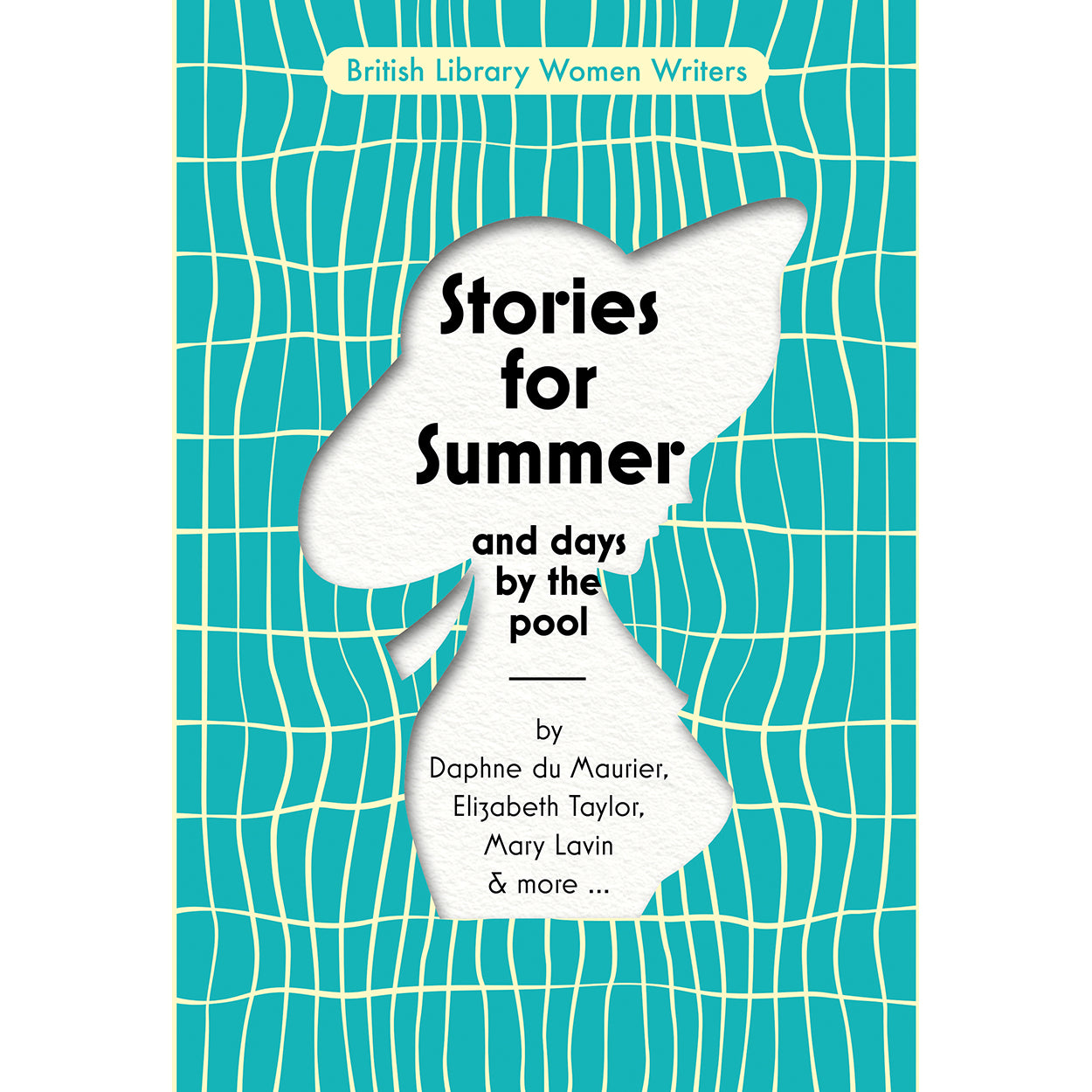
Stories for Summer and days by the pool – British Library short stories

Stories for Summer Front Cover (Paperback)

Stories for Summer and days by the pool is a collection of short stories published recently in the British Library Women Writers series.

It features stories by well-known female writers:

The Pool by Daphne du Maurier

Carnation by Katherine Mansfield

Kew Gardens by Virginia Woolf

Requiescat by Elizabeth Bowen

Exile by Sylvia Lynd

Black Cat for Luck by G.B. Stern

The Sand Castle by Mary Lavin

The Shark’s Fin by Phyllis Bottome

The Lovely Evening by Mary Norton

In a Different Light by Elizabeth Taylor

In and Out of Never-Never Land by Maeve Brennan

Afternoon in Summer by Sylvia Townsend Warner

The Fortune Teller by Muriel Spark

Men Friends by Muriel Huth

It’s a really entertaining compilation, as a woman who has been know to get sunburnt on a grey day I must say that I’ve never lain on a beach reading, or by a pool for that matter, but if you are that way inclined this book would be perfect. I really enjoyed most of the stories despite not being a huge fan of short stories in general.

My thanks to British Library who sent me a copy of the book to review.


The Rectory Mice by George MacBeth

The Rectory Mice by the Scottish writer George MacBeth was published in 1982. He’s known mainly as a poet, but later in his life he wrote some novels and books for children, this one is aimed at 10 year olds I suspect but as always with good writing, it’s entertaining for any age. It’s illustrated by Douglas Hall. The setting is a rectory in Oby, Norfolk.

It’s 1914 and at least three generations of a family of mice are living very comfortably in an old rectory, the only thing that upsets them is the clanging of the bell which alerts the rectory servants. They are extremely clean mice (impossible) so their existence is unknown to the house inhabitants, including the cats. Everything is hunky dory until they hear of the beginning of the war. War always means a lack of food, they’re worried about their cheese rations.

But when one of the mice sees what turns out to be a zeppelin floating past they realise that there is more than just a lack of cheese to worry about. As time goes on a new man joins the staff of the rectory, he’s a German prisoner of war, and he brings with him something which is going to change everything for the mice.

This is a charming book although you have to suspend your disbelief as the mice can read and Grandfather Mouse often consults the dictionary in the library. It reminded me a bit of The Borrowers by Mary Norton which I loved.


Blackwell, Arts and Crafts house, Lake District

So here we are back at Blackwell again, but we’re in a very different setting now. The hall is almost medieval in design and is quite dark. The architect deliberately designed the rooms so that you were moving from dark oak panelling through this corridor to light, very light indeed.

White room from corridor, Blackwell, Lake District

So much in this beautiful room is similar (ish) to Rennie Mackintosh’s Hill House in Helensburgh. Again there are sitting neuks by the fireplace, perfect for curling up with a book. I’m fairly sure that the frieze at the top of the wall and the ceiling is papered with Lincrusta, a kind of wallpaper which incorporates plaster designs sandwiched between the paper. It’s on the ceiling too, a fairly inexpensive way of adding luxury to a room, I think you can still buy it today.

Blackwell, White room fireplace


Blackwell, White room  chair 1

The corner cupboard below is flanked by two stylised trees, natural motifs are all around the house in the decor, particularly rowan berries, and apparently when the house was taken over after a long period of neglect there was a rowan sapling growing inside this cupboard!

White room  corner cupboard

I think all of the rooms have window seats.

Blackwell, White room windows + seat

But the white room has two window seats, one with a view of the garden, above and a great view of Lake Windermere below.

Blackwell, White room windows

It’s such a shame that Blackwell was never a real family home, just a holiday house for a short time in the summer. The pottery in this room is by Willem de Morgan – it’s stunning.


Blackwell, an Arts and Crafts house, Lake District

When we were in the Lake District a few weeks ago one of the places on our list to visit was Blackwell, an Arts and Crafts house. I must admit that I hadn’t even heard of it until quite recently. It’s an absolute jewel.

Blackwell, Lake District, Arts and Crafts house

Blackwell has always been a holiday home which is really sad, it would have made a wonderful family home although I suppose the winters in the Lake District can be quite grim. The house was designed by Mackay Hugh Baillie Scott. It’s not far from Bowness on Windermere.

Blackwell, Lake District, Hall stained glass

The photos above and below are of the Hall. The stained glass design of tulips and blue birds looks much better in reality.

aHall 6

The hall is a large room, you could easily hold a dance in it. The copper lighting is original as is the peacock frieze at the top of the walls. This is actually wallpaper which has been recently refurbished. As you can just see on the left there’s another cosy seating area.

Blackwell, Lake District, Arts and Crafts, Hall 1

We joined in a guided tour which was interesting. Some of the designs are very reminiscent of Charles Rennie Mackintosh, he and Baillie Scott were designing at around the same time and were often competing for the same commissions. Of course Baillie Scott was also of Scottish descent.

The hall is a bit of a mixture of Tudor style, with its oak panelling and early 20th century styling. The guide thought that the fireplace was a nod towards Art Deco although the house is a bit early for that, the Dutch Delft tiles around the fireplace seemed a bit incongruous in the setting, but they are attractive. Every house should have at least one window seat I think, and this house has a few. They are perfect for reading in but the scenery outside might be a bit too distracting.

Blackwell Hall , Lake District

Or you could sit in the window below, the light should be good anyway.

Blackwell, Arts and Crafts, Furniture + windows

Blackwell, Hall, Bench, Lake District

This part of the house is quite dark, it was deliberate, to contrast with the bright light of the rest of the downstairs, but I’ll leave that for another post.

Blackwell stands above Lake Windermere, below is a view from the driveway towards the lake.

Windermere, view from Blackwell, Lake District

The Other Side of Stone by Linda Cracknell

The Other Side of Stone by Linda Cracknell was published in 2021 by Taproot Press. The time switches between 1831, 1913, 1990, 2003, 2006 and 2019, but it’s never confusing. It’s a quick read at just 146 pages, I think it’s really well written. The setting is rural Perthshire. It is a novella although some people have described it as a collection of linked short stories.

It begins with a stonemason cutting the keystone of a Perthshire woollen mill, he chisels the date 1831 into it, but on the inside face that nobody will ever see he carves a secret mark.

Basically this is the history of a building over the years, from its beginning to its end. We often say when we’re in old buildings “if walls could talk” and that’s really what Linda Cracknell has done in this book. The woollen mill has seen strikes and strife particularly in 1913 when they are so disgruntled that immigration to Canada seems like a good move to some. But the wife of one of the mill workers just hopes to get her husband to sign papers to allow her to be able to train as a nurse, she needs his permission and it looks like he’s never going to give it. She becomes a suffragette which gains her husband a lot of sympathy  – from the drunken men anyway.

In the later years the mill’s fortunes decline, as almost all of them did, until the land it was built on is returned to an agricultural use again, and a circle of some sort has been completed.


Brantwood, Coniston Water, Lake District

A couple of weeks ago we drove to the Lake District which we hadn’t visited for about ten years. One of the first places we went to was Brantwood, the house which John Ruskin had built above Coniston Water.

Brantwood, John Ruskin, Lake District

It was a great choice of location.

Coniston Water, Brantwood view, Lake District

It isn’t a terrifically grand house, I think it could be comfortable, which you can’t say for all such places. It’s often used for art and nature exhibitions. The rug and dress displayed in the photo below were made of nettles, something which they did during World War 2 as fabric was so scarce, These items looked like they had been made out of fine linen, I was agreeably surprised.

Brantwood, John Ruskin, Lake District

The dining room table below had been set using modern pottery by quite a well known potter I believe, so not in keeping with the house but good for exhibiting purposes.

Brantwood, dining room, John Ruskin, Lake District

Ruskin was a keen collector of ‘stuff’ beginning as many of us do with shells and stones.

Brantwood, John Ruskin, Lake District

But his collection is somewhat different from mine!

Brantwood, John Ruskin, Lake District

Brantwood, John Ruskin, Lake District, shell collection

Brantwood, John Ruskin, Lake District

Ruskin’s bedroom below is very much a bachelor’s room. Originally there were paintings by Turner on the walls but they were sold off after his death, these ones are copies,  but they’re really good.

Brantwood, John Ruskin, Lake District

The little bay window below is a tiny room just off his bedroom, there’s only really space for one armchair in it but it would be the perfect place to sit and read, if you could tear your attention away from the scenery.

Brantwood, John Ruskin, Lake District


Brantwood, John Ruskin, Lake District

There are various other buildings around the house which are used for exhibitions or for teaching. Below is a textile exhibition with nettle fabric, wool and silk.

Brantwood, textile exhibition, Lake District,


Brantwood, textile exhibition, John Ruskin

There’s no doubt that John Ruskin was a strange man, sadly he’s probably best known nowadays for not consummating his marriage with poor Effie Gray. But he was an artist, writer, art critic, he was interested in so many things. I suppose he was either gay, just not interested in sex, but wanted to possess his lovely wife, just as he possessed other ‘things’.  There’s no doubt that he was a handsome chap himself. You can read more about him here. I’ve only just realised that his parents were Scottish.

John Ruskin, Brantwood, Lake District

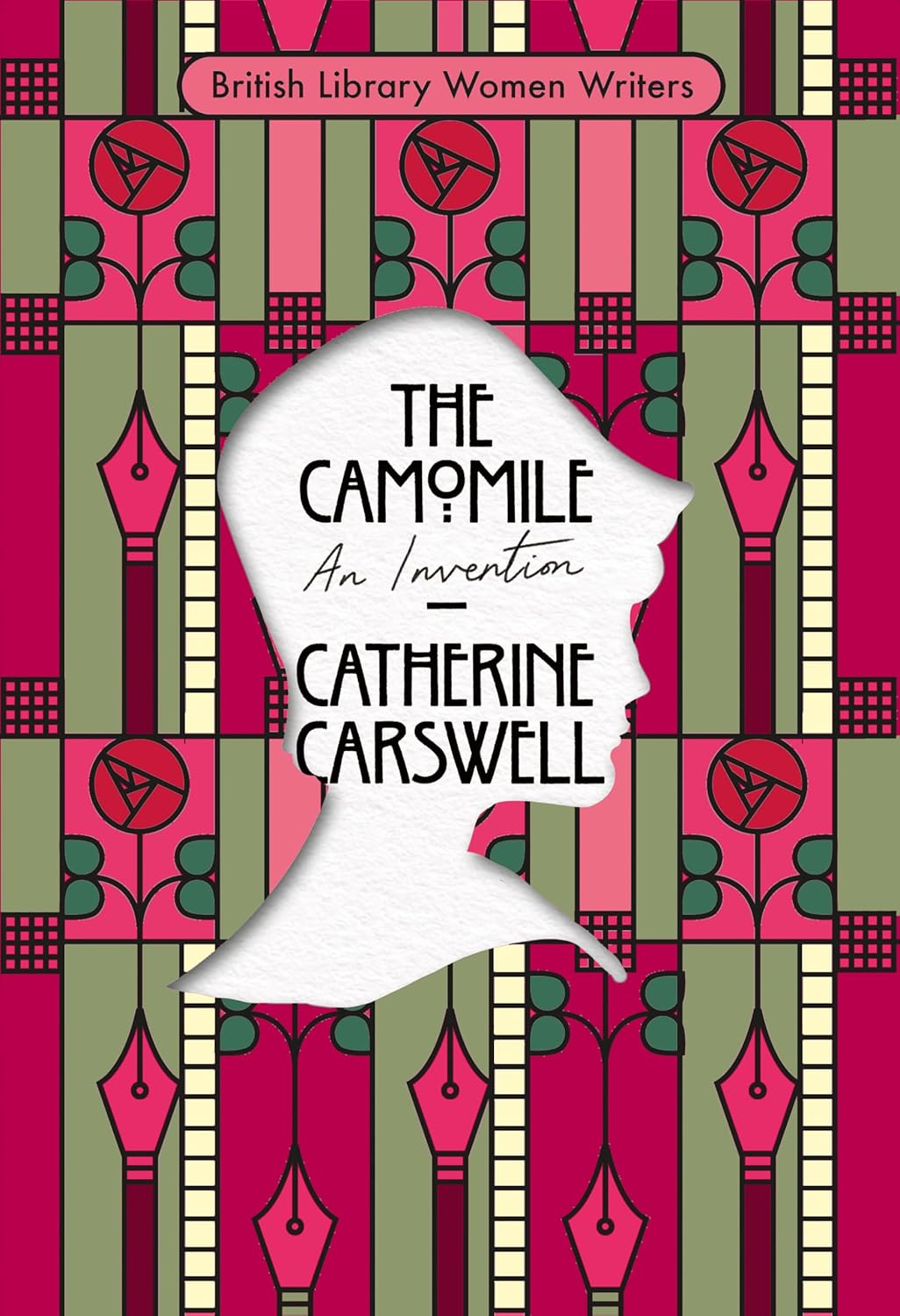
The Camomile by Catherine Carswell

The Camomile by the Scottish author Catherine Carswell was first published in 1922 but it has just been reprinted by British Library in their Women Writers series.

The blurb on the back of this book says: Set in early twentieth-century Glasgow, this effervescent novel is widely considered a fictional counterpart to Virginia Woolf’s essay ‘A Room of Ones’s Own’. In fact this book predates that essay by quite a few years.

Ellen Carstairs lives with her brother Ronald and her Aunt Harry who is a keen Christian, but Ellen gets no peace at home to do the writing that she wants to do. She is having to give piano lessons to help out financially, but worse than that her aunt is always coming in and out of her room to chat, and to try to persaude her to go to the very many religious meetings that she attends.

Ellen’s solution to the problem is to rent a room just off Byres Road in Glasgow’s west end, supposedly as a place to teach her pupils but really as a refuge from her aunt, and to get on with her writing, she has great ambition.

The book begins with a letter to her friend Ruby, they had spent time together studying music in Germany, after that it moves on to journal in style. Ellen moves from a not long out of school girl, writing of the crushes she had had on teachers to a young woman contemplating her future and weighing up her options. After a bit of a whirlwind romance and engagement some red flags have been spotted by her and it seems that she’ll have to think again.

This was a bit of a slow start for me but I ended up really loving it, there is some Glaswegian in it but really not much at all and it’s very easily understood I think. There’s quite a bit of humour as Ellen is a close observer of those around her, and the middle class society of Glasgow was quite a rich seam.

The Camomile has an interesting Afterword by Simon Thomas of  the blog Stuck in a Book.

I was sent a copy of this book by British Library, for review. I appreciated their Mackintosh – ish book cover design.


Dunino Den, Fife

I had heard about Dunino Den in Fife years ago but it was only when I saw some photos online of the place that I decided it was time to go and check it out myself. I must say I found it a bit of a strange place.

Dunino Church , Fife

The ‘den’ is situated at the back of Dunino church (above), there’s a path down through the grass and woodland which leads to a sunken area, a small burn (stream)  flows through it but you are surrounded by quite high rock faces, some of which have been carved over the years.

We had the place to ourselves but it is obviously popular with people, probably quite an eclectic bunch as there are some Christian symbols if you look hard, a faint Celtic cross to the left of the large LC below.

Dunino Den, Fife, Cross carving

But it’s thought that this place was used as a place of worship and possibly sacrifice by the Druids.

Dunino Den, Fife

But there are also ‘offerings’ to whatever, in the shape of stones, flowers and candles. I was particularly unnerved by the pottery figure of a headless woman in the photo above. Was she just accidentally broken or was it a deliberate offering of some sort?  I found the place to be a bit spooky, but it has obviously been used for centuries, possibly as a place of worship during the Scottish Reformation, but the land above the rockface which has ancient stairs cut into it also has a rock with a footprint cut into the stone, usually a sign that a king/chieftain has been there, and beside it there’s a sort of natural stone basin which was full of water.

You can see the bottom of the stone steps in the middle background of the photo below.

Dunino Den , Fife

The burn was very low, slow and sludgy considering how much rain we had had.

Dunino Den , Fife

Dunino Den , Fife

Dunino Den, Fife

Below is the sort of natural stone pond.

Dunino Den, pool, Fife

And the rock below by the pool has some faint cup and ring marks (maybe) and what looks like part of a footprint. This actually a very dangerous place to stand by as it is situated above the other photos and is close to the edge of the rockface, it would be very easy to step over the edge, especially as it is overgrown with ferns at the edge.

Dunino Den, ring marks, Fife

Right by the stone above is the well worn stone steps down to where the other photos were taken, we didn’t go down the steps though, they looked too dangerous, there is a path through the woodland which is much safer.

Dunino Den Steps, Fife

I don’t remember seeing it but it seems there’s a face carved into one of the rock walls. The photo below is from the website in the link above.

So that’s Dunino Den, a bit of a strange place which goes way back in time, no doubt some believe there are fairies living there, or some other sorts of spirits, I’m sure there are plenty of theories about it. I’m glad we visited it at last, but I don’t know if I want to go back. It’s not far from St Andrews, if you are interested in visiting it.

 

Sir John Lavery exhibition

A few weeks ago we travelled in to Edinburgh to visit the Sir John Lavery exhibition at the Royal Scottish Academy. His painting below is of Edinburgh’s Princes Street with the Scott monument and castle rock domineering – as they do. The exhibition is strangely titled An Irish Impressionist, because Lavery has always been regarded as being Scottish as although he was born in Ireland he was orphaned very young, aged five I think,  and moved to Scotland to be brought up by an uncle. Sadly the exhibition isn’t free, unless you are a ‘Friend’. It costs between £5 and £19 apparently, but we are Friends of the Galleries.

Princes Street, Edinburgh, Sir John Lavery

Below is his “View from the Canal” which was actually the River Kelvin. This was at the International Exhibition at Glasgow’s Kelvingrove in 1888.

A View from the Canal Kelvingrove

Evening Tangier – below.

An Evening in Tangier, Sir John Lavery

The painting below is called The Intruders but whether it refers to the geese or the children is anybody’s guess.

The Intruders, Sir John Lavery


Woman on Horse, Sir John Lavery

Coast defence below has a lot of reflections in it. It dates from his time as a war artist.

Coast Defence, Sir John Lavery

Below is Hendon 1917.

Hendon 1917, Sir John Lavery

I realy like the one below which is of the main building at the 1888 International Exhibition. Electricity was used for public illumination in Scotland for the first time there.

The Glasgow International Exhibition

As my great friend Joan remarked – his style is reminiscent of John Singer Sargent.


Alison’s Highland Holiday by Sheila Stuart

Alison’s Highland Holiday by Sheila Stuart was published in 1946. This one was a real blast from the past for me although I didn’t remember anything about the story, I know that I read this ‘Alison’ series when I was about ten years old and I absolutely loved the books. In fact I told my mother that when I grew up I was going to live in a wee white cottage in the Highlands. That never came to pass.

In Alison’s Highland Holiday, brother and sister Niall and Alison Campbell are aged 15 and 13, the youngest of four children who have been orphaned in recent years. They’ve just travelled north from Edinburgh by train to Sutherland, to stay with their Uncle  George over the school summer holidays. It’s an idyllic place for them as there’s a great salmon river nearby and the two of them adore fishing.

Sadly the new laird who owns the river has told their uncle that he has guests staying with him and he wants them to have the river to themselves while they are there. Niall and Alison are so disappointed, they know that they daren’t poach because their uncle would be furious with them. They’ll have to spend their time hill walking and doing a bit of fishing for tiddlers in a small burn.

While out walking by the river they meet a strange girl, Neill is impressed by her as she’s able to swim in the river.  It turns out that she’s also spending the school holidays in the area. Her name is Shona and she’s a bit of a wild one, she seems to think that rules are made to be broken.

I enjoyed the setting but as the youngsters had fishing competitions I did wonder about the amount of young fish that they were catching, there was going to be a serious lack of fish in the future in that river! It’s changed times in Scottish rivers now as you have to put anything you catch back in.

I had quite a few of the books in this series when I was a youngster but my mother gave them away when she decided I had grown out of them. Annoyingly they are now quite difficult to obtain and so are quite expensive when they do turn up.