My Friends the Macleans by Jane Duncan

My Friends the MacLeans by Jane Duncan was first published in 1967 and it’s part of a long series of the author’s ‘My Friends’ books. The books are all very autobiographical I believe.

The setting is the Caribbean island of St Jago where Janet Alexander and her husband Alexander Alexander or ‘Twice’  ás he is known have gone for a visit, but they end up staying there for a number of years when Twice is offered a good job there.

Their lives are more or less taken over by the social round on the island and as it’s all still very colonial in atmosphere Janet realises that there are sinister undercurrents. She’s longing to go home to Scotland.

I have to say that I really didn’t enjoy this one as much as the others I’ve read in this series, it didn’t have much in the way of humour. The author and her husband did live on a Caribbean island for some years, but it seems that she wasn’t very happy there.


Dimsie Goes Back by Dorita Fairlie Bruce

Dimsie Goes Back by Dorita Fairlie Bruce was published in 1927, my Oxford University Press copy seems to be a first edition.

In this one Dimsie has been asked to come back to the Jane Willard Foundation for one term to help out the headmistress Miss Yorke, who is looking a bit ‘seedy’ as far as the girls are concerned.  Dimsie will be working as school secretary.

Dimsie is now engaged to be married, the older girls who know her are glad that she’ll be coming back, she had been Head Girl in the past and with a lot of common sense she could be just what is needed as things haven’t been going very well in the school recently.

The behaviour of senior girls has deteriorated badly, with the prefects and even the Head Girl happy to ignore the rules. Even worse than that is the influence of Coral Danesbury who comes from a very wealthy family and thinks that she should get special treatment from the staff, even offering to get her mother to pay the headmistress extra if she can have a room to herself for a study. Already her shared study is stuffed full with silk cushions and ornaments – all against the rules. But a majority of the girls look up to her and want to emulate her style. Face powder and anti-freckle lotion have become popular despite being against the rules.

Dimsie helps some of the girls set up a revived Anti-Soppist League.

This was a good read, there’s quite a lot of humour with a new girl Lintie Gordon being allowed to bring her puppy with her. Lintie is only nine years old and it’s thought she won’t be so homesick with her dog Jeems being at the school. He’s an absolute scamp and is always in trouble, but never for long as he’s just too sweet to be angry with. Through Dorita Fairlie-Bruce we’re told what is going through his mind, which is always amusing, she was obviously a dog lover as they often feature in her stories.


Queen Macbeth by Val McDermid

Queen Macbeth by Val McDermid was published in 2024 and I borrowed a copy of it from the library. In this book McDermid puts forward her version of Shakespeare’s Macbeth, but written from Gruoch’s (Lady Macbeth’s) perspective.

Shakespeare fed us the myth of the Macbeths as murderous conspirators. But now Val McDermid drags the truth out of the shadows, exposing the patriarchal prejudices of history.

Gruoch is married to Gille Coemgain a chief in what is now the Inverness area of Scotland, he’s the Earl of Moray and is a bit of a brute. Gruoch is in danger because she hasn’t become pregnant and Gille is getting impatient,  obviously Gille Coemgain wants a son. Her days are numbered, and she knows it.

When the very handsome Macbeth arrives to visit his cousin Gille, Gruoch is instantly attracted to him, but apart from that he could be the answer to her problem. In this version the ‘three witches’ are Gruoch’s companions, a seer, a healer and a weaver.

This is a very slim volume at just 134 pages, very different from Val McDermid’s usual style and subject, but still a good read, I really enjoyed it.

This book is part of a series called Darkland Tales published by Polygon. Others in the series are:

Rizzio by Denise Mina

Hex by Jenni Fagan

Nothing Left to Fear from Hell by Alan Warner

Columba’s Bones by David Greig


Castle Richmond by Anthony Trollope

Castle Richmond Book Cover

Castle Richmond by Anthony Trollope was published in 1860, the setting is mainly County Cork, Ireland, at the time of the potato famine of 1846 – 47.

Castle Richmond is owned by Sir Thomas Fitzgerald, he’s wealthy with adult children, a son Herbert and two daughters. His wife, Lady Fitzgerald, had been married previously, but her husband had died in France apparently and Sir Thomas had set his lawyers to find evidence of his death before marrying. The eldest son is expected to inherit the estate and all that goes with it, and as was usual with  wealthy Irish landowners Herbert  hadn’t been trained in any profession for that reason. He has fallen in love with a local lass, Lady Clara, the young daughter of an impoverished but ‘aristocratic’ widow and they plan to marry. Unfortunately Lady Clara had been very briefly attached to Herbert’s cousin Owen Fitzgerald not long before. Her mother had put a stop to that as Owen didn’t have enough money for her liking, but more importantly she rather fancies the young man for herself despite him being years younger than her, young enough to be her son really. It’s a tricky situation especially as Owen is determined not to give up Clara.

When Sir Thomas begins to be visited by some English ne’er do wells – a father and son – Sir Thomas’s health takes a turn for the worse, something is obviously worrying him but he is keeping it to himself.  Eventually he has to admit the reason for the visitors arriving, the worst has happened and it seems that Lady Fitzgerald’s first husband is still alive, which means that the children are all illegitimate and of course Herbert will not inherit anything at all, they will be penniless and homeless on the death of Sir Thomas – and cousin Owen will inherit the estate.

I did enjoy this book although some parts of the plot are predictable – see above, apparently it wasn’t one of Trollope’s  more popular books. Parts of it are about the potato famine, I imagine that may not have been popular with readers but it is I’m sure a very authentic portrayal of those times, and it’s desperately sad.  There’s also quite a bit of Protestant/Catholic antagonism with Trollope being more sympathetic to the Catholics, which won’t have gone down well with many readers.

There are some light moments though, when Herbert’s aunt is trying to persuade him to become a church minister, with an eye to him being a bishop:

Aunt Letty was strong for the Church. A young man who had distinguished himself at the University so signally as her nephew had done, taking his degree at the very first attempt, and that in so high a class of honour as the fourth, would not fail to succeed in the Church.

Who knew that there was such a thing as a fourth class degree?!

This is the first Trollope with an Irish setting that I’ve read. Related titles with a similar setting are

An Eye for an Eye

The Kellys and the O’Kellys

The Landleaguers

The Macdermots Of Ballycloran

I might get around to those ones – sometime.

It seems that I read An Eye for an Eye back in 2015 and I blogged about it then. That’s the advantage of blogging as I just had a vague memory that I might have read it, well it was about ten years ago.


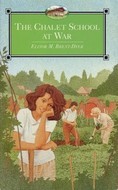
The Chalet School at War by Elinor M. Brent-Dyer

The Chalet School at War by Elinor M. Brent-Dyer was first published in 1941 as The Chalet School Goes To It.

The Chalet School at War Book Cover

This one begins with The Chalet School on the move again. They had fled the Austrian Tyrol after getting into ttrouble with the local  Nazis. Guernsey in the Channel Islands seemed like a good place to set up their new school!! Of course that wasn’t for long and with the Germans looking like breathing down their necks again they move on to mainland Britain.

Plas Howell on the Welsh/English border has been offered to them for use as a school. It’s a large and very grand house, beautifully decorated, much too good to be used as a school but otherwise ideal. After a dangerous journey across the English Channel the girls reach Plas Howell.

Gwensi Howell isn’t happy at all, she’s 13 years old and has lived at Plas Howell for the last nine years along with her older step-brother and his godfather. But Ernest her brother has had to join his ship and his godfather has gone. Gwensi had been educated by a governess, but she is to be part of the Chalet School now, she’s not used to other girls at all and doesn’t want to share her home with a lot of strangers.

Surprisingly Gwensi settles in fairly quickly, and she turns out to be a bit of a fan of boarding school books, and a few of them are name checked in the book, presumably Brent-Dyer was kindly mentioning some of her author friends.

With wartime food shortages looming the girls become keen gardeners and learn a lot, but as often happens in schools it’s the fourth year girls who cause a lot of trouble and angst.

I was particularly pleased that Jo appears in this book – along with her baby triplets. I’m not sure how far I’ll go with this series. It’s interesting that the books were written at the actual time of the war, but I might not go any further than the 1960s with the books. They are still being written by writers/fans who are continuing with the series.


Escape in Darkness by Kathleen Fidler

Escape in Darkness by Kathleen Fidler was first published in 1961 and was aimed at readers aged 10+. Although Fidler was born in England she moved to Edinburgh when she married and seems to have thrown herself into Scottish society. She was known for her meticulous historical research.

In 1600 King James VI (or James I if you are English) had been attacked by some members of the Ruthven family, meaning to murder him and seize his crown, but they had failed. Unsurprisingly since then James had vowed to ‘stamp out the name of Ruthven forever.’

Thirteen years later in Holland, young James Ruthven’s father has been killed in a duel, before he died he said that his heart must be buried at Culross Abbey in Fife, so his sister Barbara eventually travels to Scotland to carry out that task, along with her nephew James Ruthven’s son. If the king discovers that they are there, they’ll be done for.

This is an entertaining adventure tale which also gives a lot of information about the social history of the times as well as the commercial history of Fife which involved coal mining in very dangerous situations, such as under the River Forth, accessed via a moat in the middle of the river, an innovation. It was a miserable life for ordinary people with the miners being worse off than slaves really.

As it’s Fife accusations of witchcraft were inevitable,  the Fifers of the day were very keen on accusing people of witchcraft – especially incomers – or anyone they didn’t like. This was another very local book for me, very much enhanced by my experiences of visiting Culross. I’ve written a few posts about Culross over the years,  between 2012 and 2020 which you can see here if you’re interested.


SHAKESPEARE The World as Stage by Bill Bryson

SHAKESPEARE The World as Stage by Bill Bryson was published by Harper Press in 2007, it’s part of their EMINENT LIVES series. It’s very different from the other books that I’ve read by Bryson, where he seems to aim for a laugh a page. This is quite a serious book, but of course the downside is that so little is known about Shakespeare, but he manages to do away with some of the ‘facts’ that others have promoted over the centuries. So despite Bryson being able to delve into historical papers  – something that I’m always envious of, there are no real revelations, if anything his famous last will seems even more mysterious than before.
I did learn a lot about the history of the various theatres in London though, and some of the people involved with them. Thankfully Bryson is not one of those strange people who determinedly believe that just about any ‘upper class’ male in Shakespeare’s lifetime wrote the plays, and he swiftly deals with the crazy theories. There are some people who seem to think that anyone who wasn’t an aristocrat would have been barely able to read, never mind be well educated. No doubt they are the same people who believe that a school cannot be a good one – unless you pay richly for being allowed to be part of it. Obviously a nonsense.

This is a quick read at just 200  pages, which includes the bibliography. I enjoyed it.


My 2024 reading statistics

I write down the books that I’ve read as I finish them – in an old school jotter. With notes in the margins as to what sort of book they are, so I’ve totted up my stats and here they are.

I’ve read 122 books in 2024, I’ve reviewed most of them.

I’ve only read 11 non fiction books – I must do better, although I have also dipped in and out of quite a lot – as you do.

I’ve only read 10 vintage crime books. I thought it would have been more than that.

I seem to have only read 2 contemporary crime novels – how did that happen?

I read 36 books by Scottish authors.

I read 39 contemporary novels.

I read 20 children’s (YA) books

I read 19 historical fiction books, I thought it would have been more.

Only 13 classics, although I am notoriously strict (or picky) about what I deem to be a classic.

Only three books in translation.

It has been quite a good reading year for me. I’ve found more than a few new to me authors that I plan to read more of – or have already done so, particularly C.J. Sansom.

In 2025 I intend to take a very relaxed attitude to my reading so I almost certainly won’t commit myself to joining in with any challenges. I’m going to ‘dree my ain weird’ as we say in Scotland, in other words I’ll do my own thing and go my own way, depending on how I feel, with no pressure whatsoever. I’ll be visiting the library a lot, so many have been closed down completely in Fife over the past ten or so years and I hate to think that they might be going to have another cull of them, but with the state of local council finances it’s a distinct possibility in the future I think. I want to keep their borrowing statistics healthy.

I hope to do more gardening, craft and cookery posts in 2025 – well that’s the plan anyway, but 2024 was a very poor year for gardening. The only decent weather that we had in Scotland during the summer happened to be the almost three weeks when we were in the Netherlands. It was so annoying watching the BBC news while there (they’ve always been able to see the BBC as the signal is so strong) and seeing that the weather was so good back home, especially as we didn’t have very good weather where we were on holiday. To make matters worse as soon as we got back to Scotland the rain started and didn’t stop, if it wasn’t too wet to garden, it was too windy. Such is life.

So that was 2024 – blogwise anyway.


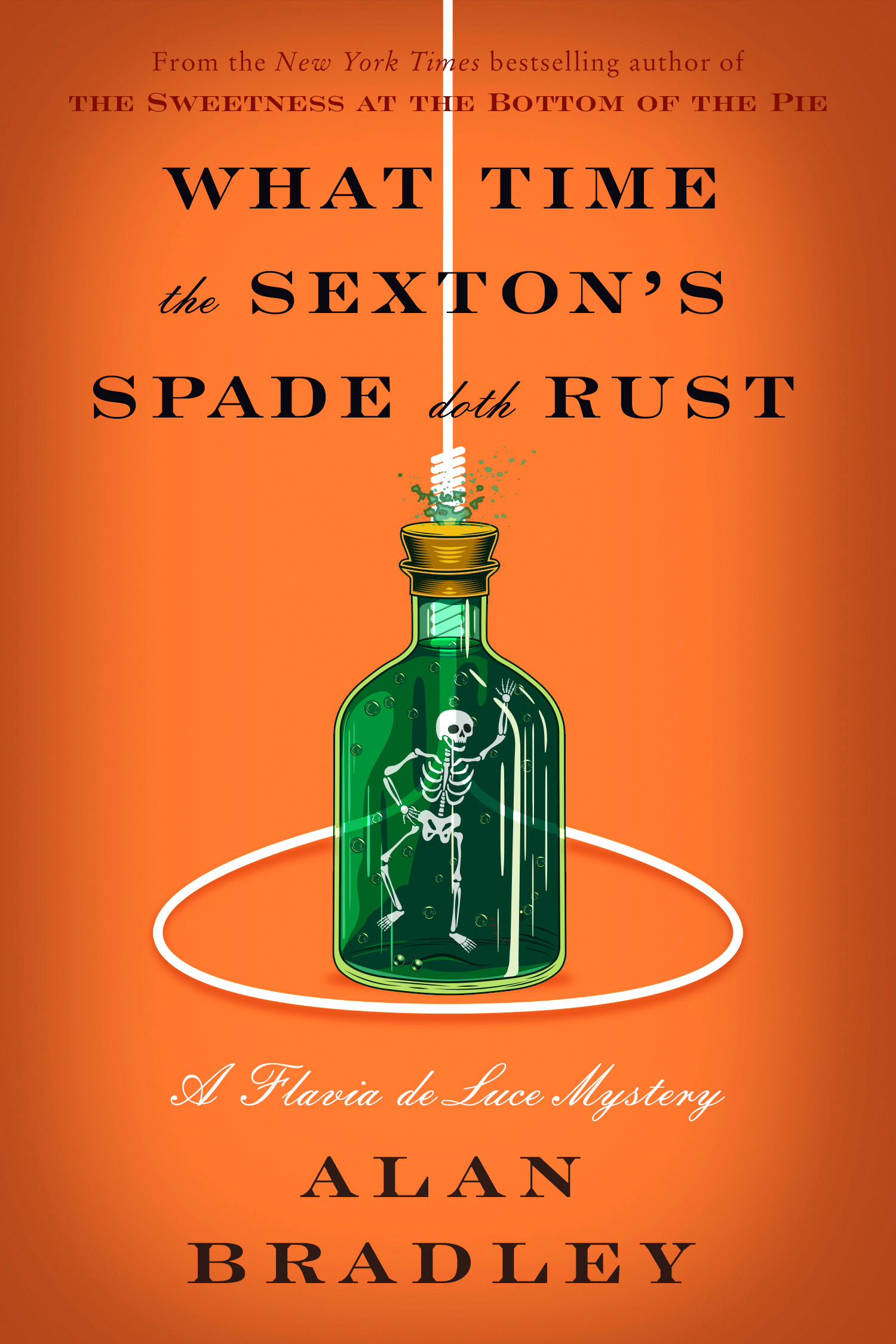
What Time the Sexton’s Spade Doth Rust by Alan Bradley

What Time the Sexton’s Spade Doth Rust by Alan Bradley was published by Orion in 2024 which means that there was a five year gap between this one and the previous book in the Flavia de Luce series – The Golden Tresses of the Dead. I had thought that the author might have run out of steam – or indeed life, so I was glad to hear that this one had been published.

Flavia has been left the family home Buckhouse after her father’s unexpected death. Her two older sisters weren’t at all happy about that, but it means that things go on much as before for Flavia and for the staff who help to run the house – Dogger and Mrs Mullett the cook  – in truth Flavia is closer to those two than she is to her sisters who are almost completely absent from this book.  A younger cousin called Undine has joined the household, she’s a bit of a handful, even for Flavia, she’s a law unto herself so she supplies some entertainment, but I feel that she doesn’t make up for the lack of snarky banter between Flavia and her older sisters.

When Major Greyleigh, one of the villagers is found dead in his kitchen it’s Mrs Mullett who is suspected of poisoning him. She gave him mushrooms that she had foraged from the woods and she wonders if some of them had been poisoned. It turns out that the Major and Mrs Mullett had had a romantic relationship years before in their youth, but Flavia can’t believe that she could be a murderer.

This tale takes a very unexpected turn towards the end, for me anyway. I enjoyed it although there were some aspects that annoyed me. The setting is 1950s England and everything feels authentic, the suddenly the reader is confronted with American spellings such as tire, color, I didn’t take note of the others. I was particularly annoyed by the word ‘purse’ being used to mean a handbag more than once.

“She rumaged in a sideboard and pulled out her purse. It was a flat Monda-go-to market  straw receptacle, good for carrying everything from a check to a chicken. She reached into the depths and dredged up a small sketchbook.”

So definitely not a small purse with just enough space for some coins and paper money then.

It just throws the reader (well me anyway) out of the setting. I was also annoyed by the use of the word foyer when it should have been hall or hallway as it was in a private home. In the UK the word foyer is reserved for theatres, cinemas, large hotels, conference centres and the like. Nit-picking maybe, but I think things like that should be picked up by an editor.


A Darker Domain by Val McDermid

A Darker Domain by Val McDermid was first published in 2008, the setting is mainly Fife in the east of Scotland, and the time switches between 1985 and 2007. This is the second in the author’s Karen Pirie series.

DI Karen Pirie is in charge of cold cases. An adult daughter is desperate to discover the whereabouts of her estranged father who hasn’t been seen since the miner’s strike in 1985. It’s thought that he had been a ‘scab’ who had gone down to Nottingham to get work there. That turned his abandoned wife and young daughter into pariahs as far as the mining community was concerned.  It’s now 2007 and the action swings between 1985 and 2007 although it isn’t at all confusing.

Karen Pirie finds herself investigating two cold cases as in 1985 there had been a kidnapping in Fife. The daughter of a very wealthy and well-known businessman had been abducted along with her small son and in the chaos of a handover she had been shot dead, and her young son had never been handed over to his wealthy grandfather with the kidnappers disappearing with him. When an investigative journalist discovers a possible clue in an abandoned building in Tuscany – of all places – Karen has to open that case again too.

I enjoyed this one, I must say that a lot of people have in the past complained that Val McDermid’s books are too grim and violent, but this one isn’t like that. There’s violence but nothing really graphic.

This is the most local to me book that I’ve ever read, one of the detectives even bought a house that must have been about five minutes away from where I lived for 26 years, going from the description. It definitely adds to the experience when you can visualise all the wee villages mentioned in Fife.

The miners strike took me right back to 1985. Jack had trouble getting to work as the police were stopping any cars which only had men in them and as teachers had all been encouraged to car share as parking at schools was a problem, they didn’t have enough spaces. So the car they were travelling in was stopped by the police and turned back as they were suspected of being ‘flying pickets’ travelling to coal pits to help out the striking miners. So the police were menacing and threatening cars full of teachers – and getting huge pay packets for their troubles. Grim times all round.