Marwick Head, Orkney, Scotland

We wanted to revisit the cliffs at Marwick Head, especially as it was such a stunningly clear and bright day weather-wise. The cliffs are full of nesting seabirds which you should be able to see if you click on the photo to enlarge.

Marwick Head

The photo below is of Marwick Bay with the island of Hoy in the background. Unfortunately we didn’t go to Hoy because the museum we wanted to visit was closed for refurbishment. Orkney was very busy during both World Wars as a strategic defence guarding access to the North Atlantic and the Home Fleet’s base in adjacent Scapa Flow.

Marwick Bay and Hoy ,Marwick Head

We were there at the right time for the Thrift flowers though. They bloom all around the cliffs.

Marwick Head, Thrift flowers, Orkney, Scotland

Marwick Head cliffs, Orkney

As you can see below there’s a massive tower at the top of the cliffs. It’s a memorial to Lord Kitchener, he drowned in the sea just off Marwick Head when the ship he was on – HMS Hampshire – hit a mine during World War 1, in 1916. You can read about it here. He was one of 737 who died when the ship went down. It does seem like some sort of payback for all the young men that he sent to their death via his ‘Your Country Needs You’ posters.

Marwick Head,Kitchener Memorial

Marwick Head , Orkney, Scotland

Apparently the next landfall from here is North America!

Marwick Head, Orkney, Scotland

I turned around and took the photo below from Marwick Head looking inland, just to let you see what the scenery is like. Orkney is definitely different from mainland Scotland, some people love the gentle looking hillocks, and certainly a lot of incomers have moved there from elsewhere but I don’t think I could ever live there for too long as I really miss trees. It’s a strange barren landscape that has no trees. There are a few dotted around in sheltered spots but they are almost all field maples/sycamores, they are probably the only ones that will survive the fierce winds.

Orkney, from Marwick Head

There are loads of rabbits in this area, with rabbit holes all over the place, which makes it qute dangerous as you certainly don’t want to catch your foot in one and take a header over the cliff! There are notices around telling you not to feed the rabbits as they are a menace, but there were dogs in the vicinity so they didn’t hang about for long when we were there – hence no bunny photos.

fromMarwick Head , Orkney, Scotland

Scapa Flow Visitor Centre, Hoy, Orkney

The small island of Hoy is a fairly short ferry trip from the Orkney mainland. The Scapa Flow Visitor Centre is well worth the trip. The area was very busy during both World Wars as it’s so strategically placed it’s a perfect place to position a large part of the British Navy, meaning the population exploded with the arrival of loads of sailors and soldiers and airmen too.

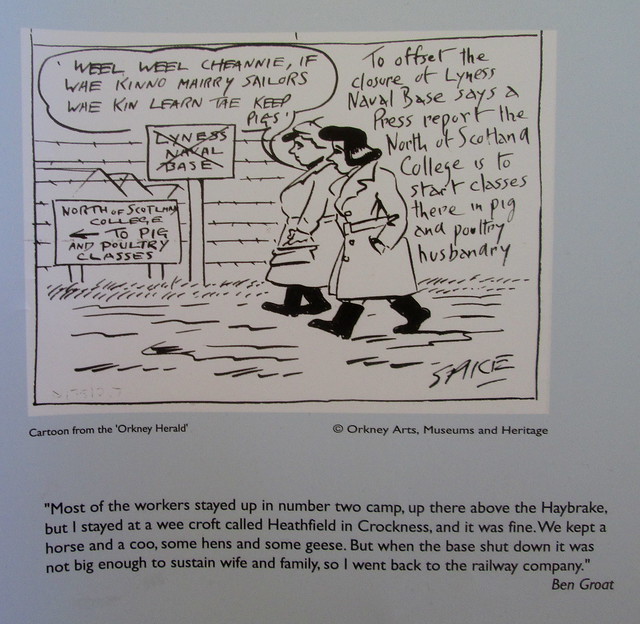
This inevitably led to a change in the opportunities of the local females who up until then didn’t have much to choose from when it came to getting married. When the navy finally weighed anchors and sailed off permanently the local females’ horizons must have closed in on them again. To compensate for this disappointment it seems that they were encouraged to take up pig farming instead of getting married. No difference some might say! I liked the cartoon below which appeared in a local newspaper at the time.

Cartoon

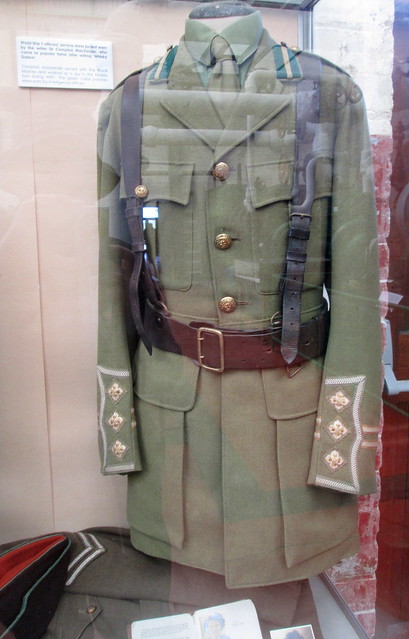
The author Compton Mackenzie (Monarch of the Glen, Whisky Galore) owned a couple of the islands and was stationed here and donated his uniform to the museum.
Comptom Mackenzie's Battle-dress

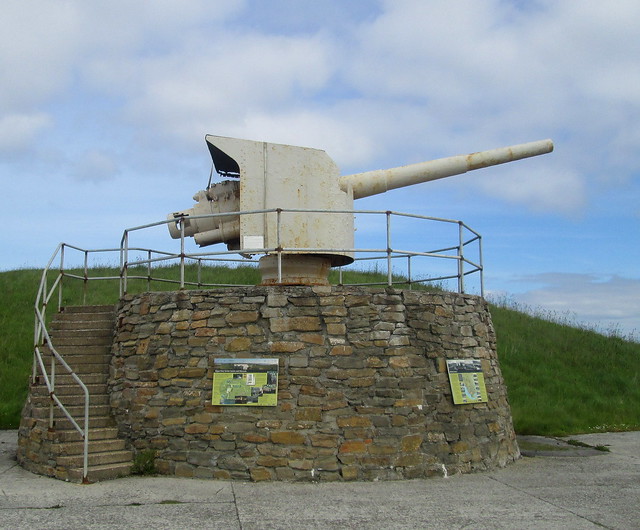
It’s really quite a good museum with exhibits inside and outside, although I’m not too interested in military hardware.

Gun

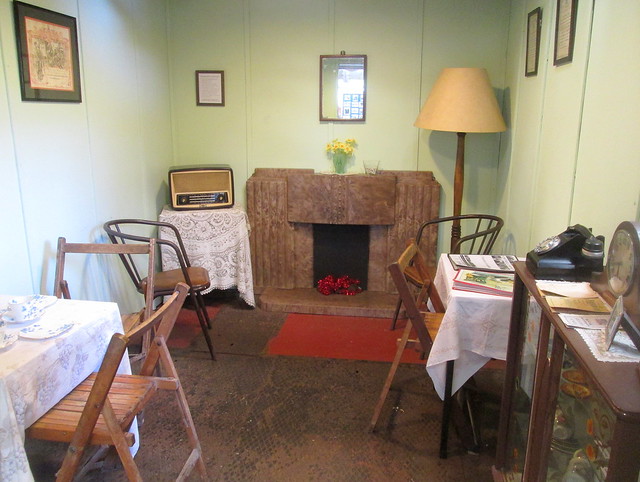
I was happier with the more domestic parts such as this mock up of a typical 1930s interior, although I feel that they could be doing with a nice 1930s three piece suite, if I had known that I would have donated one to them before we moved, as I ended up giving it to a local college to practice their upholstery skills on.

1930s room

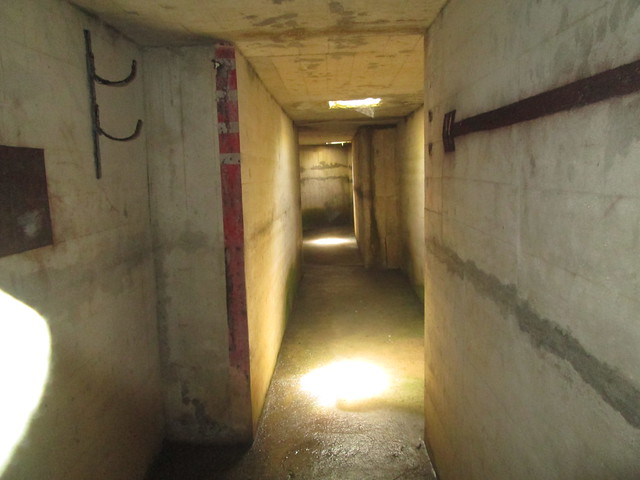
You can have a look at an air raid shelter, there must have been more of them scattered around but possibly they’ve all been filled in again.

Air-raid shelter

There’s also a tearoom, done out to look like it would have in the 1930s, but it was full of people partaking of the cup that cheers – as usual, so I didn’t take any photos of it. They had tasty cakes though.

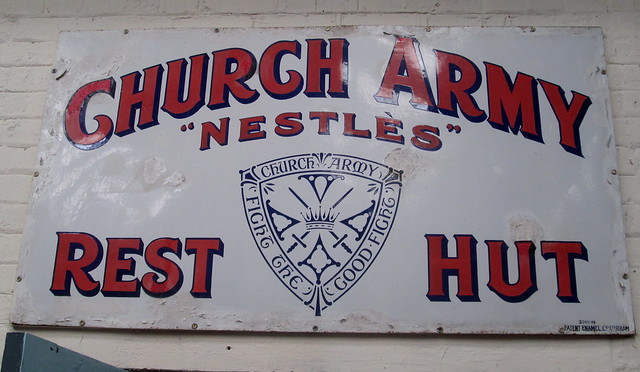
The sign above the door seems to be the original one.
Church Army Sign

Hoy is well worth a visit. I’m only annoyed that we didn’t realise that the ferry is such a small one with not much room for vehicles, so you have to book ahead, we were too late to book so we just went as foot passengers, so could only explore by foot. Next time we’ll take the car and travel across as much of Hoy as we can as there’s obviously a lot more to see than we managed, going from these images.