Smoky-House by Elizabeth Goudge

Smoky-House by Elizabeth Goudge was first published in 1940 but my copy is a 2020 reprint by Girls Gone By Publishers. This book involves smuggling along the Devon coast in the early 19th century and it has elements of a fairy tale/fantasy.

The tale begins in the village of Faraway where the five Treguddick children live with their father in Smoky-House, an old tavern. Father is the landlord. Faraway is apparently the happiest of places, it’s in England’s West Country which is a part of the world so beautiful that the people who live in it are always happy. The Treguddick’s mother is dead, but as they feel so close to heaven even that isn’t so sad as she feels close to them. However, aged 17, Jessamine the eldest girl has taken over the motherly duties.

When a stranger arrives at the tavern he brings with him an oppressive atmosphere and has a strange twist to his lips. The dogs bark at him, but the stranger is a wonderful fiddler and everyone loves his music. But still those dogs aren’t happy!

There’s smuggling involved which is a popular theme I think, but the most enjoyable part of this book is the animal characters who speak to each other and are much more sensible than the humans.

I was slightly perturbed by the ending which I think is in some ways quite a dangerous idea for children to read because the author seemed to be implying that if you are kind to a nasty person then they will give up their evil ways – which is of course rarely if ever true. In that respect this tale is the opposite of a traditional fairy tale as most of them were designed to be a warning to children.

These Girls Gone By Publishers reprint paperbacks are really lovely editions with lots of additional information about the book’s publishing history as well as Elizabeth Goudge’s life.

Hamnet by Maggie O’Farrell

Hamnet by Maggie O’Farrell hops around a bit time wise but not in a confusing way, I really enjoyed it.

The tale begins in 1596 with young Hamnet searching the house, looking for an adult to help him, but the usually bustling household is empty, just when he needs them most. His twin Judith feels so ill that she’s gone to her bed and he’s desperate for their mother’s help as she is a herbalist, and a bit of a white witch as far as some people are concerned.

Then the story flits back fifteen years to the Spring when Shakespeare met his wife at Hewlands, the family farm. They were both leading unhappy lives, William’s father was a violent bully who took most of his rage out on William, and Agnes (known better to us all as Anne Hathaway) was living with her step-mother and a houseful of half siblings. It hadn’t been too awful when her father was alive but life had become miserable since his death. The two were drawn to one another when William’s father ordered him to tutor some of Agnes’s half brothers, to help pay back debts. Agnes and William would become each other’s escape route – or so they thought.

Considering that such a lot of Shakespeare’s life is a complete mystery I think the author made a good job of filling in the gaps in a feasible way, and she neatly tied up the speculation over his will and that second best bed left to his wife. I loved the ending which paints William as a loving father, something that even his wife had doubted.

I noticed that some readers have been upset by the fact that Anne’s name had been changed to Agnes, but it’s a name which is not popular, it was my own mother’s name, she was dutifully named after a grandmother but was always called Nancy by everyone, so it seems very likely to me that Ann was her pet name, perhaps O’Farrell should just have stuck with that rather than reverting to the official name which appears in her father’s will.

Escape from Loch Leven by Mollie Hunter

Mary Stuart

Escape from Loch Leven by Mollie Hunter was first published in 1987 and it’s about one of the many escapes attempted by Mary, Queen of Scots after she was imprisoned by her own Scottish lords who had turned against her for many reasons, including that they believed she had had her first husband Darnley murdered, and then married his murderer Bothwell.

But she was still popular with the ordinary people and always managed to charm some of the people who were tasked with guarding and serving her – mainly the men!

Will Douglas is the young illegitimate son of Sir William Douglas who is a supporter of the rebellion against Mary. Sir William owns Lochleven Castle which seems like the ideal place to imprison the queen as it’s in the middle of the loch. Will is a page in the household and he’s thrilled when Mary recognizes him as a youngster she had encountered a few years earlier and calls him by a pet name she had given him. In no time Will is determined to help his Queen escape to link up with her supporters. It’s easier said than done.

The book seems to be very faithful to what is known about this particular escape attempt which you can read about here. Lochleven Castle is now owned by the Scottish National Trust and isn’t far from where I live. If you’re interested you can see the photos I took when I visited a few years ago here. The island is actually smaller than it was back when Mary was a prisoner as the water level of the loch has been raised over the years, but even so it was still a very small island with very little opportunity for anyone to stretch their legs.

This was an enjoyable read and if you’re interested in Scottish history it’s a painless way of learning a bit about Mary Stuart and the book has some helpful family trees at the front for anyone who is confused.

Tortoise by Candlelight by Nina Bawden – 20 Books of Summer

 Tortoise by Candlelight cover

Tortoise by Candlelight by Nina Bawden was first published in 1963 but my copy is a Virago reprint from 1989.

It’s the 1960s, Emmie Bean is 14 years old and she’s really in charge of her family which consists of her father, grandmother, older sister Alice and eight year old Oliver. Alice is determined to become a nurse and has to study, – when she’s not with her boyfriend, she seems happy to leave all the responibility to Emmie. Oliver has problems, he is happy to lie and steal and is very manipulative. Emmie is terrified that he’ll be caught stealing something, it’s just another of her many worries. The mother had been a well-known naturalist but she’s not around, in fact the children seem to think she is dead. As the father has a drink problem, he’s a journalist and claims he needs to go to pubs to get contacts, it’s Emmie who has to worry about providing school uniforms, life is tough and money very scarce. Then to make matters worse the grandmother’s age begins to tell on her. Emmie’s mother had encouraged her to start writing a diary/notebook and Emmie wonders if getting it published could be a way out of money problems.

Emmie has had to grow up fast but when new people arrive at a nearby house things change. Marjorie and Nick are a young married couple with no worries, Marjorie’s father is very wealthy and they’re financially secure, but are living a rather empty life with nothing to strive for. They become involved with the Bean family and Emmie is quite smitten by Nick. There’s a sadness to Nick and Marjorie and the Bean family seem to fill a void for a time.

This was an enjoyable read, but a difficult one to write about. I’ve read a few books by Nina Bawden, Carrie’s War is probably her best known book and I think I liked that one more than this one, but that may just have been because of my liking for a WW2 setting.

This book is one of my 20 Books of Summer.

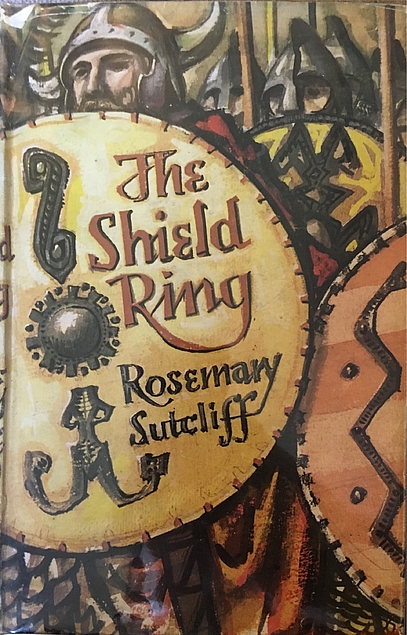
The Shield Ring by Rosemary Sutcliff

 The Shield Ring cover

The Shield Ring by Rosemary Sutcliff was first published in 1956 and I hadn’t even heard of it until I saw it fairly recently in a secondhand bookshop in St Andrews, but it turned out to be great read – as Sutcliff’s books generally are.

The setting is the English Lake District, a place that I’ve enjoyed visiting quite a few times, but the next time I visit I’ll be looking at the landscape in an entirely different way, imagining all the things that were going on there as those of Viking descent who had settled there fought the Normans over a thirty year period or more. The Normans who had fairly easily overcome the inhabitants of the southern half of England in the softer landscape found it to be a much more difficult task in the northern wilds of the Lake District which seemed to be sheltered by a ring of mountainous terrain.

I must admit that I had no idea the famous Domesday Book that we hear about so often stopped short of the Cumberland Fells so there is no mention of Lake Land at all. I can imagine that it must have been one of those areas that on old maps would have been marked – HERE BE DRAGONS.

The book begins with the not quite five year old Frytha witnessing the burning of her village by Norman William’s men. Frytha had been out and about in the woods with Grim her father’s shepherd/man of all work, when they realised that the woodland around them felt different. The birds and animals had fallen silent because the Normans had arrived and were busy slashing and burning. Grin knew there would be no survivors so he took Frytha further north into the Lake Land where she was quickly adopted by a local family. It’s the last stronghold of the Vikings who are constantly honing their battle skills to ward off the Normans who have built a stronghold at Carlisle.

Frytha quickly finds a friend in Bjorn who is just a few years older than she is, it turns into a great relationship with the two of them facing danger together in later years as they team up to do their bit to help out their community agains the Normans.

Rosemary Sutcliff was such a lovely writer of well researched books, and I certainly always learn new things of interest in them.

The New House Captain by Dorita Fairlie Bruce

The New House Captain by Dorita Fairlie Bruce was first published in 1928 but my copy is a reprint from the 1950s – going by the illustrations, there’s no date in the front.

This is the first book in this Dorita Fairlie Bruce series which features Springdale School. The school is located in the west of Scotland, Ayrshire I believe but sadly there wasn’t much in the way of Scottish atmosphere in the book, apart from one character who was a Glaswegian and supposedly had a rough accent, but there was no dialect written in any sort of Glaswegian.

However the story itself was quite entertaining with the headmistress’s unexpected choice of Peggy Willoughby to be the captain of The Rowans house. Peggy’s best friend Diana had been sure that she would be the captain and she’s more than a bit miffed to miss out on what she regarded as her right – to her best friend. To Peggy’s dismay Diana more or less drops her as a friend, using the fact that she has to study for a scholarship to sideline Peggy instead of supporting her and siding with the ghastly Sydney whenever she could. Sydney is a girl who has no team spirit and is only interested in herself.

Obviously there’s a lot more to it than this. I had read a book in this series previously and there were lots of descriptions of the Scottish countryside and a plenty of Scots dialect dialogue in it. The New House Captain is the first book in the series so I assume that the author decided in the later books that she should make the Scottish setting more obvious, which I think was a good decision. However my copy of the book was published by Spring Books, not the usual Blackie of the original books so there’s a possibility that this edition has been gutted of its Scottish atmosphere.

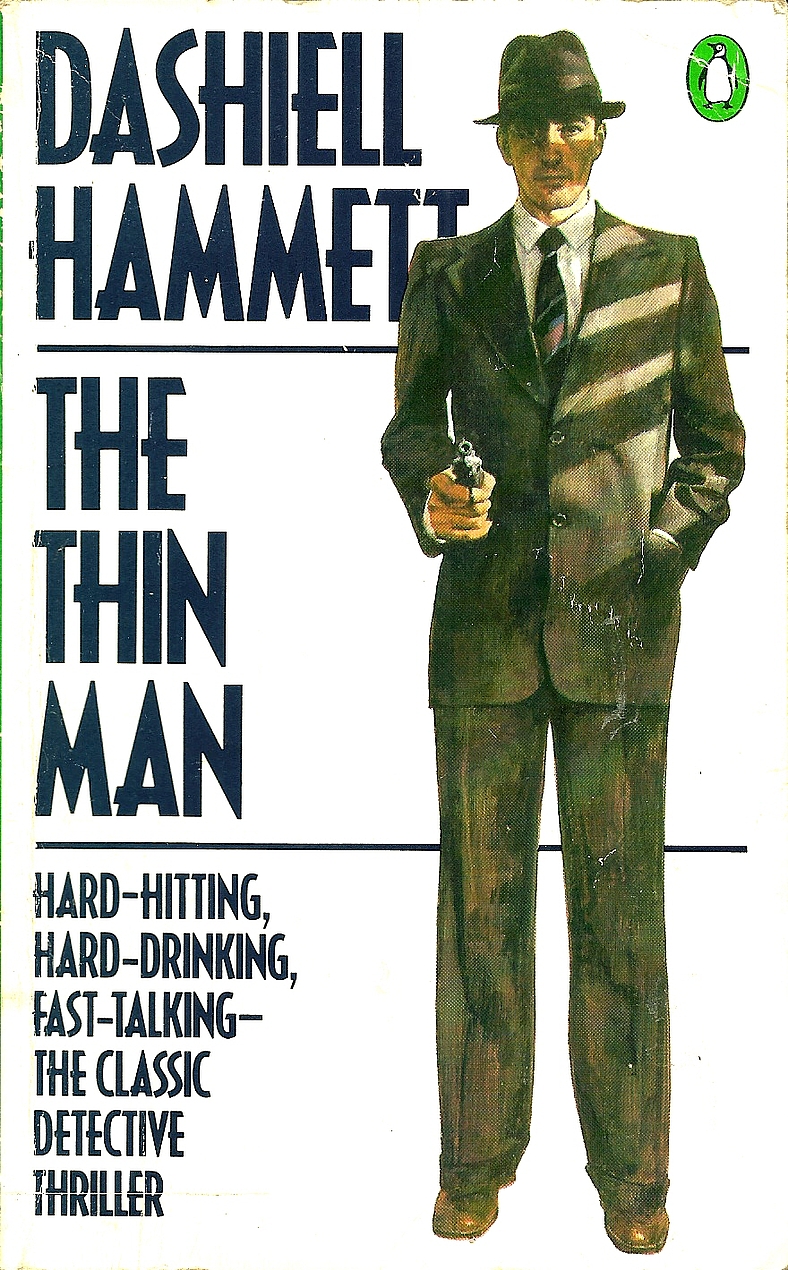
The Thin Man by Dashiell Hammett

The Thin Man cover

The Thin Man by Dashiell Hammett was first published in 1932.

Nick Charles had retired from the sleuthing business to concentrate on managing his finances which seem to have prospered since his marriage to the wealthy Nora, but he gets drawn back into the detection business when Julia Wolf is found shot dead. She had been the ‘confidential secretary’ to Clyde Miller Wynant, an inventor and one time husband of Mimi, who just happened to find Julia’s body. Mimi is well known to Nick, as are her children, Dorothy and Tristan.

There’s a lot of boozing going on in this book, so it all feels authentically like the America of Prohibition era. I enjoyed the relationship between Nick and Nora although it is a bit bizarre, Nora is too easy going in my opinion, but maybe she was Dashiell Hammett’s idea of the ideal wife!

There are several ghastly characters to really enjoy disliking, and there’s plenty of snappy dialogue. So there’s a lot to like about this book. It’s the first one by Dashiell Hammett that I’ve read and I believe he was the first writer to develop this style, but I have to say that I didn’t enjoy it quite as much as Raymond Chandler’s writing, but that may just have been because I found it just a wee bit too convoluted with a lot of characters to keep track of. Maybe our unusually hot spell was affecting my brain!

The Postscript Murders by Elly Griffiths

The Postscript Murders by Elly Griffiths was published in 2020 and it’s the second book in her DS Harbinder Kaur series. Normally I would try to read books in a series in order, but it wasn’t a problem just diving in as I did.

Natalka is a care worker with 90 year old Peggy Smith as one of her ‘clients’. When Natalka discovers Peggy dead in her chair, facing her bay window she feels that something is not quite right. Peggy had spoken of being watched, but that could just have been the beginning of age related paranoia or dementia. Then a business card is found near Peggy, on it she’s described as a ‘murder consultant’. It seems that Peggy had led a secret life as an expert on unusual ways of murdering people. Her skills were in demand by many crime writers who needed her input when they needed ways of their characters being murdered.

Peggy’s son is in an unseemly hurry to pack up her flat and get it on the market, there are a lot of books, but when Natalka and her friend Benedict (coffee shack owner and ex monk) visit the flat they end up being threatened by a masked gunman who left swiftly after grabbing a book.

DS Harbinder Kaur is on the case which begins with Peggy’s death in Shoreham and leads to Aberdeen in north east Scotland. This was a really enjoyable read with unusual and likeable characters and there’s quite a bit of humour in there too. I feel I should read the first book in this series now, The Stranger Diaries.

Rubbernecker by Belinda Bauer

I would probably never have picked up this book if it hadn’t been that favourite book bloggers enjoyed it so much. Rubbernecker by Belinda Bauer was first published in 2013.

Patrick has Asperger’s Syndrome and he only got into university because they have a quota to fill, they need a percentage of ‘disabled’ students and he fits the bill. Patrick isn’t interested in becoming a doctor, he just wants to do anatomy. He had witnessed a bad car crash earlier and is somewhat obsessed with death. His father had died when Patrick was a youngster and no doubt that experience has affected him. His mother is completely stressed out by him.

Patrick stands out as being very different from the other students, he takes everything literally and really just doesn’t understand how people communicate and interact with each other. As part of their studies students are put into groups and given a cadaver to study, stripping it back bit by bit, looking for whatever had caused their death. In time they develop a relationship with the body which for them is anonymous, but they all give their cadavers a name.

Patrick is obsessed with bagging up and labelling everything during the course, and this leads to him having suspicions about the death – things just don’t add up as far as he is concerned.

This was a great read so I’ll definitely be reading more by the author. It has suspense, some humour, horror and quirky characters.

Six in Six – 2021 edition

Jo of The Book Jotter is hosting her Six in Six meme again and I’ve decided to join in. The idea is to look back at what you’ve read over the first six months of the year and to share share six books in six categories. Jo has a lot of suggestions for categories but you’re free to come up with categories of your own if you would rather. Here goes!

Six books by authors that were new to me:

1. The Lotus Eaters by Tatjana Soli
2. The Strays of Paris by Jane Smiley
3. Divided Souls by Toby Clements
4. The Corrections by Jonathan Franzen
5. Another Little Christmas Murder by Lorna Nichol Morgan
6. Bag and Baggage by Judy Allen

Six crime books:

1. The Man from Occupied France by Anthony Parsons
2. The House on the Hill by John Drummond
3. The Deadly Truth by Helen McCloy
4. Anna, Where Are You? by Patricia Wentworth
5. Another Little Christmas Murder by Lorna Nichol Morgan
6. The Black Book by Ian Rankin

Six books by Scottish authors:

1. The Fascinating Hat by Isabel Cameron
2. The House of the Pelican by Elisabeth Kyle
3. The Gates of Eden by Annie S. Swan
4. Bel Lamington by D.E. Stevenson
5. The Black Book by Ian Rankin
6. Personality by Andrew O’Hagan

Six historical fiction books:

1. The Last Protector by Andrew Taylor
2. The Royal Secret by Andrew Taylor
3. The Grove of Eagles by Winston Graham
4. Light Over London by Julia Kelly
5. The Lotus Eaters by Tatjana Soli
6. Cousin Kate by Georgette Heyer

Six books written for children/YA:

1. The Witch of Blackbird Pond by Elizabeth George Speare
2. Pinnochio by Carlo Collodi
3. An Edinburgh Reel by Iona McGregor
4. Hitty – Her First 100 Years by Rachel Field
5. The Spanish Letters by Mollie Hunter
6. White Boots by Noel Streatfeild

Six books that were favourites:

1. The Lotus Eaters by Tatjana Soli
2. The Masterpiece by Emile Zola
3. The Wind Off the Small Isles by Mary Stewart
4. High Wages by Dorothy Whipple
5. The Last Protector by Andrew Taylor
6. The Corrections by Jonathan Franzen

I could have chosen more than six books in all of these categories, it has been a good reading year so far with just a few duffers read. One of the many great things about reading book blogs is that the book recommendations by fellow bloggers mean that it’s rare for me to waste time reading books that I don’t enjoy. The last one ‘Julia’ that I really didn’t like was completely my own fault for choosing it because of the title.

I really enjoyed looking back over the books that I read over the first six months of the year. It has reminded me that I should read more classics, more books in translation – and more non-fiction as I wasn’t able to gather up six books in any of those categories, I only got as far as five!