Rob Roy by Sir Walter Scott

Rob Roy by Sir Walter Scott was first published in 1818, but the setting is around about 1715, just before the first Jacobite Rising but the story begins in the south of England, Frank Osbaldistone narrates the tale.

Frank’s father owns a succesful business which he expects Frank as his only child to take over, but Frank has no intention of being tied down to something that he knows he wouldn’t enjoy. He refuses to follow his father into his business, which disappoints and upsets the father so much that he says that Frank must leave home, he’s cutting him off.  His father had been looking forward to the company and friendship of Frank now that he’s an adult. Frank doesn’t really believe that his father will throw him out of the family home, but he does, he also gives Frank the task of visiting the home of Frank’s uncle and cousins who are strangers to Frank as the senior Osbaldistone brothers had fallen out years ago, due to religious differences. Frank is to ask the eldest cousin Rashleigh to replace him in the family business, Frank almost changes his mind about refusing to work for his father.

Frank travels to their home in the north of England and meets his uncle, six male cousins and their relative the lovely Die Vernon whom Frank falls for. Rashleigh sets off for England and his new position, but eventually Frank hears news that Rashleigh has not been the good and dutiful businessman he has been expected to be, and Frank’s father’s whole business is in danger.

There’s a lot more to the story than this as Frank gets involved with Jacobite Highlanders and Rob Roy MacGregor, whom he had met earlier when he was calling himself Campbell.

I found the beginning of this book really hard going as Scott would never use one word when he could write two hundred, and it makes everything very dense, but towards  the end I felt my way through the fog, (I think) I was glad to reach the end of the 455 pages of quite small print. I think it’ll be a while before I tackle another book by Walter Scott.

When the book was first published it kicked off tourism in Scotland as people wanted to visit the locations mentioned in the book, and that continues to this day. I intend to visit some of the places that I haven’t been to already, but I grew up close to some of the locations. My gran was a MacGregor.

If you’re interested in seeing Abbotsford, Sir Walter Scott’s home, have a look at my previous blogposts about it here.
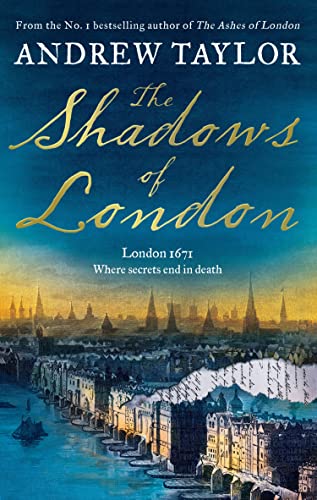
 

The Shadows of London by Andrew Taylor

The Shadows of London by Andrew Taylor was published in 2023. The setting is London, 1671 and it’s a continuation of the Cat and Marwood series.

Architect Cat has a contract to restore an old almshouse, but work has to be stopped on it when a body is discovered.  The face has been mutilated, making it almost impossible to identify the victim. It could be a financial disaster for Cat and others. Marwood is still working at Whitehall and he has the job of investigating the murder.

At court King Charles II has his eyes on yet another mistress, this time she’s a young French woman, Louise de Keroualle, supposedly a virgin.  There’s more to the liaison than just the King’s lust though as it involves European politics, with the French intending to use Louise as a spy in the camp, and presumably to manipulate the King for their own ends.

For some reason the Duke of Buckingham who is the most inflential courtier has taken against Marwood, putting him in danger of his life.

This is the sixth book in the Cat/Marwood series which I have really enjoyed, but for me this one dragged a bit in the middle, I suspect that was because I felt there was too much of Marwood and not enough of Cat.  I’ll still read the next one in the series though, if there is one.

The historical note at the end makes it clear that the Louise and King Charles II episode is historically correct, with many powerful men involved in the seduction of the young woman. The author compares it with the Harvey Weinstein and Jeffrey Epstein shenanigans, but women have always been used by men – just ask Eve.


Aberdour Castle doocot (dovecote) in Fife

We visited Aberdour Castle one afternoon  last month, we hadn’t been there for years and it looked like quite a lot of work had been done in the gardens. Below is a photo of the dovecote – or as we say in Scotland the doocot (dookit). This is obviously a beehive type construction, they are various different designs but I think this is the most elegant kind. I would love to have seen the structure which was on the right hand side of the grass, it looks like it was a wall with pillars, going by the outline, but is long gone now.

Aberdour Castle, Doocot + grounds, Fife

As you can see, inside the doocot is ringed with stone shelves which have nesting niches for the pigeons to nest in – or doves if you want to be posh. They were important sources of meat for the castle inhabitants, especially during the winter months when hunting wasn’t so easy.

Aberdour Castle, Doocot interior

I’ll do another post about the castle soon.


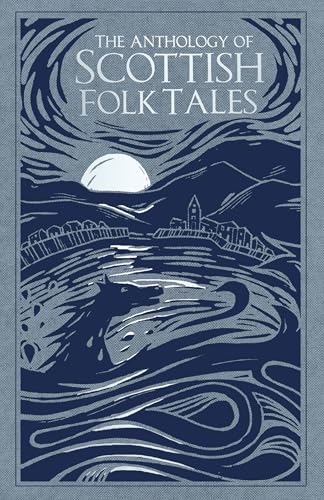
The Anthology of Scottish Folk Tales

The Anthology of Scottish Folk Tales was published by The History Press in 2017. The cover illustration is by Angela Annesley. The book is split up into various areas of Scotland. Orkney, Shetland, the Western Isles, the Highlands, Aberdeenshire, Perthshire, Argyll, Fife, Midlothian, East Lothian, Scottish Borders and Dumfries and Galloway, with local authors and storytellers contributing. I had only heard of one of them, Sheila Kinninmonth, I was in a local history group audience when she told a story, not one in this book. She was quite well-known in her day.

The stories were all new to me, but they weren’t quite what I was expecting somehow. A couple were just local ghost stories. I can see though that if the stories were actually performed as they were meant to be, rather than just read then they might be a lot more entertaining.

I enjoyed most the Highland Origin Myth by Bob Pegg, about how those dastardly wee midges came into being.

I must admit that I gnashed my teeth when I read the story by Claire Druett The Fairy Boy of Leith (Midlothian section) as she writes Carlton Hill, Edinburgh when of course it should be Calton Hill. It’s not the first time I’ve read or heard people wrongly adding in that ‘r’ to Calton but it really should have been corrected by an editor.

I borrowed this book from the library.


Our Castle by the Sea by Lucy Strange

Our Castle by the Sea by Lucy Strange was published in 2019. The setting is the south-east coast of England during World War 2.

On the first day of the war Magda came home from school with a split lip and a swollen eye. She had been in a fight and her younger sister Petra is shocked. The girls live with their parents right on the coast as their father is a lighthouse keeper, but their mother originally came from Germany and some people aren’t happy about that. They live in a cottage adjoining the lighthouse.

Of course the lighthouse lamps are no longer in use, but the glass still has to be polished up, just in case an important convoy has to be guided briefly.  The foghorn is the only way of alerting shipping to the coast now.

They all love living there, it’s ideal as there’s plenty to sketch, even their mother sketches, and that’s what causes a problem. She’s regarded as being an ‘enemy alian’ and under suspicion of being a spy and as Churchill had said “collar the lot” including people who had come to Britain to escape the Nazis. she is taken away, they’re all devastated.  She is accused of sending information to Germany, but the real enemy is much closer to the authorities than they would expect.

I really enjoyed this one which is I suppose aimed at older children (YA) but like all good writing it’s entertaining no matter what age the reader is. The story includes local legends such as standing stones, generational family strife, unresolved problems from the earlier Great War and the blot of home grown Fascism in Britain.

I bought my copy of this book from the internet, something I don’t do all that often, and I was chuffed when I realised that my copy of the book had been signed by the author.


Sheepwash Bridge, Ashford in the Water, Peak District, England

Asford on the Water,Peak District, Sheepwash Bridge


On the way back from our recent-ish trip down as far as the south west of England we visited Derbyshire/the Peak District. I think this is one of the most scenic areas of England. The old stone humpbacked bridge above is called Sheepwash Bridge and has been named as one of the best bridges for  people to play poohsticks from. It’s in the quaint village of Ashford in the Water. This village is mentioned in the Domesday Book and it used to be owned by the Cavendish family of Chatsworth fame, but they had to sell it at some point to pay death duties.

The bridge spans the River Wye, it’s a very pretty area as you can see.

River Wye , Ashford in the Water, Derbyshire

There was a constant stream of people going over the bridge and I took the first photo of it with people on it as I had given up hope of it ever being empty, but then Jack managed to snap the one below with his camera –  before anyone else went on the bridge –  but by then I was in the way!

Sheepwash Bridge, River Wye, Derbyshire

It’s a lovely wee village and river, but I bet the locals get fed up with the tourists!

Murder in a Heatwave – short stories

Murder in a Heatwave is a compilation of ten vintage crime short stories. I was attracted by the bookcover which was on display in a charity shop, so art deco.

The authors are: Dorothy L. Sayers, Rex Stout, Arthur Conan Doyle, Carter Dickson, Baroness Orczy, Michael Innes, Julian Symons, Ethel Lina White, Margery Allingham and surprisngly Ian Rankin.

I had read all of the authors before, except Baroness Orczy and although I’m not a huge fan of short stories I enjoyed most of them. I wasn’t massively taken with the Rex Stout story which is I think the longest, and I have  a bit of a Conan Doyle phobia. I enjoyed The Mystery of the Russian Prince by Baroness Orczy, and I’ll definitely give one of her books a go.  A Good Hanging by Ian Rankin features the Edinburgh Festival and Rebus, it seems strange that he should count as classic crime, but that probably says more about me than anything else.

I think that the back cover is more art deco than the front.

After reading these stories all set in summer heat I’ll soon be going on to my Christmas/Winter themed books that I’ve been hoarding throughout the year. Fingers crossed they get me into the festive mood!

The Royal Crescent, Bath

We did quite a lot of walking when we were in Bath, the Royal Crescent was one place we had to visit. It was quite  a hot day and there were lots of people relaxing on the patch of green which is opposite the Georgian houses. The crescent was designed by John Wood, the younger between 1767 and 1774. The photo below is a stitch of two photos I took on my phone.

Royal Crescent, Bath, a stitch

The stone that most of the buildings in Bath were built with is cream coloured, and apparently isn’t really ideal for house building, but over they years it has kept a lot of stonemasons busy, replacing blocks which were ravaged by the weather and would have become porous. I think it’s a type of sandstone.

Below is a photo of the right hand end of the crescent which Jack took on his camera. I’m sure if it had been on my phone I could have removed all of the people from it. Anyway, as you can see it’s quite a busy area. After  complaints from the residents about noise from traffic and particularly tourist buses with commentary, traffic has been restricted. I bet the residents of Edinburgh would love it if the same thing happened there. Traffic on cobbles makes life very noisy for them.

end of Royal Crescent, Bath, Georgian houses

I had been under the impression that Bath had avoided being bombed during WW2, but apparently it was bombed during what were called The Baedeker Raids – after the famous tourist guide books. Previously I had read that Hitler had wanted to keep Bath intact as he had plans to make it his British headquarters! Anyway, this crescent has featured in quite  a few films and Bridgerton, but Jack was not too impressed. He didn’t like the grassy patch of land opposite which was full of people. I can see that that might not be a great view for the people living in the houses. On the other hand most of the Georgian houses in Edinburgh have a road between them and the private gardens opposite which only the house owners  are able to get into, they’re well locked up, iron fenced and hedged around so you can’t even see in!

Anyway, if you visit Bath the crescent is definitely worth a look, it isn’t a long walk from the centre of the city.

The houses in the photo below are just to the left hand side of the crescent. As you can see, one of them has had a strange sort of balcony added on to it, instead of the more usual small cast iron balconies.  It looks a bit incongruous.

By Royal Crescent, Bath

Bewildering Cares by Winifred Peck

Bewildering Cares by Winifred Peck was first published in 1940, but  Dean Street Press reprinted it in 2016.

The setting is Stampfield which is a market town in the English Midlands and it’s a week in Lent.  Camilla Lacely is married to a vicar, and it’s the busiest time of the year for them. The book is Camilla’s diary of that week, there’s a lot to write about and she does it in an often witty style.

Camilla gets herself into a fankle (tangle) with the parishioners as when the curate preached what they regard as a pacifist sermon, she slept through it all, so she has no idea what they are up in arms about! They are all for running him and his family out of town, and she can’t admit that she was having a nap behind a pillar.

The country has been at war for about six months, it’s the period generally referred to as ‘the phoney war’ as not a lot had changed, rationing wasn’t that bad yet and ‘blitzkrieg’ was yet to happen.

Naturally Camilla is worried about her son Dick as he is at a training camp and presumably will be in the thick of it soonish.  Memories of World War 1 are coming back to her and she writes: Already I recognize the syptoms of the last War, when it grew more impossible to pick upthe newspaper, so that I often discover Dick learnt more about  the years 1914-18 at school than I did by living through them.

But this isn’t a grim read, there’s a lot of humour and although the vicar and the work that he does is very much appreciated by his wife, it’s evident that Camilla is the one with the heaviest burden dealing with the locals, all unpaid of course. This situation was very true to life right up to the 1970s for women who had chosen to marry a minister/vicar, like my sister-in-law, but nowadays I think that most spouses have their own careers to keep them busy. So making cheese rolls for tramps at the manse door probably doesn’t happen now!

There’s an introduction to this book by social historian Elizabeth Crawford, and Penelope Fitzgerald described (her aunt) Winifred Peck as being ‘A romantic who was as sharp as a needle.’

The book cover is a detail from Village Street  (1936) by Eric Ravilious.  I love his art, he became a salaried war artist during WW2 and sadly died when the RAF aeroplane he was in disappeared without trace in 1942.

Bags-I the Georgian house in the middle of the cover!


Ring of Brodgar

Last week when I wrote a brief post about our fairly recent visit to Avebury in Wiltshire I wanted to link to my previous visit the The Ring of Brodgar on Orkney in 2022, for comparison. It was only then that I discovered that I had never got around to blogging about it, either in 2017 or 2022. Or if I did the posts have disappeared!

Ring of Brodgar, Orkney

So here are some photos that I took, the Ring of Brodgar in the distance.

Part of Ring of Brodgar

A bit closer.

Looking Towards Ring of Brodgar from Barnhouse Village

Looking across the Loch of Harray towards The Ring of Brodgar.

Ring of Brodgar, Part

And the standing stones from the other side of the ring.

Stones in Ring of Brodgar

The stone circle itself is large, as are the stones. Below is a photo of Jack beside one of them. They’re not as chunky and rough as the stones at Avebury.

Ring of Brodgar, Single Stone

You can read more about the stones here.