# 1962 Club – Previous 1962 reads

Karen of Kaggsy’s Bookish Ramblings and Simon of Stuck in a Book are jointly hosting another of their ‘Club’ weeks and this time it’s the 1962 Club. So we’re reading books published in that year. I had quite  a tough time deciding what to read, mainly because as you can see from the list below, I’ve already read so many books that were published in 1962. I’ve opted to read The Drowned World by J.G. Ballard and The Ipcress File by Len Deighton, both of which belonged to Jack and were living in the overflow bookcases in the garage. I’ll be reviewing them both soon and should be able to fit in another 1962 read, if I can find another book to read.

The Tightening String by Ann Bridge

A Murder of Quality by John le Carre

My Friend Flora by Jane Duncan

Blood on the Mink by Robert Silverberg

Girl with  Green Eyes by Edna O’Brien

Apple Bough by Noel Streatfeild

The Nonesuch by Georgette Heyer

The Game of Kings by Dorothy Dunnett

The Demoniacs by John Dickson Carr

The Wolves of Willoughby Chase by Joan Aiken

Travels with Charley by John Steinbeck


Lichfield Cathedral

Lichfield Cathedral

It was a Sunday around lunch time when we visited Lichfield Cathedral and the place was surprisingly busy, but we were really lucky and managed to get a parking place really close to the centre of the town – or city as I suppose it is. The cathedral is so tall it was quite difficult to get it all in on my phone, I just about managed. I was seriously impressed with all the carving on the front although I was later told that some of it is Victorian as it was quite badly damaged during the Civil War.

As we were walking to the cathedral I was surprised to see this tomb/effigy on the outside of the cathedral, the right hand side of it. I think it must be one of the oldest parts, it seems strange that it isn’t inside the cathedral though.

Lichfield Cathedral, Mediaeval bit

King Charles II stands fairly close to that tomb. He was instrumental in having a lot of the Civil War damage repaired.

Charles II

I suppose that all Church of England cathedrals are ‘high’, but this one seems to be particularly so.However, I must say that the volunteers and guides were very interesting,  friendly and welcoming.

Lichfield Cathedral, altar,

There seem to be quite a few altars in the cathedral in various locations, side chapels and such, but below is the high altar. I must say that as I have no religious inclinations at all, the atmosphere in this place was very pleasant, you can’t say the same for all places of worship.

Lichfield Cathedral,High Altar

Possibly  the mosaic tiled floor below is the most modern part of the cathedral as it looks Victorian to me. There is a roundel of King Charles II, obviously he was  popular in Lichfield! The Victorian renovation was designed by Sir George Gilbert Scott. You can read about the history of the cathedral here.

Lichfield Cathedral, mosaic, Victorian floor tiles, King Charles III

The roof is beautiful, so delicate looking but obviously strong.

Lichfield Cathedral Roof

There is of course a shop, but also a lot of war memorials which interested Jack. Below is a side chapel, I think.

Lichfield Cathedral, side chapel

My phone focused on these African shields below rather than the ornate ironwork.

Lichfield Cathedral ,shields

Thanks again for suggesting the cathedral as a good place to visit, Cecilia.

Lichfield Cathedral, Altar

One last observation about this cathedral. They don’t have a ticket fee, they just ask nicely that visitors might make a donation if they can, which of course we did. We visited a couple of other cathedrals during our trip and they had quite steep ticket prices, despite their websites saying that they were ‘free’ to visit. I understand that it costs a lot to keep these places standing, but in one of the others I felt almost like I’d been ‘mugged’.  It was especially annoying as where we were parked meant that our visit could only be a very brief one. I think it’s best if they can just ask for donations although I suspect that that would mean a lot of people wouldn’t give anything at all.

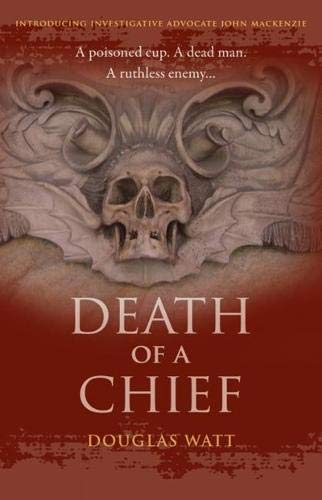
Death of a Chief by Douglas Watt

Death of a Chief by Douglas Watt was first published by Luath Press Ltd in 2009.

Tthe setting is Edinburgh, it’s 1686. To begin with there’s a ‘prelude’ which tells of Lachlan MacLean’s experience as a youngster on the battlefield of Inverkeithing where he had lost two of his brothers. But now he’s Sir Lachlan MacLean, clan chief, but not for long as he is the chief referred to in the book title.

When Sir Lachlan’s body is found in his bed in his Edinburgh lodgings it’s not clear if his death was murder or suicide. The victim had borrowed money from people for years and often hadn’t been able or inclined to pay his debts.

The Edinburgh lawyer John MacKenzie is tasked with the work of investigating, helped by his young scribe Davie Scougall. They have to travel to the Highlands to Sir Lachlan’s home to look through the papers in the chief’s home, looking for clues. Davie Scougall had barely been out of Edinburgh before and he had certainly never been to the Highlands. He’s nervous about the journey as he has heard so many stories about the lawless area which is apparently populated by violent marauders. Even his granny has warned him never to go there! There’s a possibility of clan warfare to avenge the death, but there are plenty of suspects, including the new clan chief.

This was a quick read at just 187 pages but it’s an enjoyable read with some likeable characters, it’s well written by an author who prior to writing fiction was more used to writing about Scots history. He wrote The Price of Scotland: Darien, Union and the Wealth of Nations. I might give that one a go – sometime. I borrowed this one from the library.


Gaia, art installation, Lichfield Cathedral

It was my friend Cecilia who recommended that we should visit Lichfield Cathedral when we were down that way a few weeks ago, and I’m glad that she did. It’s a beautiful cathedral which was apparently badly damaged during the Civil War ( War of the Three Nations as it is now being named). King Charles II apparently paid for the stonework to be re-done where the damage could be repaired and the Victorians also did a lot of work, replacing figures on the frontage.

But back to Gaia, we were really lucky to see what is a massive but very fragile looking Earth, it’s seven metres in diameter and was made by the artist Luke Jerram from detailed NASA imagery of the Earths surface. It has religious connotations which is why it is being toured round cathedrals. In the flesh, so to speak, it’s a thing of awe and beauty. It certainly makes you think about what mankind is doing to our beautiful planet.

Gaia, installation at Lichfield Cathedral

Gaia viewed from the choir.

Lichfield Cathedral, choir , Gaia


Gaia , art installation, Luke Jerram

I took loads of photos of the cathedral, but I’ll leave those for another day.


Pulteney Bridge, Bath

One of the places that the Bath Heritage Centre suggests that visitors might like to see is  Pulteney  Bridge. So we walked to it, it is very close to the centre of the city. It was designed in 1769 by the Scottish architect Robert Adam. I have to say that it’s a thing of beauty, to my eyes anyway, and the weir is like nothing I’ve seen before.

Pulteney Weir, weir, Bath

At the heritage centre they told us that you had to pay to get into the garden to get down to the River Avon, but we felt it had been expensive enough to get into the Roman Baths so we just walked across the bridge and went down the steps at the end of it. They led to a little patch of greenery with some trees and benches, it was just perfect really. The boat in the photo below just turned around at that point and went back under the bridge as it can’t get past the weir.

Pulteney Bridge Boat, River Avon,

Robert Adam was actually born in Kirkcaldy, very close to where we used to live, but as usual the local council demolished Gladney House which he and his brothers had been born and brought up in, just typical. It would have been such an interesting house to visit too.

Jack took this video of the weir


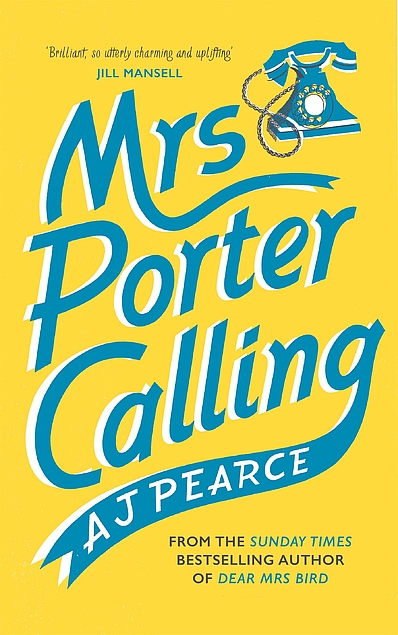
Mrs Porter Calling by A.J. Pearce

Mrs Porter Calling by A.J. Pearce is the third book by the author with the setting of WW2 London and the problems of running a women’s magazine called Woman’s Friend.
It begins in April 1943. Emmy Lake had begun knowing nothing about journalism but she’s now really confident about what she’s doing. She’s the agony aunt and she really wants to help the many readers who write in asking for her help.

Unfortunately the magazine’s owner Lord Overton dies and it transpires that he has given his niece the ghastly Honourable Mrs Porter the complete ownership of Woman’s Friend. Mrs Porter is only interested in high society and the best things in life which include clothes and make-up that no ordinary woman would be able to contemplate buying.  All of the readers’ favourite articles  are being dropped and worst of all the problem page is going too.

Within a very short time Mrs Porter has changed the magazine from a financial success that advertisers are queuing up for space in, to a magazine that very few women are buying.

With the help of Bunty, Thelma and Guy as well as the magazine team Emmy sets about trying to save the Womans’ Friend.

As with the two previous books in this series it all feels very authentic, the author has done her research. Inevitably as it’s wartime there is sadness and disaster, but they just ‘put their shoulders back’ and get on with it, as people had to. This was another enjoyable read.

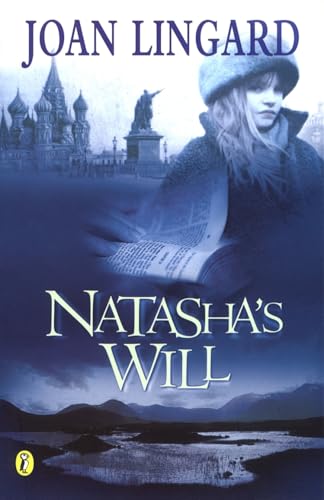
Natasha’s Will by Joan Lingard

Natasha’s Will by Joan Lingard was first published in 2020. It was a Federation of Children’s Book Groups’ Pick of the Year. I must admit that I’ve never heard of that group. It’s a very quick read at just 166 pages.

This is a dual time and place setting. It begins in contemporary Scotland where Natasha has just recently died. She had been over 90 and had been cared for in her own home by family friends of generations’ standing.  Natasha had started life in St Petersburg where she had a very privileged life – until the revolution in 1917. After a lot of difficulty danger and disasters Natasha and her mother had managed to make their way out of Russia and eventually ended up in Scotland, along with Eugenie, a friend who marries a Scot.

Years later it’s Eugenie’s family that look after Natasha in her own home until she dies. Natasha had always said that she was going to leave the family her house, but her will can’t be found anywhere, and it’s thought that she didn’t actually get around to writing it. It’s a disaster for the family, especially when Natasha’s official next of kin turns up to claim his inheritance. This was a good read with plenty of tension although I was pretty sure  that everything would turn out right in the end.

As ever it’s a plus when you know the locations and I was happy to be able to recognise St Petersburg as well as Scotland. I didn’t know anything about this book when I saw it in a charity bookshop in Edinburgh, but I’ve started to collect Lingard’s books whenever I see them, which isn’t that often, even in her hometown of Edinburgh.


The Roman Baths at Bath – 2,000 years of history

Roman Bath, Bath

When we approached the entrance of The Roman Baths we thought there was an enormous queue to get into it, but as we got closer we realised that the queue was for something else, so we got in straight away. As I mentioned before it’s expensive, but the ticket price included the use of an audio guide which was informative.  As we had travelled all the way from Scotland we decided that we couldn’t NOT go in.

Below is a photo of Bath Abbey which we didn’t go into, we had been in several churches and cathedrals within a few days so we gave this one a miss, however you do get a good view of it from within the Roman baths, exactly from where I took the photo above.

Bath Abbey , Bath

The photo below is of the hot springs bath, you can see the water bubbling, it’s naturally hot and that amazed the Romans, they decided it must be a sacred place which is why they built the whole complex there. In Georgian times the water level was higher, right up to where you can see the orange sort of tide mark. People used to sit on the stone blocks within the arches with their heads just out of the water. This was not for the faint hearted as the water was not at all clean after so many people using them, many of them with skin problems. It must have caused more problems than it ever cured!

hot bath Bubbling Waters , Roman Bath

It was crazily busy in the baths, especially in the interior parts. There’s a lot more to see than I had imagined. Below is a gilt bronze  head of the godess Sulis Minerva which was discovered during excavations. She’s an amalgamation of the Celtic godess Sulis and Roman godess Minerva. The Romans liked to include parts of the local religions wherever they settled.

Minerva, Roman Baths, Bath

They’ve discovered lots of things which must have been lost in the baths over the centuries, including this lovely Celtic style brooch. Whoever lost it must have been really annoyed! You can read more about the history of the place here.

Celtic Brooch, Bath, Roman Baths

In places you can look down to what was the foundations of the baths.

Roman Bath foundation stones, Bath

Below is a big plunge pool with just a small amount of water in it but you can imagine people sitting around on the stone steps having a gossip, or maybe not, this was the Frigidarium, the cold pool.

Roman Bath Pool, Bath

There were various altars around the place and below is a reconstruction of one with just the corners showing the original Roman pieces. I imagine that they thought it was a good idea to be nice and clean if they were going to be praying to Minerva or anyone else.

Roman Stones  + Pediment, Bath

Below is the remains of a horse sculpture.

Horse Sculpture , Roman Baths, Bath

And there are more figures of horses in what remains of the mosaic below.

Roman Mosaic, Bath

We spent almost two hours there and by that time we were definitely ready for lunch before going on to the next places of interest in Bath. Although the entry price seemed steep it was worth it. The model below shows what the buildings would have looked like in their heyday. The baths were covered with arched roofs as you can see, it would have made it a lot cosier than being open to the elements as they are today. There were areas for massage and general pampering, all by slaves of course. For some reason the videos and photographs of pampering were all of scantily clad women!!

Roman Bath model, Bath

Holiday book purchases

I managed to buy quite a lot of books while on our recent UK road trip. We stopped off at Penrith in the north of England. There’s a nice wee secondhand bookshop there just across from the old church. They had quite a lot of Elinor M Brent-Dyer Chalet School books, just paperbacks though.  I’m on a bit of a re-visit to that series, a nostalgia trip I suppose, so I bought:

Mary Lou at the Chalet School

The Chalet School Wins the Trick

Excitements at the Chalet School

Chalet School Fete

In various other towns I bought:

Viking’s Dawn by Henry Treece

They Were Sisters by Dorothy Whipple

Another World by Pat Barker

Zennor in Darkness by Helen Dunmore

Madame Claire by Susan Ertz

An End to Running by Lynne Reid Banks

The Measure of Malice – Scientific Detective Stories ed. Martin Edwards

Murder in a Heatwave  – (classic crime mysteries for the holidays)

Then we found a lovely old bookshop in Bradford on Avon (Ex Libris) old and new books, I bought three nice hardback Miss Read books:

A Country Christmas

Summer at Fairacre

Farewell to Fairacre

Then in a National Trust secondhand bookshop I bought a couple of non-fiction books:

Beastly Bath (Irreverent quotes about Bath from its greatest visitors)

Goodnight Children Everywhere (Voices of Evacuees)

Have you read any of them?


Yours Cheerfully by A.J. Pearce

Yours Cheerfully by A.J. Pearce which was published in 2002 is a sequel to Dear Mrs Bird, you can read my thoughts on that one here.

With the departure of the ghastly Mrs Bird at the end of the last book things at work in the offices of the magazine Woman’s Friend are improving hugely for Emmeline Lake. She can now reply to the problems page letters as she would like to instead of going behind Mrs Bird’s back.

The bombing of London has eased up somewhat, but Emmy’s best friend Bunty is still carrying the scars both physically and mentally from her experiences.

The government is starting a campaign to get women into the wartime factories to do their bit, the Ministry of Information want the women’s magazines to promote the idea, but those women who are already working in factories are having a tough time of it. Although the government realises that nurseries are needed to let the mothers of young children get back to work, the men who run the factories have no intention of changing anything, in fact they’re sacking women if they have childcare problems. Of course the women aren’t even being paid the same as men for doing the same jobs! Emmy gets involved.

This is a really enjoyable read with the relationships between the women of varied classes being to the fore, with no snobbery involved. The author did plenty of research to get the nitty gritty details of wartime Britain, including the fact that wives first realised that their husbands were either dead or missing when his army pay was stopped and they got no money! This happened several times to my father when the merchant ships he was on were torpedoed. No ship, no pay, but I suppose he was just glad to be picked up by another ship. I used to work with a woman who got a telegram saying her husband was missing and after six months they would begin to pay her her war widow’s pension, but what was she supposed to do for money for those six months?! The day before those six months were up she got a postcard from Italy from her husband who was a prisoner of war there!

My mother was of that WW2  generation and she worked in a factory sewing military uniforms, but that was before she was married with children. It was the most memorable time of her life though and every conversation came back to her wartime experiences. This book feels very authentic and true to the times. I’m looking forward to reading the next one in the series which is called Mrs Porter Calling.