The Night Watch by Rembrandt

We’ve been to the Netherlands quite a lot as I have a brother who has lived there for decades, but we had never been to Amsterdam and Jack and I were both fed up having to tell people we hadn’t been there as it seems that that is the only place people visit in NL. So we rectified that a few weeks ago and took the train to Amsterdam from Friesland, a two and a half hour journey. We were heading for The Rijksmuseum, around a 30 minute walk from the railway station, everybody else seemed to be a tourist too!

We wanted to see everything at the museum and we DID see everything, but we especially wanted to see Rembrandt’s The Night Watch, and look what we saw when we got there!

Rembrandt's Night Watch, Rijksmuseum

At the moment most of the very large painting is covered with machinery and gadgets which are apparently measuring the vibrations of the canvas. It’s thought that tiny vibrations in the atmosphere are damaging it.

It’s just typical – when we went to see Chatsworth part of it was covered with scaffolding, see the photo below.

Chatsworth House

The famous bridge at Ironbridge was likewise obscured the first time we went there.

Iron Bridge at Ironbridge

And of course when we sailed to the Bay of Biscay it was an absolute flat calm when it’s well known for being rough, something that I was looking forward to. I’m strange that way, I don’t like fairground attractions, just looking at them makes me feel sick but I’m never sea-sick.
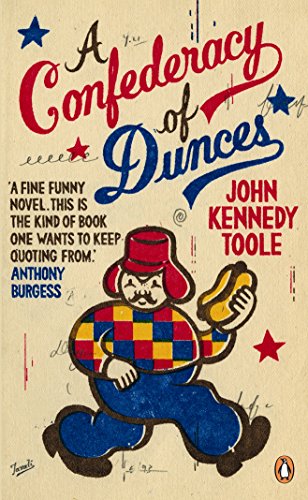
A Confederacy of Dunces by John Kennedy Toole – 20 Books of Summer 2023

A Confederacy of Dunces by John Kennedy Toole was first published in 1980. I had vaguely heard of the book before my brother gave me his copy while I was visiting him, he hadn’t been able to get into it, so I just had to give it a go despite it obviously not being on my original 20 Books of Summer list. I must say that the book is definitely different, but in a good way, if you have a certain type of sense of humour.
Ignatius J. Reilly  is a young man, a university graduate (Medieval History)  who has a fine idea of himself, he’s so enamoured of himself and his supposed intelligence that he looks down on everyone else. But Ignatius is so weird he won’t ever fit in with ‘normal’ people. He’s just about unemployable, unsurprisingly his mother is not happy about that, she’s still having to support her lazy and overweight son.  When he does get a job at the Levy Pants company, he quickly sets about causing mayhem there.

Ignatius had already been in trouble with the police when he took exception to being asked for his identification by what he regards as an over zealous policeman. The policeman is desperate to arrest just about anyone as his sergeant has a low opinion of him. His sergeant sends him out in ever more ridiculous disguises, but he still pops up in Ignatius’ life, even when Ignatius is working as a hot dog vendor, the lowest of the low apparently.

This book isn’t for everyone but if you have the right sort of sense of humour for it – as I have then you’ll probably find it crazily daft as I did. There are some great characters such as Iggy’s sometime girlfriend Myrna, and Burma Jones the negro who has to take a below minimum wage job sweeping up in a dive of a bar, otherwise he’ll be jailed as being a vagrant. He was my favourite character, he had a wonderful way of speaking. This book would make a great film, it’s so visual and farcical.

Sadly John Kennedy Toole committed suicide, possibly because he wasn’t able to get this book published, his mother was determined to find a publisher though which she eventually did, and now it’s a Penguin Essentials.


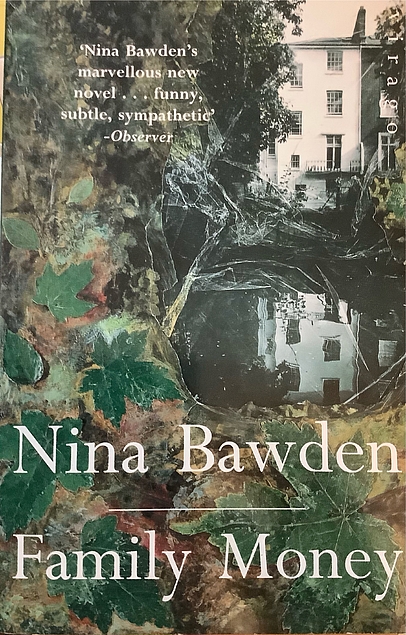
Family Money by Nina Bawden – 20 Books of Summer 2023

Family Money by Nina Bawden was first published in 1991 and was reprinted by Virago the following year. It’s one of my 20 Books of Summer.

Fanny Pye is an elderly widow who is getting used to her singleton life after her husband Daniel’s death. He had been rather overbearing and now her various family members are beginning to try to make decisions for her too. Fanny still lives in the family home in London, the value of the house has risen a lot over the years and some members of the family would like to be able to get their hands on some of the money from the sale of it. Fanny is very attached to Ivy her cleaning lady though, and doesn’t want to upset her life.

But Fanny’s own life is upset when she witnesses an act of road rage on her way home from a restaurant and she becomes a victim herself. In hospital her recovery only goes so far as her memory has been damaged and she’s confused. Her children think this is an opportunity for them to push the idea of Fanny moving to a smaller house, but Fanny would like to buy a small house for Ivy, one close to her daughter. As you can imagine that idea doesn’t go down well with some people who feel that their father’s money shouldn’t leave the family.

When Fanny’s memory begins to come back to her she’s filled with fear and a sense of danger, she doesn’t feel safe in her home any more.

The back blurb says:

Here, the tempo of a thriller is brilliantly linked with a wry examination of the manners and morals of an acquisitive society.

I enjoyed this one although for me the ending is somewhat disconcerting.

In Place of Fear by Catriona McPherson – 20 Books of Summer 2023

In Place of Fear by Catriona McPherson is set in Edinburgh in 1948. The National Health Service is just being set up and Helen Crowther has got a job as a medical almoner, akin to a social worker nowadays, attached to two local doctors’ surgery. Previously the work had been done by a sort of ‘lady bountiful’ type of woman who had been doing the work voluntarily, and she had trained up Helen to help her.  Helen has trouble making people believe that they won’t have to pay for visits to the doctor as the idea of the NHS seems too good to be true to them, but as she has been brought up in similar circumstances to her clients she’s more in tune with their problems.
When Helen and her husband get the chance to move into a home of their own they’re ecstatic.  Helen hopes that not sharing cramped accommodation with her parents and sister will mean that things will now be different in their marriage, her husband isn’t interested in her and her mother is champing at the bit to be a grandmother.

When Helen stumbles across a body she’s sure she knows who the victim is, but she’s perplexed when the investigation doesn’t proceed the way she thinks it should. There’s a lot going on in the secretive life of some of Edinburgh’s more prominent citizens and Helen needs to untangle it all. This was a really good read. This is one of my 20 Books of Summer reads.


I’m back!

It has been about three weeks since I blogged, it wasn’t planned like that as although we were going away to spend time with my brother and his family in the Netherlands I had every intention of writing blogposts while I was there. I never found the time or inclination though, I think that probably proves that it was a very enjoyable and relaxing holiday, with plenty of catching up to do as we hadn’t been able to visit them for over four years.

We took the ferry from Harwich which has the advantage of being a shorter trip than the Newcastle or Hull  route,  but the long drive down south was very tiring and boring, despite us having a break overnight in the English midlands on the way down.  It’s not far off 500 miles for us. The traffic on the south of England motorways was a nightmare, dead slow and stop and at times scary. It was a real treat to reach the Hook of Holland and what appears to be civilisation.  Britain looks like a third world country in comparison with the roads in the Netherlands.

Although I cheated slightly by starting on my Twenty Books of Summer reading a couple of days before June, I’m much further behind than I thought I would be, mainly because my brother (who has lived in the Netherlands for over 50 years) gave me a book to read saying he hadn’t been able to get into it, obviously that one wasn’t on my original list. The book was A Confederacy of Dunces by John Kennedy Toole. Have you read it?

I was a bit worried about my garden while I was away because people living in the Netherlands can watch the BBC on their TVs – for nothing, in fact the newspapers publish the TV listings for the Beeb every day – and they don’t have to pay the licence fee – so I was able to see the weather forecasts and it was very hot while we were away, although not quite as hot as we had it in NL  where it was over 30 C, not far off 90 F. Anyway the garden had exploded while we were away and the Turk’s Cap lilies had been and gone. I’ll take some photos of the garden tomorrow. I have a few book reviews to catch up with too.


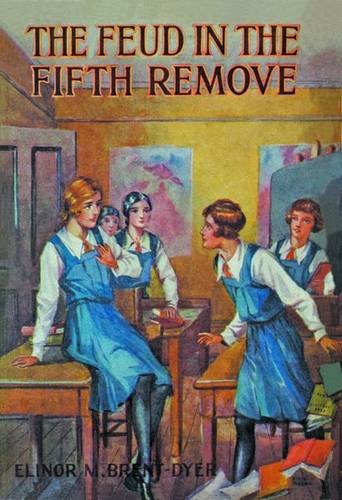
The Feud in the Fifth Remove by Elinor M. Brent-Dyer

The Feud in the Fifth Remove by Elinor M. Brent-Dyer was first published in 1932  but it has been reprinted by Girls Gone By Books more recently. At just 112 pages it’s a quick read, but still very enjoyable.

It begins at the start of a Christmas term at the Abbey School which has a fair few girls with unusual names, even for the 1930s – Philathea and Salathiel are new to me. But it’s Brenda, the new girl who causes trouble.

Brenda is an only child and has been utterly spoiled by her parents, but particularly her mother.  The results are that Brenda is a complete snob and it isn’t long before she’s sussed out and graded all the girls according to how much money she thinks their fathers will earn. Despite having  an eclectic mixture of backgrounds the pupils get on well together in general, but Brenda believes that those girls in the higher echelons, by her standards, shouldn’t have to consort with the girls who come from a ‘trade’ background, and she’s daft enough to try to get the other girls to join in with her and freeze out what Brenda regards as the poorer pupils.

It transpires that Brenda isn’t only a snob but she’s a liar and cheat too, and when she starts being rude to her mother even her mother has to accept that she has brought up a thoroughly unpleasant daughter. Brenda won’t even accept that the school’s prefects have a right to tell her what to do and she decides to run a campaign to get rid of them.

This book is like a handbook of how to conduct your life if you want to be an upstanding member of society. Just don’t do as Brenda does. I found it entertaining though and as ever I enjoyed being in the company of the characters.


Rival Queens by Kate Williams – The Betrayal of Mary, Queen of Scots

Rival Queens which is subtitled The Betrayal of Mary, Queen of Scots by Kate Williams was published in 2018. I borrowed this one from the library, and I swithered about taking it as I’ve read quite a few books about Mary, Q of S – what more could there be to say? Well it turned out that there’s quite a lot in this book that was new to me about Mary and Elizabeth. I had thought that Antonia Fraser’s Mary, Queen of Scots couldn’t be topped, but the author seems to have far more insights into both personalities, although it’s Mary and her predicaments which are to the fore in this book. The writing style is very relaxed somehow,  it flows so clearly and is never heavy going, and Kate Williams is just like her readers would be – enthralled and sometimes almost amazed by the fact that she has access to historic  letters and documents that she has been able to study during her research for the book. Other historians have been a bit reticent on the reasons that Mary ended up marrying Bothwell, but Williams seems in no doubt that she had been raped by Bothwell, and was pressured into marrying him.

I hadn’t quite realised how much Mary had been used by her various relatives, with them seeing her as just a way for  them to grab more power and kingdoms in the future. I don’t remember reading that the four wee Marys who sailed to France with Mary Stuart to be her playmates had been separated from her almost immediately. The Scottish side of Mary was going to be stamped out so that she would be a completely French queen when the time came.

Both queens suffered from a lack of the respect which would have been automatic for any young king, simply because they were male. With both women having so much in common it’s a tragedy that they never actually met, but Elizabeth couldn’t be persuaded.

I’ve always thought that Mary was at a disadvantage where men were concerned as her father died when she was just days old, it meant that she never had a man in her life that she could judge any possible husband against – for good or bad. I’m sure that’s a disadvantage.

As it happens I’ve visited almost all of the places that are mentioned in the book, some of which she escaped from.

Anyway I enjoyed this book so much that I’m going to track down anything else that Kate Williams has written, both non-fiction and fiction.

Duffus Castle, Elgin, Moray, Scotland

A few weeks ago we had a couple of days away up in Elgin in Morayshire, north-east Scotland and one of the places we visited was Duffus Castle which as you can see is just a ruin. Apparently it’s one of Scotland’s finest motte and bailey castles.

Duffus Castle, Elgin, Moray, Scotland

Duffus Castle , Elgin, Moray, Scotland

There’s enough of it still visible to be able to imagine what it was like back in its heyday.

Duffus Castle , Elgin, Moray, Scotland7

Like all castles it sits on the highest ground but in the photo below you can get an idea of what the surroundings are like, fairly flat for Scotland but there’s obviously some good farmland around.

Duffus Castle, Elgin, Moray, Scotland

If you want to read the info board below click on it and it should enlarge.

Duffus Castle, info board, Elgin, Moray, Scotland

As we were walking around the area we heard a tremendous roar, it was a fighter jet, followed closely by its companion. It all happened so fast that I just had time to get a quick snap, but by that  time they were quite high up, they had been really low when we first saw them on the horizon. Throughout the afternoon we could hear them from time to time, it’s probably a common occurence for the locals, but it’s quite strange to be walking around a 12th century fortress with jets flying above you.

fighter Jet, Elgin, Scotland

The Big House by Naomi Mitchison

The Big House by Naomi Mitchison was first published in 1950 and it’s aimed at children over 9 years old, it’s good no matter how many years you are beyond that age though.

Susan is the daughter of the local landowner, so she lives in The Big House and most of the people living in the area are employed by her family. That makes life difficult for Su in school at Port-na-Sgadan as just about all of the other children hate her. Not only is her family rich, but she can’t even speak Gaelic like the other children.

The story begins on  Halloween and some of the local children take the opportunity to beat Su up. They have their ‘false-faces’ on so they feel safe enough to do it. Only Winkie the fisherman’s son is her friend and he helps her. Of course the fisherman doesn’t have the landowner as his boss, so there’s no resentment there. As Winkie is helping Su back to her home to clean her up they hear a piper in the distance.  It turns out that the piper was captured by evil fairies hundreds of years ago and Halloween is his only chance of escape. He needs the children to help him. Su and Winkie end up in the underworld of the evil fairies, in danger of never being able to get back home.

If you know fairy tales at all you’ll recognise some common themes, such as a stolen baby and someone being changed into a swan but this one does have a very Scottish flavour about it and it brought back some memories for me. I had completely forgotten that when I was wee we called Halloween masks false-faces, but as soon as I read those words it brought back the horrible smell they had, compressed cardboard I suppose,  but we all wore them, at least they were bio-degradable, unlike the plastic ones nowadays.  As the book was written/published in 1950 and food rationing still existed in the UK this tale features quite a lot of feasts and food which would have been unobtainable at the time, like so many books written in this era.

Naomi Mitchison was herself the daughter of a  Big House but she seems to have had a governess before being sent to a boarding school, I’m sure she would have had experience of being despised by the local children when she was growing up. She died when she was 101 and had quite a life, being politically active and a lifelong Socialist.

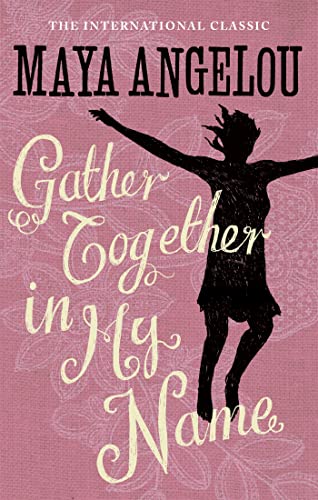
Gather Together in My Name by Maya Angelou

Gather Together in My Name by Maya Angelou was first published in 1974 and it’s the second book in the author’s six volume  series of autobiography.

It begins in World War 2 which for some was a good time, jobs were plentiful in civilian life and black people who had been scraping a living doing bottom of the pile jobs had been able to earn good money in factories which were making munitions and other things needed for the war effort.  It was a good time for some, but with the peace all that stopped and unemployment loomed.

Maya got work as a cook in a restaurant, and she was good at it, but one of her male customers showed interest in more than her cooking, and so begins his charm offensive. Maya is in need of love, she’s an easy victim for a handsom older man, but it doesn’t last long. She’s reluctant to move on because her baby son has settled with a baby minder, but Maya’s brother persuades her to move to another state to begin again.

I liked this book but not quite as much as I Know Why the Caged Bird Sings, the first one in this series. Maya seems to have been a strange combination of street-wise sassiness and complete naivete where a certain sort of man is concerned. I suppose that more or less being abandoned by her own mother left her vulnerable and open to being abused by scumbag men.