The Bookseller of Inverness by S.G. MacLean

The Bookseller of Inverness by S.G. MacLean was published in 2022, I found it to be a cracking read, in fact it would make a great film.

Iain MacGillivray had been one of the many Jacobites on Drumossie Moor, Culloden in 1746, and one of the few to get away with his life, although badly wounded, he had feigned death.  It was a terrible time with the Redcoats running amok, pillaging, killing the wounded, and generally causing mayhem and despair within the local communities as they raped and murdered. Six years on and Iain has a bookshop in Inverness where he just wants to put it all behind him, and have nothing to do with the Jacobite cause. But the cause comes to him.

A mystery customer comes to his bookshop, he’s searching for a particular book but refusing to give any information at all, he’s going through all the books one by one. At the end of the day Iain has to practically throw the stranger out so that he can shut the shop, but when he opens it up the next morning he finds the stranger dead, his throat had been cut by a sword with a white cockade on its hilt – a Jacobite symbol.

Iain is surprised to discover that his Jacobite sympathies have resurfaced, and the behaviour of most of the Redcoats in the local barracks only strengthens his feelings.  Someone is settling scores, and it transpires that there’s another Jacobite plot afoot.

This was apparently a Times Audio Book of the Week with the comment that ‘This slice of historical fiction takes you on a wild ride.’

If you do read any books by S.G. (Shona) MacLean you should make sure that you read the Author’s notes at the end of the book. They’re always fascinating, her family background is steeped in the Scottish Highlands, where she still lives, and her uncle was the thriller writer Alistair MacLean. Shona MacLean obviously takes after him.
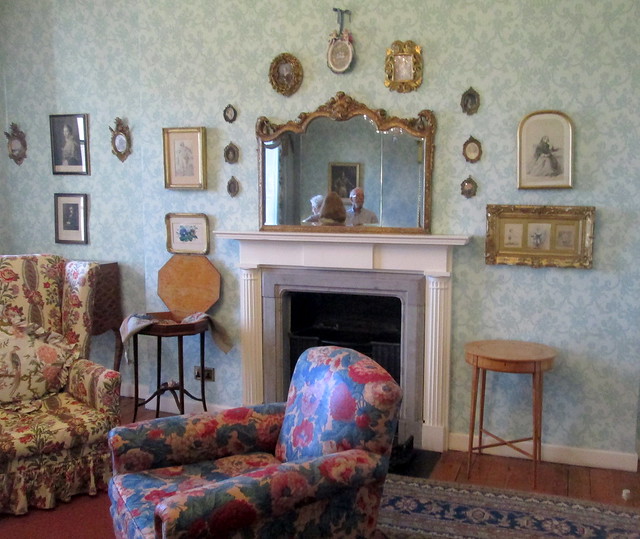
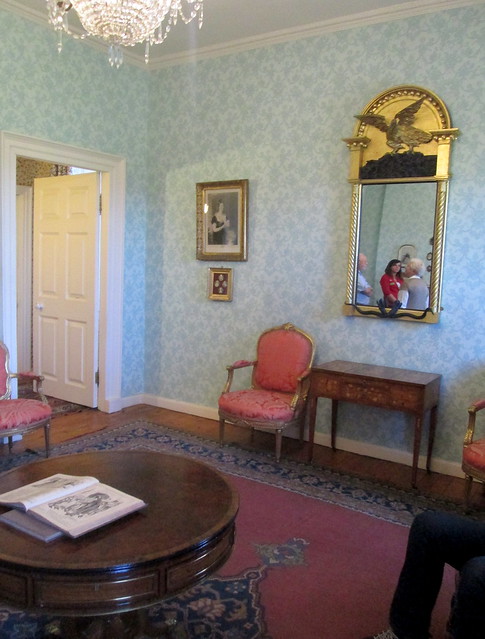
 

House of Dun near Montrose – interior

It’s a few weeks now since we visited the House of Dun near Montrose, you can see the post that I did about the exterior of the building here. It was built in 1730 for the laird David Erskine.

This is a house that you can only go around as part of a guided tour, but they seem to be fairly frequent so we didn’t have to wait all that long to be shown around. It’s a shame that one of the owners married a woman who liked to tinker with the internal plan of the house. It was of course designed by William Adam who was a fanatic about having everything symmetrical, even creating dummy doors to match actual doors at opposite ends of walls. A previous occupant has ruined a lot of the proportions by having walls removed and such, especially in the hall.

Room in House of Dun

Room in House of Dun

I keep saying this but it’s true – although it’s a very grand house, it still has the feeling of a family home. It must be all the personal nick-nacks that decorate the place that help.

It was impossible to get a photo of the huge looking glass without getting people in it!

Room windows in House of Dun

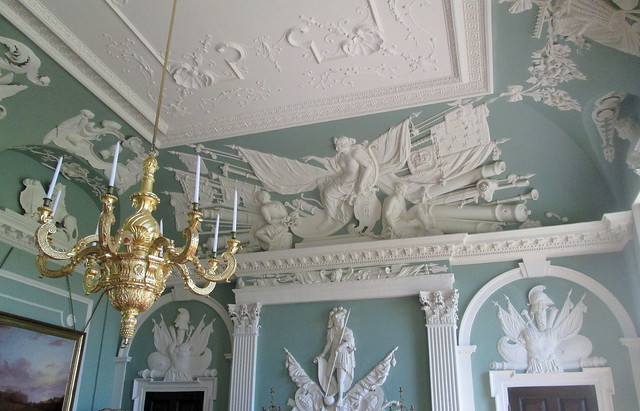
The cornicings/plaster wall and ceiling decorations are incredibly ornate as you can see.
Room in house of Dun

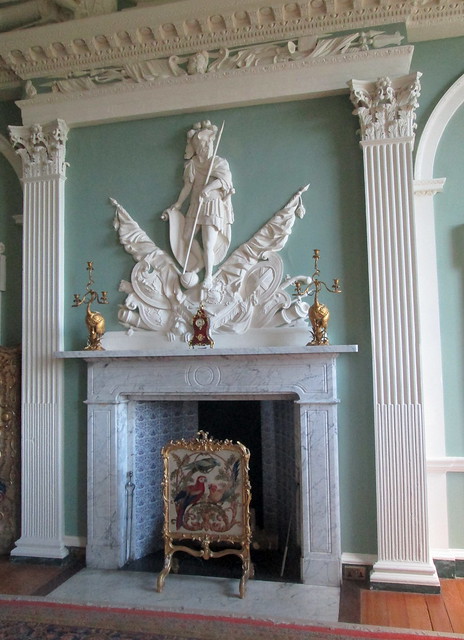
Apparently the overmantel decoration is of a soldier standing with one foot crushing the crown of England. Not terribly subtle, apparently the house was owned by Jacobites who enjoyed this sort of visual support for the Jacobite cause and they got away with it, at a time when they could easily have been executed for such sympathies!
Room  Overmantel + fireplace

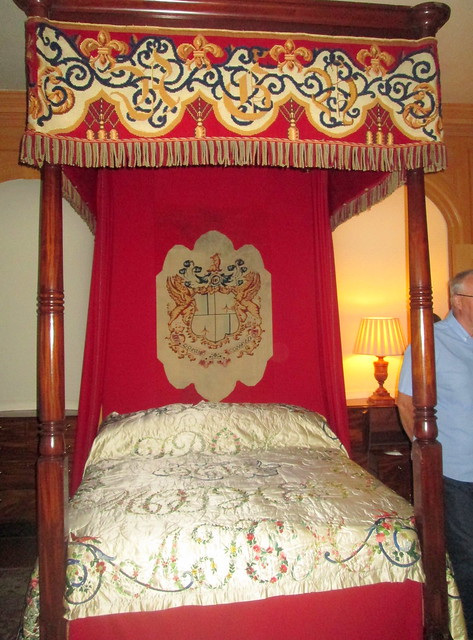
The embroidered quilt on this four-poster bed is fantastic. It was apparently found in a tin trunk in the attics fairly recently. It was a wedding gift embroidered by the mother of the then laird and it has his and his mother’s name sewn all over it, and the fact that it was a gift from her for his wedding. It’s suspected that his bride didn’t want to have her mother-in-law at such close quarters, even if only in the shape of embroidery and I have to say I don’t really blame her.
Quilted bed

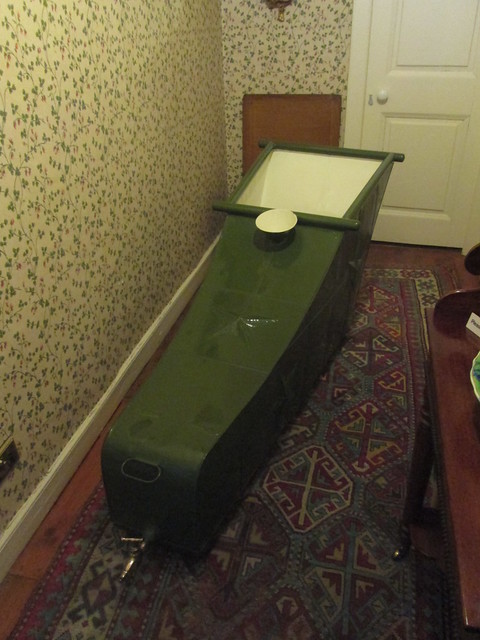
Lastly, just about the most bizarre object at the House of Dun is the ‘boot’ bath below, so named because it resembles the shape of a boot. I can’t make up my mind whether it was enclosed like that to keep out draughts or just to make it a more private experience for the bather. I don’t think it would have made washing your legs and feet very easy though!

boot bath