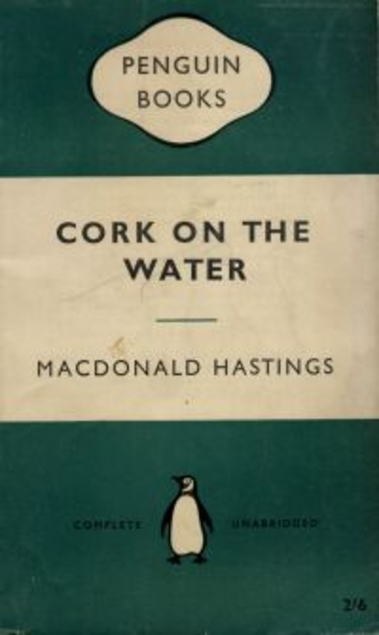
Cork on the Water by Macdonald Hastings

Cork on the Water cover

Cork on the Water by Macdonald Hastings was published in 1951.

Mr Montague Cork is the general manager of the Anchor Accident Insurance Company. He has many years experience of working in insurance and when a claim is made for £25,000 because a man called Gabriel Daggers has died, Cork has a feeling that something is not quite right about it.

Daggers had died in a fly fishing accident in the Highlands of Scotland, but it was two weeks before his body was found in the deep water of a pool. Daggers has left the insurance money to a well known ballerina, but she doesn’t want it. She had had a complicated relationship with Daggers in the past.

Mr Cork takes Robert, one of his insurance employees, with him and they take turns in driving up to the Highlands in his Bentley. Their driving skills are poles apart as Mr Cork is very aware of the dangers of driving, due to the amount of claims he has seen over the years, he’s a nervous and risk averse driver, knowing how sheep can cause mayhem on the roads! His companion is a young man who had got the job in insurance because his father was a friend of Mr Cork but the work is killing him with the boredom, he had been a commando during the war and he needs a bit of excitement in his life. Mr Cork has chosen the perfect partner for his investigation.

This is a good adventure story with the plot involving wartime experiences. The action takes place on a Highland estate and there’s a lot of leaping around on moors and hillsides.

It is written in the John Buchan style, certainly no bad thing. But it also seemed very similar in many ways to the Mary Stewart book which I read just before this one – Wildfire at Midnight. The setting was the same, a Scottish Highland hotel and the surrounding countryside, it was a shame that I didn’t realise that to begin with because I did get a wee bit mixed up with the two books at one point. Both books were also written in the 1950s and they both had so many people puffing away on fags constantly, Mr Cork smoked Passing Clouds all the time, even lighting one from the one which he was just getting to the end of. It’s a wonder I don’t have a smoker’s cough after all that! Cork on the Water was a good mystery and action adventure. I think that Hastings only wrote three or four of these books featuring Mr Cork as an unlikely sleuth.

Macdonald Hastings was a well known face on TV in the 1960s, so says Jack, but I can’t remember him. Before that he worked on radio and during the war he was Picture Post’s War Correspondent. He was also the father of Max Hastings who has carried on in the same vein as a journalist and author of books about World War 2.

I read this one for the Read Scotland 2016 Challenge.
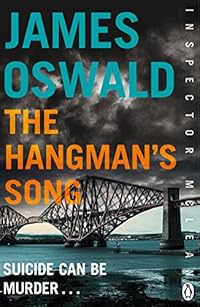
The Hangman’s Song by James Oswald

 The Hangman’s Song cover

The Hangman’s Song by James Oswald is the third book in his Inspector McLean series.

Edinburgh’s police headquarters is in chaos as the ongoing restructuring of Scotland’s police forces has meant that Chief Inspector Duguid – or Dagwood as he is sometimes known as is the temporary boss. McLean has a very low opinion of Duguid and the feeling is mutual. Duguid is piling lots of extra work onto McLean and at the same time is removing officers from his cases, sending them on needless training courses at Tulliallan police college.

However when a series of hangings take place in the city there are enough odd details to make McLean feel that they are anything but the straightforward suicides that Duguid insists they are.

McLean is having as much trouble with his work colleagues as he is with the investigation, jealousy is leading some of the more immature in the force to play stupid but expensive pranks on the financially independent McLean and at times he does wonder himself why he is bothering to remain in the police force. Luckily for us he realises that that would be giving in and doing just what his colleagues want.

I’m really enjoying this series which should be read in order but I agree with Jack that it could do without the spooky elements which really don’t add anything.

If you want to read what Jack thought about this book, have a look here.

I read this one for the Read Scotland 2016 Challenge.
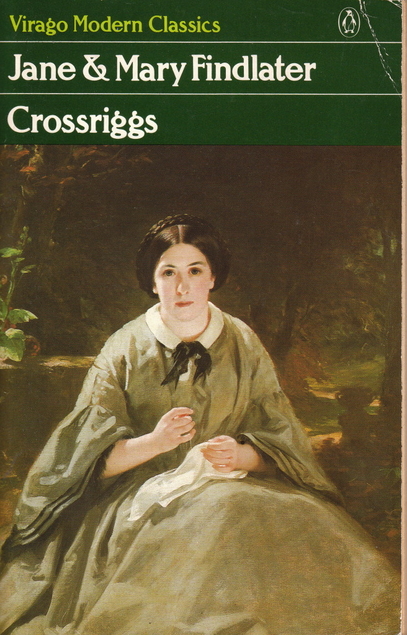
Crossriggs by Jane and Mary Findlater

Crossriggs cover

Crossriggs by Jane and Mary Findlater was first published in 1908 and it’s one of those books which I’ve been meaning to get around to reading for years. I’m quite intrigued by the thought of two people writing a book, and I wonder how they actually went about it. I must admit that I had no idea that these Scottish sisters had been so famous in their day. They travelled to the US amongst other places and were friends with writers such as Robert Louis Stevenson, Walter de la Mare, Henry James, Rudyard Kipling and Virginia Woolf. The sisters were the progeny of a Scottish Free Presbyterian Church minister.They lived in Lochearnhead until their father’s death when they moved to Prestonpans, a small town close to Edinburgh.

Crossriggs is a small town which is not far from Edinburgh by train. The Hope family live there. Alexandra Hope is a young woman who runs her elderly father’s very poverty stricken household. Mr Hope is a vegetarian/fruitarian who would nowadays be described as being a vegan. He’s a peace loving man who doesn’t want to cause anything any harm, but although he is regarded as being very clever he is forever having crazy ideas about new ways of growing things and it usually ends up in failure and loss of money, which is just what they can’t afford.

When the recently widowed elder daughter Matilda comes back from Canada with her five children it falls to Alex to slave at various jobs to try to earn money to feed them all. It never seems to occur to Matilda that her young sister is taking on all of the responsibility for the family.

Alex is a great character, what we in Scotland call ‘a nippy sweetie’. She’s very ‘pass remarkable’ and often has a sarcastic but witty thing to say about her neighbours and their appearance. However one of her neighbours is a well respected academic/writer and it’s obvious that Alex is in love with him, but he is married so he’s completely off limits of course.

Alex is unwilling to just settle for what she regards as an inferior sort of man and so turns down marriage proposals, to Matilda’s disgust.

This book has lots of echoes of various books in it. It’s similar to Jane Austen’s Emma in parts. Alex is like Jo from Jo’s Boys, but this is an essentially Scottish book, moral and spiritual but not to a sickly degree.

I also found it similar to O. Douglas’s (also the daughter of a Wee Free minister) books although hers are perhaps a bit more light hearted and more preachy, or maybe just a bit less well regarded or dare I say it popular. The elements are the same though: A young woman looking after a load of children who are not her own, a lack of money, annoying neighbours and relatives and romance.

R.L. Stevenson said that there is a difference between the Scottish and English psyche. In England they ask you – What is your name?

But in Scotland they ask – What is the chief end of man?

This is the difference between Scottish and English literature anyway. It’s probably because straightforward story telling was regarded as being frivolous, but if it had a moral and a sound feeling for what was right and wrong, then it was worthwhile.

I read Crossriggs for the Read Scotland 2016 Challenge, it’s my fifth one this year, and also for the Women’s Classics Literature Event and for Reading My Own Damn Books. Three down with one stone!

I was interested to see that the book is dedicated to:

Kate Douglas Wiggin and Norah Archibald Smith
two sisters,

from two sisters,
Mary and Jane Findlater.

It’s a good read.

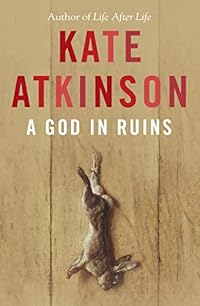
A God in Ruins by Kate Atkinson

 A God in Ruins cover

I enjoyed reading Life After Life not long ago although at times it did irk me, the constant re-starting of life which went on in it and what seemed like a waste of good fiction ideas which might have been taken further in a more ‘normal’ book. Anyway, Jack was keen for me to get around to reading A God in Ruins fairly quickly as he wondered what I would think of it – so here goes. I’m not going to say too much about the actual story for fear of spoiling it for anyone, suffice to say that as often occurs with Atkinson the story jumps around a lot from 1944 to contemporary times.

A God in Ruins by Kate Atkinson is a sort of continuation of Life After Life, the main character is Teddy Todd who is an RAF Halifax bomber pilot, he is the younger brother of Ursula who has such a busy existence in Life After Life.

Atkinson obviously had to do a lot of research into the experiences of pilots and their crews and she manages to write what seems to me to be incredibly realistic and absolutely terrifying bombing sorties as Teddy takes part in the carpet bombing of Germany in 1944. I’ve always thought that those men were made of stronger stuff than anyone today and this book just underlines it.

I loved this book it’s a real page turner, but it is like a palimpsest with rubbing out and rewriting of lives being involved when you get to the bottom of it. The whole story takes a very sad turn towards the end, but it makes you think how everything was changed in people’s lives, all those futures that people planned, but they just never happened as they had hoped they would.

If you want to know what Jack thought of the book have a look here.

I’m looking forward to her next book. I read this one for the Read Scotland 2016 Challenge. Although Atkinson was born in the north of England she has lived in Edinburgh for many years, and she uses Scots words, such as ‘hirpling’ meaning limping.
Beneath the Abbey Wall by A.D. Scott

Beneath the Abbey Wall by A.D. Scott is the third in this murder mystery series which is set in Inverness in the 1950s.

Again we’re back at the offices of a local newspaper – The Highland Gazette. Mrs Smart is a mainstay of the organisation and when she is found dead – murdered – the whole place is thrown into confusion. Mrs Smart more or less ran the place, without them really realising it.

Joanne Ross, one of the reporters, is now separated from her abusive husband, it’s a big step for a mother to have thrown her husband out, in a community where women are supposed just to put up with things.

The police are pretty useless and it’s left up to the newspaper staff to investigate Mrs Smart’s murder. During their probing all sorts of secrets come out, in fact nothing is as it seems, not even Joanne who seems so strong and sensible, it now looks like she is going to make the same mistake she did before. There’s no doubt that her brains turn to mush at the sight of a handsome man, no matter how he behaves towards her.

I enjoyed this mystery and the setting. There are quite a few likeable characters, I had an idea who the culprit was but these books are about more than the crime. They’re about how women were viewed in 1950s Scotland and how attitudes began to change, slowly. I’m looking forward to the next book and finding out what happens with McAllister and Joanne.

Although A.D. Scott doesn’t live in Scotland now she is very definitely a Scot and I read this one for the Read Scotland 2016 Challenge.