England Their England by A.G. Macdonell

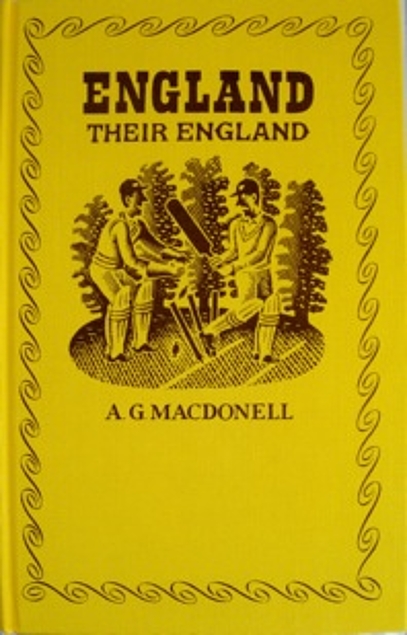
England Their England cover

England Their England by A.G. Macdonell was first published in 1933 and it won the James Tait Black prize that year. My copy is a lovely illustrated Folio Society one. The only other book I’ve read by him was a vintage crime and he did write under various names. My copy is illustrated by Peter Brookes.

The book is set in the early 1920s, Donald Cameron is a young Scot who had been invalided out of the army where he was at the Western Front. When he gets home to Aberdeenshire where his father is a farmer it’s evident that he isn’t much use to his father, and his father tells him to go to England. (Harsh!)

While he was at the front he had met up with a Welshman who had been in publishing. On hearing that Cameron was interested in writing he told Cameron to look him up in London if they ever get out of the war, so that is what he does. The Welshman thinks that a book about the English from a foreigner’s point of view would go down well, and Cameron immerses himself in English society of various sorts as a way of studying them.

His account of a cricket match is apparently the most famous and popular part of this book but for me it was his invitation to a country house Friday to Sunday that was the funniest. Donald was taken in hand by a man who knew how to make an entrance at such a social event. The most important thing was to arrive with masses of luggage which would impress the servants and then receive numerous phone calls from various important persons – all made by Donald’s social advisor of course! It was a hoot.

This is all very much tongue in cheek of course. At the time this book was first published there was a bit of a vogue for such amusing books, by people such as P.G. Wodehouse and Jerome K.Jerome.

I read this one for the Classics Club Challenge, Read Scotland 2016 Challenge and the James Tait Black Challenge – three with one book!

Kate Hardy by D.E. Stevenson

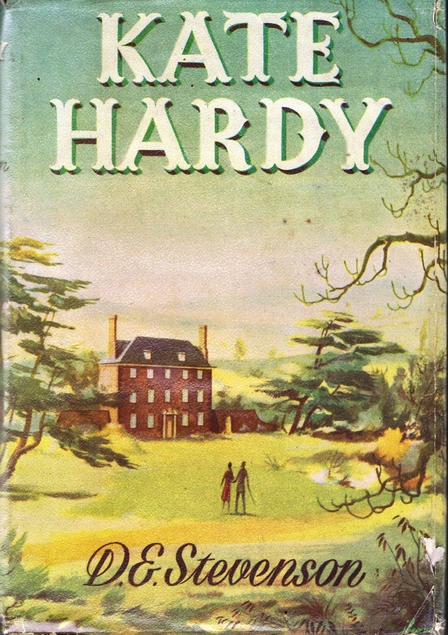
Kate Hardy cover

Kate Hardy by D.E. Stevenson was first published in 1947.

The ancient village of Old Quinings is full of gossip, it’s rumoured that Richard Morven the owner of The Priory, an historic estate, has sold the Dower House. Richard’s wife dies some years before and he sees no need to hang on to the property which has been bought by Kate Hardy, an author in search of a quiet place to write. Kate also has a flat in London but since her older widowed sister and her daughter have plonked themselves on her, with no feelings of gratitude Kate decides to leave them to it in the London flat.

D.E. Stevenson’s writing remind me very much of that other Scottish author O.Douglas – minus the religion, with both of them writing about small communities and usually a young woman moving to a new neighbourhood and having to make a new home for herself amongst strangers.

However there’s a bit more to Kate Hardy which deals with the snobbery and jealousy that some returning soldiers had to put up with when they came back from World War 2 – hoping to just pick up their lives where they were prior to joining the armed forces. It’s a bit of social history and an enjoyable read.

I read this one for the Read Scotland 2016 Challenge.

Read Scotland 2016 Challenge

I’ve reached my goal of reading 21 Scottish books for the Read Scotland 2016 Challenge. So here they are, in no particular order.

1. Beneath the Abbey Wall by A.D. Scott
2. The Factory on the Cliff by A. G. MacDonell
3. Lament for a Maker by Michael Innes
4. Night and Silence by Aline Templeton
5. A Life, Josephine Tey by Jennifer Morag Henderson
6. Fatty O’Leary’s Dinner Party by Alexander McCall Smith
7. Murder at the Loch by Eric Brown
8. The Moon King by Neil Williamson
9. Touch Not the Cat by Mary Stewart
10. Instructions for a Heatwave by Maggie O’Farrell
11. Water on the Brain by Compton Mackenzie
12. Fair Helen by Andrew Greig
13. Cork on the WaterMacdonald Hastings
14. The Hangman’s Song by James Oswald
15. Wildfire at Midnight by Mary Stewart
16. Crossriggs by Jane and Mary Findlater
17. A God in Ruins by Kate Atkinson
18. The Game of Kings by Dorothy Dunnett
19. Life After Life by Kate Atkinson
20. Murder of a Lady by Anthony Wynne
21. Candleshoe by Michael Innes
22.Nine Coaches Waiting by Mary Stewart
23.The Land the Ravens Found by Naomi Mitchison
24.England Their England by A.G. Macdonell
25.Kate Hardy by D.E. Stevenson
So I’ve completed the Isle of Skye level and I’m heading for the Orkney level. I’m not sure how many more books I have to read to get there though!

Candleshoe by Michael Innes

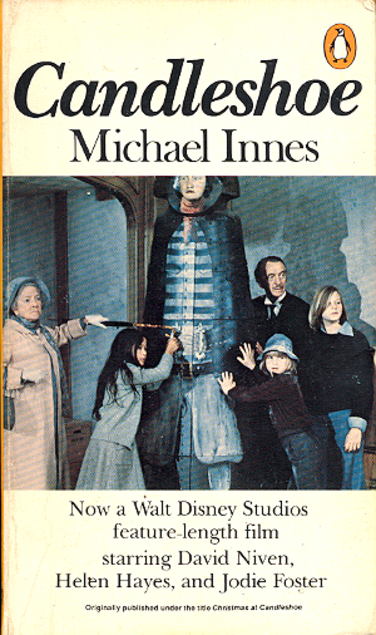
Candleshoe cover

Candleshoe by Michael Innes was a very recent purchase by me. I bought it when I was down in the Scottish Borders a couple of weeks ago. I hadn’t even heard of this book before but Peggy knew about it and she has seen the film that Disney made of it. In fact the book was originally called Christmas at Candleshoe but my copy is a later tie in to the film. The book has nothing to do with Christmas the festival at all, it’s someone’s first name. As you can see from the book cover David Niven starred in the film, I don’t know how I managed to miss seeing it. Possibly it was released during one of the several times that our local fleapit in Dumbarton was closed due to fire damage. The Rialto,the last surviving cinema was forever going on fire for insurance purposes it was rumoured!

It’s a bit confusing as although the film is apparently aimed at kids, being made by Disney, the book definitely wasn’t written for children. Michael Innes had a habit of using the art world as part of the plot in his books – as he does with this one but it bears no resemblance to his Inspector Appleby mysteries.

A very wealthy American woman tourist is in Britain touring the usual country stately homes. As her son is a student at Oxford and she is very keen on all the ancient history of England, she’s on the lookout for an estate to buy and refurbish. When she stumbles across a house that has been completely bypassed by the 20th century she’s enchanted.

Her son fears that she’s determined to buy the ancient pile and Jay a teenager who seems to be keeping the whole place going is also worried that the very elderly owners would be happy to sell up. Jay believes an old story that there is treasure somewhere in the house and he’s not surprised when the house comes under attack from thieves.

The whole thing is a bit crazy and I have to say that this definitely isn’t one of Michael Innes’s best books. He was always very keen to shoehorn literary elements into his books, I suppose because for his day-job he was a university lecturer in English, but I don’t think that mentioning Meredith and numerous other literati does much for the pace of a mystery. He drops in Latin phrases in much the same way as Dorothy L. Sayers did, which is fine if like me you were lucky enough to do Latin at school, but I suspect that it’s just an annoyance for many people. At least he doesn’t switch to Greek as Sayers did at times!

This is my 21st book read for the Read Scotland 2016 Challenge. That level was originally being named ‘Back O’ Beyond’ but since visiting the Isle of Skye recently with Peggy, I think it is now going to be called Skye, or Isle of Skye – it’s up to Peggy. Any levels beyond that being named Orkney and then the ultimate – Shetland.

I think I’ll be giving this one a three on Goodreads.

The Factory on the Cliff by A.G. MacDonell

 The Factory on the Cliffs cover

The Factory on the Cliff by A.G. MacDonell was first published in 1928 but it has been reprinted by Fonthill Media. Originally this book was published under MacDonell’s pseudonym Neil Gordon. MacDonell is best known for his book England, Their England. Published in 1933 it’s a satirical comedy on English society and its eccentricities. It won the James Tait Black Award in 1933.

The Factory on the Cliff is written very much in the style of John Buchan, in other words a sort of ‘boys own adventure story’. The story begins with George Templeton on a golfing holiday in Aberdeen, Scotland but when he damages his thumb while using the starting crank on his car it means he can’t golf. He’s the sort of chap who hates walking, unless he happens to be whacking a wee ball along as he goes.

Desperate for some exercise he is forced to take a walk and comes across a group of men acting suspiciously. They’re looking for something but claim that they aren’t. Later George finds a type of Mills bomb (grenade) in the undergrowth and realises that that is what they were looking for.

I think that this sort of adventure tale was very popular when it was first published, especially amongst the many men who would have been involved in the First World War. It involves germ warfare and scientists and Scotland Yard does get involved albeit at a distance. The characters had all been soldiers and in some way it was something that they missed, as apparently men did. There’s only one female character and she is there as a bit of eye candy for the men.

I must admit that I’m happier reading the country house sort of murder mystery but I still enjoyed this book. I also love the cover, very much of its time, but I’m not so enamoured with the size of the book, one of those larger format ones which is just not going to fit on the shelf where I have the rest of my vintage crime books. Annoying.

Archibald Gordon MacDonell was born in India but he regarded himself as a Scotsman so this one counts towards the Read Scotland 2016 Challenge.

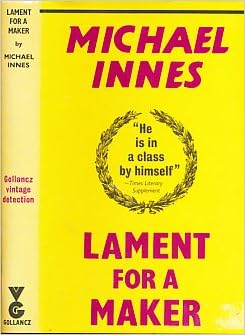
Lament for a Maker by Michael Innes

Lament for a Maker cover

Lament for a Maker by Michael Innes was first published in 1938 and the story is told by five different characters in seven sections.

In the first part the story is narrated by Ewan Bell, a shoemaker from Kinkeig and it’s written in his dialect which I think might have put some readers off but really it shouldn’t be a problem for people.

Ranald Guthrie is the laird of Erchany Castle. He’s hated in his part of the Scottish Highlands, because of his meanness. Ranald spends his time counting his gold coins and quoting parts of an ancient Scottish poem by William Dunbar – which you can read here. A maker or more usually makar is a Scottish word for a poet, usually a court poet. The title has been brought back into use now and at the moment the makar is Jackie Kay.

Anyway, back to the book.

Ranald Guthrie has a young niece, but if you believe the local gossip she might actually be his daughter – or maybe he has designs on her, the locals will believe anything of him, he’s seen as being the devil. Christine, the niece has fallen for a young local man but Guthrie despises his family. It’s a bit of a Romeo and Juliet situation.

When Guthrie falls to his death from his own battlements on a wild wintry night there’s speculation, did he jump or was he pushed? His American relatives had tried to have him put into an asylum in the past because of his strange behaviour. Of course John Appleby of Scotland Yard is going to get to the bottom of it.

This is a very convoluted mystery, well worth reading, in fact it’s often regarded as being Michael Innes’s best book.

I read this one for the Read Scotland 2016 Challenge.

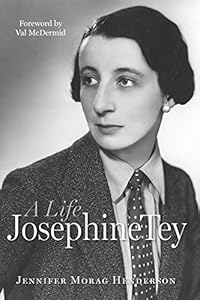
Josephine Tey A Life by Jennifer Morag Henderson

 Josephine Tey A Life cover

Josephine Tey A Life by Jennifer Morag Henderson was published in 2015 and I borrowed it from the library. I was really surprised when I saw how thick the book is, it’s 426 pages including the index and I did wonder how somebody had managed to write so much about a writer who was famously secretive about her life. I thought maybe a cache of until now unknown information had come to light somehow but apparently not.

In fact by the end of the book I didn’t really know much more about Tey than I had before I set out to read it. Henderson writes a lot of pages about Tey’s father’s business and how it grew, not really something of great interest but it pads out pages I suppose and it’s information easily gained through local council records.

There’s an awful lot of speculation about possible World War 1 romances, Henderson seems determined to give Tey a tragic romantic history but really there is no evidence that any man was any more than a friend with an interest in poetry. It would seem that while Tey was in Inverness (most of her life) she kept herself to herself. Her family seem to have had a bit of a chip on their shoulder about the family being in trade, the father was a successful fruiterer and they seem to have thought that they were rather looked down on by some sections of the community. But the three daughters in the family were sent to a private school and I can just imagine the locals thinking that the local board school was good enough for most of them, why not for the Tey family. It inevitably sets you apart if your children aren’t sent to the ordinary local school.

Tey was one of those Scottish people who couldn’t wait to get out of Scotland and she suffered from an inherited snobbishness which must have made life in a small Highland town such as Inverness a real pain for her. She sought to anglicise herself in that mistaken belief that some people had/have that ‘English’ meant superior. She was proud of having English ancestors, when most people would probably have hidden that fact.

The sad fact is that for most of Josephine Tey’s life she was stuck in a town that she didn’t like much with no friends there and having to run after her elderly authoritarian father, while her two younger sisters left Inverness for England and stayed down there. She must just have lived for the times that she managed to get away down south to stay with friends or visit publishers.

This book is more interesting for the information about Tey’s way of writing and the background to her books and the plays written under the name of Gordon Daviot. I think it’s fair to say that Tey had rather an immature attitude to her work and was quite willing to cut off her nose to spite her face when it came to her relationship with the BBC. She was very precious about her writing talent – too precious maybe.

If you enjoy Tey’s writing you’ll definitely want to read this book although for my liking there is far too much emphasis on her extended family, particularly when you consider that they could not be described as being a close family. I didn’t really need to know that Tey’s father Colin had an ostentatious gravestone put up at his parents’ grave – a sure sign of a guilty conscience, he was ashamed of them and their Gaelic heritage and seems to have kept his own children away from them. What a shame for all concerned.

I rarely get a chance to chat about books I have read with actual friends instead of blog friends. But as it happens Eric had just read this one and we were of the same opinion, it didn’t tell us much more than we already knew about Tey. Eric mentioned that as Tey was obviously a lesbian he can’t understand why Henderson should be so determined to avoid that fact. I have to say that I agree completely. Tey did have lesbian friends and when propositioned by one of them she rebuffed her. But I would say that the reason for rebuffing her was probably because the woman was the partner of Tey’s friend and had a reputation as a philanderer, causing her partner grief. Tey would have to have been a fairly despicable person to have an affair with her friend’s partner. Tey at the time was fond of wearing masculine clothes, including shirts and ties as well as mannish jackets (see the book cover) – enough said. However Tey was of a religious bent so it’s probably something that she struggled with. It certainly goes a long way to explaining why Tey had such a horror of publicity and journalists.

As it happens I am also the daughter of a fruiterer and if I had ever become famous I would have found it bizarre if anyone had shown any interest in where my father’s shop was, or his relationships with his extended family. If you’re a fan of Tey’s writing though you will definitely want to read this book.

There’s a short introduction by Val McDermid.

I read this one as part of the Read Scotland 2016 Challenge.

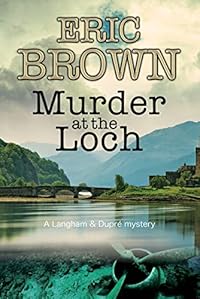
Murder at the Loch by Eric Brown

 Murder at the Loch cover

Murder at the Loch by Eric Brown is the third in his Langham and Dupre mystery series and this one is possibly even better than the first two Murder by the Book and Murder at the Chase.

The setting is a freezing cold December in 1955. Donald Langham is of course a writer and he’s preparing for his marriage to his fiancee Maria Dupre, but his wartime commanding officer Major Gordon has contacted him and his friend Ralph Ryland, he needs their help. Donald and Ralph drop everything and go off to help.

Major Gordon now owns a luxury hotel in the wilds of the Scottish Highlands, so it’s to the hotel that Donald and Ralph make their way as someone has been taking potshots at the major – or maybe they were aiming at the major’s companion.

Major Gordon is attempting to raise the wreck of a German Dornier bomber which had crashed into the nearby loch in 1945. The winter weather has hampered the project, but it also seems that someone doesn’t want the Dornier to be lifted from the loch. Why would that be? And why was a Dornier flying in that area in 1945 anyway? Who or what were its cargo?

As the weather closes in on them Donald and Ralph are stranded in the hotel with the rest of the guests, then one of them is murdered. With everyone under suspicion Murder at the Loch has all of the suspense of a vintage murder mystery and the charm too.

It was only a matter of time before Maria Dupre managed to get in on the act too and Donald’s literary agent Charles Elder makes a welcome entrance towards the end of the book when he is finally released from Wormwood Scrubs where he has been languishing “at Her Majesty’s pleasure,” – in other words he’s been in jail – due to the discriminatory laws of the time. Charles is one of my favourite characters in this series so I hope he has an even bigger part to play in the next book.

I love Eric Brown’s writing and his ability to capture the atmosphere of the 1950s.

Although Eric is a typical Yorkshireman he has been living in Scotland for a number of years now and so this book counts towards the Read Scotland 2016 Challenge.
Touch Not the Cat by Mary Stewart

Touch not the Cat cover

Touch Not the Cat by Mary Stewart was published in 1976 and it must have been around about then that I first read it. I couldn’t remember an awful lot about the book (it was a long time ago after all) but I did remember that the family crest had something to do with the storyline. Judith @ Reader in the Wilderness and I decided to read this one at the same time and she plans to get her post up about it soon.

This is a light read, you might call it a comfort read, perfect holiday or summertime reading. The setting is mainly Herefordshire in England in the 1970s although the book does begin in Madeira where Bryony Ashley is working at a hotel that is owned by her father’s friend, it’s just a holiday job for her but tragedy strikes when Bryony’s father is knocked down and killed by a hit and run car in Germany. Her father wasn’t killed outright and his last words have been written down for Bryony, as the doctors know that she won’t get to his bedside before he dies. There is a tradition of a sort of telepathy within the Ashley family and Bryony has it as has one of her male relatives, but she doesn’t know which one it is that communicates with her through thought.

Bryony is now an orphan and even worse than that her family home Ashley Court is entailed meaning that it has to be passed on down the male line in the family. Ashley Court is practically a ruin, an ancient moated house which has suffered from a lack of maintenance for years. It’ll be a millstone around the neck of the eldest Ashley cousin Emory, even more than Bryony realises because she discovers that that branch of the family is equally skint when she and her father had believed them to be very well off.

The police have never been able to track down whoever killed Bryony’s father and she begins to think that it wasn’t a simple accident. Did her cousins have something to do with it? Which of her cousins is it that she has a mental link with, being able to communicate through telepathy.

Bryony is suspicious of her cousins, would they have killed her father to get their hands on Ashley Court and the land around it?

With romance thrown in and some lovely descriptions of the surroundings, something always expected in a Mary Stewart book, this was an enjoyable read. Mind you I always compare any of her books with her Merlin/Arthurian trilogy, that ended up being a series of five books. Those books are still my favourites.

I read this one for the Read Scotland 2016 Challenge, I’ve now read thirteen Scottish books so far this year.

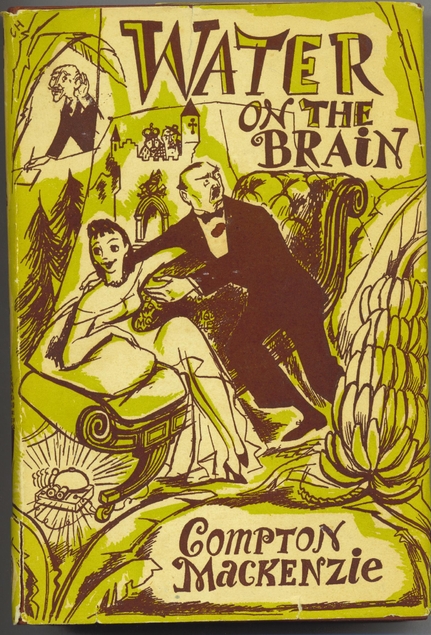
Water on the Brain by Compton Mackenzie

Water on the Brain cover

Water on the Brain by Compton Mackenzie was first published in 1933 but my copy was published in 1954 and the author had added a preface explaining that the book had been written just after his trial at the Old Bailey under the Official Secrets Act. Mackenzie says that in 1933 the book must have seemed like something out of a Marx Brothers film, such was the craziness that those in ‘Intelligence’ got up to. But he thinks that post World War 2 many people who had come into contact with the Intelligence Services would have recognised the types of characters involved.

The book had me laughing out loud quite a lot, it’s a hoot. Of course it counts towards the Read Scotland 2016 Challenge, my tenth Scottish book this year.

The action begins in London where a young army major, Arthur Blenkinsop is living with his wife in a service flat. He had seen action in World War 1 but since then he had been working in Mendacia, a small outpost of the British Empire. That job had come to an end when the local political situation changed, and back in London he is looking for work so he is delighted when he gets a letter from the Director of Extraordinary Intelligence asking him to call at the War Office for an interview.

Major Blenkinsop is such an idiot he’s taken on by Intelligence immediately and sent up to Scotland to try to broker a deal which would mean that the ex king of Mendacia gets into power again. Blenkinsop’s cover is that he is working in the banana business but his wife is suspicious from the beginning and she thinks he is having an affair. She follows Arthur up to the Scottish Hydro in the Highlands where he becomes involved with two elderly sisters who are English but are very aware of their Macadam forebears and are in Scotland for the first time ever. They get completely caught up in it all and believe that there is a plan to bring Home Rule to Scotland and that they can help.

It does indeed become something akin to a Marx Brothers film and as Compton Mackenzie was one of the founder members of the Scottish National Party and the powers in England were worried that it would become something like Sinn Fein in Ireland, it’s not surprising that people were keeping an eye on him.

I read this book and wrote the post quite a while ago and have only just realised that I didn’t get around to actually publishing the post.