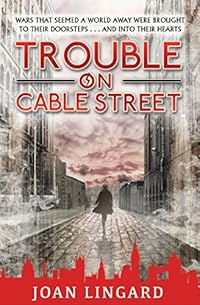
Trouble on Cable Street by Joan Lingard

Trouble on Cable Street by Joan Lingard was first published in 2014 and it was the author’s last book, she died on the 12th of July 2022.

The setting is the East End of London, 1936. With Hitler in power in Germany his ranting speeches and ant-Jewish laws are making the people in Britain nervous. It feels like they’re heading for another war, when they haven’t even got over the horrors of WW1. War has already broken out in Spain between the Nationalists and Republicans, and some of the younger men have already signed up to go and fight in Spain.

The British Fascists, known as the Blackshirts and led by Oswald Mosley are taking advantage of the situation and are planning to march into an area of London which has a population of Jewish people.

Isabella works in a factory which is owned by a Jewish family. Her mother is of Spanish descent but within the family things are fraught, her two brothers are on opposite sides of the political spectrum and one of them is just about to leave to fight in Spain on the side of the Republicans and against the Fascist Nationalists, but unknown to everyone the other brother has been attending meetings of the Blackshirts.

When the Blackshirts march through their neighbourhood there’s mayhem and the family inadvertently gets involved.

This one was a great read, there is of course some romance involved, but it’s quite depressing that the same political problems are coming to the fore again in so many countries.
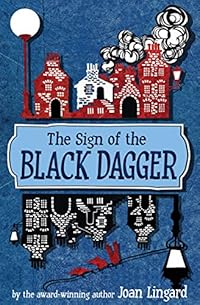
The Sign of the Black Dagger by Joan Lingard

THe Sign of the Black Dagger by Joan Lingard was first published in 2005. I borrowed this one from the library as when Lingard died recently I realised that I haven’t read many of her books and I should rectify that as she was a Scot. Typically the local library system doesn’t have many books available to borrow as in Fife the people who run the libraries (they aren’t librarians) corrall all the books by locals in their reserve stock – and they don’t let anyone borrow them!

Anyway, back to the book. The setting is Edinburgh where Will and Lucy, a young brother and sister live in a very old house in the Royal Mile which has been in the family for generations. Their father disappears suddenly and they discover that there are people after him. Their mother discovers that he has money problems, which he has been hiding from everyone, he has never been a good businessman.

While searching the house Will and Lucy discover an old journal secreted in a hole in a wall. It has been written by another William and Louisa/Lucy, ancestors of theirs, and their father has had similar problems. Both men are being pursued by men determined to get the money that they’re owed.

The experiences of both related families, with about two hundred years in between them, feature the children mainly, with the mothers in the background having had no idea that their family life was in danger.

I enjoyed this one, it was interesting to see how the authorities dealt with those in debt two hundred years ago in Edinburgh, and as ever I like it when I know the setting well, as I do, but there is a useful map if you don’t know Edinburgh’s Old Town.

The Master of Ballantrae by R.L. Stevenson

The tale is told by Ephraim McKellar, the steward of the estate belonging to Durie of Durrisdeer in Scotland. The laird of Durrisdeer has two adult sons and as the 1745 Jacobite uprising is about to begin sides have to be taken. It’s a dangerous time for landed estates as supporting the losing side will mean that they will lose everything. To avoid this disaster familes with two sons have one son, usually the younger one supporting the Jacobites while the eldest one supports the status quo, King George. But James Durie the eldest is keen to leave home for the more exciting prospect of the rebellion and decides to toss a coin to do so, of course he wins the toss which leaves his brother Henry at home.

Henry is very much the ‘spare’ heir as far as his father is concerned. The father can’t stop talking about James as if he’s some sort of hero whereas in reality he’s a ‘right bad yin’. When the Jacobites lose the Duries eventually get word that James has been killed and the father persuades Henry to marry James’s fiancee, and that’s as far as I’ll go with this one.

I can’t say that it’s one of my favourites by Stevenson, I really disliked the whole idea of the father favouring his eldest son to such an extent, and the younger brother ending up more or less being mentally tortured by him, but that’s my problem. I felt so sorry for Henry that I really couldn’t enjoy the story and it has a really sad ending.

I could definitely have been doing with something more uplifting, but don’t let me put you off reading this one! You might really enjoy it as so many people seem to have done.

Visitors from England by Elisabeth Kyle – 20 Books of Summer 2022

Visitors From England by the Scottish author Elisabeth Kyle was published in 1941, but my copy is a 1962 reprint.

Peter and his sister Margot are having to spend their holidays in Scotland, with complete strangers. Their mother is seriously ill and is in a nursing home back in England and their father is already dead. They’re not looking forward to being away from home, but Mrs MacDonald who they’ll be staying with has a son around the same age as Peter. Alec isn’t looking forward to spending his holidays with the visitors, he suspects that they’ll ruin his holidays and that they’ll not want to do the sort of things that he enjoys doing. Basically he thinks they’ll be southern softies!

Peter isn’t any better as he tells his sister that as Alec is a Scot he’s bound to be tough. Their assumptions are quickly ‘scotched’ though as the brother and sister are more than willing to follow Alec down a cliff and on to the beach. In the distance they see old Morag. Years ago she had survived a shipwreck, The Silver Horn had been her father’s ship and Morag was the only survivor, ever since she has been talking about the treasure that’s in her father’s old cabin, and hoping that she’ll be able to retrieve it somehow.

This one’s an entertaining tale of friendship with a bit of an adventure thrown in, and some interesting characters who span the class divides.

Sheiks and Adders by Michael Innes – 20 Books of Summer 2022

Sheiks and Adders cover

Sheiks and Adders by the Scottish author Michael Innes was first published in 1982, by Gollancz. Whenever I see those yellow Gollancz covers nowadays I’m just about grinding my teeth, since I read about how badly Victor Gollancz treated his editor Diana Athill, paying her paltry wages for years. Anyway, to the book.

Sir John Appleby has retired from Scotland Yard, and he’s very happy to be out of it, but when he visits a summer charity fete which happens to be a fancy dress do, he gets involved in a murder. Appleby is dressed as Robin Hood and he’s amused to bump into his replacement at Scotland Yard, as he’s also dressed as Robin Hood! It seems that the fete is being held in the grounds of a house which belongs to a businessman who has recently moved there, and Scotland Yard has had a tip-off that there’s going to be trouble.

A wealthy Arab sheik is going to be attending, is his life going to be in danger? To add to the difficulties lots of men have decided to dress up as Arabs, it’s impossible to figure out who is the real sheik. One thing that Appleby knows for sure – for some reason the owner of the house had forbidden his daughter’s boyfriend to come dressed as an Arab!

This was quite an amusing read. Michael Innes was also an academic and he liked to make sure that his readers knew that, so there are a lot of literary allusions as usual, I know that some people find that annoying, I just find it quite funny!

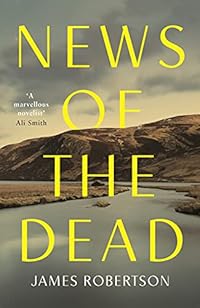
News of the Dead by James Robertson

News of the Dead by the Scottish author James Robertson was published in 2021. It has been longlisted for the Walter Scott Prize for Historical Fiction 2022. I’ve really enjoyed the previous books that I’ve read by Robertson, but I must admit that I was a wee bit disappointed when I realised that this one really has three threads to the book, I’m a wee bit fed up with that sort of narrative because I find there’s always one storyline that I much prefer and I get annoyed when that one is left off to focus on another one, however, the threads all involve one place, Glen Conach which is a remote valley in Angus, the north of Scotland.

Supposedly Glen Conach was named after an early Chrstian Pictish saint, a hermit called Conach, but the book begins in contemporary times when young Lachie, an eight year old boy visits his elderly friend Maja. Lachie’s a bit worried that he might have seen the ghost of a young girl, and he has to tell Maja about it, maybe she can explain what it was.

“To tell the story of a country or a continent is surely a great and complex undertaking; but the story of a quiet, unnoticed place where there are few people, fewer memories and almost no reliable records – a place such as Glen Conach – may actually be harder to piece together. The further into the past you go, the more you feel you are journeying into a strange, unknowable region. The hazier everything becomes, the more whatever facts there are become entangled with myth and legend. And when you return to the present, it may seem that fact and fiction were never that discrete from one another after all.”

The time loops back to 1809 when Charles Kirkliston Gibb is writing his journal at Glen Conach House. He’s a bit of a conman really, he relies on being able to talk the owners of grand houses into allowing him to stay with them while he does research in their libraries. Otherwise he would be starving or would have to live off his poor widowed mother.

This time around he’s doing research into the life of Saint Conach and needs to read the Book of Conach, one of the many books in the very good library at Glen Conach House. He plans to spin his research out until he can blag his way into another grand house, but nothing goes to plan.

This is a great read, actually I’ve just read that it has won the Walter Scott Prize for Historical Fiction, which was announced last week. I’m not at all surprised.

On a personal note I must say that James Robertson seems to be a ‘good guy’ as he took part in the campaign to stop Fife Council from closing 16 local libraries some years ago. He actually turned up at meetings, but it was all to no avail, even with Val McDermid and Ian Rankin weighing in too, the decision had already been made I’m sure.

The Tontine Belle by Elisabeth Kyle

The Tontine Bell by the Scottish author Elisabeth Kyle was first published in 1951.

Jinny Errclestoun has been brought up in England in rather poverty stricken circumstances, but she has always been told of her family’s glory days in 18th century Glasgow when the tobacco business had made some families fabulously wealthy – including the Errclestouns. The American War had changed their circumstances completely though as The Tontine Belle had been fired on by rebels in Baltimore and had sunk. That led to the ruin of the Errclestouns.

When Jinny’s father dies she travels to Glasgow to see the only asset left to her, a damp ruin of a house which had been very grand in the 18th century but was now being used as bedsits for people who couldn’t afford somwhere decent to live. Jinny ends up living there herself with the one other thing that had been left to her by her father, a wooden model of The Tontine Belle.

There’s a bit of a mystery in this tale, but it didn’t go at all the way that I expected it to. However given what went on in Glasgow development-wise in the 1950s and 60s the plot is very much of its time and I enjoyed the way the character of Jinny developed. I’ve only read a few previous books by Elisabeth Kyle, but they had Edinburgh as their setting so it was enjoyable to be in the Glasgow of the 1950s.

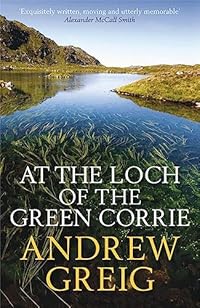
At the Loch of the Green Corrie by Andrew Greig

At the Loch of the Green Corrie by Andrew Greig was first published in 2010.

Andrew Greig had formed a friendship with the poet Norman MacCaig while Greig himself was an aspiring poet and over the years MacCaig became something of a father figure to him. So when on his last visit the ill MacCaig said to him ‘I should like you to fish for me at the Loch of the Green Corrie. Only it’s not called that. But if you go to Lochinver and ask for a man called Norman MacAskill, if he likes you he may tell you where it is. If you catch trout I shall be delighted. And if you fail, then looking down from a place in which I do not believe, I’ll be most amused.’

I really enjoyed this one which is a mixture of the author’s thoughts on his past life and failed marriage, poetry, geography, geology, fishing and friendship. Andrew Greig first got in touch with the Scottish poet Norman MacCaig when MacCaig had a poem printed in The Scotsman, so began a long friendship with MacCaig introducing Greig to the other well-known Scottish poets of the times, a lot of whisky was consummed.

Some of the blurb on the back says:
‘If you have a desire to luxuriate in the most beautiful use of the English language borne along by the love of one gifted poet for a recognized master of melancholy, then this is the book for you. It most certainly is the book for me’ Billy Connolly.

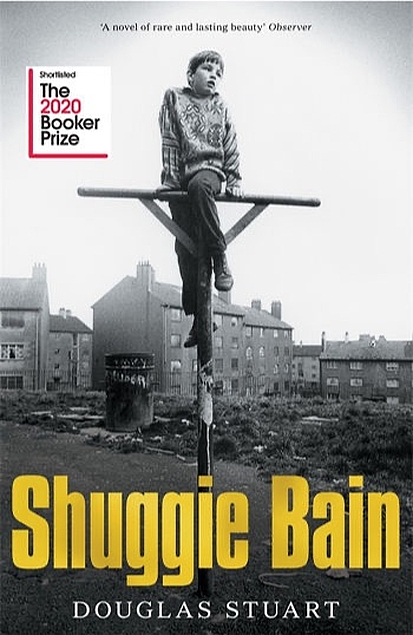
Shuggie Bain by Douglas Stuart

Shuggie Bain cover

Shuggie Bain by Douglas Stuart won the 2020 Booker Prize and at the time I seem to remember that there were a lot of people who were very surprised, complaining that it was difficult to read the Scots/Glaswegian dialect, but really there’s very little in it.

The setting is Glasgow where Agnes Bain has walked out on her husband and taken her three children with her. She goes off with a taxi driver called Hugh Bain, he’s more exciting than her husband it would seem, but neither of them have planned things, and Hugh has walked out on his wife and four chidren. With nowhere to live they end up moving in with Agnes’s parents. Life isn’t at all as Agnes had imagined it to be and she has developed a serious alcohol problem.

Unsurprisingly Hugh has turned out to be a terrible philandering husband. When Agnes has a melt down they have to move out of her parent’s home and Hugh rents a flat in a remote pit village, but of course the pit is closed, everybody is unemployed, it’s a desert with windows, and Agnes’s drink problem gets worse and worse. As you would expect the home life of the children is a disaster, but the two older ones leave home and Shuggie is the one who is left behind to deal with Agnes who as soon as she gets her benefit money spends it all on booze and fags.

This book is very autobiographical and is a grim read at times, especially when you remember that in reality there are so many children having to cope with addicted parents, it’s heart-breaking. However, Douglas Stuart has managed to triumph over his dreadful childhood and has become a successful fashion designer and of course author.

You can read Jack’s far more detailed review here.

The Mirror Dance by Catriona McPherson

The Mirror Dance by Catriona McPherson is the 15th book in the author’s Dandy Gilver series and I’ve read them all, but I was a wee bit disappointed with this one. In fact by the time I got to about 70 pages from the end of the book I had lost all interest in the outcome, but I struggled on. I’ll be generous and say that maybe it is all the horrendous news from Ukraine which had an effect on me.

The setting is mainly Dundee and St Andrews. There has been a murder in Dundee. A Punch and Judy man is done to death while Dandy was actually watching his puppet show in a park, despite having a front row view, she didn’t see anyone approaching the puppet booth. How was it possible?

The investigation involves two supposedly rival publishing companies, Doig’s Publishers and D.C. Thomson’s and a possible problem over copyright. There are plenty of twists and turns along the way, in fact maybe too many.

There are a few annoying mistakes, such as the mention of the shop/newspaper, magazine distributor W.H. Smith, which didn’t exist in Scotland until fairly recent years as it was John Menzies which had that business in Scotland. The setting for the book is 1937.

There are some phrases which seem unlikely in Dundee of the 1930s, such as ‘state of the art’. But the mention of cricket not being played in Scotland is just plain wrong. Cricket was very popular in many areas of Scotland and still is. I live near two villages which have cricket pitches which are still in use and one of them won the National Village Cricket Cup in 1985. There’s a cricket pitch and pavillion in Kirriemuir, the birthplace of J.M. Barrie of Peter Pan fame, and he actually donated the ground and pavillion to the town as he was a huge fan of cricket, as was Arthur Conan Doyle, they played it together.

Anyway, possibly I’m being too picky and this series has just run its course for me.