The Black Arrow by Robert Louis Stevenson

The Black Arrow by Robert Louis Stevenson was first published in 1888.  It’s set during the Wars of the Roses in the time of King Henry VI and as you would expect it’s a combination of adventure and romance. Sadly it didn’t come up to the standards of Treasure Island, Kidnapped or even its sequel Catriona.

Dick Shelton’s father was murdered when Dick was younger and now that he is grown up Dick wants to get justice for his father. Unfortunately Dick’s guardian is Sir Daniel, he’s a rogue although supposedly a gentleman. Sir Daniel buys up guardianships so that he can plunder their money before they reach maturity. He has kidnapped Joanna Sedley from her legal guardian, intending to marry her off to Dick.

Meanwhile Dick is beginning to think that Sir Daniel and his cronies are actually responsible for his father’s death and Joanna is sure of it, she persuades Dick to team up with The Black Arrow outlaws against Sir Daniel.

I really disliked the style of writing that Stevenson employed in this book, a sort of archaic English which Stevenson himself called ‘tushery’. I suppose that he thought it would help with the historical atmosphere, but it really doesn’t.

There is quite a lot of fighting and killing, as you would expect in a book which features battles and spies and a 15th century setting.  I downloaded this one from Project Gutenberg as my copy of the book dates from 1908 and has teeny weeny print.
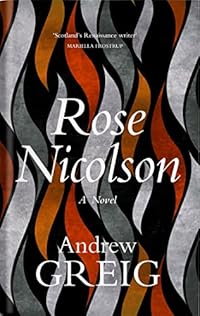
Rose Nicolson by Andrew Greig

Rose Nicolson by Andrew Greig is a great read. The setting is mainly Edinburgh or as it is written ‘Embra’ and St Andrews in Fife. It begins in 1574, the hardline Calvinist John Knox is dead and the woman that he despised, the Catholic Mary, Queen of Scots has left Scotland, but it’s feared (or hoped depending on which side you are on) that she will be back with a French army to help her.

William Fowler lives with his parents in Anchor Close, Edinburgh, but his father is killed in the close when he goes out to see what all the noise in the street is about. It doesn’t change the plans for William though, he is sent to St Andrews University, while his mother takes over the running of the family business – moneylending. William discovered that he could help her by putting some business her way. St Andrews Cathedral is already a ruin after John Knox and his followers had wrecked the place years before. What had been a well-off Catholic institution, because of the pilgrims that had brought money into the place in the past is now a poverty-stricken small town with teachers being almost as poor as the students, the locals are mainly involved in the fishing industry, and it’s a fishing family that Rose Nicolson belongs to.

William had seen her when she was busy mending fishing nets and had completely fallen for her, it turns out that she’s his best friend’s sister, and like his own family the parents had had religious differences.

Will’s mother is involved in a plot to have the Catholic religion reinstated. The Scottish Reformation has introduced a much more unforgiving version of Christianity and there are those that think that it was much more fun when you could sin and then confess and be forgiven. There’s no such fun with Knox and Calvinism, where just about everything leads to hellfire!

Anyway, this is a great read, the locations are all so well-known to me and that always adds to the experience. I intend to take some photos of some of the locations, including the martyr locations in St Andrews which have their initials on the ground where they were burnt. Meanwhile you can see some photos of Anchor Close here.

This book’s plot didn’t go the way I had expected it to, there was a good twist at the end which I did half guess, but I really enjoyed the character of Walter Scott, who was an ancestor of Sir Walter Scott the author, he was apparently very proud of being a descendent of this Border reiver. Scott would have loved this book, as I did.

Jack read it after I did and if you want to read his much more detailed review and thoughts you can have a look at it here.

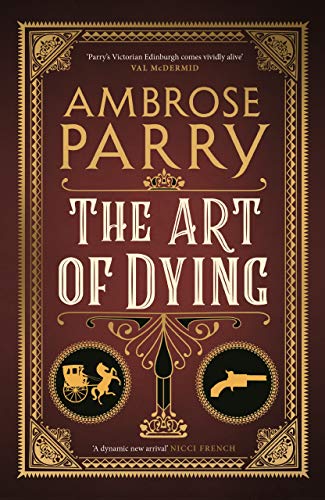
The Art of Dying by Ambrose Parry

The Art of Dying  cover

The Art of Dying by Ambrose Parry was first published in 2019 and it’s a sequel to The Way of All Flesh. The setting is Edinburgh 1849 where Doctor Will Raven has arrived after spending some time in Germany. He has returned to become assistant to the famous Professor Simpson and is looking forward to seeing Simpson’s housemaid again, he and Sarah had had a bit of a dalliance, but Raven hadn’t been able to stomach the thought of marrying a housemaid, albeit one who has a deep knowledge of medicine and herbs as Professor Simpson was happy for her to read his medical books and help him in his clinics. Raven is somewhat mortified to discover that another doctor hadn’t been so and so Sarah is now a doctor’s wife.

Raven realises that people within the city are dying, whole families within days of each other and he’s hoping that he will be able to prove that it’s a new illness that’s killing them, it would be a great thing for his reputation and career. He and Sarah team up to do some investigating. Meanwhile Professor Simpson’s reputation is being attacked by some of his colleagues, the medical profession is a dirty one with a lot of metaphorical knife sharpening going on.

Will and Sarah are determined to protect him, but Will is again in trouble with the local moneylender, something that he thought he had seen the end of previously.

I’ve really enjoyed these books which have a great atmosphere of old Edinburgh, from the lowest of the low in the Old Town to the wealthy and well-known inhabitants of the New Town.

It would seem that nothing much has changed when it comes to ambition within the medical profession – for some people anyway as I was reminded of that English doctor some years ago who was so determined to enhance his reputation and make a name for himself that he ignored anything in his research that didn’t fit in with his own theory. Which would have been harmless I suppose except he terrified some parents into refusing to get their children vaccinated against serious childhood diseases. I believe that after being dealt with in the UK he has moved on to the US to do the same thing, so endangering the lives of loads of children. Thankfully Will Raven is made of different stuff!

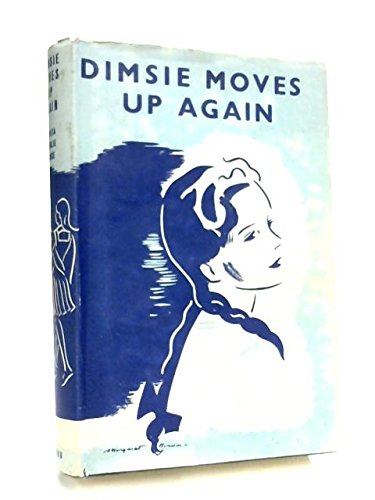
Dimsie Moves Up Again by Dorita Fairlie Bruce

 Dimsie Moves Up Again cover

Dimsie Moves Up Again by the Scottish children’s author Dorita Fairlie Bruce was first published in 1922 and is the third book in the Dimsie series with the setting of a boarding school for girls. My copy of the book dates from 1941 when it was a Christmas gift to Joan from her Auntie Belle, according to the inscription.

The story begins on a stormy September day, it’s the first day of the new school year so it’s quite chaotic with lots of girls’ boxes and trunks piling up waiting to be emptied. Dimsie and her chums are now almost seniors, but not quite. They are however senior enough to be outraged by the behaviour of the girls in the lower forms, they had never behaved like that when they were juniors!

The new head girl is an unexpected choice as far as most of the girls are concerned, and to some of the teachers too, and it takes a while for her to get into the swing of it all, so behaviour does get a bit out of hand in a dangerous way.

The new girl Fenella, who has never been at school before having been educated by governesses, has such a superior attitude – for no good reason – and she inadvertently triggers a hair-raising adventure.

As ever though it’s Dimsie who is the central character. I feel that Enid Blyton based Darrell in her Malory Towers books on Dimsie, those books were published over 20 years later than the Dimsie books and aren’t nearly as well written although I loved them as a youngster. I’ll definitely be continuing with the Dimsie series.

Rose Cottage by Mary Stewart

Rose Cottage by Mary Stewart was first published in 1997.

The setting is Argyll in Scotland and Sunderland, County Durham in the north-east of England. Kate Herrick is a young widow, having lost her husband who had been in the RAF during World War 2 – one of ‘the few’. Unexpectedly she has been left fairly well-off by him, but she’s working in a plant nursery in County Durham, just for something to do really, but she loves the work.

However Kate’s Granny has moved north to Scotland and has decided to stay there for good, she has asked Kate to clear up Rose Cottage which is the house that Granny had lived in. The house is on the Brandon estate where Granny had been a cook for years, and as Kate had lost both her parents as a child she had lived there with her Granny. Kate has instructions as to which furniture and household goods should be packed for Scotland, but she doesn’t expect it will take her long.

Kate’s a wee bit worried about going back to what had been her childhood home as not everyone had been friendly as she was growing up there, since her mother had been unmarried and her father a mystery. Kate had had to put up with some nastiness from strait-laced people, but she’s surprised by how welcome she has been made to feel on her return – time has changed things it seems.

This is an entertaining light read, not in the same league as the author’s earlier books but still with an element of romance, mystery and suspense in it, which she was so well known for. It was the last book that Mary Stewart had published and she was over 80 by then, she was 98 when she died.

I found it to be a bit of a strange experience reading this one as there were so many elements in it which echoed the experiences of a friend of mine from Sunderland who splits her time between Sunderland and Scotland – and she even has a pet tortoise just as one of the characters in the book has!

Although Mary Stewart is generally seen as being a Scottish author, she was actually born in the north-east of England, but moved to Scotland when she married a Scottish soldier and settled down in Edinburgh with him. I imagine she enjoyed her imaginary jaunt back in time to her roots geographical via writing this book.

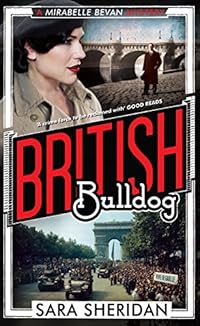
British Bulldog by Sara Sheridan

British Bulldog by Sara Sheridan was published in 2015 and it’s the third book in the Mirabelle Bevan series which is set in the early 1950s. In this one Mirabelle is told by a solicitor that she has been named in the will of a man that she barely knew. A Major Bradley, better known as Bulldog Bradley has just died and in his will he asks that Mirabelle tries to track down a wartime colleague of his. They had both been prisoners of war and had escaped together in 1944, but had been split up somehow and although Bradley had got back safely to Blighty his escape partner Philip Caine hadn’t. Mirabelle has been left 10,000 guineas in the will if she will take on the job of looking for Caine. That’s £10,000 plus 10,000 shillings, a huge amount of money, as you can imagine Major Bradley’s widow isn’t amused, she thinks the worst of Mirabelle.

Mirabelle sets off for Paris, as her mother was French she speaks the language fluently and knows the city well. It’s not long before she’s drawn into dangerous situations and discovers that Caine and Bradley had known her beloved Jack Duggan during the war. There’s a different enemy now with the Cold War gaining momentum and Mirabelle finds herself in the thick of it.

I think this one is my favourite of the series so far, the Paris setting was a nice change and it was good to be there without actually having to travel.

England Expects by Sara Sheridan

England Expects by Sara Sheridan was published in 2014 and it’s the third in the author’s Mirabelle Bevan series. The setting is mainly Brighton during a summer heatwave in 1953.

Joey Gillingham has just arrived in Brighton on an early train from London, he’s a sports journalist and is in the town to report on a series of boxing matches, but he’s also keen on horse-racing. The people who inhabit those sporting worlds can be ruthless, and it seems that Joey has upset someone as he is murdered in the prologue!

Obviously Mirabelle is interested in the case when she reads of it in the local newspaper, and she and her side-kick Vesta become involved in a very dangerous investigation. I can’t really say they are aided by Superintendent McGregor, because the boot is really on the other foot, and although I found the plot which involves Freemasons to be rather unlikely I did enjoy being in the company of Mirabelle, Vesta and their friends.

In general Sara Sheridan does a fairly good job of capturing the atmosphere of the early 1950s, however she doesn’t always get it right. At one point Mirabelle and Vesta have to travel by train to Cambridge, changing trains at King’s Cross London where they buy bottled beer from a packed station bar. During the journey they sip the beer!

No, that just would never have happened in 1950s England. Women would never have drunk beer in public and the only thing acceptable would have been cups of tea from a tea trolley. Despite that glaring incongruity I still really liked this book. I think I’m enjoying this series because I like being in the company of the characters – as much as anything else.

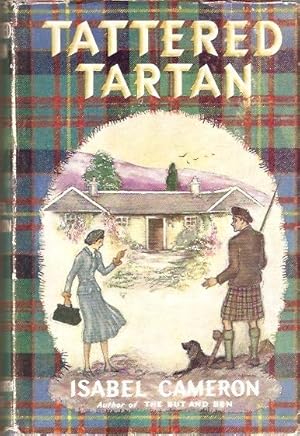
Tattered Tartan by Isabel Cameron

Tattered Tartan cover

Tattered Tartan by the Scottish author Isabel Cameron was first published in 1950 and I only realised after I had finished it that it is actually a sequel to her earlier book But and Ben. I’ll have to find a copy of that one.

The setting is the Scottish Highlands where Dr Grizel Gillespie has settled in well after a year in Glen Craigan, where the locals have accepted the ‘leddy’ doctor. Things are changing in the glen though as there’s a rich new ‘laird’ who is English and he’s shaking things up a bit.

There’s also a hydroelectric scheme being built which means that the inhabitants will have electricity in their homes and also water will be brought into their homes. This will be a boon, especially for the women and young girls of the area as it’s their job to carry in the water in buckets. In fact the older girls in families are often kept off school by their mothers who think it’s more important that the girls help in the house than get an education.

There is of course jeapordy and romance, it’s an entertaining read but for me it was the social history aspect that interested me most.

It seems hard to believe now but in the mid 1960s when I was a five year old living in Glasgow, the family who lived above us came from the Highlands, and even at that time they didn’t have running water in the house they had had on the Isle of Skye. On Saturday night they had to get lots of buckets of water from the well and stood them all under the kitchen table as they weren’t allowed to do anything on Sunday/the Sabbath except go to church and read the Bible, they couldn’t even cook anything, that had to be done on Saturday. So being able to just turn on a tap to get water would have seemed almost like a miracle. How times have changed. They went back to live on Skye anyway so that lifestyle didn’t put them off.

The Eleventh Orphan by Joan Lingard

The Eleventh Orphan by the Scottish author Joan Lingard was published in 2008 and she dedicated this one in memory of her grandparents who inspired her to write the characters of Ma and Pa Bigsby.

They have a pub in Victorian London called The Pig and Whistle where they have a very full home due to the ten children that they’ve adopted. When the local policeman turns up with another homeless child in tow Ma Bigsby isn’t keen to take her in, she always said she wouldn’t take on any more than ten children at a time. Elfie, short for Elfrieda is eleven years old, and has been in trouble with the police for thieving, another thing that puts Ma off, but when she is told by PC O’Dowd that Elfie has a painting of The Pig and Whistle in her bag Ma decides to take her in. Elfie knows nothing about her parents, not even their names, but she does have a bag full of clues that might lead her to her father anyway, she knows her mother is dead.

Ma sets to work cleaning up her newest waif and Pa begins to educate Elfie as she can’t read, teaching the children is Pa’s main job, but he also has to keep Elfie and Ivy apart as they hate each other at first sight. But there’s a lot of love within this blended family which is nurtured by the wisdom and common-sense of the parents.

This is really well done, an entertaining read for adults as well as children. It’s the first in a trilogy.

The Fair Botanists by Sara Sheridan

Previously I’ve read some of Sara Sheridan’s mysteries and enjoyed them so when I saw that she had written a book called The Fair Botanists with an Edinburgh setting, I requested it from the library.

The year is 1822 and Edinburgh is agog, King George IV is supposed to be visiting the city, the first visit from a Hanoverian king. Sir Walter Scott has the job of organising the whole thing and he’s not helped by not knowing exactly when or even if the visit will take place – such are the whims of royalty.

Meanwhile others are busy transporting mature trees and plants from where they have been growing in Leith Walk to their new home in what will be the new botanic gardens at what was the Inverleith estate. Inverleith House still has some of the family living in it. The elderly Clementina has recently been joined by Elizabeth, her nephew’s widow who is feeling lucky to have been taken in by her husband’s family as her husband left her poverty stricken. She’s a talented botanical artist so she’s very interested in all the planting that’s going on, particularly the rare Agave Americana which is due to flower soon.

In fact lots of people are interested in that plant, for various reasons, all determined to get a bit of it, but Bella is the most determined. She has befriended Elizabeth who is just about the only person in Edinburgh who doesn’t know what Bella’s profession is.

I did really enjoy this one but it’s not perfect. It should have been edited to expunge mention of ‘the elephant in the room’ as that’s a modern phrase, and I was really annoyed by the constant use of ‘quite the’ instead of ‘quite a’ by what seemed like every single character in the book, it’s just something that I dislike but dozens and dozens of uses of it by different characters drove me mad. Otherwise it’s entertaining and informative with interesting characters and situations both fictional and actual.