Grasmere Gingerbread

9 May 2013 23:51

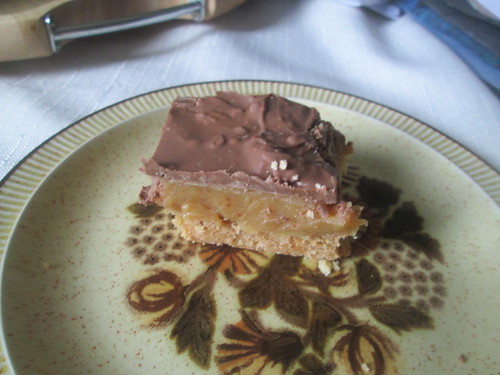
The village of Grasmere is famous for its gingerbread and I first tasted it when we went there recently. It was a bit of a surprise as it isn’t gingerbread as we know it. It isn’t cakey at all, in texture and consistency it’s more a cross between shortbread and flapjacks, and it is very good. As it’s quite robust it would be perfect for picnics or packed lunches. I knew I had seen a recipe for it in one of my many cookery books and at last I’ve just got around to trying it out.

Unfortunately Flickr has gone all wonky tonight, I hope I can add my photo soon.

Edited to add:- OK today; so here it is.

Grasmere Gingerbread


Grasmere Gingerbread

175g/6 oz wholewheat flour

50g/2 oz porridge oats

1/2 level teaspoon bicarbonate of soda

1 level teaspoon cream of tartar

2 level teaspoons ginger

175g/6 oz margarine

175g/6 oz brown sugar, muscavado gives a good flavour

50g/2 oz mixed dried peel finely chopped (optional)

Method:

1. Put flour and oats in a bowl and sift in bicarbonate of soda, cream of tartar and ginger. Mix well.

2. Rub in margarine, stir in sugar and mixed peel.

3. Press mixture into a greased Swiss roll tin, 28 by 18 cm/11 by 7 inches.

4. Bake in a warm oven, Gas 3, 325 F, 160 C, for about 30 minutes until brown.

5. Allow to cool in tin for 5 minutes then cut into fingers.

I did add the dried peel but 2 oz is an awful lot of peel so I added about half of that amount. It gives a lovely tang to the biscuits but even at half the amount it is very orangey, next time I think I’ll add some crystalized ginger too as I know that that would go down well with Gordon, our youngest son, who says that it isn’t possible for something to be too gingery. I’ll have to think of a new name for it then.

I made the dried peel myself, it’s a bit of a faff to do but I couldn’t find it in my local supermarket. I usually have an orange every day so waited until I had about a week’s worth of peel stored in a tub in the fridge before making it.

Dried peel is different from candied peel, which as you would expect has sugar added to it.

To make dried peel pare the bitter pith from the skin and cut the skin into strips, spread out on a baking tray and dry in the oven on a very low heat. Half an hour should do it but keep an eye on it as it will burn easily. It will keep well in a jar. Mine was very dry and brittle, maybe a wee bit overdried but it made it very easy to break it smaller, by putting into a small bowl and bashing it with the end of my rolling pin.

This is linked with Beth Fish Reads Weekend Cooking

Victoria Sponge Sandwich

24 March 2013 22:58

This is the most popular cake which is sold in the National Trust tearooms, which was a bit of a surprise to me but then I thought about it and it’s probably because it is a classic from childhood and let’s face it people in the National Trust tend to be the older generation who might think that Lemon Drizzle cake is something outrageously new and different so not worth the risk. They sell an amazing 171,000 slices per year.

Victoria Sandwich 2

I must get myself a sugar dredger or whatever you call them, because I just shook the sugar off a spoon and it didn’t work very well. I halved the quantity of the ingredients in the recipe, which meant that I used just three eggs when seven were used in the original. I think that half egg should have been substituted with a sploosh of milk or even some apple juice works well in a sponge if you think the mixture is a bit stiff. It is a wee bit dry for my taste and I’m sure that was why.

However, it is tasty and it’s also a very big cake, even just half the size it should be. The sandwich tins I used are 8 inches in diameter internally. I also added a few drops of vanilla extract to the cake mixture because I hate that eggy flavour you sometimes get in homemade sponges and the vanilla stops that happening. I used strawberry jam to sandwich the layers together.

avic sponge 3

Victoria Sandwich

Ingredients

350g/12oz self-raising flour

350g/12oz butter

350g/12oz caster sugar

350g/12oz (7) eggs

a few drops of vanilla extract (optional)

250g/9oz raspberry jam

Caster sugar to dust

Method

1. Preheat the oven to 170oC (gas mark 3).

2. Grease and line two 9-inch sandwich tins.

3. Place the butter and sugar in a large bowl and use a whisk to beat until light and fluffy.

4. Add half the eggs and whisk to combine, add remaining eggs and whisk well until light.

5. Sprinkle over the flour and with a spatula fold into the eggs, using a figure-of-eight motion. Be gentle, you need to keep as much air as you can in the batter.

6. Divide between the tins and bake for 35-40 minutes. Test using a skewer inserted into the middle of the cakes; if it comes out clean, they’re ready.

7. Once cool, use the jam to sandwich both halves together. Finish with a dusting of caster sugar.

This post is linked to Beth Fish Reads Weekend Cooking

Coffee and walnut cake

16 March 2013 23:57

whole cake side

Coffee and walnut cake

Serves: 8
Preparation time: 20 minutes
Cooking time: 20 minutes

Ingredients

Sponge:

250g (8oz) self raising flour

250g (8oz) margarine.

250g (8oz) sugar

4 eggs

1 tablespoon instant coffee mixed in a little hot water

1 tablespoon crushed walnuts (I added quite a lot more than this, just because I had walnuts which needed to be used up)

Icing:

125g (4oz) butter

250g (8oz) icing sugar

1 teaspoon instant coffee mixed in a little hot water

Method

Sponge

Preheat the oven to 200C or gas mark 6

1. Cream together margarine and sugar in a mixing bowl.

2. Add the beaten eggs to the mixture.

3. Add the crushed walnuts.

4. Add the coffee mixed with water and stir well.

5. Fold in the flour gently.

Put equal amounts into 2 x 8″ greased round sandwich tins, bake for 20 mins at 200C/360F/gas 6

Filling

Cream together butter and icing sugar in a bowl
Add mixed coffee

Sandwich cakes together with filling leaving a little to spread on top, then sprinkle with whole walnuts. You might be able to see from my photo that I grated some white chocolate over the cake, in an attempt to get Jack to eat it, but of course it just made it even sweeter.

This is a good cake, although it is quite dense, but not heavy – if that makes sense. I was not keen on the buttercream aspect of it though, it was too sweet.

The next time I bake this one I’m going to bake it in a loaf tin and make up a coffee syrup, skewer it all over and drizzle the syrup into it. I’m also going to use pecans instead of walnuts as Jack doesn’t like walnuts. I can’t taste much difference between them, but there you go, our taste buds are all different I suppose.

This is one of the cakes which is served in National Trust tearooms. It’s the third most popular one, they sell 102,000 slices of it per year! I think I’m going to bake their biggest seller next week – can you believe that it’s Victoria sponge? They sell 171,000 slices of that in a year.

a slice of cake

This post is linked with Beth Fish Reads Weekend Cooking.

Scottish Tablet/ Swiss Milk Tablet

18 December 2012 23:41

By popular demand (Evee and Peggy) I’m posting this tablet recipe which I blogged about nearly three years ago now. Since then I’ve adapted the recipe a bit. My mother’s hand-written recipe just says – a tin of condensed milk and doesn’t specify the size and I have experimented and decided that it works just as well with half a large tin or 1 small tin of condensed milk. Also I recently bought a sugar thermometer which only cost £6 but makes sweetie making so much easier. If you have one then you should turn the heat off when the mixture reaches the soft ball mark on the thermometer. Then add a drop of vanilla extract and beat with a wooden spoon as usual. If you don’t have a sugar thermometer you can still make tablet following the instructions below.

Swiss Milk Tablet

The photo above is of the tablet I made a while ago, you might want to cut your pieces smaller, my mum made small bite sized cubes. I made two batches recently, one with ordinary white sugar and the other with 1 lb of white and 1 lb of dark muscavado sugar. This makes it quite black treacly in flavour. Next time I’m going to try demerara sugar. I’ll put a new photo on soon.

Scottish Tablet (originally posted in February 2010)

This recipe has been handed down in my family for at least four generations. It is unbelievably sweet but at the same time very more-ish. So, if you are keen to hold on to your teeth, keep this recipe for high days and holidays only.

2lb sugar
4 oz unsalted butter
1 cup milk
1 large (397g) tin of condensed milk (or half of it for the healthier option)!!
drop of vanilla extract

Put the sugar, butter and cup of milk into a large heavy-based pot and cook on a low heat, stirring occasionally with a wooden spoon, until the butter has melted and the sugar has dissolved and then bring the mixture to a good ‘rolling’ boil.

It is important that you use something like a large soup pot as you really don’t want this mixture boiling over on to your hob.

Pour the condensed milk into the pot and stir carefully. Turn the heat down to the lowest setting and allow the mixture to come to the boil again. Don’t stir it.

Have a cup of cold water ready for testing the tablet. The amount of boiling time required before getting to the testing point is a bit of a guessing game, but with practice you will know just by looking at the mixture as it will have turned slightly darker and be thicker in consistency. It takes about 15 minutes to get to this stage on my hob, it’s called the soft ball stage, but as you can imagine it will vary greatly, depending on your hob and the type of pot used. I use an old aluminium soup pot.

Carefully scoop a teaspoonful of the mixture out of the pot and dip it into the cup of water. Leave for a few seconds and test for toffeeish consistency (not quite dripping off.) Repeat this if necessary until the mixture is at this stage.

Then turn off the heat and add the drop of vanilla extract. Beat the mixture with the wooden spoon. Be careful not to splash any of it on to you. Keep beating until you feel the consistency changing. It should feel heavier and thicker and you will feel the spoon ‘catching’ on the base.

Very carefully, pour the tablet into a non stick baking tray. Mine is 11 inches long and 7 inches wide and about 2 inches deep. This is really a two person job. One to hold the pot, while the other scrapes. Allow to cool and set slightly before marking into squares.

Watch how quickly it disappears. Be amazed by how fast you can put on weight. And fingers crossed that you don’t need any fillings when you next visit the dentist.

Pear and Ginger Pudding

21 November 2012 00:05

The supermarkets have plenty of nice pears at the moment so I thought I’d try this recipe.

Pear and Ginger Pudding

As you can see from my photo, I must have been having a wee bit of a senior moment when I took it because the pudding is upside-down on the plate, I did peel the greaseproof paper off the bottom of it, although it looks as if it’s still on. I know what was going through my head when I did it, I was thinking it was the upside-down pear pudding I sometimes do, but that is really quite different. I’ll be doing this one again as it went down very well with some cream, but as usual Jack thinks it would be even nicer with custard!

You need:

5 small pears, peeled, halved and cored
100g or 4 oz butter, plus extra for greasing
100g or 4 oz light brown muscovado sugar
100g or 4 oz black treacle
125ml or half a cup of whole milk
140g or just under 6 oz plain flour
1 level teaspoon ground ginger
a few shakes of cinnamon
1 level teaspoon bicarbonate of soda
1 medium egg, beaten

1. Heat your oven to gas mark 2 or 150 C (130 C fan assisted oven)
Grease an 18cm square cake tin (I think mine is actually a bit bigger)Line the base with baking parchment or greaseproof paper.
Arrange the pears cut side down in the bottom.

2. Melt the butter,treacle and sugar gently on a low heat until the sugar has dissolved. Stir in the milk and leave to cool a little.

3. Sift together the flour, spices and bicarbonate of soda. Beat it into the melted butter mixture along with the beaten egg, I just used a hand balloon whisk to do this.

4. Spread the mixture evenly into the prepared cake tin, giving it a bit of a ‘dunt’ on the worktop to make sure there are no air pockets.

5. Bake for about 1 hour, using the usual skewer method to make sure the centre is cooked through. If it isn’t cooked but the top is browning too much then cover the top with some baking parchment or foil to prevent burning.

Eat!

There is a metric/imperial measurements site here.

Tomato and Bean Soup (Fasolatha)

29 October 2012 23:43

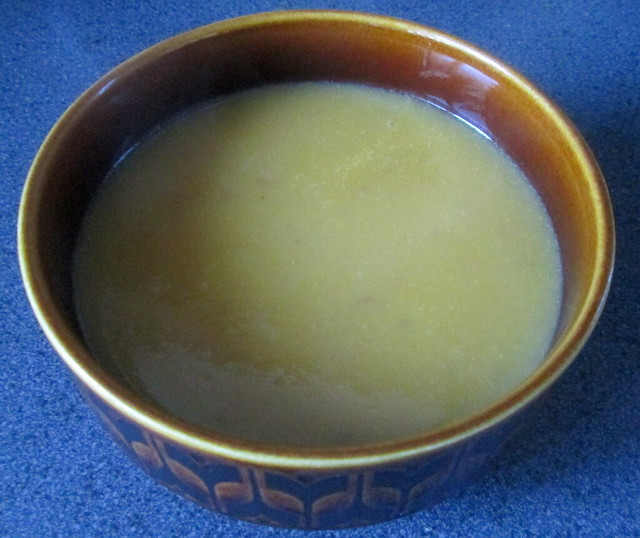
This recipe originates from Macedonia, Greece, and it’s back by popular demand, because Joan hadn’t heard of Fasolatha, as you can see it’s just ordinary tomato and bean soup, but it’s very tasty and nourishing, a real winter warmer.
Soup which is suitable for vegans!

tomato and bean soup

I blogged about this soup a few years ago, early on in my blogging career. It’s Duncan’s favourite soup and as he is living in his own place now he might tackle making it himself!

1 mugful of dried haricot beans soaked overnight
3 tomatoes, quartered or about 12 tiny ones
2 onions
4 carrots
3 sticks of celery (optional)
2 200g tins of chopped tomatoes
2 tsp dried oregano
1 tbsp tomato puree
chopped parsley and thyme (to your taste)

Roughly chop the onions carrots and celery and whizz up in a blender with water. You will have to do this a few times to deal with it all. Reserve some of the carrot and celery just roughly chopped if you like chunky bits in your soup as we do. Add all of this to a large pan with the haricot beans and tins of tomatoes. Then. add the tomato puree, dried oregano and chopped parsley and thyme. Lastly, add the quartered tomatoes and more water. I use my pressure cooker for this recipe as then you don’t have to bother about soaking the beans first, just cook at pressure for about 20 minutes. I add enough water to make about 12 bowls of soup. If you don’t have a pressure cooker then just boil it all up for about 1 hour. Season to taste. Try it, you’ll love it. If you can’t be bothered with the dried beans, try using ordinary tinned beans. Obviously you will only have to boil the soup for about 20 minutes then. I’ve never tried tinned beans but I think it will work fine.

Chocolate beetroot cakes

10 September 2012 23:49

chocolate beetroot cakes

I’ve been searching for the perfect chocolate cake recipe forever, so it seems anyway, and I may just have found it at last. Beetroot seems to be the ingredient of the moment and I think I first heard of it being used in chocolate cake in a recipe in The Great British Bake Off last year. I didn’t fancy the idea much but I felt the same about carrot cake when it first became popular in Britain.

Then Nigel Slater did a beetroot cake which looked good but unfortunately it includes dried fruit and of course Jack hates sultanas, raisins, anything like that – he calls them ‘blisters’. I toyed with the idea of substituting chopped dates as he doesn’t mind those, but then I found this recipe on the BBC Food website and these cakes are just about perfect. They feel quite heavy but they aren’t heavy in the stomach, the weight is all due to the lovely moist texture of the sponge.

I didn’t have corn oil so I used sunflower oil. Cooked beetroot can be bought in vacuum packs at the veggie section of all supermarkets.

Ingredients

75g/2½oz cocoa powder or powdered drinking chocolate

180g/6½oz plain flour

2 tsp baking powder

250g/8½oz caster sugar

250g/8½oz cooked beetroot

3 large eggs

200ml/7fl oz corn oil

1 tsp vanilla extract

icing sugar for dusting

Preparation method

Preheat the oven to 180C/355F/Gas 4. Arrange paper muffin cases in a 12-mould muffin tin.

Sift the cocoa powder, flour and baking powder into a bowl. Mix in the sugar, and set aside.

Purée the beetroot in a food processor. Add the eggs, one at a time, then add the vanilla and oil and blend until smooth.

Make a well in the centre of the dry ingredients, add the beetroot mixture and lightly mix. Pour into the muffin cases.

Bake for 30 minutes or until the top is firm when pressed with a finger.

Cool on a wire rack and dust with icing sugar to serve.

I used a non stick muffin tin for mine but if you only have fairy cake cases that will be fine, it just means you’ll get more of them as they’re smaller. In the future I think I’ll split the muffins and fill them with cherry jam and cream, and maybe even have a cherry on top!

Toad in the Hole – a recipe containing sausages

25 August 2012 00:19

No toads were harmed whilst making this dish.

Toad in the  Hole

Toad in the Hole sounds disgusting, doesn’t look an awful lot better but it is a very tasty and economical meal. This isn’t something which I was given as a child, in fact I must have been over 20 when I first tasted it as that’s when I made it for my husband. It had been a staple of his childhood. My mother regarded it as TOO ENGLISH for us – being Scots and I think she objected to the pork meat which ‘link’ sausages usually contained, she preferred Scottish beef. Anyway, I’m sure it’s a well known recipe but in case it’s new to you – here goes!

Cooking time 35: – 40 minutes
Oven temperature:- 450-475 F. Gas Mark 7-8
then 375 F. Gas Mark 4-5

For the Hole
Basic pancake batter:

4 oz plain flour
1 or 2 eggs
half a pint of milk

For the Toad:
A splash of cooking oil
1 lb of sausages

Make the pancake batter in the usual way. Use 2 eggs if you want a richer mix.

Then put the cooking oil into a large metal roasting tin and heat in the oven for about 4 minutes. I cut each sausage into three pieces to make sure they’ll be properly cooked through but I’m sure it isn’t really necessary. Add the sausages to the roasting tin and heat in the oven for about 8-10 minutes.

Remove from the oven and carefully pour the pancake batter mix over the sausages. Cook in a very hot oven for the first 10 minutes, until the mix is beginning to rise. Lower the heat to moderate and bake until golden brown.

The edges will be quite crisp whilst the middle will have a softer consistency. Halved tomatoes or mushrooms can be added in with the sausages if you want to make it a bit different. Serve with a side salad.

I always use really nice sausages, you can get all sorts of different types now of course with added herbs, leeks, wine, beer and even cheese.

The oven temperatures and times may differ slightly depending on your oven.

This post is linked to Weekend Cooking at Beth Fish Reads. Hop over and have a look at what other people have been cooking up.

Soda Bread

12 February 2012 22:42

Soda bread

Soda Bread: heat the oven to 400F/200C/Gas 6

6oz/170g self-raising wholemeal flour.
6oz/170g plain flour.
half a teaspoon of salt.
half a teaspoon of bicarbonate of soda.
290 ml/ half a pint of buttermilk.

1. Tip the flours, salt and bicarbonate of soda into a large bowl and mix together.
2. Make a well in the centre and pour in the buttermilk, mixing quickly with a large fork to form a soft dough. Depending on the absorbency of the flour you may have to add a wee bit more ordinary milk, if the dough seems a bit stiff, but it shouldn’t be too wet or sticky.
3. Turn onto a lightly floured surface and knead briefly.
4. Form into a round and flatten the dough slightly before placing on a lightly floured baking tray.
5. Cut a cross on the top and bake for 30 minutes or until the loaf sounds hollow.

I really liked the flavour of this bread but I think I need to fine tune the recipe a wee bit for my oven. The next time I’ll try baking it at Gas 5 for a longer time because the centre of my loaf was too doughy and obviously needed a bit more baking. I think my ovens are quite fierce, the thermostats don’t seem to be quite right so I often have to adjust baking times. I’m also going to try baking it in a bread tin as I prefer rectangular bread.

I’ve always loved soda bread, it’s very popular in the west of Scotland but for some reason the bakers in the east of Scotland didn’t sell it when we first moved here. They might sell it now, I gave up looking for it. I’ve been meaning to make it myself for years and only got around to it for the first time last week. I want to make more bread but my previous attempts have been dismal failures – doorstops spring to mind!

So I was interested in what Paul Hollywood was saying about bread making on the Great British Bake Off and I think I’ve been using the wrong sort of yeast. Different yeast has been purchased so I’ll be having another go later in the week. Fingers crossed that the poor birds don’t have to bounce their beaks off another disaster!

Following Paul Hollywood’s video I’m going to try making this bread later in the week.

Christmas Day

27 December 2011 01:04

I’m a day late with this post but I don’t seem to have had much time to myself. As you can see we’ve had the family home for Christmas, our two boys and Laura, Gordon’s girlfriend who is as much like a daughter to us as anyone could be as they’ve been going out with each other since they were just 17 and she stayed a lot with us when they were students as she was an English student, coming from Rochdale but at Uni in Stirling so we were her local base.

We had turkey and ham with lots of roasted veggies and yes sprouts which Jack and I love anyway but this time I used the Jamie Oliver shredded sprout recipe with bacon.
Duncan, Gordon and Laura

How solemn do we all look? We had fun, honestly!

Christmas Day Table

Believe it or not, I had never made a trifle before and I put this one together, not bothering with a recipe. Next time I’ll use more jelly and less custard I think. I used a shop bought Swiss roll for the first layer then topped it with strawberries and jelly then custard and cream with strawberries topped with grated chocolate. Very tasty.

Strawberry trifle

Just so that we had a choice of puddings I also made chocolate cheesecake based on Lorraine Pascale’s recipe which you can see here. I tweaked her recipe slightly. Instead of all chocolate digestives I made a third of them Amaretto biscuits to make a more interesting combination and I did the cheesecake in two layers, the first of which was all mixed in very well and the second layer was just roughly mixed to leave some of the cream cheese unmixed which made the flavour better I think as I like a bit of a surprise in each spoonful. As you can see I had a bit of a disaster with my piping nozzle thingy and ended up scraping the melted chocolate out onto the melted milk chocolate instead of having a beautifully feathered decoration. In future I’m not going to bother faffing about with the melted chocolate on top as the cheesecake is nice enough without it I think.

Chocolate Cheesecake

Boxing Day is always a rest for me as it’s the leftover ham and turkey made into a pie which takes no time to throw together. For some reason the pastry has shrunk away from the edges of my pie dish but it tasted fine.

Turkey and Ham Pie

So that’s it all over for another year. Now for Hogmanay!