The Davis Cup

For various reasons I didn’t get a chance to watch as much of Wimbledon on TV this year as I usually do, for instance we had to travel to Glasgow during one Andy Murray match, and before I knew what was happening – he was out of it. Who expected that? Not me anyway and not the anonymous idiot who bet £50,000 on him to win the tournament.

So today I was glad to be watching Murray playing against Gilles Simon in the Davis Cup. It’s rarely a relaxing pastime watching him play, in fact I reckon it’s not good for the NHS coffers, I’m sure that the Accident and Emergency units must fill up with heart patients.

After much stress (for me anyway) he won, making this the first British team to get so far in the tournament since 1981, which was obviously before he was born.

All very well and good, he was playing for team GB, so why did Sue Barker say in the post match chat that it was going to be great in the next round – England versus Australia. The woman on ITV news the previous evening also called the team England too despite the doubles players being two Scottish brothers – not to mention the coach.

Really they should know better, England is not an acceptable substitute for Great Britain. It’s even worse than those times in the past which I thought we had left behind, when successful people were described as being British, but if they lost they were called Scottish. I wonder how many complaints the BBC had about it? I didn’t bother. I’m fairly sure though that early on in the match some parts of the crowd were chanting England, England. It’s just completely ignorant.

If this had happened the night before the Independence Referendum it would have guaranteed a “YES” vote!

Loch Leven Castle

We had been meaning to visit Loch Leven Castle for over 30 years and it was just one of those local things which you never get around to visiting, or almost never. It’s one of the many castles which Mary Queen of Scots escaped from. In fact I have a theory that her captors allowed her to escape so that they could follow her and be led to their enemies, she seems to have made a habit of escaping, so it’s either that OR those men were all charmed to bits by her good looks, red/gold hair, very long legs (she was 6 feet tall) and of course as she was brought up in France from the age of five, she had a French accent!

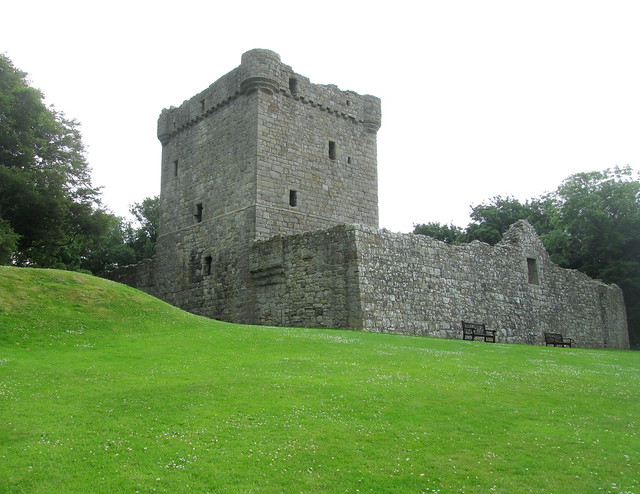
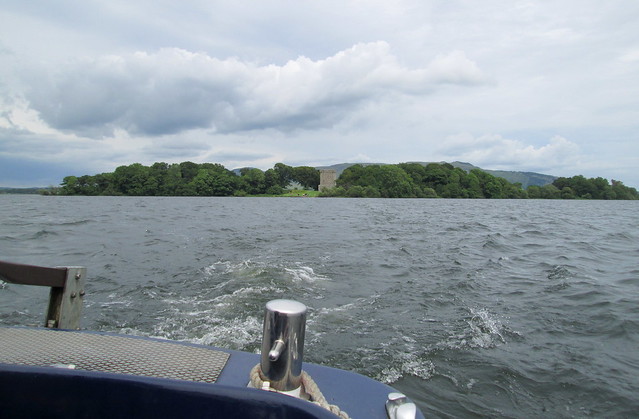
In the photo below you can see the castle. When she was there the loch level was higher than it is today so there was very little land around it, not that there’s much there today but you can take a wee walk around it. She complained bitterly about her living conditions and I don’t blame her really, it must have been very damp and cold.

Loch Leven

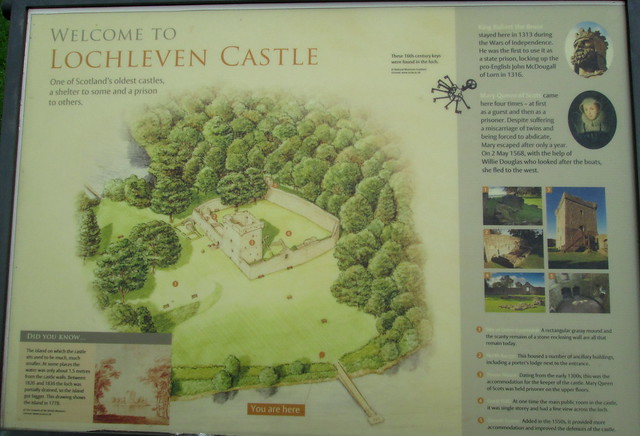
Below is an information board which I hope you are able to read.

Loch Leven

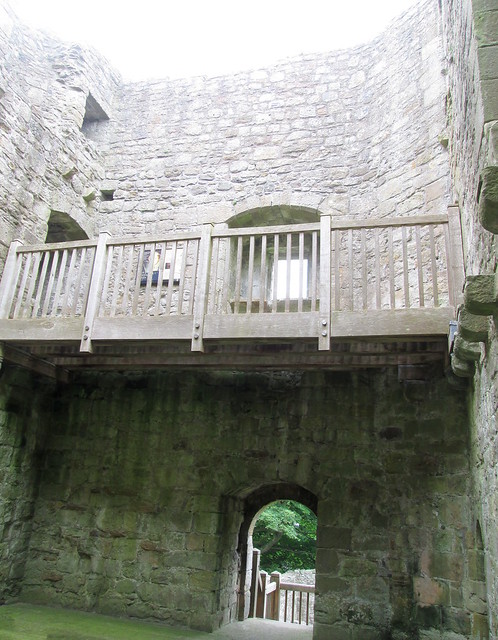
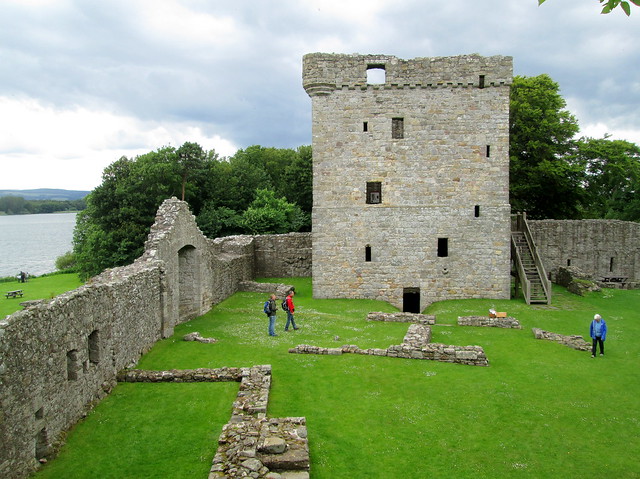
Loch Leven Castle is mainly a ruin but it’s still well worth a visit and there were quite a lot of visitors when we were there. Only ten people are allowed at a time in the boats which take you out there, it’s about a ten minute journey and the boat fare is included in the ticket price which was £5.50 and you get the boat from Kinross.

Loch Leven

Loch Leven Castle

Loch Leven Castle

It was a good afternoon out and although there were clouds of midges about which you can expect being near a loch I suppose – they weren’t bothering us at all, amazing!

A Sting in the Tale by Dave Goulson

A Sting in the Tale by Dave Goulson was first published in 2013 and it’s apparently a Sunday Times bestseller but it was via Joan at Planet Joan that I heard about it.

I’ve always loved bees and never been able to understand people who are frightened of them, such as the plumber we had who refused to go into our old house using the front door as the cotoneaster was alive with bees, silly man.

This book is very informative about all sorts of bees, written in a very amusing and readable fashion, despite the scientific facts within it. Dave Goulson has made bees his life’s study and is a very successful academic who has worked in several different universities in the UK, including Stirling University, not that far from me, so some of the information was very local to my area.

At one point Goulson describes: gangs of males can often be seen clustered together, reminiscent of a group of men propping up the bar in a pub. – which is just exactly what I have thought when the bees sound positively boozy with so much pollen.

I had no idea that the Perthshire soft fruit industry relies on importing bees from abroad, because the local bees wouldn’t be able to pollinate the vast quantities of plants involved. It seems crazy to me, surely we could have someone here breeding the bees.

Coincidentally, just as I finished reading this book I noticed a report in one of the local newspapers about a nasty disease infecting bees in Perthshire, you can read about it here.

A Sting in the Tale ended up being an entertaining read although I know that if I had been the author’s mother I would have been very worried about him as he was growing up. He describes how he had an obsession with nature which meant that he was on the lookout for animals and ended up scraping up roadkill in an attempt to practice his taxidermy skills on them. Being one of his childhood pets was not a good place to be as he invariably did them to death somehow or other. He did sound a bit like an incipient serial killer, but he turned out fine in the end. It just shows that you can worry too much about things!

My only gripe about this book is that there are no photos in it, I could have been doing with some to help me identify bees in my garden. Have I ever seen a carder bee for instance, much mentioned in the book but new to me? I googled carder bee and lo and behold it seems that the bees in the nearby nest and guzzling my bee bar plants are, I’m fairly certain, carder bees. I’m chuffed!

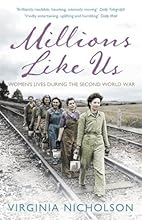
Millions Like Us by Virginia Nicholson

Millions Like Us cover

Millions Like Us by Virginia Nicholson is subtitled Women’s Lives During the Second World War. I read about this book on someone’s blog, one which I regularly visit, but sadly I can’t remember which one. Anyway I thought that after reading two books recently which were mainly about men in the war, I thought this would be a nice change, it was more than that, it was really interesting. This book was first published in 2011, just in time really as by then an awful lot of women who were active during the war were already dead. The wartime home economist Marguerite Patten features in the book and of course, she died recently. The Scottish writer Naomi Mitchison also features in it, another one no longer with us.

Inevitably a book like this has culled material from various other books on the subject, so some of Nella Last’s diary extracts appear too. It’s about every aspect of women’s lives at the time, from having to take in refugees from Belgium and Holland, or children from London. Choosing which service to join if you were unmarried, apparently thousands applied to join the Wrens (Navy) because the uniform was much more flattering than the others, and the hat was very fetching!

Those who ended up working in factories often had to put up with men who were resentful that the women were there, so they played tricks on them all the time, or the boss seemed to think that putting up with being groped by him was in the job description.

All in all it was a tough time for women, some of them might have enjoyed the friendship of their colleagues, especially if they had lived very narrow lives until then, but others were obviously happy to marry just about any chap to get pregnant and escape back to civilian life.

As you would expect, it seems that the strict moral code which most middle and working class women adhered to went out the window when you didn’t know whether you would wake up in the morning or you would be killed by a bomb.

At the end of the war, when the men eventually began to trickle home again, it wasn’t all milk and honey, with the husbands being keen to get back to the way things had been before, with them being head of the house. Seemingly they had no idea that the women had had things so tough. In some ways it was easier for those who were off in the services, they had their food put down to them and didn’t have to worry about clothing coupons as they were in uniform. It must have been quite a shock to see how much work went into just trying to get enough food when they got back to civvy street.

The book mentions that one woman in the ATS put on 2 stones in weight during the war, because they were being fed stodge I suppose, and I’ve seen it mentioned elsewhere that you could tell the women who had been in the forces because they all looked bloated. I had already noticed that from photos I had been shown by women I’ve known over the years.

There’s a small bit in the book about women who had been conscientious objectors, apparently they were given a tougher time than their male counterparts. As the women would never have to kill anyone it seems that they were seen as just trying to dodge doing anything at all. The one man that I knew who was a ‘conshy’ during the war actually had a really awful time of it as he accepted work as an ambulance driver in London, which meant that a lot of his time was spent in gathering up body parts and taking them to a hospital mortuary. There were women doing the same thing, really it’s a wonder they didn’t all go mad.

Peacetime brought divorce for a lot of couples who had married in haste, hardly knowing each other at all, and never really expecting to survive the war. For the GI brides things were even more precarious. Think of leaving your own family behind to be with someone you hardly know in a strange country. Not being able to run home when your husband started beating you up is a distinct disadvantage. No doubt some of the marriages were successful, but I remember my mother telling me that she knew a few girls who had been GI brides and went off to the US – all starry eyed, no doubt thinking of Hollywood, but when they got there they discovered that their husband’s home town was way out in the sticks, a sort of one horse town and definitely stuck in the past as far as the brides were concerned. What a disappointment!

Back to the book, it was a time of huge social upheaval obviously and working class women and ‘toffs’ were thrown together as they had never been before, an education for all concerned no doubt. I haven’t mentioned the make-up, apparently it was thought that women should wear make up, as a moral booster for everyone. I rarely use the stuff but I do admire that generation of women who had so much pride that they never opened their front door if they didn’t have their lipstick on (my mother) – but I hadn’t realised it was encouraged by the government!

This book used diaries, autobiographies, memoirs and interviews with the few who are still around. A very good read.

Murder Underground by Mavis Doriel Hay

Murder Underground by Mavis Doriel Hay is one of those recently republished British Library Crime Classics, the book was first published in 1934.

I had never heard of the author before but the blurb on the back has a wonderful endorsement by Dorothy L. Sayers who happens to be my favourite crime writer so I thought it would be a good read.

Sayers wrote in the Sunday Times, 1934:

‘This detective novel is much more than interesting. The numerous characters are well differentiated, and include one of the most feckless, exasperating and lifelike literary men that ever confused a trail.’

Sadly I can’t really say that I agree. For me this was just an okayish read and I felt it really did drag on.

Miss Pongleton is an elderly lady who owns the Frampton Hotel which is the sort of place which has a company of permanent residents. When Pongle, as she is known to them ends up murdered on a London Underground railway staircase, it seems obvious who the culprit is and the police make an early arrest. But of course it doesn’t end there. I almost said ‘more’s the pity’ but it wasn’t that bad, just not as good as I had hoped.

I can think of classic crime writers who would have been more deserving of being reprinted, and probably you can too.

Library Haul

I’ve been jumping around between a lot of the local libraries, borrowing like mad in an attempt to push their borrowing statistics up as they are in danger of being closed down due to cuts – all to no avail because apparently 16 libraries in Fife will be closed permanently. Well – I tried my best. Anyway, what do you think of my most recent library haul?

I’ve always been interested in 1950s fashion and design so when I spotted Fifties House by Catriona Gray at Kirkcaldy I just had to take it home. I was born at the back end of the 1950s but I remember some of the furniture and accessories from childhood. In fact I’m still severely disgruntled that my mother got rid of her beautiful 1950s golden oak dining suite by Beautility – whilst my back was turned when I was in Germany. She replaced it with a gateleg formica ‘teak’ table and a teak room divider/wall unit which nobody wanted when the inevitable house clearance took place some years ago. I would have gladly given house room to the golden oak! You can look inside the book here and see some of the contents if you’re interested.

Homemade Gifts by Sarah Moore was the next one which I picked up. Since moving house last year I’ve done hardly anything in the way of crafts but I’m hoping to get back into the swing of it before much longer. I have an ever growing fabric and ‘stuff’ stash so it’s about time I used some of it. You can look inside some of this book here.

The shirt off his back by Juliet Bawden was next, the title tickles me but as I have a bag full of Jack’s old shirts which are past wearing and he doesn’t need any of them for wearing whilst doing DIY/painting, I plan to use some of them to do projects in this book which you can look inside here.

Lastly – and don’t all shout at me for this, yes it features the ‘C’ word, Christmas of course. Tilda’s Christmas Ideas by Tone Finnanger was on their new books shelf so I’m the first person to get it out and I swithered about it, but the thought that it would almost certainly be unavailable to borrow nearer Christmas swayed me towards borrowing it. I love the Scandinavian looking Santas on the front cover and I have lots of red material so I plan to at least make those. You can see some images of the Christmas projects inside it here.

The McFlannels by Helen W. Pryde

There’s next to nothing on the internet about the author Helen W. Pryde, but I did find the above photo on a site called alamy. She seems to have written a lot of radio screenplays for the BBC and I’m not sure if the McFlannel books which were originally radio plays account for all of her writing.

I was really chuffed to get two of the books (4 and 5) in a charity shop, just as I had almost given up hope and had decided to trawl the internet for them. Of course I managed to buy book 3 when we were up at Fort William with Peggy and Evee in May.

The series comprises of:
1. The First Book of the McFlannels
2. The McFlannels See It Through
3. McFlannels United
4. McFlannel Family Affairs
5. Maisie McFlannel’s Romance

After Peggy left to go back to the US I just binged on books 3, 4 and 5 devouring them one after the other. When they were published, from 1947 on I think these books were seen as just a bit of light reading, a good laugh. Nowadays though they’re a real window into the social history of mainly Glasgow, with occasional days away into Edinburgh – or as we say in Glasgow – capital punishment!

These books are written mainly in plain English but father McFlannel, in the shape of Willie speaks with such a broad Glaswegian dialect that his wife and daughters are permanently embarrassed by him and despite years of attempting to train him up to be more genteel, none of it rubs off on him. Which is just as well as he is the best character in the books and holds his own with the posher members of society, who tend to be called McSatin or McSilk as almost all the surnames in the books are types of cloth appropriate to the characters, such as the McTweeds being a bit coarse and the minister is Mr McCrepe.

As I haven’t lived in the west of Scotland for donkey’s years now I’m wondering if all the pithy ways of expressing yourself have gone. Do people who think they are better than other folk (like a Scottish Hyacinth Bucket equivalent) still talk ‘pan loaf’ meaning a put on posh accent. Somehow I doubt it, which is a bit of a shame because it was amusing when you had dealings with people like that. Thankfully if you want to re-visit those days then you can through the McFlannel books, if you can get a hold of them.

I read these books as part of the Read Scotland 2015 Challenge. I’ve lost count of how many I’ve read this year, I’ll have to do a re-count.

Roses in my garden

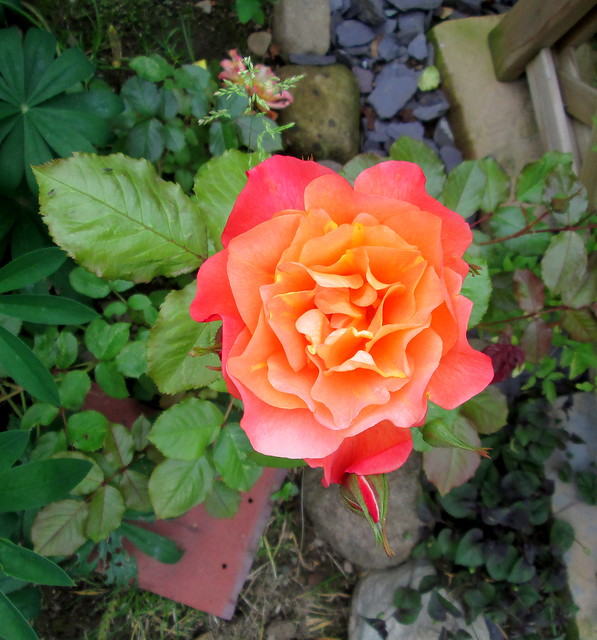
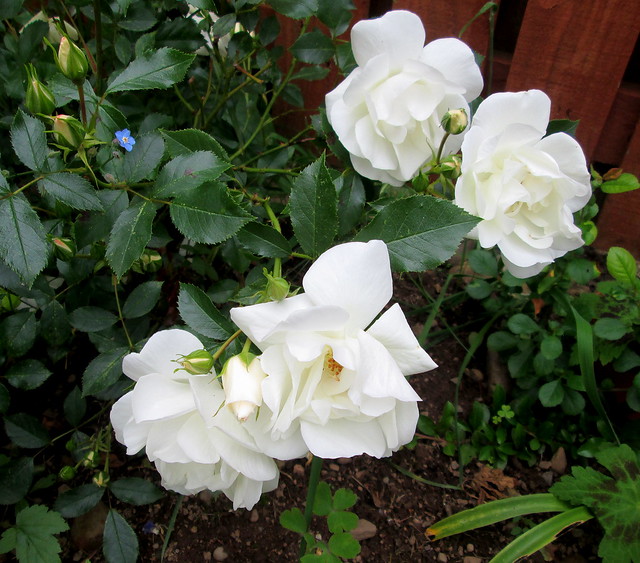
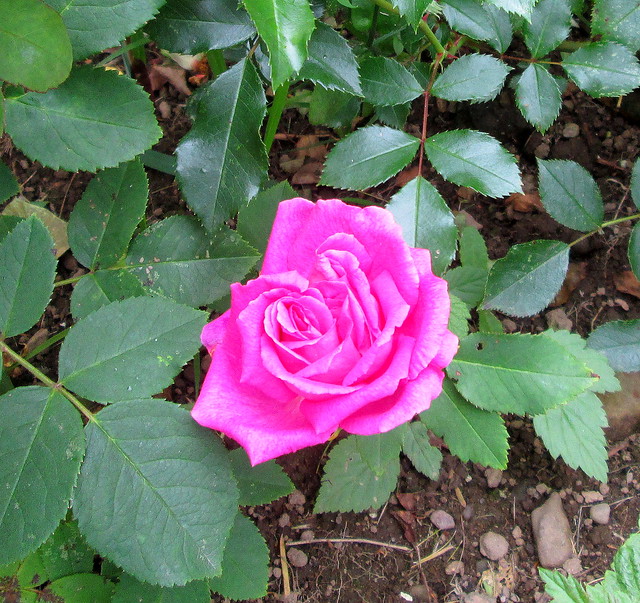
Just a quick post tonight of some of the roses which are flowering at the moment in my garden. I really MUST dig out all my rose labels as I can’t remember what these ones are. The first one below is my favourite so far, it begins as an almost red bud and changes colour as it opens, a cracker!

rose

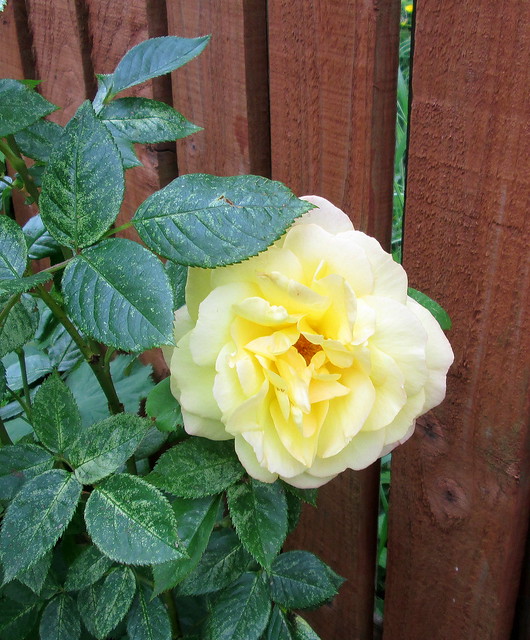
This yellow one is obviously in need of some plant food as going by the leaves it’s deficient in something..

rose

rose

rose

The Gowk Storm by Nancy Brysson Morrison

The Gowk Storm by Nancy Brysson Morrison was first published in 1933 and it features in the Top 100 Scottish books. Jack is intending to work his way through that list and he thought I would enjoy reading this one. Which I did, as did Peggy Ann, you can read her review of it here.

The setting is the Highlands of Scotland, a manse which apart from the minister and his wife houses their three young daughters. The story is told through the observations of the youngest girl Lisbet. Her two older sisters Julia and Emmy are reaching the age when they are going out and about a bit and meeting other young people, life beyond the strict atmosphere of the manse beckons but it’s a more complicated life which ends in grief.

Some people think that the story is similar to that of the Brontes and as the author also wrote a biography of the Brontes I can see why they would think that, there are three daughters and the father is a self-centred tyrranical misery, but for me it was the writing of Willa Cather which was brought to mind. The ability to conjure up a sense of place in beautiful descriptions is always a winner for me and I think it’s a very Scottish/Celtic trait in writing, where the place is as much a character as any of the people.

The tale veers towards Thomas Hardy in its sense of doom and drama, but not quite as dark and depressing as his writing can be. The Gowk Storm is described as – ‘lyrical, passionate and a real page turner.’ I’ll definitely be looking for more of Nancy Brysson Morrison’s books.

Below is a wee taster of her writing.

I sat for some time on the western side of the dyke, looking over the moor and stared at the bare ground so long that I saw it veined with deep dark colours, wine red, ruby and prune, drawn to the surface by the sun. Amongst the peat hags were little raised islands with tufts of long grasses sprouting from them, which made me think of fantastic hedgehogs. Grasses purple when in a mass, bent whispering and sighing before the wind, but I was so protected where I sat that it scarecely fanned my face.