Orkney Houses

One thing that I really like about going to visit new places is the different types of houses that have been built there. Most places have their own distinctive style, or they did have before the 1960-s anyway.

The wee house below is at Skara Brae and is used as a teeny exhibition centre. It is obviously well maintained which is just as well as it is more or less right on the beach and the weather is often wild.
a house a Skara Brae

Sadly the Orkney islanders have mainly opted for warmth and comfort in recent years, not that I blame them as I have recently done that too. But a lot of traditional houses on Orkney have just been abandoned and are now ruins. Every since I was a wee girl I’ve had an urge to bring any derelict houses I see back to life, it seems such a shame to me to leave a house standing empty, especially nowadays when there are so many homeless people around, but that doesn’t apply in Orkney I hope. The ruin below is just above the beach near Skara Brae.

ruin  near Skara Brae
Even I have to admit that it’s probably a wee bit too far gone, the location is great though.
a ruin

It looks like most of the local buildings have been built from stones taken off the beaches, there are certainly plenty of them where you can just pick up perfectly flat straight stones. Some houses that aren’t that far gone in dereliction still have their stone roof more or less intact.

In some ways the old buildings are quite similar to newbuilds now as small windows were preferred, presumably to keep the cold and wind out as much as possible. I was very taken by the house below which I managed to snap while Jack was driving past it. If I had a flagpole I’d be very tempted to fly a Jolly Roger/pirate flag from it too! That house has been harled/cement rendered to try to keep the weather out and preserve the stone underneath.

Pirate flag

I think it might be possible to rebuild these old homes, using a modern house structure as a sort of lining, all well insulated of course. Then you could have the best of both worlds – a lovely quaint building with character and the warmth of a modern home. I’d be tempted to give it a go – if Orkney wasn’t so far away.

The house in the photo below is now used for storage I think.

an old house in Stromness

The building below may have been just for storage or animals, on the other hand, if there are a few wee windows on the other side, it might have been a house at some point in the past. It has a slate roof though, not stone.

Orkney buildings
People in Orkney are very friendly, well the ones we met were anyway. One windy evening we were walking along the back road, struggling with a small map we had been given, and a motorist stopped to ask if he could help us. We told him we were looking for the location of Norna of the Fitful Head‘s home. She was a character in Sir Walter Scott’s The Pirate. As it happened the friendly gentleman had built his house right at what had been Norna’s gate, but of course her house was no longer standing. It was probably just by the escallonia bush on the right below.

Bitsy Miller

Sir Walter Scott had based his character Norna on Betty Miller (the motorist called her Bitsy) who was a sort of white witch who made her living selling ‘fair winds’ to sailors, apparently at sixpence a wind, a lot of money in those days. With sailors being superstitious and fearful of rough weather, she did a good trade in fair winds which I think she sold to the sailors in a piece of cloth. It was an ingenious way of making a living, even better than the snake oil merchants of America’s wild west. As you can see from the photo below, the motorist has named his house Fairwinds, in memory of her.

Bitsy Miller

There are ruins all over the place, often with a modern-ish house very close by, they have just built the new home in the garden of the old one. It’s quite difficult to take photos of places on Orkney though as often there is no suitable stopping place and the roads are very narrow with passing places, so stopping would cause a traffic jam.

The photo below is of Stromness from the south. If you’re interested in Polar exploration – this is the harbour that Captain Cook’s ships Discovery and Resolution called in at to replenish their stores of fresh water and food.

Stromness from south

The well they used was sealed up in 1931 and as you can see they now have it covered to protect it.

Well for sailors

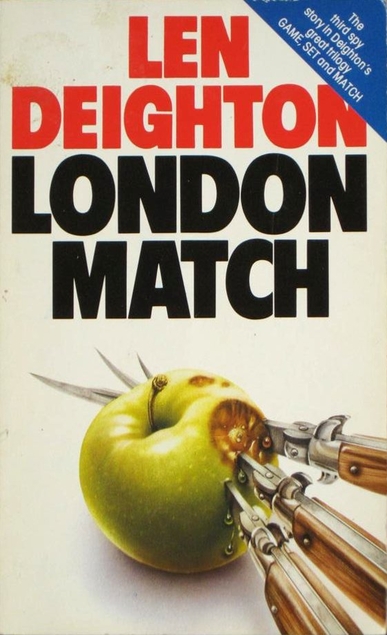
London Match by Len Deighton

London Match cover

London Match by Len Deighton was first published in 1985 and it’s the third book featuring Bernard Samson and the various other ‘civil servants’ who were engaged in spying or spy spotting in London and West Berlin during the Cold War era.

As you would expect, nothing can be taken at face value, leaks in the department mean that just about everybody is under suspicion of being a double agent. At the same time there’s a lot going on in the way of office politics and back stabbing and Bernard believes his children are in danger of being snatched.

At 405 pages you would think that this wouldn’t be a quick read but it didn’t take me long (mind you the bad weather might have had a hand in that!) and I find Deighton’s writing to be really good and surprisingly descriptive, something that I appreciate. I’ll definitely be reading the next one in this series which is Spy Hook.

Len Deighton seems to be one of those talented people who have successes in many different arts, that’s always impressive, and slightly annoying of course!

London Match was one of my 20 Books of Summer.

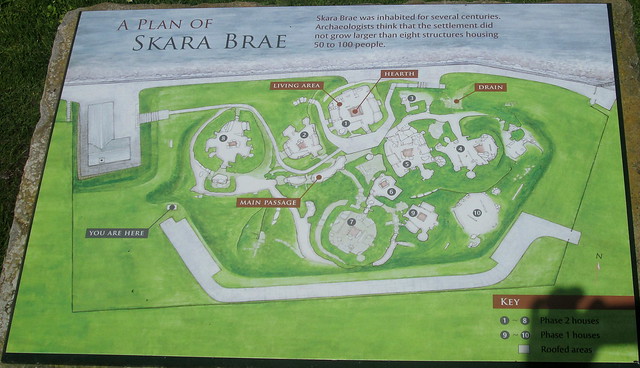
Skara Brae, Orkney

We were quite lucky as we got to Skara Brae before it became too busy, we looked around the remains and then walked along the beach, and when we got back to Skara Brae three tour coaches had arrived. I don’t think it can be quite the same experience when there are that many people there.

Skara Brae plaque

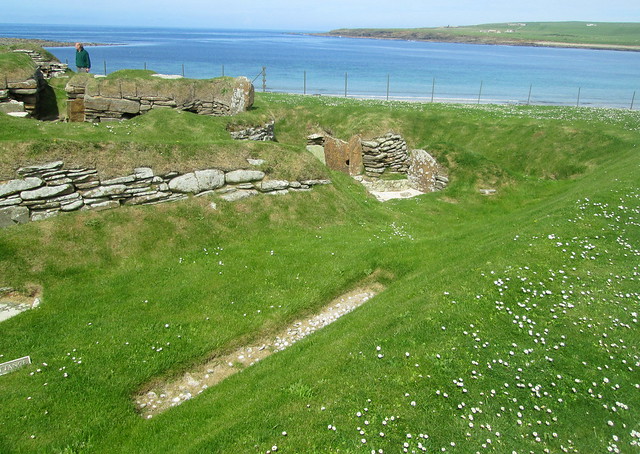
As you can see Skara Brae is situated close to a beach. It was a huge storm back in 1850 which resulted in a huge amount of sand being cleared away, uncovering the remains of the Neolithic dwellings. This settlement is 5,000 years old, older than Stonehenge. According to the historian Neil Oliver Orkney was the centre of the world back then!

first structure

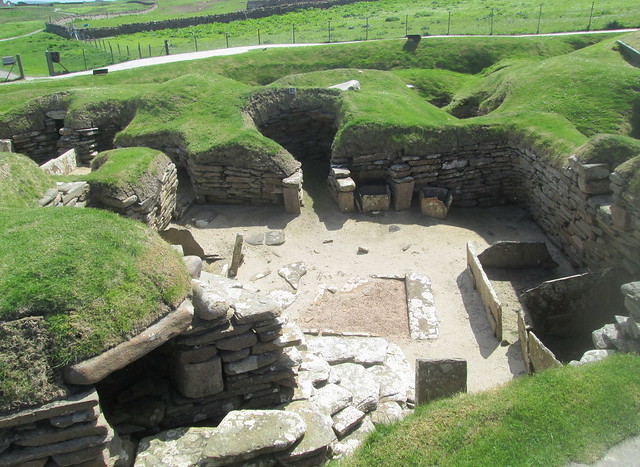
The rectangular ‘boxes’ on the right of the photo are the beds, they would have been filled with heather and animal skins to make them cosy.

house  at Skara Brae

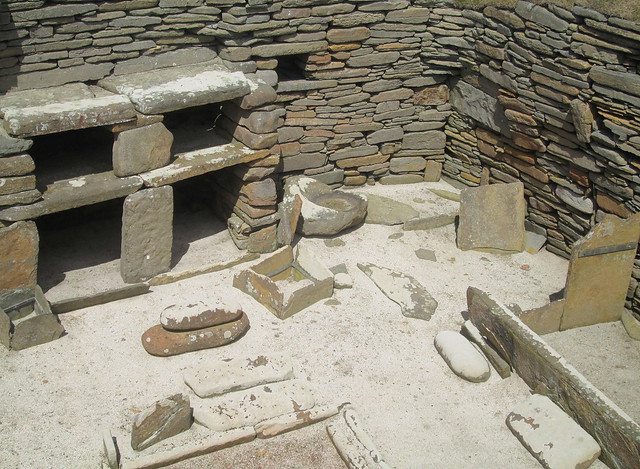
It is a bit like The Flintstones, with all the furniture being made from rocks, but I really like the shelves/dresser. Some Stone Age woman was really proud of her home and did her best to make it comfortable.

shelves

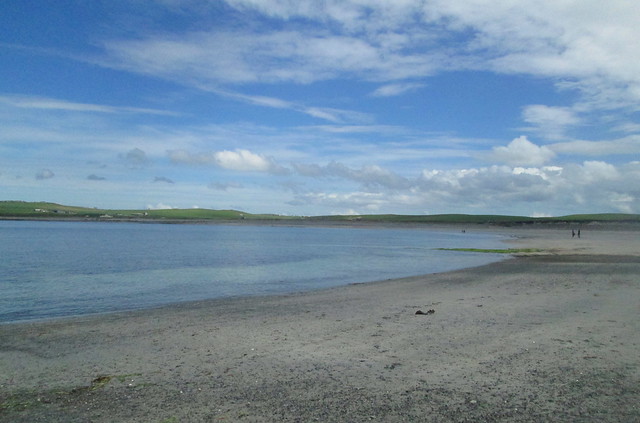
This is a view of Skaill beach from the edge of Skara Brae.

Skaill Beach, Orkney

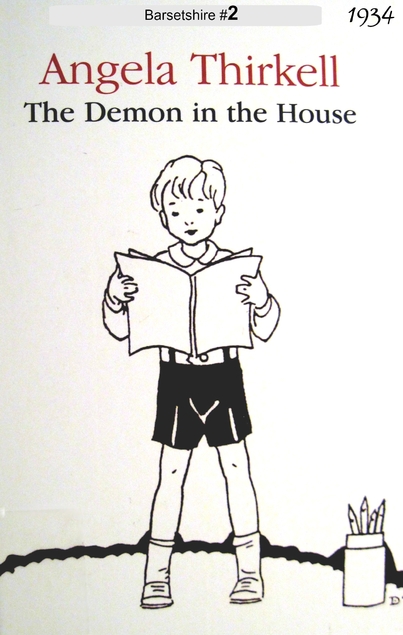
The Demon in the House by Angela Thirkell

The Demon in the House cover

The Demon in the House by Angela Thirkell was published in 1934, a busy year for the author it would seem. She so fell in love with her character Tony Morland who first appears in High Rising – that she had to write more about him. He is of course the twelve year old son of Laura Morland who is a writer, it’s difficult not to assume that the Morlands are based on Thirkell’s own family.

This was a first time read for me as I had trouble finding a copy to buy at what I regarded as a reasonable price, luckily I managed to borrow it from the library, albeit in large print.

As the youngest of Laura’s four boys and never having known his long dead father, Tony is rather pampered, but he’s an exuberant lad, always getting into scrapes, breaking windows, ruining clothes, washing the newly shelled peas down the sink, retrieving them from the u-bend and eating them! You get the idea, he’s a bundle of trouble but at the same time adorable.

This portrayal of the relationship between a young boy and his mother is by far the most realistic I’ve read, despite Tony’s exaggerated character. Every bike outing of Tony’s has Laura imagining the worst. At the end of the book she is sorting out the clothes for his school trunk, he’s moving up to the senior school and going from short trousers to long ones, a huge rite of passage for boys and mothers in those days.

What really surprised me about this book is the many mentions of Hitler. Tony says Hitler murders practically all Germans. He knows what he would do. He’d put an electric shock machine in his telephone and when Hitler answered the telephone he’d get electrocuted. If only it had been that easy.

I read this one for the 20 Books of Summer Challenge.