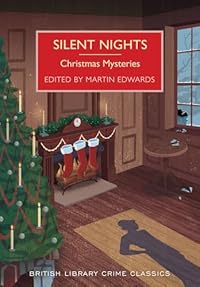
SILENT NIGHTS Christmas Mysteries edited by Martin Edwards

 SILENT NIGHTS   cover

I’ve been away for four days, travelling around in the north-east of England and seeing the sights, before we need a passport to visit England, but I didn’t see as many sights as I would have liked to – so I’ll be back to see the Roman sites next time. I didn’t get an awful lot of reading done while I was down there but I did finish …

SILENT NIGHTS Christmas Mysteries edited by Martin Edwards was published in 2015 and it’s a compilation of fifteen short stories which all have a Christmas theme. There’s a short biography of each of the writers before their contribution to the book begins, they were interesting and informative. I had no idea that Marjorie Bowen also wrote under the names Joseph Shearing, George R. Preedy, John Winch and Robert Paye. She has two stories in this collection.

I found Cambric Tea that she wrote as Marjorie Bowen to be quite chilling. A wealthy man believes that he is being poisoned by his much younger wife, but all is not as it seems.

She wrote The Chinese Apple under the name of Joseph Shearing. A successful woman has to travel to London from her home in Italy after her sister dies leaving a young daughter who may need some attention from her reluctant aunt. Returning to the family home is an ordeal for the aunt who had been living in Florence. London is dingy and dirty and the house holds bad memories for her, things go from bad to worse as she realises that there has been a murder in the house across the road.

I had already read The Necklace of Pearls by Dorothy L. Sayers so didn’t bother re-reading it as I remember that I wasn’t too impressed by it, which is strange as I’m really quite a Sayers fan. I think in general though this is a really good collection. I don’t think much of the cover design though, which is surprisingly dull in my opinion, maybe there is a shortage of Christmas linked vintage designs. This cover was designed by Chris Andrews and isn’t one of his best book covers.

The Blue Carbunkle by Arthur Conan Doyle
Parlour Tricks by Ralph Plummer
A Happy Solution by Raymund Allen
The Flying Stars by G.K. Chesterton
Stuffing by Edgar Wallace
The Unknown Murderer by H.C. Bailey
The Absconding Treasurer by J.Jefferson Farjeon
The Necklace of Pearls by Dorothy L. Sayers
The Case is Altered by Margery Allingham
Waxworks by Ethel Lina White
Cambric Tea by Marjorie Bowen
The Chinese Apple by Joseph Shearing
A Problem in White by Nicholas Blake
The Name on the Window by Edmund Crispin
Beef for Christmas by Leo Bruce

Christmas Reads

To try to get me into the Christmas mood I’ll be reading some Christmas related books, sadly so far the only one that I have in the house unread is Silent Nights Christmas Mysteries edited by Martin Edwards and it’s a British Library Crime Classic. This is one that I didn’t get around to reading last year, but I’m half-way through it now and finding it to be a good read.

Silent Nights

This collection of short stories features the writers below, some of whom I’ve never even heard of before.
Arthur Conan Doyle
Ralph Plummer
Raymund Allen
G.K. Chesterton
Edgar Wallace
H.C. Bailey
J.Jefferson Farjeon
Dorothy L. Sayers
Margery Allingham
Ethel Lina White
Marjorie Bowen
Joseph Shearing
Nicholas Blake
Edmund Crispin
Leo Bruce

Calke Abbey – again

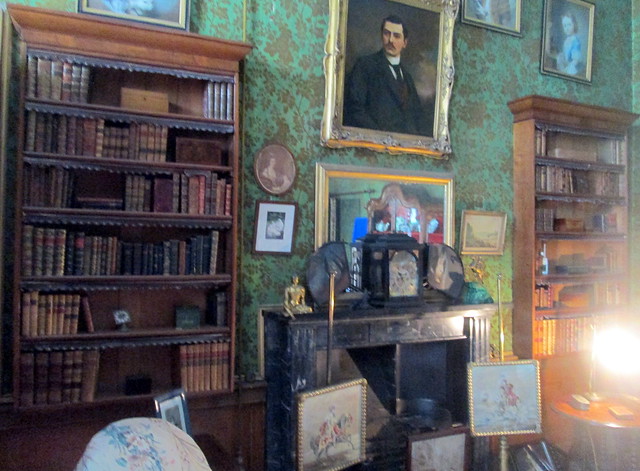
Back at Calke Abbey, you can see from the amount of clutter around that some of the rooms are very Victorian, I suspect that these were the ones that the family used most themselves. Why have one fire screen when you can have three?!
paintings, Calke Abbey

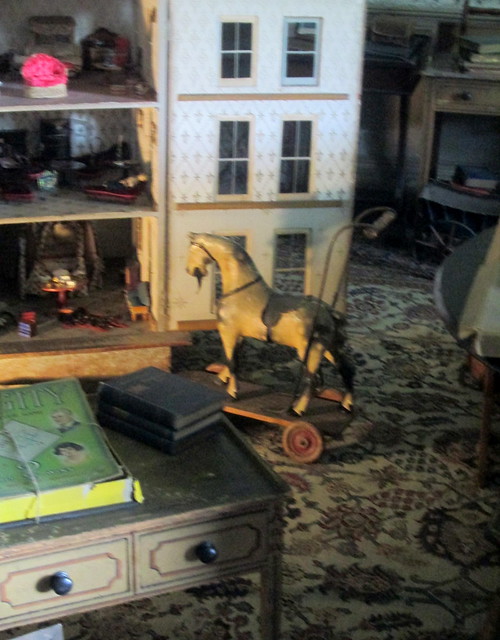
I love the nurseries in these old houses, more than anything a doll’s house and push along horse makes you realise that no matter how grand they were in their heyday they were still family homes. Mind you, it’s a very grand doll’s house.
toy room, rocking horse, nursery, Calke Abbey

But it’s a very long time since any children ever played in this nursery/schoolroom which obviously became a bit of a dumping ground for ‘stuff’. I think it was a good decision of the National Trust’s to leave things just as they found them for once. I like all the soot stained ghostly outlines of whatever hung on the walls.
toy room clutter 2 doll's house

nursery clutter, old toys, Calke Abbey

I suspect that the children were bathed in a tin bath in front of the nursery fire and not in the shower in the photo below. Surely there must have been some sort of oilskin curtain around it to keep the water in. I think that the water must have been stored in the cistern above and when it was empty your shower was over. You would have to be fast, unless it was little more than a trickle.
Edwardian shower, Calke Abbey

Le Testament Francais by Andrei Makine

Le testament francais

Le Testament Francais by Andrei Makine was first published in 1995 and is apparently an international bestseller, but I had never heard of it before I stumbled across it in the library, and I thought it would ‘do’ for one of my Read Europe Challenge books. It was written in French and translated into English by Geoffrey Strachan.

First I have to say that this is a really well written book, but as ever with a translation I have no idea whether that is down to the author or the work of the translator, as just as a bad translation will kill a good book – so can a good one make all the difference for the better.

I didn’t love Le Testament Francais as other readers seem to have though. It wasn’t a page turner for me and I was never dying to get back to reading it after putting it down.

The narrator is a young Russian boy who grows up in the 1960s and 70s, he learns about the experiences of Charlotte, his French grandmother through her memories of Paris and a suitcase full of old photographs, newspapers and magazines from her past. After a lot of toing and froing between France and Russia in her earlier life Charlotte had settled in France, but with the outbreak of war she ended up going back to Russia as she could speak the language and they needed her as a nurse. When she eventually wanted to get back home to France her papers were confiscated and she was stuck in what was by then Stalinist Russia.

Determined to hang on to her French identity and mainly speaking French Charlotte’s grandson ends up being seen as being French by his schoolmates and really not fitting in, eventually he grows to love Russia but after Glasnost and the opening up of Russia he settled in Paris to write books in French about his Russian life.

I suspect that the structure of this book is what is meant to impress the reader, but that would probably depend on how much experience you have of reading books that jump around between times and settings. For me it was just okay. If you have read this one, what did you think of it?

I read this one for the 2019 European Reading Challenge.

Chester

The city of Chester is a lovely place to visit if you want a wee bit of a change from the rural scene in nearby Wales which is where we were staying for a few days when we visited this place. Chester is absolutely choc full of history. We stuck to the townscape but if we had done our homework beforehand we could have visited a Roman amphitheatre and all sorts – next time maybe.

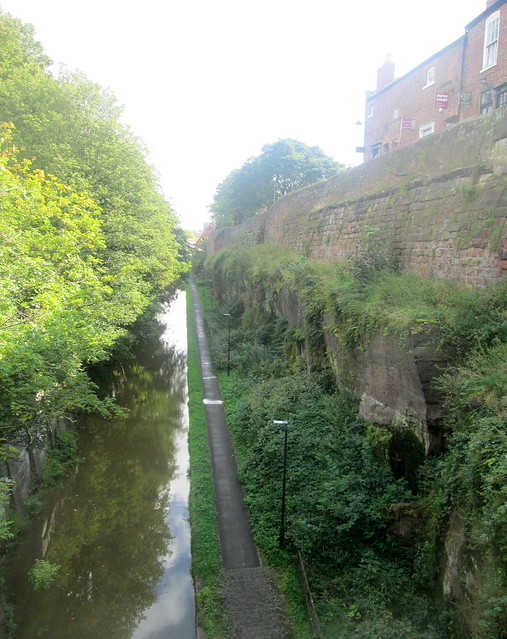
Chester was founded by the Romans in AD 79 and in the photo below you can see that there’s still quite a lot of the original Roman wall that they built around their fort still in existence.

Roman Wall, Chester

Chester Town Hall (maybe)

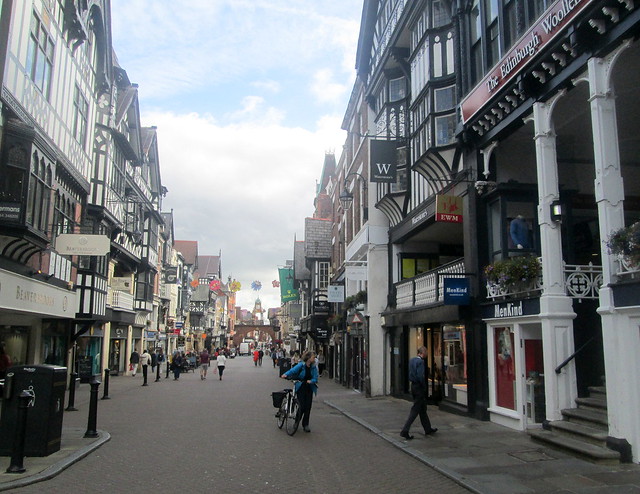
We didn’t take many photos as there were so many people about, but in the one below you can see the famous Chester Rows – the two tier medieval shops which are still being used as shops today. There are lovely arcades which you can wander around in, keeping dry if it happens to be raining.

Chester Rows

Next time we visit we’ll definitely be aiming for the Roman amphitheatre, which you can see here.

We did visit the Cathedral but that will be in another post.

Rosie by Rose Tremain

 Rosie cover

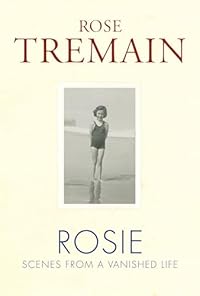
In Rosie: Scenes from a vanished life by Rose Tremain the author has written about her family history, going back to the memories that she had of her maternal grandparent’s home, a place that she and her sister adored visiting, despite the fact that their grandmother was remote and gave them no love. She had been traumatised by the death of her two sons years before, one was killed in World War I but before that another had died while at school when he was only 16. Rose Tremain’s mother had suffered from this unloving mother who mourned all her life for her lost beloved sons, forgetting that she still had a daughter who was alive. In fact the daughter’s very presence seems to have been a source of pain and at the age of only six she was sent away to a boarding school, despite the school supposedly not taking in girls until they were at least eight.

It’s that daughter, Rose’s mother, who went on to replicate that unloving and selfish behaviour when her own daughters were born, but the abusive upbringing seems not to have been carried on by Rose Tremain’s generation, almost certainly because for most of their formative years Rose and her sister were lucky enough to get a lot of love from their beloved and selfless nanny. Leaving the parents to get on with all sorts of bed-hopping which culminated in ‘dolly mixture’ families of step-siblings.

I’m assuming that Rose Tremain will go on to write another book about her later life, but obviously she felt that there was a lot that she had to get off her chest about her parents in particular. Her father was neglectful too, a not very successful playwright, whose existence did at least make her realise that it would be possible for her to become a writer eventually.

Rose was a good student and was expected to get into Oxford but at the age of 15 she was ripped away from her studies by her mother who was determined that her daughter was not going to go to university. A finishing school in Switzerland was what she got instead, but luckily it hasn’t held Rose Tremain back and maybe her experiences abroad and the people she met were inspiring for her later writing.

Sadly Rose Tremain’s mother and grandmother weren’t unique in viewing their daughters with disdain and dislike, determined to put as many obstacles in front of them as possible. I hope that sort of mothering has died out now – but who knows what goes on within any family. I will never forget overhearing my own mother tell her friend that there was no point in putting any effort into daughters as they just grew up to push prams!

This was quite an interesting book, it’s always good to read about the background of a writer, but her fiction is far preferrable to me.