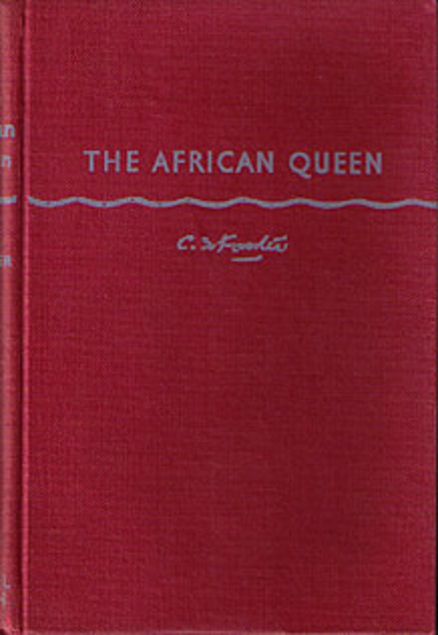
The African Queen by C.S. Forester – book versus film

The African Queen cover

How many times have I watched the 1951 film The African Queen? I have no idea, but there are definitely bits of it that I could act myself, you’re probably the same. Anyway, I hadn’t realised that it was based on a book by C.S. Forester which was published in 1935 so when I saw the book in an Edinburgh secondhand bookshop recently I snapped it up.

I really enjoyed reading this book but all the way through I was comparing it with the film, and as a fan of Humphrey Bogart for me the film just pips the book. In the book the character of Allnutt is a whining cockney, so there was just no way that he was going to trump the character of the Bogie version of Allnutt. The setting is of course German East Africa during World War 1.

There are quite a lot of differences in the storyline, because I suppose that the early 1950s film industry wasn’t going to shock their audiences with a Katherine Hepburn in the shape of Rose (sister of a missionary) who very quickly has a sexual relationship with Allnutt as she does in the book. I don’t recall that in the film Rose realises that she had always been under the thumb of either her father or brother and had never been able to make decisions for herself. She found freedom with the death of her brother who had been a miserably strict Christian missionary.

There’s a lot in the film which is faithful to the book, the whole journey in The African Queen is as it was in the book, until close to the end which is very different, but the ending would definitely not have got past the prudish sensibilities of the times. I prefer the book’s ending. The writing makes it so easy to imagine the surroundings, even if you hadn’t seen the film I think. The film features large African animals, just because they could I suppose, but they don’t appear in the book which sticks to the mosquitoes and leeches which are shudderingly horrible enough.

Several times Rose is described as being only slightly below Charlie (Allnutt) socially, something which was important at the time I suppose, but in the film she seems so superior. For once I found the film more enjoyable than the book, and not just for Humphrey Bogart!

You can see a short trailer for the film below, if you’re interested.

Mercy by Jussi Adler-Olsen

Mercy cover

When I read the blurb on the back of Mercy by Jussi Adler-Olsen I had real qualms about actually getting down to reading the book as it seemed like a nightmare to me – what do you think?

At first the prisoner scratches at the walls until her fingers bleed. But there is no escaping the room. With no way of measuring time, her days, weeks, months go unrecorded. She vows not to go mad. She will not give her captors the satisfaction. She will die first.

But I had requested it from the library, meaning to use it as part of the 2019 European Reading Challenge, and more importantly my blogpal had really enjoyed it – so I gritted my teeth and got stuck into it.

The action swings between 2002 when Merete Lynggaard a high profile politician disappears from a ferry, and 2007 when detective Carl Morck goes back to work after being involved in a traumatic case which involved the death of one of his colleagues and paralysis of another. Carl isn’t popular with his other colleagues and so he’s made head of a new department which is housed in the basement of police headquarters. Ostensibly Department Q has been set up to re-investigate cold cases, but it’s really just to keep Carl out of the way. He’s allocated another member of staff to help him, Assad is an Iraqi refugee who turns out to be a lot more useful than at first suspected.

The premise of this book was for me devilishly fiendish, but then I hate the thought of basements and the possibility of being stuck in one, but amazingly I really enjoyed the book and particularly the character of Assad, this is the first book in a series and I’ll be reading more of them, for one thing I want to know more about Assad’s background.

You can read what TracyK of Bitter Tea and Mystery thought of the book here. Mercy is published in the US under the title The Keeper of Lost Causes.

Book Inscriptions – yes – or no?

I’ve talked about book inscriptions here before. I love to read the inscriptions in the secondhand books that I buy, but I never write in books myself. I just can’t bring myself to do it, although before I got married I used to write my name inside my books and even used pretty book plates at one time. Marriage cured me of that, I think it was probably something to do with the change of name! I’ve often thought about using post it notes to stick on books, just with my name and maybe the place and date that I bought it, but haven’t got around to actually doing that. But I would never write in a book that I was giving to someone, in fact I probably wouldn’t give a book as a gift unless I knew for certain the person wanted it.

Anyway, in last week’s Guardian Review section there’s an article by Elle Hunt about book giving and inscriptions and you can read it here.

Otherwise I’m probably just like you at the moment only more so as I also have Jack’s Christmas Eve birthday to think about. I suspect that it’s only the imminent arrival of visitors, even the family kind, that makes me get stuck into the housework. I’d rather read!

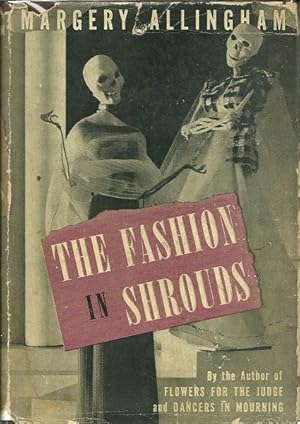
The Fashion in Shrouds by Margery Allingham

The Fashion in Shrouds cover

The Fashion in Shrouds by Margery Allingham was first published in 1938 but my copy is a hardback reprint from 1940 and has 437 pages. It was so much more pleasant a reading experience compared with the vintage Penguin crime Allingham editions that I usually read.

I had a look at some reviews of this book on Goodreads and it comes in for quite a bit of flak from some readers for being misogynistic. I read it from a different angle and had a good laugh at a lot of it, which I’m sure was intended by Allingham. Quite often the ‘mysoginistic’ comments are made by other women and used to be called plain bitchy. Apart from anything else, this book features the lovely red headed and smart Amanda who eventually married Campion and in my opinion leads to him becoming a far more rounded character – she improved her man, just as many a good woman does I’m sure.

It also features Valentine, Albert Campion’s sister. She’s working as a designer in a London couturier’s, she’s talented and very well-connected, exactly what is needed to attract well-heeled clients to the business. When one of her special designs for Georgia Wells a famous actress is stolen it kicks off series of events that need Campion’s attention. Georgia Wells is one of those women that should come with DANGEROUS TO MEN stamped on her forehead. She enjoys the adoration of men and is more than happy to steal the men of her friends, particularly Val’s man – and rub their noses in it. You can just about hear Campion’s teeth grinding, and Georgia’s husband is none too pleased either.

Then there’s a string of murders, but fear not as Campion sorts it all out of course.

This did remind me of a storyline in The House of Elliot which was a series revolving around a fashion house in London owned by two sisters. I loved it when it was on TV in the 1980s but when I saw an episode of it not that long ago it seemed quite stilted and also ‘hammy’. Acting styles often change over the years I suppose.

Anyway, back to the book – it has put me in the mood to read more by Allingham and I’ll have to have a look and see what I still have of hers – unread.

2019 European Reading Challenge

Reading Challenge

This is my first year of participating in the 2019 European Reading Challenge which is hosted by Gilion @ Rose City Reader

This is my wrap up post but I never did get around to posting any of these review links at Rose City Reader. I’ve enjoyed doing this challenge although I joined up fairly late in the year, with the aim of getting me out of my usual reading comfort zone. In fact I think I got mixed up between this challenge and something else as I had it in my mind that the books should have been originally written in another language – but I was wrong about that. Anyway, it’s just a bit of fun so – here goes.

FRANCEA Place of Greater Safety by Hilary Mantel.

VATICAN CITYIn the Name of the Family by Sarah Dunant.

RUSSIAThe White Guard by Mikhael Bulgakov.

GERMANYA Woman in Berlin by Marta Hillers.

BELGIUMAn Infamous Army by Georgette Heyer.

ICELANDSnowblind by Ragnor Jonasson.

IRELANDThe Country Girls by Edna O’Brien.

ITALYA Nest of Vipers by Andrea Camilleri

FINLANDThe Exploits of Moominpappa by Tove Jansson

SCOTLANDMiss Marjoribanks by Margaret Oliphant.

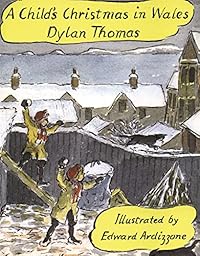
A Child’s Christmas in Wales by Dylan Thomas

 A Child's Christmas in Wales cover

A Child’s Christmas in Wales by Dylan Thomas was one of those books that I had somehow missed, it has been a bit of a tumbleweed moment for me and I’ve been meaning to rectify things and actually get a copy of the book for years, especially as my pal Joan has always re-read it at Christmas. Yesterday when I saw a lovely wee copy of the book – illustrated by Edward Ardizzone – in a secondhand bookshop in Edinburgh, I snapped it up, for all of 99p.

Despite (or maybe because of) the fact that A Child’s Christmas in Wales bears no resemblance to my own experiences of childhood Christmases, I found this to be an atmospheric and fun read. The fun comes in the shape of the aunties and uncles who form part of the family Christmas memories.

Auntie Bessie, who had already been frightened twice by a clock-work mouse, whimpered at the sideboard and had some elderberry wine. The dog was sick. Auntie Dossie had to have three aspirins, but Auntie Hannah, who liked port stood in the middle of the snowbound back yard, singing like a big-bosomed thrush.

Beautifully written as you would expect from a poet, for me this teeny wee book was more like a glimpse into another world, so completely different was it from the 1960s Christmases that I experienced in Scotland, which were very quiet affairs with (and I know you’ll never believe this) NO SNOW. There was no carol singing – apart from at school, Christmas Day wasn’t even a holiday in Scotland until the mid 60s I think, and we concentrated on Hogmanay/New Year for our neighbourly and family get-togethers. In the decades since then we’ve caught up, due completely to consumerism and advertising I think.

You can see the Edward Ardizzone illustrations here.

A film was made based on this book and I intend to watch it in an effort to try to get myself into the Christmas mood, however this year it will take nothing short of a miracle to do that!

St Mary’s Church, Mold, Wales

While we were visiting Gladstone’s Library at Hawarden in North Wales we took a trip to the nearby small town of Mold. It was the morning and seemed like a nice bustling sort of place, full of locals going about their business. On our wanderings around we spotted this old church called St Mary’s which turned out to be quite historic. Sadly we weren’t able to get into it.

St Mary's Church, Mold, Wales

But the information board outside was interesting. The church was built/funded in the 1480s by Margaret Beaufort, the mother of Henry Tudor.
The church was built in thanksgiving for Henry’s victory at the Battle of Bosworth Field.
St Mary's church info, Mold, Wales

The gravestones seem to have been re-arranged over the years and I doubt if many of them are really marking the actual grave of the person named. Most of them were written in Welsh but it seems to me that Welsh women keep their husband’s name after they die as women do in England too. Of course in Scotland the name on a gravestone is her maiden name, it makes life much easier for people doing family research I think.

St Mary's Church, Mold, Wales, gravestones

St Mary's churchyard . Mold, Wales

It’s a very grand church for such a small town but it’s such a shame that the locals haven’t managed to organise some volunteers to show people around the church – at least during the summer months, and make sure that nobody can vandalise it. Apparently vandalism has been a problem in the past. The old church in the teeny town I live in manages to keep the chuch open with volunteers in the summer, and it’s a focal point for people walking the Fife Pilgrims Way.

St Mary's  stitch

Directly across the road from the church is this Tudor building which has lovely old diamond paned windows. I waited and waited for that car to move, but although the driver was sitting in it he seemed determined just to stay there staring into space. I suspect he moved as soon as we left the area!
Tudor style S (windows)

If you happen to find yourself in the area of Mold it’s worth a visit, but there doesn’t seem to be much else of interest around there, or if there is – we missed it!

Green Park Terrace by Isabel Cameron

Green Park Terrace cover

I haven’t been able to find out anything about Isabel Cameron but from her writing she was obviously Scottish. My copy of this book does have its dustjacket which has some information regarding her other books and the information that over 750,000 copies of Isabel Cameron’s books have been sold. And from the Glasgow Herald – “All Mrs Cameron’s work has that grace, humour and feeling that people love.”

Green Park Terrace by Isabel Cameron was published in 1949 but the setting is a town in Scotland during World War 2 and the Green Park which the terrace overlooks is rumoured to be taken over by the army, the Lovat Scouts to be precise. The news is not welcomed by Mrs Warren of No.1 Terrace Park, she thinks that the soldiers will be rowdy and drunken and will likely spend their time swearing and fighting. Her servant, a young woman from the Isle of Lewis is enthusiastic about the prospect though as you can imagine!

Each chapter deals with the attitudes of various neighbours at different Green Park Terrace house numbers. They’re a very mixed bunch, one house has been turned into a guest house. Another is inhabited by a very demanding woman who thinks she is an invalid and her poor downtrodden daughter. There’s a career woman in one house, determined that having a child isn’t going to change her life and her work in a frock shop, but when the nanny ends up in hospital everything begins to fall apart.

There’s many a mention of Lord Woolton who was appointed Minister of Food during the war, as ever, food and rationing feature. Actually I’ve made Woolton Pie and it wasn’t bad.

This is an enjoyable read and as it was published in 1949 it seems that writers, readers and publishers weren’t too keen to drop the subject of World War 2 on the home front. I suspect that a lot of people were hankering for ‘the good old days’ of war, when so many people, particularly women who had been kicking their heels and bored stiff at home found that they were happy and busy doing war work of some kind. The end of the war wasn’t welcomed by everyone.

I’d be interested to hear if any of you have read anything by Isabel Cameron

Ironbridge, Shropshire, England

Ironbridge, Bridge

A couple of years ago when we visited Ironbridge for the first time we were really disappointed because the famous iron bridge was completely swathed in scaffolding and plastic while it underwent major refurbishment. We were luckier this time. The bridge was the first cast iron bridge to be made, way back in 1779 and it is beautifully elegant for something so solid and strong. It spans the River Severn, which didn’t look quite as slow and sludgy on this visit, it was a brighter day and there had probably been less rain – we’ve made up for it since then!

River Severn, Ironbridge, Shropshire

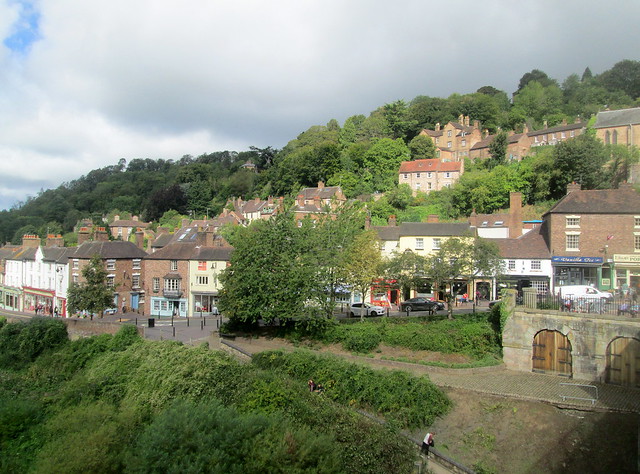
You get a good view of part of the town from the bridge, the buildings seem Georgian to me. Just a wee bit to the right of the photo there’s a good secondhand bookshop.

Ironbridge from bridge

Ironbridge is popular with tourists, well it’s a scenic town and a good place to stop and stretch your legs a bit. It isn’t annoyingly busy though and there are several museums that you can visit if you’re so inclined.

Ironbridge from bridge

This town is regarded as the birthplace of the Industrial Revolution so I imagine it’s a lot cleaner than it was way back then when there must have been smoke belching out of the various factory chimneys. It seems so rural nowadays, with all the trees and greenery.