Appleby’s Answer by Michael Innes – 20 Books of Summer 2021

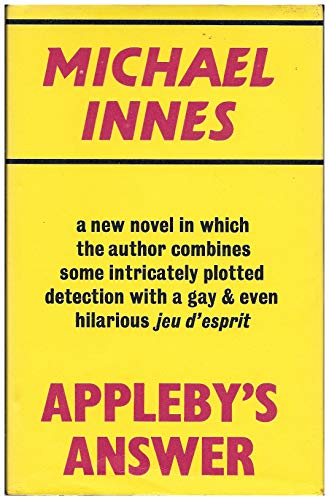
Appleby's Answer cover

Appleby’s Answer by the Scottish author Michael Innes was published by Gollancz in 1973 so I suppose that means it’s vintage crime now although that seems a bit strange to me, however in some ways the book seems even older than that. It begins with Miss Pringle sharing a railway compartment with a strange man. Miss Pringle is a crime writer with a penchant for ecclesiastical settings and she’s travelling to London to attend a dinner with a group of fellow crime writers.

Captain Bulkington is the other traveller and strangely he’s reading a copy of one of her books, when he recognises her from the photo on the dust jacket the two get into conversation. Bulkington has a private school, a crammer which coaches young men to pass the entrance exam for top drawer universities. It’s a business that he has taken up since retiring from the army, but he has a proposition for Miss Pringle. He wants to collaborate with her in writing a book and invites her to stay at his establishment, but Miss Pringle has her suspicions about him and just agrees to correspond with him instead.

However she decides to travel to Bulkington’s village to do a bit of detective work and discovers that there are only two students enrolled in the crammer, and neither of them seem to be university material. It seems that Bulkington has some sort of hold over them.

Appleby and his wife have travelled to the same Wiltshire village to visit friends and so become embroiled in the affair.

This isn’t a murder mystery but is an entertaining read with quite a lot of humour thrown in. My copy of the book is an old Gollancz one and I couldn’t help thinking of Diana Athill who would have been working as an editor there when this one was published, I don’t think she mentions Michael Innes in any of her books though. This was one of my 20 Books of Summer.

A Mithraic Temple, Carrawburgh, Northumberland

After we visited the Roman fort at Chesters we drove on to see the remains of a Mithraic temple which is in the middle of a field. I have to say though that the temple itself isn’t very well signposted, so we ended up yomping over a field full of indignant sheep towards what was definitely a ruin in the distance, but that turned out to be the ruin of a farm building. Oh well, it was all good exercise and we gave the sheep something else to think about other than grass!

We eventually got on the right track, the signpost was on a small fencepost just the width of the wood, so about 3 inches square.

This is the road by the car park at Carrawburgh, Northumberland, as you can see the road is very straight so presumably this was originally the Roman road.

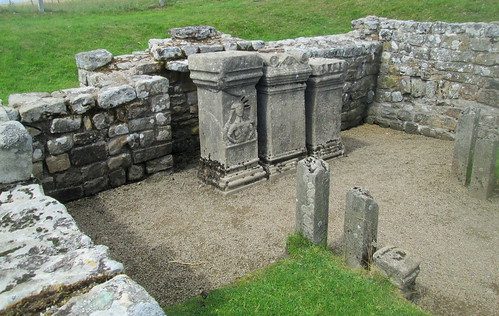
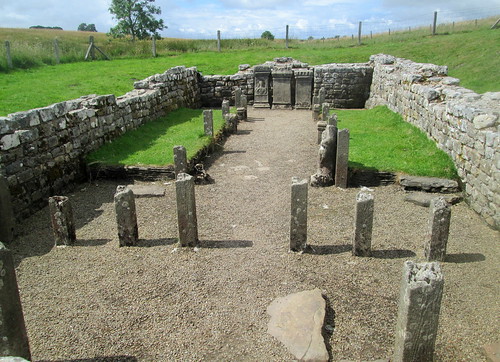
The temple is quite small but as the god Mithras was popular with soldiers it was probably quite well used by the men at Chesters Fort.

Mithraic Temple, Carrawburgh, Northumberland, Roman ruin

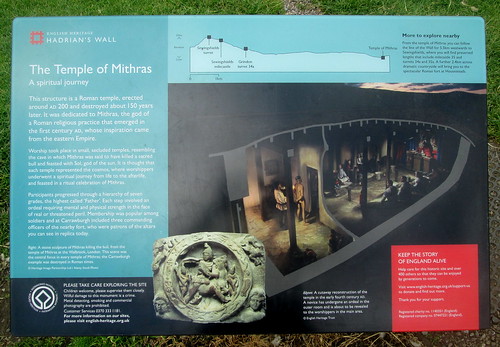
Temple Information Board, Mithraic temple, Carrawburgh, Northumberland</scri

You can read about Mithras here.

Mithraic Temple, Crawwburgh, Northumberland

Mithraic Temple, Carrawburgh, Northumberland

Mithraic Temple, Carrawburgh, Northumberland, Roman ruin

The middle column of the altar has a stone offerings dish and visitors have been leaving coins, sweets and a big piece of wood as worshippers would have done. I was a really big spender and offered up 2 pence!

Votive Offerings, Mithraic Temple, Carrawburgh, Northumberland

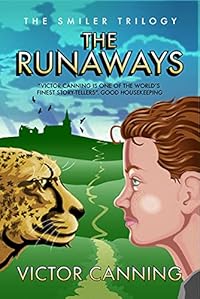
The Runaways by Victor Canning

The Runaways by Victor Canning was first published in 1972 and it’s the first part of his Smiler trilogy. It was made into a film for US television in 1975. The book is about 15 year old Samuel Miles, his mother is dead and his father is away at sea most of the time, so his older sister and her husband look after Samuel while his father is absent. ‘Smiler’ as he is known is a bit of a handful for his sister, but there’s no malice in him.

However, he ends up being wrongly convicted of stealing an old lady’s handbag and is sent to a borstal for young offenders, he manages to escape only to be recaptured by the police on a stormy night. On the way back to the borstal he takes a chance to escape again and manages to fend for himself in the barn of a house which has nobody living in it.

Smiler isn’t the only one being hunted down. A cheetah has escaped from the famous Longleat Wildlife Park. It was the storm that gave Yarra the opportunity to escape when a tree was blown over. She heads for Salisbury Plain, much of which is used by the army for training. Unknown to the two escapees they take cover in the same barn, with Smiler being in the loft and so begins a wonderful relationship between the two.

This was a great read, aimed at older children or Young Adults as they say today in publishing. It’s very well written with some really likeable characters and I’m very much looking forward to reading the other books in the series.

I was sent a digital copy of this book by Farrago Books via Netgalley. Thank you.

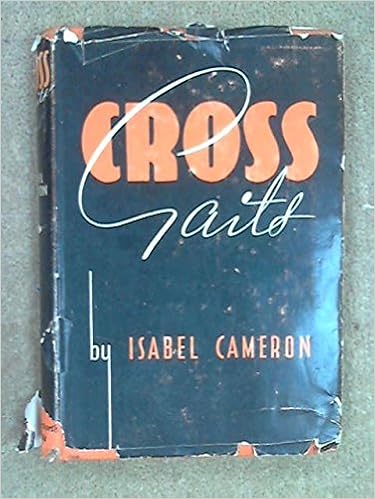
Cross Gaits by Isabel Cameron – 20 Books of Summer 2021

Cross Gaits cover

Cross Gaits by Isabel Cameron was first published in 1945. The setting is Scotland and in the beginning it’s 1904 and Margory Mackay is preparing to marry Hugh Mcgregor a church minister, but there’s turmoil within their branch of Christianity with a split likely among congregations and the so-called church leaders, the usual ‘Free Church of Scotland’ thing. They decide to go ahead with the wedding anyway.

This book isn’t as interesting or amusing as the previous book that I’ve read by this author – The Fascinating Hat. I can vouch for the authenticity of the background of the tale though as it was a hard life being a minister’s wife back in those days, unless you were lucky enough to have money of your own, or the husband had. Those huge manses that they were given as part of the very small stipend were impossible to heat and life was a struggle, especially for the wives. I had that first hand from Jack’s granny who became a rector’s wife during World War 1.

This was just too ‘churchy’ to be a comfy read for me. I’ve bought a few more of Isabel Cameron’s books, just because of the Scottish setting, I feel that they’re a glimpse into the social history of the times, so I hope those ones are more enjoyable than this one.

I read this one for 20 Books of Summer 2021. My copy didn’t have the dust cover.

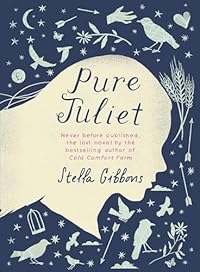
Pure Juliet by Stella Gibbons

Pure Juliet by Stella Gibbons was published posthumously in 2016 which was 27 years after her death.

Juliet Slater has just left school at the beginning of the book, she has done really well in her A levels but her father has decreed that she must get a job instead of going to university. Even a letter from the headmaster can’t persuade him to change his decision.

But unknown to her parents Juliet had struck up a friendship with an elderly and wealthy spinster and she takes herself off to live with Mrs Pennecuick – ‘Aunt Addy’, packing a case full of maths and science books so that she can continue her studies in the large house which has a bevy of Spanish servants. As you can imagine Juliet’s intentions are suspected by just about everyone, especially as she’s a very strange character. Nowadays she would probably be described as being quite high on the Autistic or Asperger’s spectrum but neither of those words appear in the book. Juliet has no interest in anything but mathematics and becomes obsessed by coincidences. It’s a word that she has to look up in a dictionary, helped by a library assistant as Juliet’s knowledge of anything outside maths and science is scanty. She’s not interested in any relationships with people and isn’t even grateful for all the help she gets from Aunt Addy, but Addy’s great-nephew Frank sees Juliet as his project, he thinks she might be a genius, and over the years he attempts to help her further her studies and to make her less self-obsessed and a bit more ‘normal’.

I enjoyed this one despite Juliet being so strange and unlikeable. There were plenty of other characters whose company I did appreciate, but if you’re expecting another Cold Comfort Farm you might be disappointed, I remember so many laugh-out-loud moments in that one, but Pure Juliet is quite different. The ending was very abrupt though, almost as if the author just got fed up writing it.

Chesters Roman Fort part 2

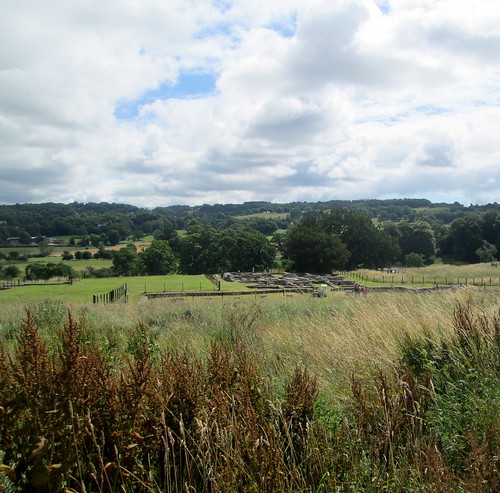
The ruins that you can see in the distance below are what remains of the camp commandant’s house. As you can see the area that the fort is set in is scenic but I imagine it would have looked a bit different in Roman times, nearly 2,000 years ago, however the land here was very fertile even back then it seems and was able to provide enough in the way of crops for humans and horses. The fort was known to the Romans as Cilurnum.

Commandant's house from distance

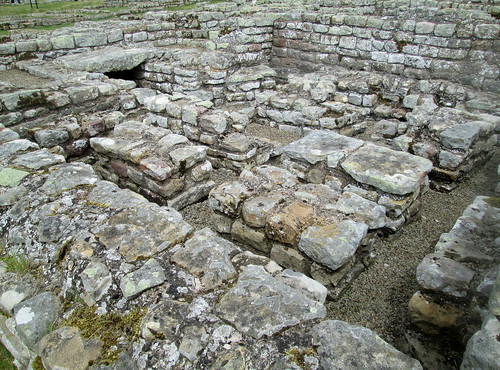
Closer up you can imagine that it must have been a lot more comfortable than any of the other accommodation, and at least he had central heating, I think the bricks are part of that system.

Commandant's House , Chesters fort, Cilurnum, Northumberland, Roman ruin

By Commandant's House, Chesters fort, Northumberland

The floor below would have had a mosaic pattern on it I’m sure, but what can be seen in the photo are the supports of the floor.

Commandant's House, Roman floor, Northumberland

Annoyingly I don’t seem to have an info board photo for the commandant’s house, but the HQ info board below is quite interesting.

HQ Building info board, Chesters Roman fort

But as you can see there isn’t much left of it nowadays.

HQ building, Chesters Roman fort, ruins

You need a good imagination!

HQ Building Chesters Roman fort, Northumberland

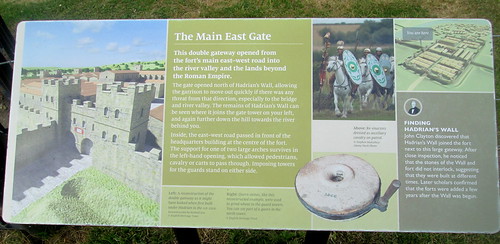
The info board below gives you an idea of how grand and imposing this area would have been – all to keep those barbarians from the north out!

Main East Gate Board, Chesters Roman fort, Northumberland

Thursbitch by Alan Garner – 20 Books of Summer 2021

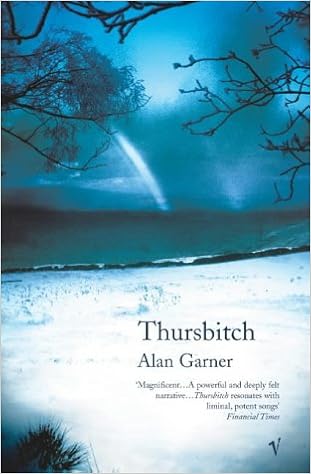
Thursbitch cover

Thursbitch by Alan Garner was first published in 2003, I just noticed after I had bought it that my book is a signed copy. I’ve read quite a few of Alan Garner’s books over the years, they’re always a bit strange and this one is stranger than usual. To begin with it was just too weird for my taste but I did end up liking it, and it’s a difficult one to describe.

The setting is 18th century northern England – and contemporary. John Turner is a packman, carrying goods all over the country, anything that needs to be taken elsewhere, and sometimes he’s away from his home in very rural Cheshire for quite a long time with his horses and cart. It’s a time when most people hardly strayed from the neighbourhood that they were born in, so John/Jack is quite cosmopolitan compared with the locals.

I was more interested in the 21st century relationship between Ian and Sal though as they traversed the same hills that Jack had travelled through, albeit 200 years or so later.

This was one of my 20 Books of Summer.
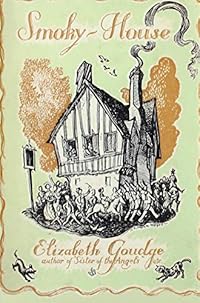
Smoky-House by Elizabeth Goudge

Smoky-House by Elizabeth Goudge was first published in 1940 but my copy is a 2020 reprint by Girls Gone By Publishers. This book involves smuggling along the Devon coast in the early 19th century and it has elements of a fairy tale/fantasy.

The tale begins in the village of Faraway where the five Treguddick children live with their father in Smoky-House, an old tavern. Father is the landlord. Faraway is apparently the happiest of places, it’s in England’s West Country which is a part of the world so beautiful that the people who live in it are always happy. The Treguddick’s mother is dead, but as they feel so close to heaven even that isn’t so sad as she feels close to them. However, aged 17, Jessamine the eldest girl has taken over the motherly duties.

When a stranger arrives at the tavern he brings with him an oppressive atmosphere and has a strange twist to his lips. The dogs bark at him, but the stranger is a wonderful fiddler and everyone loves his music. But still those dogs aren’t happy!

There’s smuggling involved which is a popular theme I think, but the most enjoyable part of this book is the animal characters who speak to each other and are much more sensible than the humans.

I was slightly perturbed by the ending which I think is in some ways quite a dangerous idea for children to read because the author seemed to be implying that if you are kind to a nasty person then they will give up their evil ways – which is of course rarely if ever true. In that respect this tale is the opposite of a traditional fairy tale as most of them were designed to be a warning to children.

These Girls Gone By Publishers reprint paperbacks are really lovely editions with lots of additional information about the book’s publishing history as well as Elizabeth Goudge’s life.

Chesters Roman Fort, Hadrian’s Wall

Last week we travelled down to the north-east of England again, just for a few nights, and it’s just typical that when we had only been down there half a day or so the weather changed from what had been days and days of hot dry weather – to heavy rain – such is life, and I suppose the gardens needed it!

Before the heavens opened we did manage to fit in a visit to Chesters Roman Fort. I was surprised at how busy it was but the English school holidays had just begun and I think the English Heritage site had just been allowed to open up again after the Covid lockdown.

The fort was only discovered in the 1840s by John Clayton the landowner, who had a lot of his men uncovering the Roman remains, the work was continued by his nephew who inherited the estate, although the Claytons were very wealthy and had a lot of men digging up the area there are still lots of parts to be excavated, presumably when English Heritage can afford to do it. Below is a photo of the fort HQ.

HQ Building, Chester's fort, Roman remains, Cumbria

The photo below is the base of what was an interval tower.

Interval Tower , Chester's Roman Fort, Cumbria

The whole fort was obviously part of Hadrian’s Wall but there are only a few bits of the actual wall uncovered at the moment, presumably a dig would find more of it although I expect that a lot of the stones have been re-used over the years by farmers needing houses and farm walls.

Part of  Hadrian's wall, Chesters Roman Fort, Cumbria

Below is a photo of the remains of some of the stables.

Stables , Chester's Roman Fort, Cumbria

As there were lots of horses and men housed at this fort a good source of water was obviously imperative, the North River Tyne is right on the edge of the camp and if you look across the river in the middle of the photo you’ll see some of the remains of the bridge abutment.

Bridge Abutment , North Tyne River, Cumbria

Chester's fort Bridge Info board stitch

It’s an interesting place to visit if you find yourself in that area, there seem to be Roman remains all over. This fort is in a particularly scenic location but I can’t help feeling sorry for the 500 or so Spanish cavalry soldiers who inhabited this camp, they must have been frozen to the bone in winter – or maybe even in summer!

Hamnet by Maggie O’Farrell

Hamnet by Maggie O’Farrell hops around a bit time wise but not in a confusing way, I really enjoyed it.

The tale begins in 1596 with young Hamnet searching the house, looking for an adult to help him, but the usually bustling household is empty, just when he needs them most. His twin Judith feels so ill that she’s gone to her bed and he’s desperate for their mother’s help as she is a herbalist, and a bit of a white witch as far as some people are concerned.

Then the story flits back fifteen years to the Spring when Shakespeare met his wife at Hewlands, the family farm. They were both leading unhappy lives, William’s father was a violent bully who took most of his rage out on William, and Agnes (known better to us all as Anne Hathaway) was living with her step-mother and a houseful of half siblings. It hadn’t been too awful when her father was alive but life had become miserable since his death. The two were drawn to one another when William’s father ordered him to tutor some of Agnes’s half brothers, to help pay back debts. Agnes and William would become each other’s escape route – or so they thought.

Considering that such a lot of Shakespeare’s life is a complete mystery I think the author made a good job of filling in the gaps in a feasible way, and she neatly tied up the speculation over his will and that second best bed left to his wife. I loved the ending which paints William as a loving father, something that even his wife had doubted.

I noticed that some readers have been upset by the fact that Anne’s name had been changed to Agnes, but it’s a name which is not popular, it was my own mother’s name, she was dutifully named after a grandmother but was always called Nancy by everyone, so it seems very likely to me that Ann was her pet name, perhaps O’Farrell should just have stuck with that rather than reverting to the official name which appears in her father’s will.