Mr Mac and Me by Esther Freud – 20 Books of Summer 2024

Mr Mac and Me by Esther Freud was first published in 2014, by Bloomsbury. I had meant to read this book when it first came out, not ten years later. It’s one of my 20 Books of Summer.

It’s well known I think that Charles Rennie Mackintosh and his wife Margaret MacDonald Mackintosh moved from Glasgow to Suffolk when his career in architecture had ground to a halt.  As World War One progressed they got into trouble with the authorities as some of the locals decided that the strange couple with the odd accent (Scottish) must be spies. Esther Freud has woven a story around them, embroidering what had happened to them there and how it impacted on them, as seen through the eyes of Thomas Maggs, a young boy with a damaged foot, something that he has in common with CRM.

Thomas lives on the Suffolk coast, his father is a publican, he’s abusive as a father and husband, and of course he has a drink problem, so Thomas doesn’t have a good relationship with him. When Mackintosh and his wife arrive in the area Thomas is attracted to the couple who show an interest in his own drawings and befriend him.

The Mackintoshes have money problems and Mac can’t even sell his exquisitely painted botanical art, never mind get architecture commissions, to make matters worse there are problems within Margaret’s family so she has to be away in Glasgow at times.

I enjoyed this one although it is tinged with sadness as the war takes its toll of the locals. There’s some lovely writing, descriptions of flowers, scenery and seascapes.  But as you would expect The Glasgow School of Art also features and in the author’s acknowledgements at the end of the book she adds her own ‘heartfelt appreciation of the Scottish Fire and Rescue Service for the skill, courage and determination they showed in overcoming the blaze that raged through the Glasgow School of Art just as this book was going to press.’

Of course fire came back again for a second bite of that building, such a tragedy. The remains, just a shell, are still wrapped in plastic, waiting for some sort of decision. It’s a deeply depressing sight.


Balvenie Castle, by Dufftown, Moray, Scotland

We were out and about in the far north-east of Scotland for a few days a couple of weeks ago, and one of the many places that we squeezed into those three nights away was a visit to Balvenie Castle near Dufftown. It’s in the middle of nowhere up a quite scary steep and very narrow road, and when we reached the castle it was shut! It doesn’t open on Monday.

Balvenie Castle, by Dufftown, Moray, Scotland, Black Douglas

Anyway, we were undaunted as we were able to step over the fence easily to have a closer look, we kept well away from the back as per instructions, and as we’re Historic Scotland members we weren’t doing them out of any money.

Balvenie Castle, near Dufftown, Moray

We were only there for a few minutes.

Balvenie Castle, near Dufftown, Moray

I took the photo below through the gate, as you can see it has a nice barrel vaulted roof.

Balvenie Castle, near Dufftown, Moray, Scotland

Balvenie Castle was owned by a few prominent Scottish families in the past, including the notorious Black Douglases from 1362 to 1455. It’s a very scenic ruin, unfortunately the photo that I took of the farmland nearby came out too fuzzy to use. As ever, click on the photos if you want to see them enlarged.

Balvenie Castle, near Dufftown, Moray

I’ve just realised that this castle is actually owned by an absent American from Atlanta, Georgia! It is just managed by Historic Environment Scotland.


.

The Hazelbourne Ladies Motorcycle and Flying Club by Helen Simonson – 20 Books of Summer

Hazelbourne Ladies Motorcycle and Flying Club by Helen Simonson  is another of my 20 Books of Summer although it wasn’t on my original list which has had to be amended somewhat. This one was a request from the library.

It begins in 1919 in fictional Hazelbourne-on-Sea in the south of England. It’s a tough time for women as those who have been working during the war are having to give up their jobs so that the returning soldiers can have them. Constance Haverhill finds herself surplus to requirements at her family home as her parents are dead, her brother has inherited the farm and his wife doesn’t want Constance around. The estate where Constance worked during the war have got rid of her which means she is homeless as well as jobless, she’s lucky to have found work as a lady’s companion to an old family friend who is convalescing at a hotel.

The hotel is a popular meeting place for Poppy Wirrall, she’s the daughter of a baronet and during the war she and a group of women had flown aeroplanes from factories to the airfields. Now they can only drive motorbikes, they’ve set up a taxi company for women only, with sidecars for the passengers.

This was a good read. It features lots of the social problems that came with the end of World War 1. The lack of men for women to marry as so many had been killed in the war, the horror of severely damaged men both physically and mentally,  the problem of suddenly having no work for women after they had become used to being wage earners throughout the war years, and then the new laws which favoured the returning soldiers.

That makes it all sound a bit grim but there is some romance and light-heartedness in there too. This is the third book by Simonson that I’ve read, I’ve enjoyed them all, I’ve just had a look at my blogpost of her second book Before the War and I ended it by writing:

Snobbery, racism, prejudice, bitchiness, family strife – all the usual nastiness that goes to make up almost any society of human beings in fact – appear in each of Helen Simonson’s books.

That’s true of this one as well.


Where the World Ends by Geraldine McCaughrean – 20 Books of Summer

Where the World Ends by Geraldine McCaughrean was first published in 2004 and it won the Whitbread Children’s book award that year, also the Carnegie Medal in 2018 for an illustrated edition. This is one of my 20 Books of Summer.

The setting is the St Kilda archipelago in the far north of Scotland, the date is summer 1727. As usual in the summer a boat full of young boys along with three men has sailed to a sea stac so that they can harvest sea birds to help them survive the next winter. They use every part of the birds to help them survive the grim weather to come. It’s a harsh existence, but it’s part of growing up for any young male St Kildan.

During the harvest time they live in a cave and have to bed down on the rough floor which causes them to have sores, if they get infected it’ll be the end of them, oil from the dead sea birds is rubbed into any cuts and grazes to try to avoid infection.

After their harvest season should be over no boat comes to pick them up as arranged. At first they assume that the weather has had something to do with the lack of a boat, but as summer turns to autumn and winter weather arrives they can’t imagine why they have been abandoned. They only have rain water to drink now and their clothes are in rags after having to climb the cliffs daily.

One of the men decides to start to gather any bits of wood which wash up around the sea stac, he hopes to be able to build some sort of raft in the hope that he’ll be able to sail to nearby Boreray to get help.

This book is based on a true story, the author has woven a tale around it, imagining the tensions that would have emerged under the circumstances. It’s a really good read.


Gideon Ahoy! by William Mayne – 20 Books of Summer

Gideon Ahoy! by William Mayne was published in 1987. Gideon is a teenager and he’s profoundly deaf, so he doesn’t have much in the way of speech. He seems to be mentally handicapped but he would probably be described as being severely autistic nowadays. The whole household revolves around Gideon who makes a lot of noise which of course he can’t hear. His younger sister Eva gets somewhat neglected because of the situation, not that she minds. There are also two  younger children, called Tansy and Mercury. Their mother has a hard life because she’s more or less a one parent family, the father is in the Merchant Navy and spends most of his time away at sea.

Gideon gets a job working on a canal barge, he’s good at the work and is popular with the people who pay to go on the boat trips, but it’s a mystery what happenes to his pay. He never brings any home although his employer pays him.  Gideon’s confidence rises and the atmosphere in the family begins to improve, although Tansy and Mercury are still a handful, brimful of energy. But it turns out that Gideon’s job is just for the summer and he can’t understand that the barge isn’t used in the cold months.

This is a lovely story with a happy ending, just what I needed really.

Apparently William Mayne was convicted of child abuse and his books have been removed from libraries and possibly even most bookshops but I bought my copy of this book in a secondhand bookshop in Callander, Stirlingshire, and when I bought it the woman said, ah that’s a lovely book. I don’t know if she knew of the history of William Mayne. However it set me thinking. Are some authors ‘too big’ to be cancelled the way some banks or companies are deemed to be too big to be allowed to fail?

I’ve always wondered why Gary Glitter’s records have been cancelled but Michael Jackson’s are still played regularly on the radio and TV.

Likewise William Mayne’s books have been removed from shelves but Alice Munro is still feted despite her husband admitting that he sexually abused her daughter from the age of nine for years, and she blamed her daughter instead of getting rid of her husband, the girl’s step-father.  You can read about it in a Guardian article here.  I find that more shocking.

Alyth, Perth and Kinross, Scotland

A couple of weeks ago we grabbed a blue sky day and drove north up to Perthshire (Perth and Kinross) to do a bit of a road trip to small places that we hadn’t visited before. Such as – Alyth. I believe that’s the old pack bridge in the photo above, nowadays it’s for pedestrians only.

Alyth Burn, Perth and Kinross

It’s a small town, quite historic, first mentioned in the 13th century. The Alyth Burn runs right through the middle which makes it scenic as there are several bridges going across it. Not surprisingly they have been bothered by flooding in the town. I was really chuffed to see some small fish in the burn ranging from about 6 inches to 8 inches. I’m always hanging over bridges to see what is in the water but more often than not there’s nothing to be seen!

Despite it being quite a small place it has even smaller places nearby which don’t even have a shop, or maybe just has one wee shop if they are lucky, so there were quite a lot of people around, so the large war memorial below was the only other photo I took. It’s on the outskirts of Alyth. There were a couple of plant stalls by the side of the road where I was standing to take the photo, small plants such as coleus and pelargoniums for just 50p each, so I chose four plants and put the money in the honesty pot. I should have taken a photo of the stalls, they were nice and colourful.

Alyth, War Memorial, Perth and Kinross

I would definitely go back there some time,  to do a bit more exploring.

Night Fires by Joan Lingard – 20 Books of Summer 2024


Night Fires by the Scottish author Joan Lingard was first published by Hamish Hamilton in 1993. It was obviously influenced by the political unrest and revolutions which were going on around the late 1980s, particularly the fall of the Romanian Ceausescu regime.  It’s one of my 20 Books of Summer.

Lara and Nik are teenagers who live in an orphanage on the outskirts of town. The orphanage is run by an evil man and woman that they nickname Dracula and The Crow. When Nik and Lara see that they are loading up their vehicle with as much stuff as they can it’s obvious that Dracula and The Crow intend to leave the orphanage, fearing for their lives. They can see and smell that mobs have set the city on fire, the people have had enough, they’ve snapped and they’re fighting back, hoping to rid themselves of the brutal and suffocating dictatorship that they’ve been living under.

Lara and Nik decide to see what’s going on for themselves and Bibi, a woman who works in the orphanage  gives them the address of her sister in the city, they can go to her if they find themselves in trouble – which they do.

This is a good read, aimed at young teenagers I think.


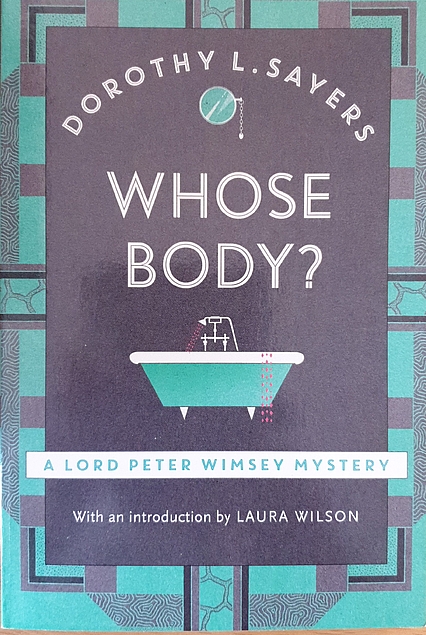
Whose Body? by Dorothy L. Sayers

Whose Body? by Dorothy L. Sayers was first published in 1923. It begins with Lord Peter Wimsey getting a phone call from his mother. She tells him that Mr Thipps the architect who is working on her local church’s roof, has discovered the body of a man in his bath. The body is naked apart from wearing a pair of pince nez.  When Peter goes to investigate he realises that the corpse is supposed to be the wealthy businessman Sir Reuben Levy who has gone missing. It bears a resemblance to Sir Reuben, but Peter isn’t fooled.

Inspector Sugg jumps to conclusions and thinks he has solved the case, of course he is completely wrong, and Lord Peter is going to enjoy proving him to be wrong.

This was a good mystery which kept me guessing. There is some slight discomfort in that Sir Reuben’s Jewish background is mentioned a few times, but nothing really disparaging, considering the times in which the book was written.  He’s portrayed as being a kind and generous husband and Lord Peter is an admirer, despite his father having disliked self-made men like Sir Reuben. Sheer snobbery.

Bill’s New Frock by Anne Fine

Bill's New Frock by Anne Fine | GoodreadsBill’s New Frock by Anne Fine was published in 1989.  When Bill Simpson woke up on Monday morning, he found he was a girl. It doesn’t seem to puzzle his mother when she enters his bedroom, gives him a pink dress with shell buttons to wear, and drops it over his head! Bill’s father is late for work and gives him a quick kiss on the cheek before he rushes out of the house. It’s all very confusing and mortifying to Bill.  At school nobody seems to be surprised at the change in Bill.

The blurb on the back from the Guardian says: ‘Stylishly written and thought-provoking.’

That it certainly is because Bill soon realises that girls are treated very differently from boys by the teachers and people in general, and it’s often not in a good way.

Anne Fine has won lots of awards for her children’s fiction. I think this one is probably aimed at age eight years and up. It’s a very quick read at just 89 pages and would be perfect for reading out to a class over the last few minutes of the school day, by the end of a week the book would be finished. It’s illustrated by Philippe Dupasquier.


Adam Bruce Thomson at The City Art Centre, Edinburgh

We went to the Adam Bruce Thomson exhibition at The City Art Centre in Edinburgh a couple of weeks ago. The exhibition is titled The Quiet Path.

Below is his painting of Dean Bridge, a part of Edinburgh which looks very much the same now as it does in his painting.

The Old Dean Bridge

Below is his painting of the North Bridge with the Salisbury Crags in the background, Edinburgh.

North Bridge and Salisbury Crags Edinburgh

With a very different style he painted the village of New Galloway, below.

New Galloway

In Bringing in the Hay below he has documented a part of social history, before everything on farms was mechanised.

Bringing in the Hay

In another style Adam Bruce Thomson portrays The Royal Engineers Building a Bridge, below, a scene he would have witnessed in his time in the Royal Engineers in World War I.  If you want to see more of his works have a look here.

Royal Engineers Building a Bridge Near Mons

This is a great exhibition which is in a gallery just off the main streets of Edinburgh, at the back of Waverley Station, it’s well worth a visit if you are in Edinburgh. As the Edinburgh Festival started yesterday when we happened to be in the city, it felt like the hordes had descended on the place, apparently the population doubles in August.