

The Small Army by Michael Marshall was published in 1957 and it’s the true account of the evacuation of children from Guernsey in the Channel Islands during World War 2. Guernsey is just twenty miles from France and the Germans invaded early in the war.
The war-time home of the author’s Guernsey school Elizabeth College was at Whitehall House in Derbyshire. The boys had to get permission from their headmaster to visit the nearest town which was four miles away, and they had to walk. They made their own entertainment which mainly consisted of training to fight when they were older, intending to get back to Guernsey and fight the Germans and free the island. One of the boys was keen on science and he was able to make weapons, I don’t know how he managed to get a hold of the chemicals he needed, but he must have done so as there were plenty of explosions which the local farmers put up with. It was known locally that there were gangs of boys playing war games, but in such a rural area it was ignored for a long time.
By the end of the war some of the boys were as old as 17 and 18 and when they were able to get back to Guernsey their plans of hunting down collaborators more or less evaporated and they set about gathering as much of the weapons and ammunition which the Germans had left behind. The island was rammed full of stuff and the older boys set up a company to sell the equipment to companies who had arrived from the British mainland to buy up as much as they could. Nobody in authority stopped them from doing so! The boys made a lot of money with no questions asked about their right to ownership of the abandoned equipment including searchlights, compression pumps, radio sets, optical instruments, tool chests, field telephone sets and miles of cable. It was a very lucrative business operated by the two eldest boys who were by then young men.
The book has photographs of the rocket projector that they built as well as the lists of the members of the organisations, suitably decorated in a schoolboyish manner.
This was an interesting and at times amusing read about schoolboys who wanted to take on the German invaders on their own home ground instead of being sent to the relative safety of the British mainland. They certainly had that “we’ll fight them on the beaches” mentality.

 Elizabeth I and her world by Susan Watkins is a lovely book with sumptuous photographs by Mark Fiennes. I borrowed this one from the library just last week, I must admit that it was the photos that really attracted me and I had intended just drooling over all the Tudor portraits, grand buildings, jewels, gardens and paintings of various scenes, but when I began to read it I quickly realised that I wanted to read it all. Despite knowing quite a lot about the Tudor courts and Elizabeth there was still a lot to learn from this book. Elizabeth may have made some mistakes as a youngster but she certainly learnt from them and seemed to know intuitively how to stay on the right side of her people.
 Bridal Path by Nigel Tranter was first published in 1952 but my copy is a 1996 reprint. The cover illustration is from a painting by the Scottish artist Francis Campbell Boileau Cadell called The Dunara Castle at Iona. Nigel Tranter wrote a huge amount of historical fiction, but this one was a contemporary novel, and it was such a good laugh, just what I needed.
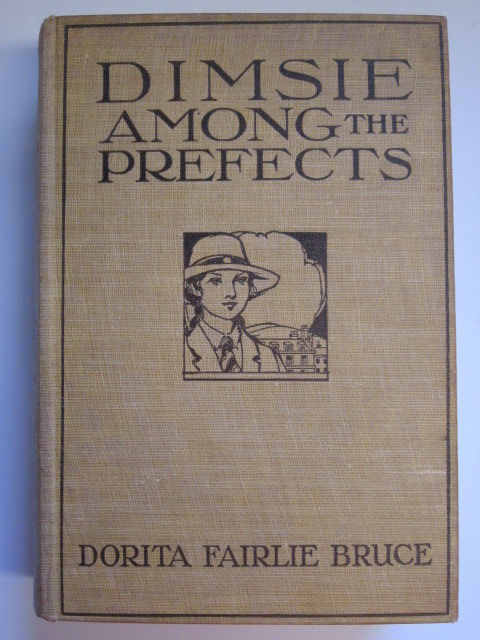 Dimsie Among the Prefects by the Scottish author
  A Year Unfolding by Angela Harding, A printmaker’s view, is a lovely book. I asked Jack to buy me a copy for our fairly recent wedding anniversary. Actually it was supposed to be for my birthday but he didn’t get around to getting a copy fast enough for that!
 Hannah Hauxwell was a bit of an unexpected celebrity in 1973 when her lifestyle was filmed by the BBC’s Yorkshire television. I think it was part of a series called A Hard Life about people who weren’t living a sort of ‘normal’ life. This book tells how it all came about. To begin with Hannah was only 46 but she seemed much older as her life was like something from another century. She was the last person standing in a family which had lived in the Baldersdale area of County Durham for several generations. Nothing had changed in all that time, apart from Hannah being left to do all the farm work on her own. There was no running water in the farmhouse and no electricity. There was a small stream about forty yards from the house and often the ice had to be broken on it with a pick axe. There was no road to the farm and Hannah was so desperately poor that she couldn’t even afford the luxury of a dog for company as she could hardly afford to feed herself. She was dressed in rags. Baldersdale is in north east England, County Durham and it was settled by Vikings which is how the area got its name, Balder was Odin’s son in Norse myths.
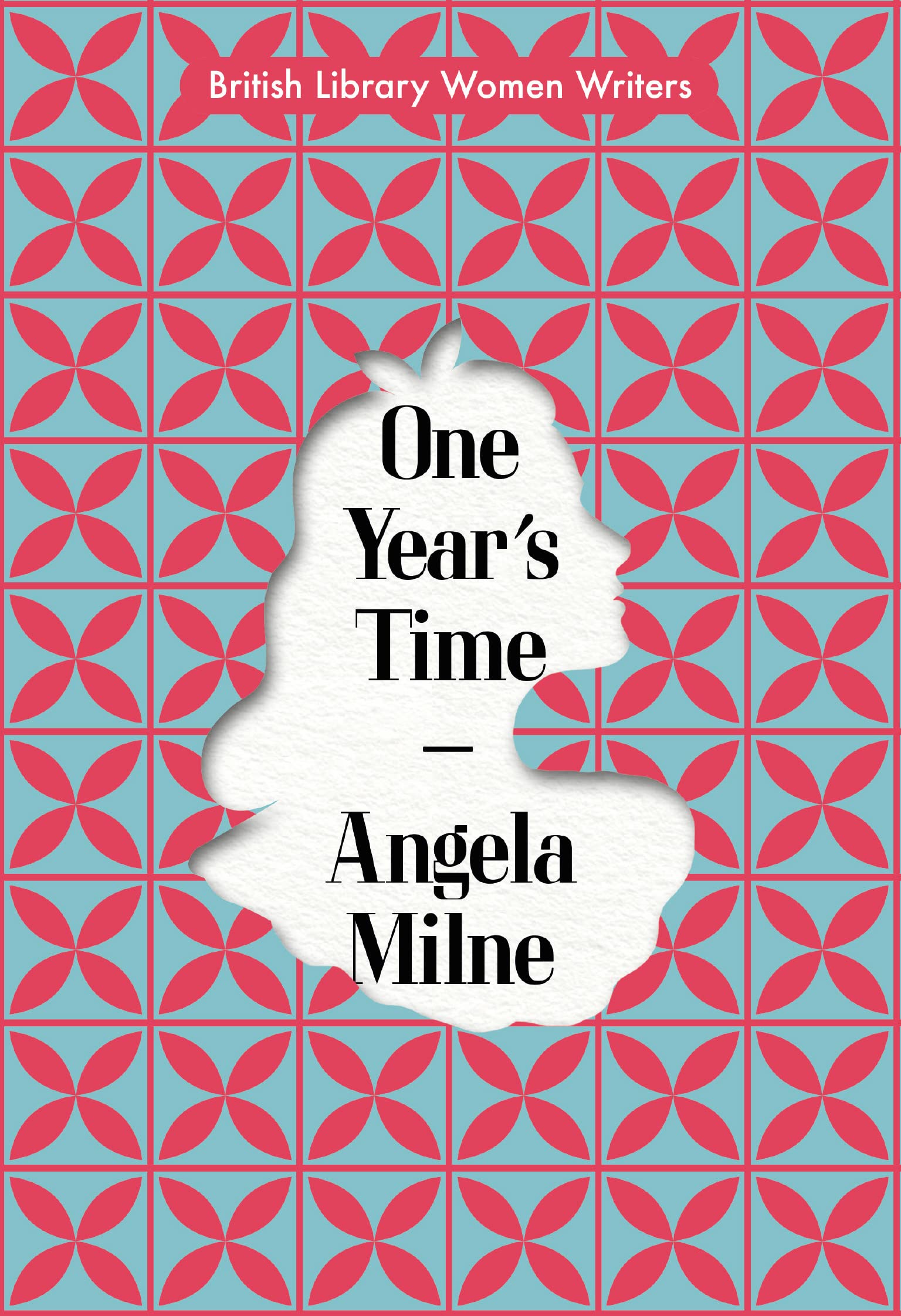 One Year’s Time by Angela Milne was first published in 1942, but it has just been reprinted by British Library. I must say that as soon as I started to read this book I turned back to the publishing details to check them out as I could hardly believe what I was reading. The setting is the late 1930s and it begins in London.
 The Princess of the Chalet School by E.M. Brent-Dyer was first published in 1927 and it’s the third book in the Chalet School series which I’ve started to revisit since reading some of them as a youngster. I can’t really say it’s a trip down memory lane as I don’t remember too much about them, or maybe I just read the later books.
 Comes the Blind Fury by Douglas Rutherford was first published in 1950.