Tower of Glass by Robert Silverberg # The 1970 Club

Tower of Glass Book CoverI had read all of my own published in 1970 books, so I dived into the garage to delve into the overflow bookcases and came up with one of Jack’s books, an SF book – Tower of Glass by Robert Silverberg, it was published in the US in 1970. It’s a good long while since I read any science fiction.

Simeon Krug is fabulously wealthy. He has created a community of androids, three different grades, Alphas, Betas and Gammas, they are made in vats starting with a sort of chemical soup and then they are given a training to learn how to become almost human, to understand their needs, the Alphas being the closest to being human. They look similar to humans, apart from their skin being red. The androids exist to do the dirty work and make life easier for humans.

Simeon Krug, their creator has moved on to a new project and he has become obsessed, he has designed a massive tower of glass and he hopes that as it reaches far into space he’ll be able to communicate with other galaxies, one in particular which is sending signals which can’t be deciphered.   .

Unknown to Krug the androids have set up chapels where they can worship Krug their creator, but he does know about the AEP which is a political group founded by disgruntled androids who are determined to gain equal rights with the humans. They want it to be made illegal for them to be sold and for anyone harming them to be held responsible legally.

So there are parallels with slavery, and social inequalities, but also the dangers of creating what could be superior beings which could take over society if they felt that way inclined.

Fifty-four years ago Robert Silverberg was imagining an AI takeover, except nowadays no androids are required, just computers.

This was a surprisingly good read, although I don’t really know why I was surprised as Silverberg was one of the best SF authors of his time. I have read a few of his previous books, but decades ago.


Astercote by Penelope Lively – The 1970 Club

Astercote by Penelope Lively was first published in 1970.  It was aimed at young teenagers – probably, but is good for any age.
Sister and brother Mair and Peter Jenkins are living in Charlton Underwood, a Cotswolds village. They’ve moved there recently as their father has taken up a teaching post, so it’s all new to them. When their dog runs off into the woods they chase after him, although they’ve been told not to go into the woods.

That’s when they discover that the woodland had once been a village. The children discover that the Black Death had overcome Astercote and the area has been completely taken over by nature, but you can still see some of the cottage ruins. It’s all slightly spooky,  or maybe just atmospheric. Events take a strange turn when some of the locals get ill and are convinced that the Black Death has returned.

This one wasn’t quite what I expected, for some reason I had assumed that it was going to be historical fiction, but I enjoyed it.

The 1970 Club – previous reads

I’ll be joining in with The 1970 Club which begins on Monday, it is hosted by  Stuck in a Book and Kaggsy’s Bookish Ramblings. I’ve read and reviewed just a few books from 1970 in the past, but I don’t have many unread in the house, so it looks like I’ll be diving into Jack’s many SF books from that year, there are quite a few to choose from.

My previous 1970 reads are:

The Twelth Day of July by Joan Lingard

Tamlane by Anne Rundle

The Witch’s Brat by Rosemary Sutcliff

The Driver’s Seat by Muriel Spark

The Homicidal Colonel by Robert Player

Bury My Heart at Wounded Knee by Dee Brown

I know that I reviewed 84, Charing Cross Road by Helene Hannf but it seems to have disappeared from my blog.


So that’s just six books from 1970, I should be able to add a couple to that over the week, possibly by Roger Zelazny and Philip K. Dick.

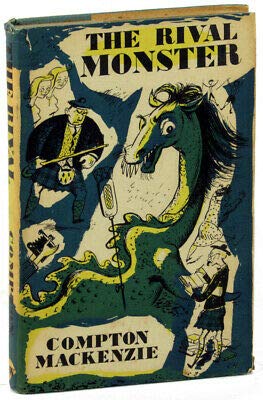
The Rival Monster by Compton Mackenzie

Book Cover

The Rival Monster by Compton Mackenzie was published in 1952. This very prolific  author is better known for writing Whisky Galore and The Monarch of the Glen. This book features a lot of the characters from the Whisky Galore books, with the same daft humour.

In a previous book (which I haven’t read yet) a flying saucer had apparently been seen attacking the Loch Ness monster and it is feared that it had either killed the monster or scared Nessie off, to take up home in another loch.

But there have been lots of sights of another monster and it definitely isn’t Nessie as it has huge teeth and comes onto the land. The tabloid newspapers are agog and one of them is putting up a prize of £250 for anyone who gets a photo of the monster. A young English palaeontologist makes his way to the island of Todday, hoping that finding the ‘monster’ will boost his academic career.

The twins Muriel and Elsie Waggett have almost given up hope of ever getting a life of their own off the island, and their mother just dreams of moving back to London, close to her sister.

This is a really light-hearted romp with a lot of the humour revolving around Mr Waggett, the pompous incomer who had been head of the Home Guard during the war. He’s even worse than Mr Mainwaring of Dad’s Army fame.

Murder Must Advertise by Dorothy L. Sayers

Book CoverMurder Must Advertise by Dorothy L. Sayers was first published in 1933. My edition is a Hodder reprint from 2016.

The very successful advertising agency Pym’s Publicity has taken on a new copy-writer by the name of Death Bredon, it is of course Lord Peter Wimsey looking exactly like himself but claiming to be his disreputable cousin Bredon when he is recognised.

There had recently been a death within the offices of the company. Victor Dean had fallen down a metal spiral staircase, but was it purely an accident or a dastardly murder? Lord Peter is engaged to go undercover and get to the bottom of the mystery, but the bodies pile up before he cracks the case. In some ways the plot seems quite a modern one involving fast living upper class types and illegal substances, but I suppose there’s nothing new in crime.

There’s an introduction by Peter Robinson.

I read this one about 30 years ago and as I’m quite a fan of Sayers it was about time I had a re-read. It doesn’t feature Harriet Vane, those ones are my favourites, but it’s still really enjoyable, with what I’m sure was a very authentic setting as Sayers got the idea for the book while she was working as a copy-writer in an advertising agency. It’s thought that she came up with the famous Guinness adverts featuring a Toucan. She injects plenty of humour into the tale with quick witted wordplay  as you would expect from such characters.

LOVELY DAY FOR A GUINNESS - Alcohol Advertisement Wall Poster Print - 30cm x 43cm / 12 Inches x 17 Inches


Kenilworth by Sir Walter Scott

It took me a week to finish Kenilworth, it’s 568 pages long, my edition dates from 1908, it was a prize given to my granny-in-law for ‘general exellence’ at St Gabriel’s Church in Govan. I wonder if she ever ploughed her way through it, she was a big Georgette Heyer fan. The book was originally published in 1821.
I can’t say that I enjoyed this one. I usually get used to Walter Scott’s garrulous writing style fairly quickly but this one felt like a real drag.

The setting is mainly Kenilworth Castle which was owned by Robert Dudley (Earl of Leicester) Elizabeth I of England’s favourite. The whole thing is just Walter Scott’s version of what went on in that Tudor court where men were jockeying for Elizabeth’s attention in an attempt to climb the greasy pole and maybe even become her husband.

Dudley thinks he has a good chance of catching Elizabeth but crucially he is already married to Amy Robsart, although it is a secret marriage. Obviously things don’t end well for Amy.

There’s a lot more to it of course, I don’t think that it helped that I already knew how the story would end. I don’t think I’ll darken Scott’s door for quite some time – if ever.

I would really like to visit Kenilworth Castle sometime though, meanwhile I’m making do with this You Tube video with historian Dan Snow.


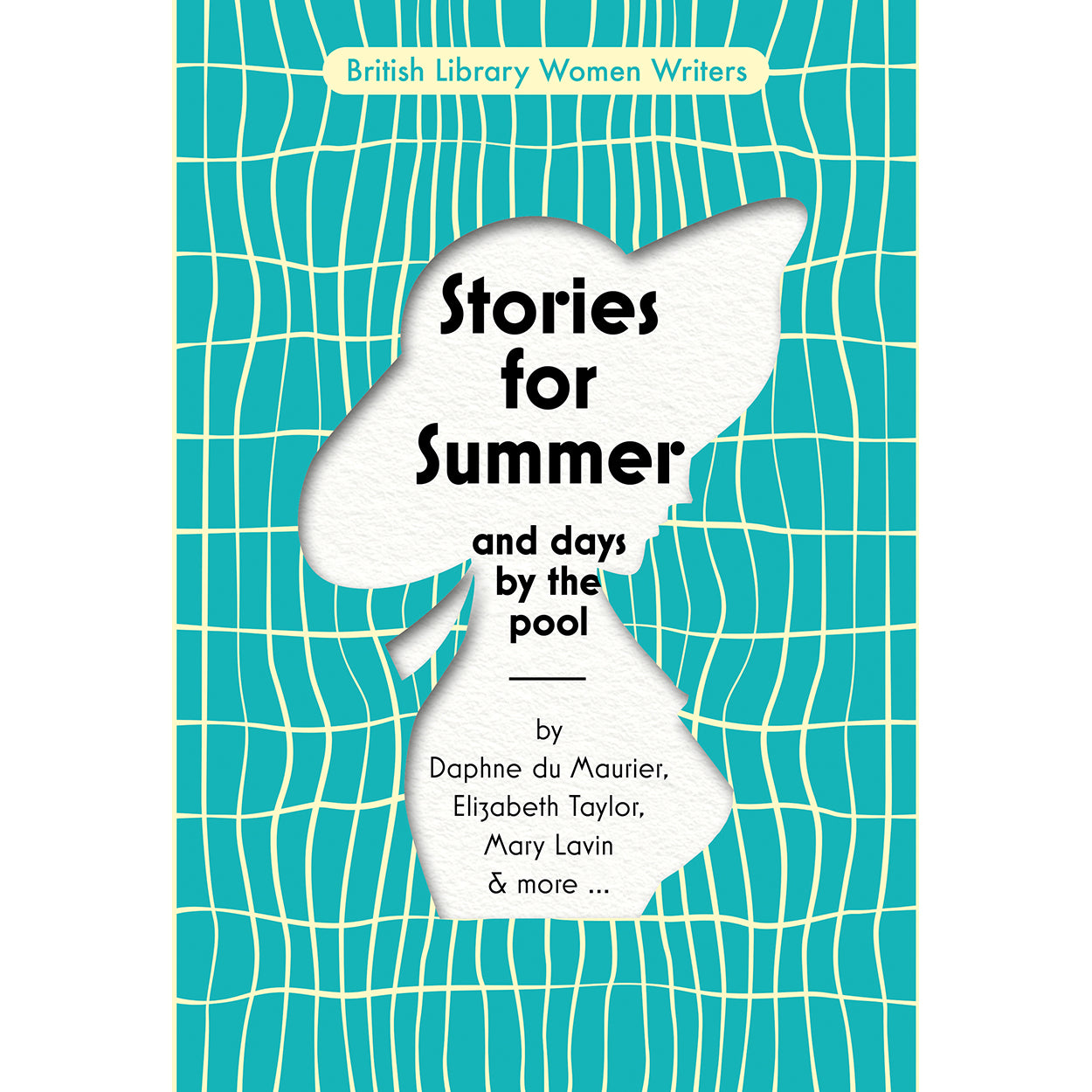
Stories for Summer and days by the pool – British Library short stories

Stories for Summer Front Cover (Paperback)

Stories for Summer and days by the pool is a collection of short stories published recently in the British Library Women Writers series.

It features stories by well-known female writers:

The Pool by Daphne du Maurier

Carnation by Katherine Mansfield

Kew Gardens by Virginia Woolf

Requiescat by Elizabeth Bowen

Exile by Sylvia Lynd

Black Cat for Luck by G.B. Stern

The Sand Castle by Mary Lavin

The Shark’s Fin by Phyllis Bottome

The Lovely Evening by Mary Norton

In a Different Light by Elizabeth Taylor

In and Out of Never-Never Land by Maeve Brennan

Afternoon in Summer by Sylvia Townsend Warner

The Fortune Teller by Muriel Spark

Men Friends by Muriel Huth

It’s a really entertaining compilation, as a woman who has been know to get sunburnt on a grey day I must say that I’ve never lain on a beach reading, or by a pool for that matter, but if you are that way inclined this book would be perfect. I really enjoyed most of the stories despite not being a huge fan of short stories in general.

My thanks to British Library who sent me a copy of the book to review.


The Rectory Mice by George MacBeth

The Rectory Mice by the Scottish writer George MacBeth was published in 1982. He’s known mainly as a poet, but later in his life he wrote some novels and books for children, this one is aimed at 10 year olds I suspect but as always with good writing, it’s entertaining for any age. It’s illustrated by Douglas Hall. The setting is a rectory in Oby, Norfolk.

It’s 1914 and at least three generations of a family of mice are living very comfortably in an old rectory, the only thing that upsets them is the clanging of the bell which alerts the rectory servants. They are extremely clean mice (impossible) so their existence is unknown to the house inhabitants, including the cats. Everything is hunky dory until they hear of the beginning of the war. War always means a lack of food, they’re worried about their cheese rations.

But when one of the mice sees what turns out to be a zeppelin floating past they realise that there is more than just a lack of cheese to worry about. As time goes on a new man joins the staff of the rectory, he’s a German prisoner of war, and he brings with him something which is going to change everything for the mice.

This is a charming book although you have to suspend your disbelief as the mice can read and Grandfather Mouse often consults the dictionary in the library. It reminded me a bit of The Borrowers by Mary Norton which I loved.


The Other Side of Stone by Linda Cracknell

The Other Side of Stone by Linda Cracknell was published in 2021 by Taproot Press. The time switches between 1831, 1913, 1990, 2003, 2006 and 2019, but it’s never confusing. It’s a quick read at just 146 pages, I think it’s really well written. The setting is rural Perthshire. It is a novella although some people have described it as a collection of linked short stories.

It begins with a stonemason cutting the keystone of a Perthshire woollen mill, he chisels the date 1831 into it, but on the inside face that nobody will ever see he carves a secret mark.

Basically this is the history of a building over the years, from its beginning to its end. We often say when we’re in old buildings “if walls could talk” and that’s really what Linda Cracknell has done in this book. The woollen mill has seen strikes and strife particularly in 1913 when they are so disgruntled that immigration to Canada seems like a good move to some. But the wife of one of the mill workers just hopes to get her husband to sign papers to allow her to be able to train as a nurse, she needs his permission and it looks like he’s never going to give it. She becomes a suffragette which gains her husband a lot of sympathy  – from the drunken men anyway.

In the later years the mill’s fortunes decline, as almost all of them did, until the land it was built on is returned to an agricultural use again, and a circle of some sort has been completed.


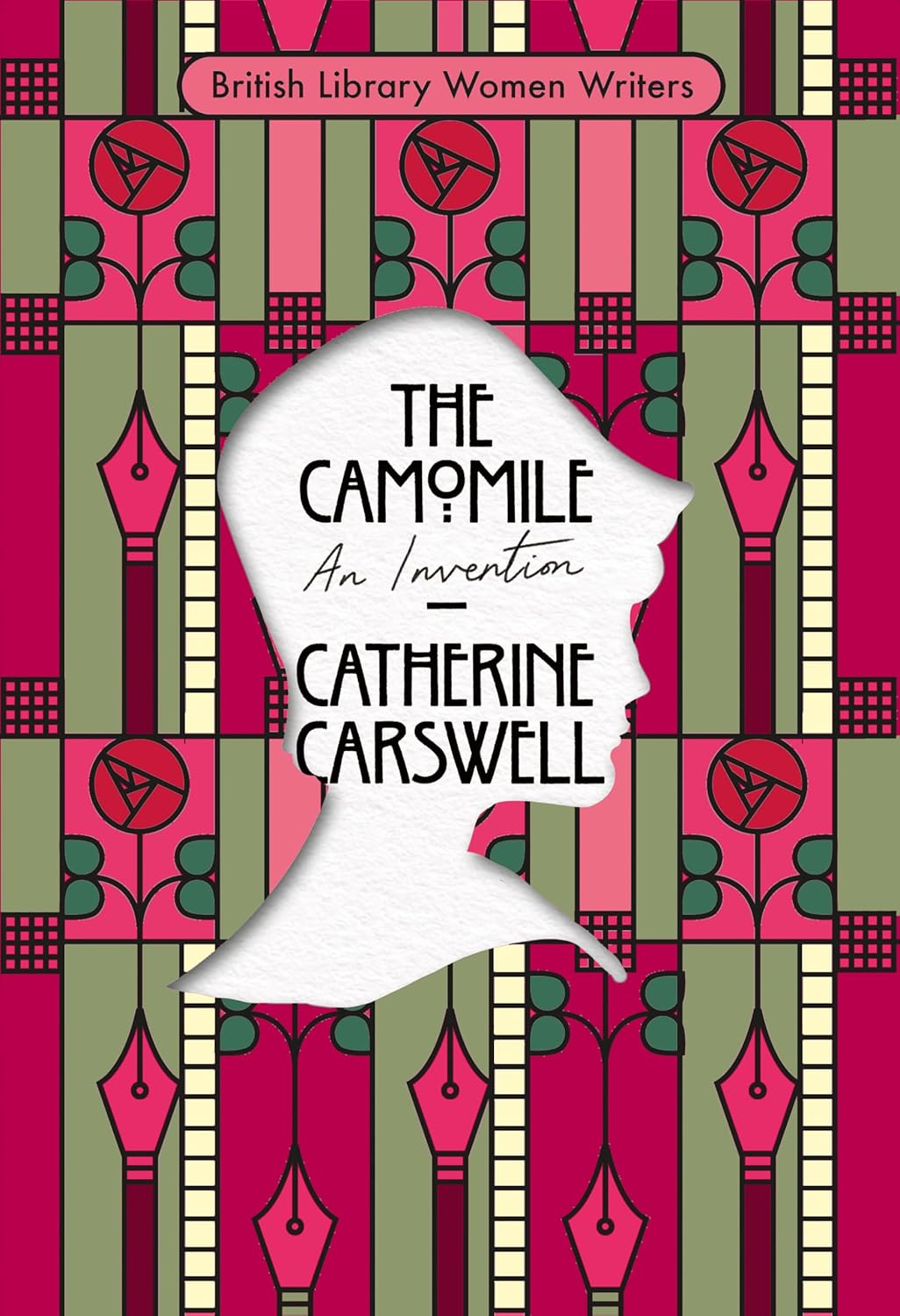
The Camomile by Catherine Carswell

The Camomile by the Scottish author Catherine Carswell was first published in 1922 but it has just been reprinted by British Library in their Women Writers series.

The blurb on the back of this book says: Set in early twentieth-century Glasgow, this effervescent novel is widely considered a fictional counterpart to Virginia Woolf’s essay ‘A Room of Ones’s Own’. In fact this book predates that essay by quite a few years.

Ellen Carstairs lives with her brother Ronald and her Aunt Harry who is a keen Christian, but Ellen gets no peace at home to do the writing that she wants to do. She is having to give piano lessons to help out financially, but worse than that her aunt is always coming in and out of her room to chat, and to try to persaude her to go to the very many religious meetings that she attends.

Ellen’s solution to the problem is to rent a room just off Byres Road in Glasgow’s west end, supposedly as a place to teach her pupils but really as a refuge from her aunt, and to get on with her writing, she has great ambition.

The book begins with a letter to her friend Ruby, they had spent time together studying music in Germany, after that it moves on to journal in style. Ellen moves from a not long out of school girl, writing of the crushes she had had on teachers to a young woman contemplating her future and weighing up her options. After a bit of a whirlwind romance and engagement some red flags have been spotted by her and it seems that she’ll have to think again.

This was a bit of a slow start for me but I ended up really loving it, there is some Glaswegian in it but really not much at all and it’s very easily understood I think. There’s quite a bit of humour as Ellen is a close observer of those around her, and the middle class society of Glasgow was quite a rich seam.

The Camomile has an interesting Afterword by Simon Thomas of  the blog Stuck in a Book.

I was sent a copy of this book by British Library, for review. I appreciated their Mackintosh – ish book cover design.