The Riviera by Wm Scott

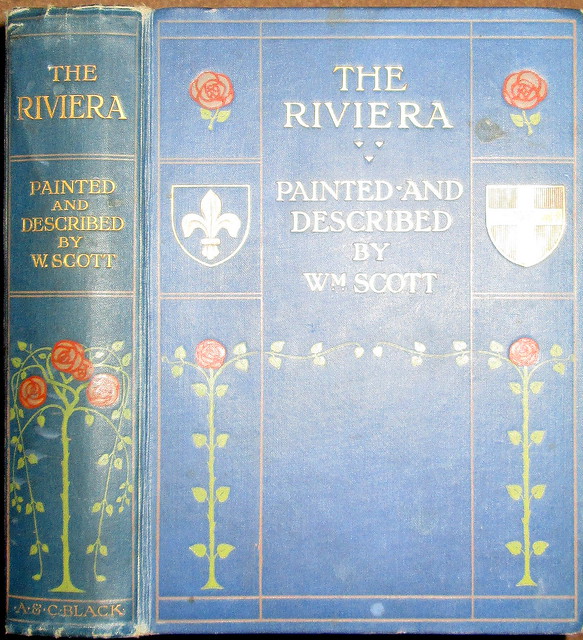
Book cover

When Joan of Planet Joan and I realised that we both owned copies of this lovely book The Riviera by Wiliam Scott – but neither of us had actually got around to reading it – we decided to rectify that. You can read what Joan thought of the book here.

Unsurprisngly Joan and I thought much the same of the book. We both started off by thinking that Scott’s writing style was more than a wee bit purple prose-ish, but either he settled down as the book progressed, or we just got used to his style.

Lots of eating establishments are mentioned and sometimes warnings are given to the reader not to ask for any food as they will be shown the door quickly, as the patron wasn’t inclined to serve food.

Scott’s observations on customs officials is quite amusing, he really detested them and thought that there was really no need for them. I think that he would be shocked at how much more difficult foreign travel has become nowadays, with people not even being allowed a pair of scissors in their luggage.

He seemed to enjoy the French Riviera more than the Italian, partly I suspect because Italy was a poorer country and the food wasn’t as good, although he did mention that the food in France was often disappointing. On the other hand parts of the French coast had already been spoiled by too much development. I dread to think what he would say about the Riviera now as I recall someone saying that Cannes has changed from being a charming fishing village into a ghastly horror over the last fifty years.

He is scathing about the so called preservation of old buildings in Italy, which always seems to result in destruction rather than preserving. I was amused at this as only yesterday I was reading about similar things happening in Spain where the locals are up in arms at what so called experts have done to their local castle.

This is the first A&C Black book that I’ve read and I intend to track more of them down, although I suspect that I won’t be able to find many at the price I got this one for – the princely sum of £4, just a matter of months ago.

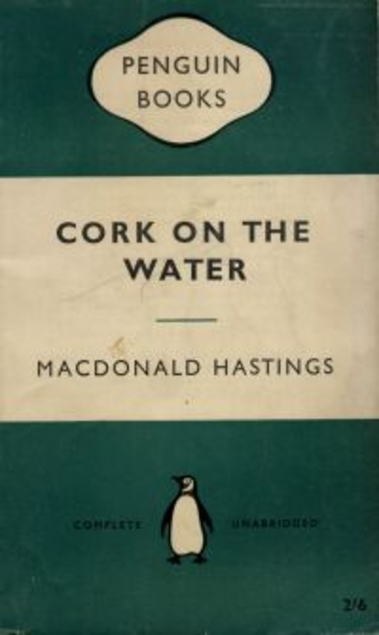
Cork on the Water by Macdonald Hastings

Cork on the Water cover

Cork on the Water by Macdonald Hastings was published in 1951.

Mr Montague Cork is the general manager of the Anchor Accident Insurance Company. He has many years experience of working in insurance and when a claim is made for £25,000 because a man called Gabriel Daggers has died, Cork has a feeling that something is not quite right about it.

Daggers had died in a fly fishing accident in the Highlands of Scotland, but it was two weeks before his body was found in the deep water of a pool. Daggers has left the insurance money to a well known ballerina, but she doesn’t want it. She had had a complicated relationship with Daggers in the past.

Mr Cork takes Robert, one of his insurance employees, with him and they take turns in driving up to the Highlands in his Bentley. Their driving skills are poles apart as Mr Cork is very aware of the dangers of driving, due to the amount of claims he has seen over the years, he’s a nervous and risk averse driver, knowing how sheep can cause mayhem on the roads! His companion is a young man who had got the job in insurance because his father was a friend of Mr Cork but the work is killing him with the boredom, he had been a commando during the war and he needs a bit of excitement in his life. Mr Cork has chosen the perfect partner for his investigation.

This is a good adventure story with the plot involving wartime experiences. The action takes place on a Highland estate and there’s a lot of leaping around on moors and hillsides.

It is written in the John Buchan style, certainly no bad thing. But it also seemed very similar in many ways to the Mary Stewart book which I read just before this one – Wildfire at Midnight. The setting was the same, a Scottish Highland hotel and the surrounding countryside, it was a shame that I didn’t realise that to begin with because I did get a wee bit mixed up with the two books at one point. Both books were also written in the 1950s and they both had so many people puffing away on fags constantly, Mr Cork smoked Passing Clouds all the time, even lighting one from the one which he was just getting to the end of. It’s a wonder I don’t have a smoker’s cough after all that! Cork on the Water was a good mystery and action adventure. I think that Hastings only wrote three or four of these books featuring Mr Cork as an unlikely sleuth.

Macdonald Hastings was a well known face on TV in the 1960s, so says Jack, but I can’t remember him. Before that he worked on radio and during the war he was Picture Post’s War Correspondent. He was also the father of Max Hastings who has carried on in the same vein as a journalist and author of books about World War 2.

I read this one for the Read Scotland 2016 Challenge.

Reading My Own Damn Books – in March

I decided to join in the Reading My Own Books Challenge at Estella’s Revenge in the hope that it would make me concentrate on my books rather than books from the library. It sort of worked, although I did request some books from the library because other bloggers had loved them. Anyway, in March I read eleven books and of those eight were my own. They were:

1. The Game of Kings by Dorothy Dunnett
2. Murder of a Lady by Anthony Wynne
3. The Edge of the Cloud by K.M.Peyton
4. Crossriggs by Jane and Mary Findlater
5. Introduction to Sally by Elizabeth von Arnim
6. Wildfire at Midnight by Mary Stewart
7. Cork on the Water by McDonald Hastings
8. The Winds of Heaven by Monica Dickens

I had been aiming to read at least six of my own books so I’m very happy with eight although I didn’t manage to read Murder in Piccadilly by Charles Kingston as I had planned, that one will be carried forward to be read in April. I’m hoping to read at least six of my own books in April, I’ll definitely be reading Oblamov by Goncharov because I got that one in the Classics Club Spin.

I have a horrible feeling that I actually bought more than eight books in March though, so the TBR pile is still increasing!

The Winds of Heaven by Monica Dickens

The Winds of Heaven cover

The Winds of Heaven by Monica Dickens was first published in 1955 but I believe that Persephone Books have reprinted it recently.

The year is 1951 and Louise has been recently widowed, she’s 50 something and her marriage wasn’t a happy one as her husband was self-centred and over-bearing, showing her no respect or love. Louise believes that the fact that she gave him three daughters instead of the son he craved made him behave as he did.

Unfortunately it isn’t long before Louise discovers that her husband has left her more or less destitute, he was heavily in debt and the house is mortgaged. This means that she has to rely on her three daughters for everything and although they are all very different characters they are all cold and reluctant to have their mother living with them, so they take turns at housing her for a few months at a time. The daughters have taken their cue from their father.

Louise feels unwanted and burdensome and does everything she can to be almost invisible in her daughters’ homes. On a visit to a London tearoom Louise is befriended by a man who sells beds in a department store. They are both lonely but this relationship seems doomed to fail as they are both rather socially inept.

I enjoyed this book which portrays south of England suburbia and its snobbish inhabitants so well, the pushy parents, social climbing and hypocrisy. The only gripe I really have about it is that Louise’s gentleman friend – who it turns out is a published writer of crime fiction ‘shockers’ as well as a bed salesman – is a good character who didn’t appear often enough in the book for my liking.

Guardbridge in Fife

I find myself in the wee village of Guardbridge in Fife from time to time. Mainly when I want to take a look at a furniture restorer’s wares. We were there earlier this month, just before they were closing the roads around the area for some sort of roadworks, causing mayhem of course.

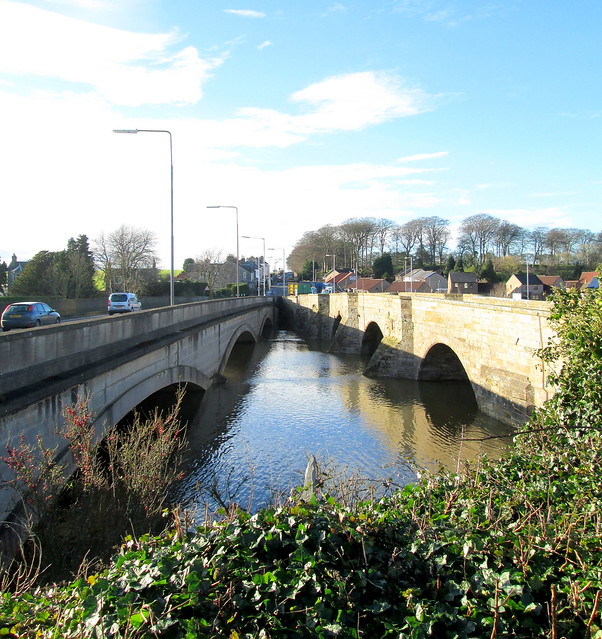
Guardbridge

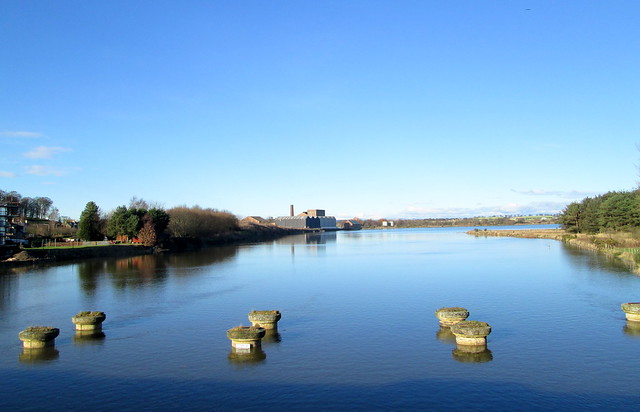
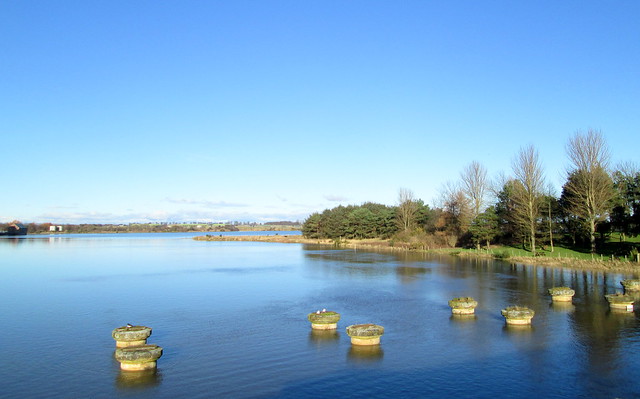
Anyway, I decided to take a few photos of the two bridges that are so close together they meet. Cars only go across the left hand bridge though, and in the river you can just see the remains of what was a viaduct for the trains to get across the River Eden. The viaduct must have been removed when the railway line to St Andrews was closed down, unusually that wasn’t a Beeching cut.

Guardbridge 2

Guardbridge was a mediaeval stopping off point for pilgrims visiting St Andrews which is only about three miles away. Apparently St Andrews was one of the most important sites of pilgrimage in Europe. The Augustinians regulated how many pilgrims could be allowed to travel on to St Andrews each day.

Guardbridge 3

It was a beautiful blue sky day as you can see. Both bridges are very old, the oldest being from the 15th century.

Guardbridge is close to Leuchars which until recently was an RAF base, now it has been turned into an army base. For that reason if you have a Sat Nav/GPS it won’t be of much use to you, I’ve been told there’s some sort of block on it for security reasons. I find that hilarious, as if someone intent on causing trouble won’t be able to find their way about without Sat Nav!

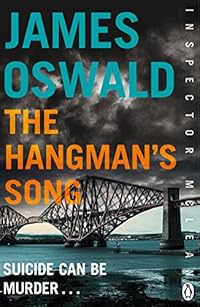
The Hangman’s Song by James Oswald

 The Hangman’s Song cover

The Hangman’s Song by James Oswald is the third book in his Inspector McLean series.

Edinburgh’s police headquarters is in chaos as the ongoing restructuring of Scotland’s police forces has meant that Chief Inspector Duguid – or Dagwood as he is sometimes known as is the temporary boss. McLean has a very low opinion of Duguid and the feeling is mutual. Duguid is piling lots of extra work onto McLean and at the same time is removing officers from his cases, sending them on needless training courses at Tulliallan police college.

However when a series of hangings take place in the city there are enough odd details to make McLean feel that they are anything but the straightforward suicides that Duguid insists they are.

McLean is having as much trouble with his work colleagues as he is with the investigation, jealousy is leading some of the more immature in the force to play stupid but expensive pranks on the financially independent McLean and at times he does wonder himself why he is bothering to remain in the police force. Luckily for us he realises that that would be giving in and doing just what his colleagues want.

I’m really enjoying this series which should be read in order but I agree with Jack that it could do without the spooky elements which really don’t add anything.

If you want to read what Jack thought about this book, have a look here.

I read this one for the Read Scotland 2016 Challenge.

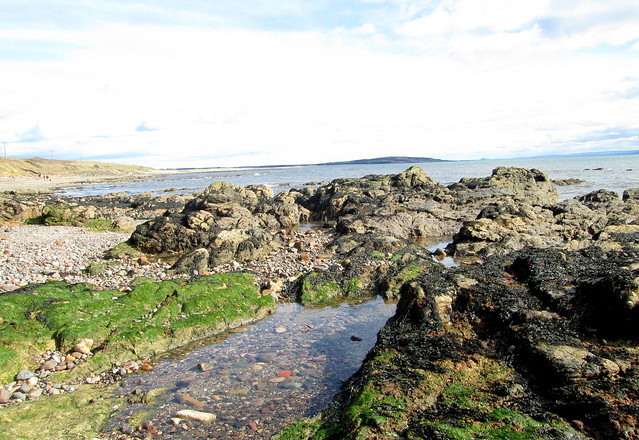
Largo Beach

Rocks at Largo

One of my favourite local beaches is at Largo Bay in Fife, the photo above is of a rock pool there. I took the photo today, we swithered about going there or going to Falkland Palace for a walk around the gardens there to see what was blooming, but when I had a look at the National Trust ‘ What’s on at Easter’ section I realised that they were having an Easter egg hunt there today. So that was definitely to be avoided as it sounded too much like mayhem to me.

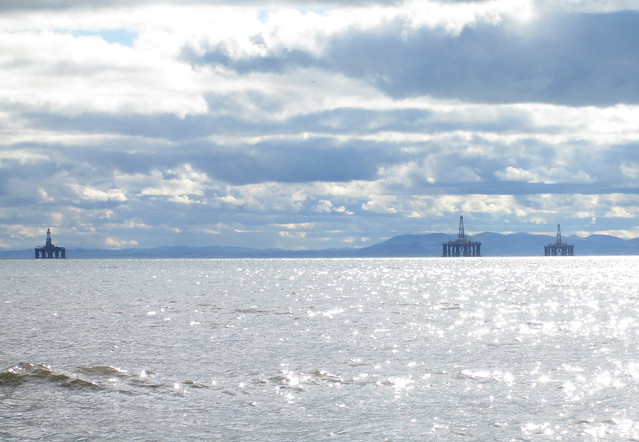
So Largo Bay it was then, it’s a good beach for a walk and has a nice mixture of sand and interesting stones to look at, I find sandy beaches quite boring. They don’t actually drill for oil in the Firth of Forth, these oil rigs are just being floated off to their final destination in the North Sea after having been built fairly close by.

oil rigs

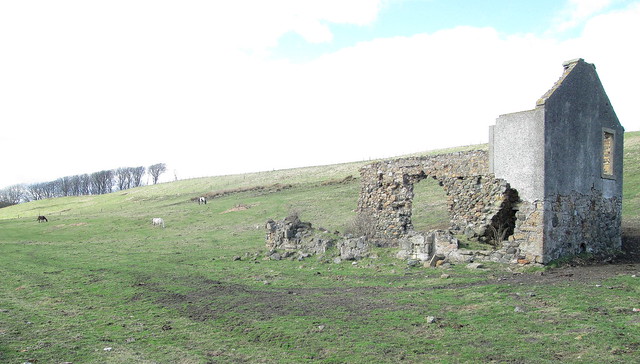
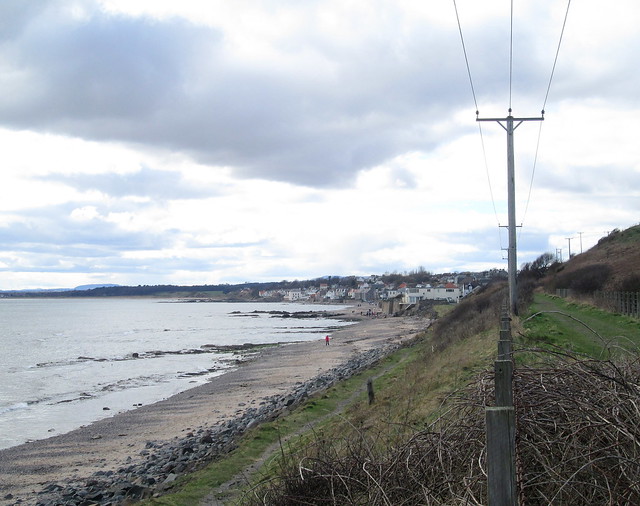
We must have walked further along the beach than usual because neither of us had ever spotted that there was a path above the beach, I just caught a glimpse of this ruined house and climbed up the bank to investigate.

ruins 1

The path was obviously a railway line before Beeching closed down a huge amount of the UK’s railway network in the 1960s. The photo below is of the village of Lower Largo in the distance.

Largo from bay

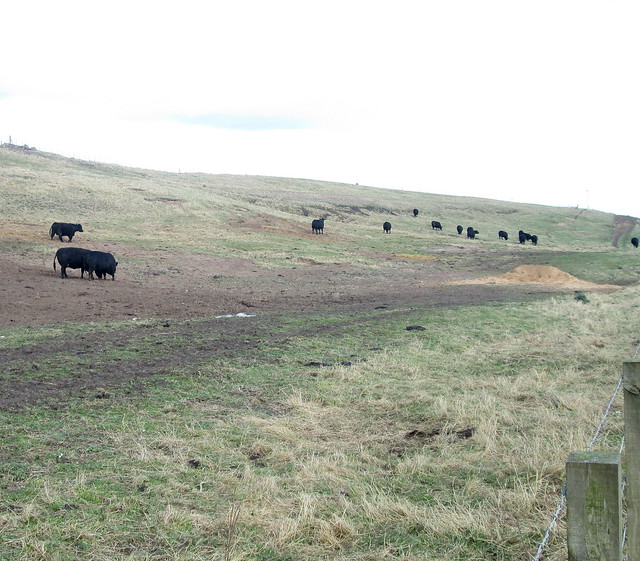
The fields above the beach have horses and bulls in them, although Jack calls all cattle cows. He is so unobservant! Sadly they are just black bulls, nothing at all exciting like Highland cattle or Belted Galloways.

cattle

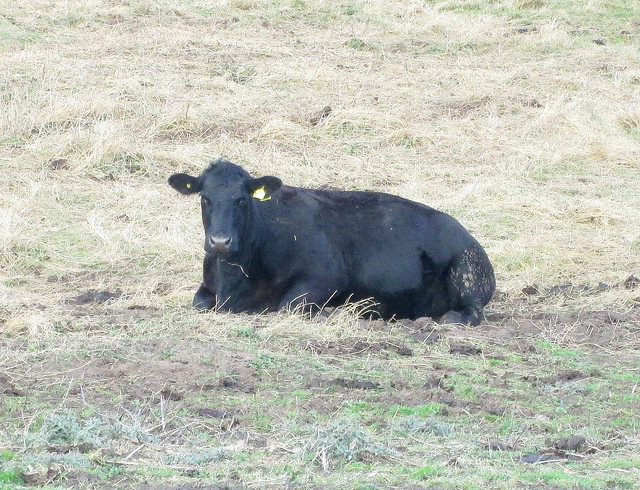
The bull below was not in the least impressed by being called a cow though, just as well there was a fence between us!

cattle

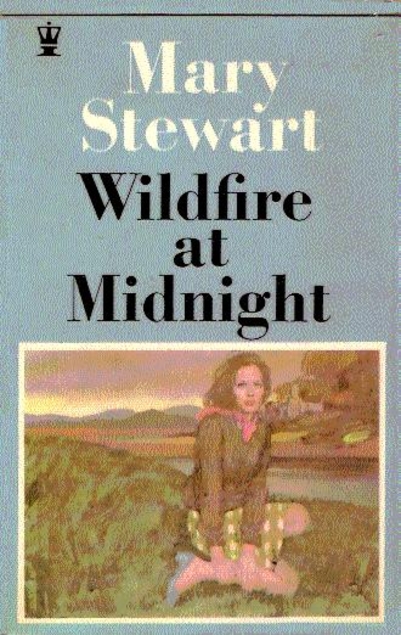
Wildfire at Midnight by Mary Stewart

Wildfire at Midnight cover

Wildfire at Midnight by Mary Stewart was first published in 1956 but the story begins in 1953, just a few days before the coronation of Queen Elizabeth II. London is rapidly filling up with people who have come to get a view of the proceedings. Gianetta Drury is a model for Montefior a famous designer, and she could have a grandstand view from his premises above Regent Street, but perversely she wants to have a holiday away from the heaving city. At her mother’s suggestion she ends up going to the Isle of Skye and booking into a hotel recommended by her mother.

Gianetta is divorced and she’s shocked to discover that her ex-husband is also a resident at the hotel, but there’s an even bigger shock for her as she’s told that there has been a murder in the neighbourhood, and everyone except Gianetta is under suspicion.

The hotel is full of the usual hill walkers and anglers and in no time a couple of female hill walkers/mountaineers fail to return from their hike. With a murderer on the loose there’s even more than the usual worry in case they have been done to death, rather than just got lost in the mountains.

I really like Mary Stewart’s books. Apart from anything else you never know what you’re going to get when you open one of them, her books are never predictable. This one has plenty of mystery along the lines of Christie but also beautifully descriptive passages and just a wee bit of romance of course.

This is another one which counts towards the Read Scotland 2016 Challenge.

Introduction to Sally by Elizabeth von Arnim

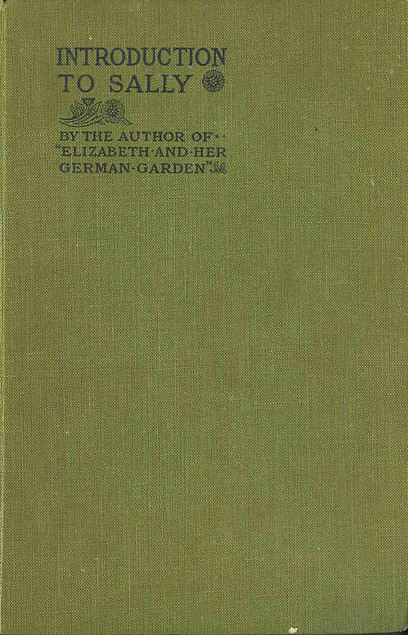
Introduction to Sally cover

Introduction to Sally by Elizabeth von Arnim was published in 1926, but of course von Arnim was being coy about it as it only has that
“BY THE AUTHOR OF “ELIZABETH AND HER GERMAN GARDEN” tag.

To begin with I thought this was going to be a sort of Pygmalion/My Fair Lady rewrite but it turned out to be quite different.

Mr Pinner is a shopkeeper and is married to a very pretty woman and they live in London. After ten years of marriage they still have no children which is a huge sadness to Mr Pinner in particular, that coupled with the fact that Mrs Pinner is argumentative leads him to think that given his time again he wouldn’t have married her. Eventually Mrs Pinner does get pregnant and has a little girl who turns out to be even prettier than her mother. Mr Pinner wants to call her Salvation as he feels she has saved their marriage as Mrs Pinner is now too taken up with her baby to quarrel about anything. They compromise and call her Salvatia, but of course that is shortened to Sally, much to her parents’ annoyance.

As Sally grows up she attracts too much attention from men, they come into the shop just to catch a glimpse of her, it’s good for business but Mr Pinner can’t stand all these men lusting after his daughter and they end up trying to hide her from them. When Sally is sixteen her mother dies and so Sally has to help in the shop, the business turnover doubles overnight but Mr Pinner can’t take the strain of looking after Sally on his own. The Pinners are a God fearing family and it grieves Mr Pinner that even the local doctor and vicar are lusting after his daughter. – These married gentlemen – what could it be but sin they had in their minds? They wished to sin with Sally, to sin the sin of sins, with his Sally, his spotless lamb, a child of God, an inheritor of the kingdom of heaven.

Mr Pinner decides to move out of London for Sally’s sake. He finds a shop in a teeny village which is owned by a man who wants to move to London and they exchange premises. The village of Woodle seems ideal to Mr Pinner, but he doesn’t realise that it is close to Cambridge and when term time begins it has students going through it. When one particular ogling student Jocelyn Luke sets eyes on Sally he’s so overcome by her beauty that he mentions to her father that he wants to marry her. Mr Pinner can hardly believe his luck and in no time he has married Sally off to him. He’s keen to pass the responsibility of looking after Sally on to a husband.

Too late Mr Luke realises that although Sally looks like a dream, she sounds absolutely dreadful. He tries to improve her speech but Sally is unable to pronounce an ‘h’. In fact she seems not to realise that there is such a letter in the alphabet and she has no interest in improving herself. Usband – as she calls Mr Luke seems always to be angry with her, except at night time when he is too busy – Oh Sally-ing! as Sally calls it.

I began by thinking that this book was just a bit too daft but in the end I really enjoyed it. It’s all a bit of a hoot as the very innocent Sally continues to wow all the males she comes into contact with, without even trying, and despite her obvious ‘common’ background.

It is of course all very wrapped up in snobbery and the differences between working class people and the various other types, up to ‘the pick of the basket’ as Sally’s parents had described the aristocracy.

There’s an article from The Independent here in which they seem to think that Elizabeth von Arnim has been unknown to readers for years, but we know differently don’t we?!

One other thing I want to mention – this book has a rubber stamp inside it saying: Josiah Parkes & Sons Ltd
WORKS LIBRARY

The book was published in 1926 and I couldn’t help wondering what the company actually did, so I Googled them and came up with this.

They made keys and locks amongst other things and I love the old photos of the workforce and their surroundings. Real social history going back to the time when to work for a company was like being part of a big family with a library for the workers and no doubt lots of clubs for them all to socialise in. Mind you standing on those cobbles all day must have been hard on the feet!

I read this one for Reading My Own Damn Books and the Classics Club and also The Women’s Classic Literature Event.

Foodie Friday – Cheese souffle

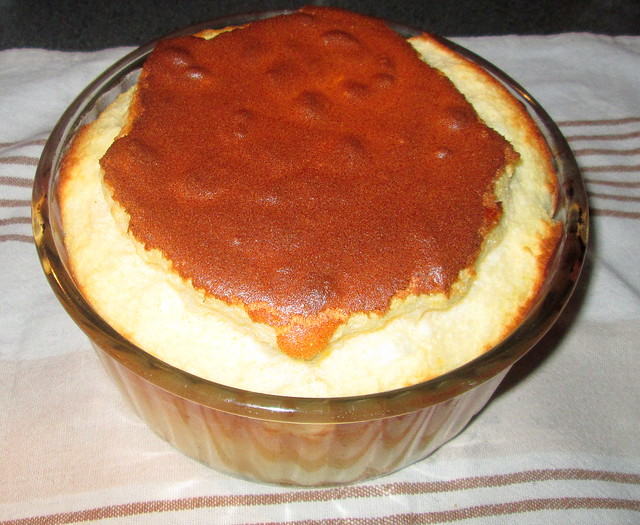
I was only about 16 or 17 when I first made cheese souffle and I didn’t realise that souffles were regarded as ‘difficult’ and often avoided by experienced cooks. Luckily my first cheese souffle turned out well using this recipe.

Cheese souffle

3 eggs
25 g or 1 oz of butter
15g or half oz flour
142 ml or 1/4 pint milk
75 g or 3 oz grated cheese
seasoning, including dry mustard

Separate the eggs. Melt the butter and stir in the flour, gradually add the milk and bring to the boil, stirring until smooth. Cool slightly, add cheese seasoning and egg yolks one by one, beating well. Fold in the stiffly beaten egg whites and put into a greased oven proof dish or souffle dish. Cook in the centre of a moderately hot oven, 400 F / 200 C / Gas Mark 6 for about 20 minutes, till well risen and brown. Serve at once.

I use ordinary cheddar cheese for this recipe and I only use mustard as a seasoning, about a teaspoonful. I think there is enough salt in the cheese already. Accompany it with a salad.

This is based on a Marguerite Patten recipe.