Seafield, Kirkcaldy, Fife, Scotland.

7 April 2013 00:39

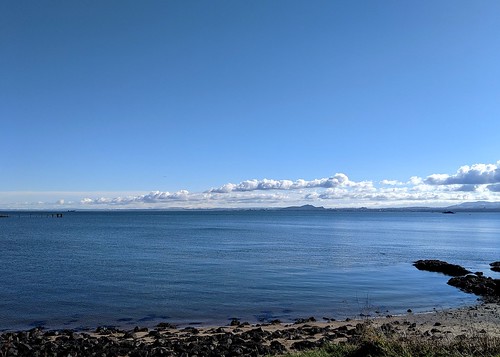
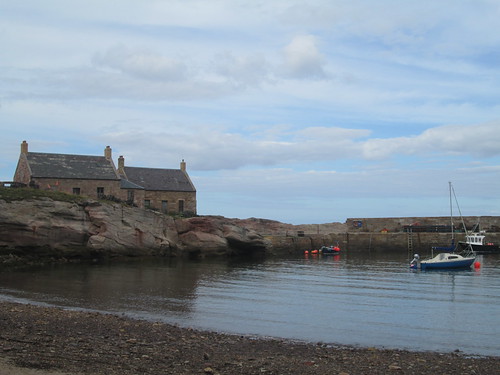
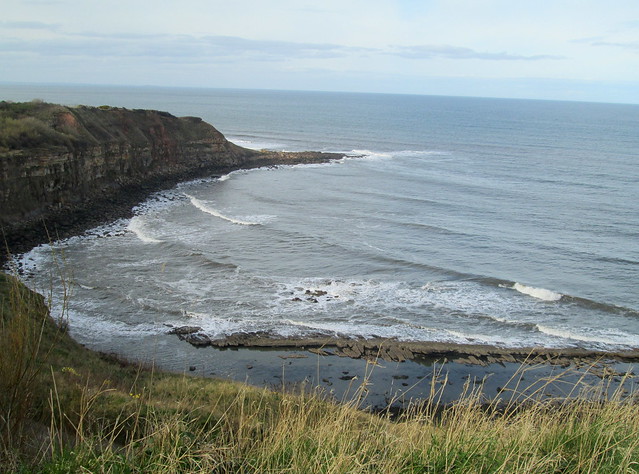
As the clocks sprang forward by one hour last week – the nights are fair drawin’ oot, as we say here. I love this time of the year because it’s almost like getting another life as there’s light to do things after dinner time, like take a walk along the coast to Seafield, which is what we did a couple of nights ago, as you can see, the tide was quite far out. Sometimes there are seals on the rocks here, but not this time. Until about 20 years ago there was a coalmine underneath the sea here. It must have been very scary to mine in those conditions.

arocks and sea 1

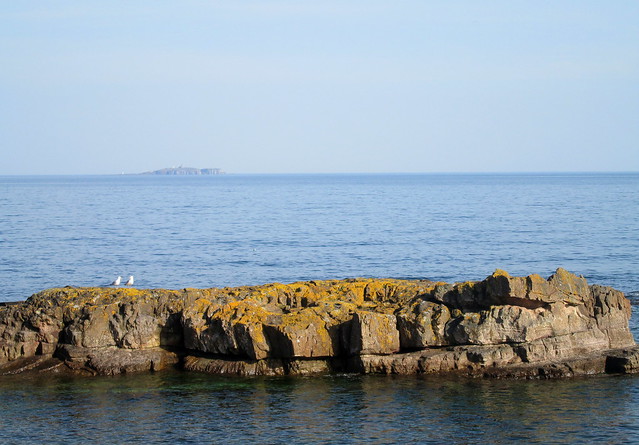
There are some nice red rock formations along that part of the coast. It looks like sandstone to me but I’m not sure that it is as that is a very soft stone but this seems to be able to stand up well to being battered by the North Sea.

arocks 1

It’s difficult to get photos without junk in them. The whole place is littered with stuff which has been lost overboard from ships. Buckets, old ropes, smashed up creels and bits of tarpaulin seem to come in with every tide. Every now and again there is a community clean up weekend, but it’s a never ending task.

arocks and sea 2

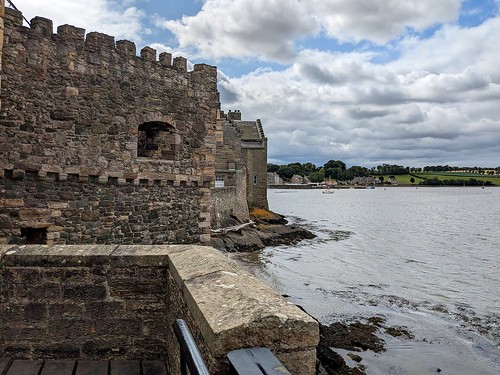
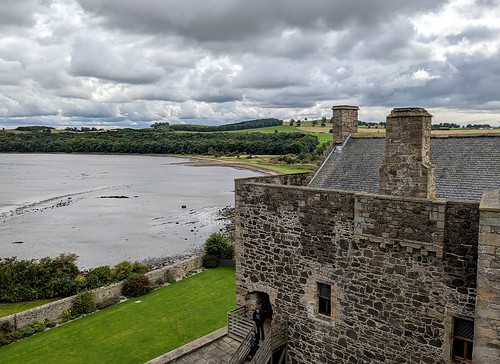
This was our destination, Seafield Tower, or what is left of it. It was abandoned in 1733. I don’t suppose you can be sentimental and save all old buildings, there are so many of them around Scotland. This one has clung on to the coastline for hundreds of years and until recently it was really quite safe to have a walk around in it but the heavy seas of this last winter have taken their toll on the tower.

aTower 2

As you can see from this photo, there has been a fairly massive rockfall from the tower and I suppose it’ll eventually all disappear into the North Sea.

aTower 1

Cramond again

25 November 2012 00:45

For some reason I couldn’t add these two photos onto my Flickr yesterday, but could today so, this one is of Cramond Island, just off the village of Cramond. There’s a causeway which leads out to it and if the tide is right you can get down onto the shore and walk out to the island, making sure that the tide isn’t going to change whilst you are there as it would be quite embarrassing to have to be rescued by a life boat crew. The hills you can see on the other side of the river are in the county of Fife, where I live, and it looks quite scenic from this location.

Cramond Island

We walked out right to the end of the causeway and I turned and took this photo of Cramond village but most of it is obscured by the trees. The tide was in so the Forth was lapping all around the causeway, we’ve never actually got here at the right time so more planning is required as I would love to get on to the island sometime.

As you can see last Saturday was a blue sky day but after we had gone for a walk along the shore for about half a mile it started to chuck it down with rain and the wind was painfully cold. I don’t think we’ve had many days this year when it hasn’t rained.

The Causeway, Cramond

I think all of the islands were inhabited by soldiers manning gun emplacements during both world wars as this area was obviously a target for the Germans. The naval base of Rosyth is nearby as is the iconic Forth Bridge which was attacked by enemy aircraft as it would have been a great propaganda coup for them to destroy it. Of course they didn’t succeed and it’s still doing a good job of carrying trains over the River Forth every five minutes or so – I kid you not, it’s amazingly busy, I can’t think where they’re all going.

Here it is again, not visible from Cramond, this is one of the photos I took from South Queensferry a while ago.

The Forth Bridge

Cramond village, near Edinburgh

23 November 2012 23:35

Last Saturday we stopped off at Cramond after spending the afternoon at Ingliston Antiques Fair, near Edinburgh. Cramond is a wee coastal village near Edinburgh and we pass it on the way home to Fife. It was a favourite destination when our boys were wee.

A street in Cramond, Scotland.

The photo above is of the hotel at Cramond, the village is almost a suburb of Edinburgh now but at one time it was apparently popular with Edinburghers looking for a weekend getaway from the city, of the ‘dirty weekend’ variety. I haven’t read Muriel Spark’s Prime of Miss Jean Brodie, mainly because I’ve seen so many different dramatised versions of it, but I remember distinctly the actor Gordon Jackson in the 1969 film trying to persuade Jean (Maggie Smith) to go away with him for the weekend to Cramond – so naughty!

Cramond, near Edinburgh

Most of the buildings have been whitewashed, as is traditional with coastal houses. These buildings are actually by the harbour just where the River Almond flows into the Firth of Forth. Cramond is thought to have been first inhabited in 8500 BC which makes it the oldest settlement in Scotland. The Romans settled there around about the year 142 but only stayed for 15 years or so, after which they retreated back to Hadrian’s Wall.

The Firth of Forth

The photo above was taken from Cramond, looking over the Firth of Forth to Fife, the village of Aberdour is more or less in the middle of the photo but most of it is obscured by an island, the bigger island is called Inchcolm and we had a great afternoon out there last year, if you want a closer look at it take a peek here.

You can clearly see some wind turbines which have been popping up in quite a few locations. They’re controversial but I quite like them although I don’t suppose I would want one on my doorstep. That well known pain in the neck Donald Trump has been trumpeting on about them just today on the news as there are plans for some turbines to be built in the sea near his golf course north of Aberdeen. Apparently he hates them and thinks they will kill tourism in Scotland, and he would have built his golf course in Ireland if he had thought that his view was going to be blighted by turbines. If only we had known then and we could have waved him cheerio as he departed in high dudgeon for Ireland, and the people in Aberdeen wouldn’t have to put up with yet another golf course!

Kirkcaldy Beach and ships

13 September 2012 23:58

I’ve blogged about Solitaire before, she’s the biggest pipe layer in the world and a few weeks ago she was joined by her sister ship the Audacia. They’ve both been coming and going every now and again but most of the time they’ve been anchored in the Firth of Forth.

The first time I saw one of these very strange looking pipe layer ships I was amazed at how weird it looked, it was the Solitaire, a Swiss army knife of a ship and I really thought it was quite ugly looking but I’ve now changed my mind completely and I love all those bits hanging off it, I think it’s quite elegant looking. In fact when we’ve been driving back along the Orrock Quarrry road from Edinburgh and get to the spot on the road when you can see the Forth, I was hurrah-ing whenever she came back into view. What can I say – but I live a quiet life!

Pathhead foreshore + ships

Yesterday I happened to be on the beach at Pathhead in Kirkcaldy and took the chance to snap them again, and I’m glad that I did because last night Audacia sailed off for Haifa, Israel. I wonder how long it’ll take her to get there?

Further along the beach I came across a mini stonehenge construction, I don’t know who built it but they’re my kind of people. Why stick with sandcastles when you can branch out to something more solid!

a mini stonehenge

The other photos I took were mainly of rock formations on the foreshore which I intend to put on Pinterest – if I ever get around to joining it!

Culross, Fife, Scotland

7 September 2012 23:43

Before we went around the palace at Culross we had a guided tour of the town. It looks just as it must have when the houses were built in the 16th century, if you ignore the cars!

quaint street

In common with most coastal towns the whole town is built on a steep hill. When the National Trust took over the palace there were a lot of houses in the town which were derelict. Luckily the NT decided to take them on too otherwise they would have been demolished eventually. They rent the cottages out and apparently there is a long waiting list of people wanting to rent them. It takes about 6 years to get to the top of the list.

house in square, Culross

As you can see, crow stepped roofs and pan tiles are in use again, just like in Dysart. This photo has the market cross in it, there’s a unicorn on top of it. Unicorns are a symbol of Scotland.

Town square, Culross

There are a lot of different designs of houses, no two are the same as far as I can see, but they’re mostly white or pink but some are orange. I suppose they’re about the same age as the timber framed Tudor houses that you see in England but these houses seem a lot more solid. My own house is about 110 years old and I can’t imagine living in a house which is 400 or 500 years old.

pink house in Culross, Fife

If you do go to visit Culross make sure you wear flat shoes because the cobble stones aren’t the easiest to walk on. Thankfully though the roads are clean which they wouldn’t have been in medieval times, there was raw sewage running down the gutters then. It can’t have been pleasant for anyone but must have got worse towards the bottom of the streets. Typically the abbey full of monks and priests was at the top of the hill!

Culross Palace and Gardens, Fife, Scotland

7 September 2012 00:13

During the last week of the school holidays we drove just a few miles from home to the small but very historic town of Culross, which is pronounced Kooriss. This is a panorama photo of the town.

Culross pano

This is the palace from the back, in fact I seem to have neglected to take any from the front! As you can see, there’s a good view of the Firth of Forth. The palace dates from 1597 and is a very bright colour, almost orange, but it is the original colour and it was a status symbol as it cost so much to have the building finished like that when it was built.

Culross palace panorama

This photo is of the chickens in the orchard, there was also a lovely border collie belonging to the gardener there but he/she didn’t stay still long enough to get a snap of her. I think that gardener may well have one of the best jobs around.

chickens

Look closely and you’ll see that apples can grow in Scotland although it obviously helps if you have a south facing garden and nice big thick walls which store what little heat we might get.

apples + flowers

The gardens are steeply terraced with stone steps in about four layers, so you have to be fairly fit to tackle them but it’s well worth it if you’re interested in plants.

Culross palace terraces

There’s a good selection of plants and produce to buy here, the wee wooden stall which you might be able to make out has bags of very unusual varieties of veggies and you just have to make your choice and post your money into the honesty box.

Culross palace garden

We had planned to visit the palace and abbey in the same afternoon but after doing the town tour and the palace tour we were too tired for the abbey and it was getting late too so we’ll be going there some other day.

These are all National Trust properties and in fact the NT owns over 100 of the houses in the town and they rent them out. Culross is well worth a visit, there’s plenty to see but now that it’s so quiet it’s hard to imagine the place as it was when it was a very busy port, even busier than Leith apparently, which is Edinburgh’s port. It was full of ships which were transporting the coal from the very lucrative mining industry here and before that there was a salt industry.

Dysart, Fife, Scotland

4 September 2012 00:06

Every now and again we take a wander along to Dysart which is an old Royal Burgh just a couple of miles north, along the coast from Kirkcaldy. The schoolkids have made a new sign for it apparently. I have no idea how they made it but it looks quite snazzy I think.

Dysart  Primary school art

This is a photo of Pan Ha’ and St. Serf’s Tower, the buildings are of traditional east coast design, with the red pan tiles on the roofs coming originally from Holland as ballast in ships. Dysart was a very busy port at one time.

aPan Ha'

The town tolbooth, the ground floor of which would have been used as a prison. I imagine it would have been quite well used as there would have been plenty of sailors around, getting drunk and having fights.

Dysart tollbooth

We walked alongh the coastal path for quite a while but bits of it have been roped off as the cliffs are in a dangerous state at the moment. It’s that ever present coastal erosion, the island of Britain is shrinking all the time it seems, and the sea is coming to get us. Do we ever gain any land I wonder?

You can see the old winching gear of Frances Colliery which closed down years ago, when Maggie Thatcher killed the coal mining industry of Britain, along with a lot of communities.

panorama from Dysart

If you’re interested you can see an older Dysart post of mine here.

Yesterday further north along the coast, some 15 or 20 miles or so, between Pittenweem and Anstruther it was ‘all go’ as a pod of whales beached themselves for some reason. It was early in the morning and by the time rescuers reached them 10 had already died. After huge efforts 16 whales were encouraged back to deeper water but unfortunately since then one has died at Leith and it’s feared that the others will come to grief too as they are just swimming around near the Forth Bridges. They’re pilot whales and shouldn’t be anywhere near this coast, but this happens every now and again for some unknown reason. It’s such a shame.

Shipping Movements

6 August 2012 23:09

This post will probably only be of interest to people who live near a coastline – as I do. Usually there are at least a few container ships and tankers anchored in the Firth of Forth, near where I live. I live close to the exact same stretch of coastline which gave Adam Smith the Scottish economist his ideas, but he was watching a lot more ships coming and going in those days. I’ve always wondered what they’re all doing and where they are going, but when I saw this ship (below) I just had to find out what on earth she is.

Solitaire, A Swiss Army Knife Ship

I call her a Swiss army knife of a ship because she has all sorts of bits and pieces hanging off her, I’ve never seen anything quite like her. Anyway, it turns out that she is called The Solitaire and she is the world’s largest pipe-layer. She is absolutely enormous and she has been in the Forth for a couple of weeks now as she is between contracts at the moment. They don’t have to pay berthing fees if she is anchored mid-river. She’s off to China in the autumn to have her crane upgraded from 300 tonnes to 850 tonnes.

Solitaire was embroiled in a fair bit of controversy a few years ago, when she was sabotaged off the coast of Ireland by people protesting the Corrib gas pipeline and its construction. Apparently, the pipelay stinger (the lower of the two white bits hanging off the back of the vessel) was completely detached, forcing Solitaire to limp to Greenock for urgent repairs.

If you want to know the names and details of ships all you have to do is visit this website.

There has been quite a lot of ship movement out there recently, I’m hoping that that means the economy is improving a wee bit. I know, I’m clutching at straws!

Elie and Earlsferry, Fife, Scotland

9 May 2012 23:32

A couple of weeks ago we went for a drive along the Fife coast to Elie but we ended up visiting Earlsferry too because the villages run into each other and it takes you no time to walk from one to the other. The photo below is of the Bass Rock and I took it from the main street in Earlsferry. It looks quite eerie somehow but it’s quite a view for people to have from their garden. The rock is home to thousands of sea birds so you can guess what the white stuff is! In the dim distant past prisoners used to be put on the rock and R.L. Stevenson mentions it in Kidnapped.

Bass Rock

The next three photos are of some of the local houses which I particularly fancied the look of. The one below is so cute a wean/kid could’ve drawn it.

Cute wee house

This one must once have been two flats, as you can see the window at the bottom on the left hand side was originally a doorway. The orange coloured roof tiles are called pan tiles and they were widely used on the east coast of Scotland but they originally came from Holland, they were used as ballast in ships which sailed here.

Pink cottage

The one below is altogether much grander and as soon as I saw it I thought it looked very similar to the houses you see in France so I wasn’t surprised to see that its name is Marionville.

Marionville

This one is of Elie taken from the beach in Earlsferry which is just off the main street there. They are nice wee places to visit but I really wouldn’t want to live there, they feel so remote and there’s not much in the way of shops at all. I don’t fancy having to travel miles to the nearest supermarket when we eventually downsize, so we won’t be moving to this area. The search continues!
Elie from Earlsferry

Kirkcaldy Beach, Fife, Scotland

31 March 2012 00:34

This week Scotland has been enjoying wonderful weather for once and March temperature records have been broken. It got to 73F in some places, I think it was about 69F at the beach in Kirkcaldy when I took these photos.
 Kirkcaldy shore

There were actually people sunbathing in their bikinis but I decided against shocking you. It has to be said that Kirkcaldy central beach definitely isn’t one of the bonniest beaches in Fife and there are much nicer ones just a stone’s throw in each direction along the coast. The nearby small towns of Aberdour and Kinghorn have beautiful sandy beaches too.

Kirkcaldy shore
As you can see the sand here has teeny wee bits of coal, just like grit mixed in with the sand. A legacy of the coal mining days of the area, of course all the mines were closed down years ago.
 black coal tide line

The water is beautifully clear though and this photo is actually all water as the tide was coming in. The Firth of Forth is certainly a lot cleaner than it used to be. It’s just at this point that it turns into the North Sea.
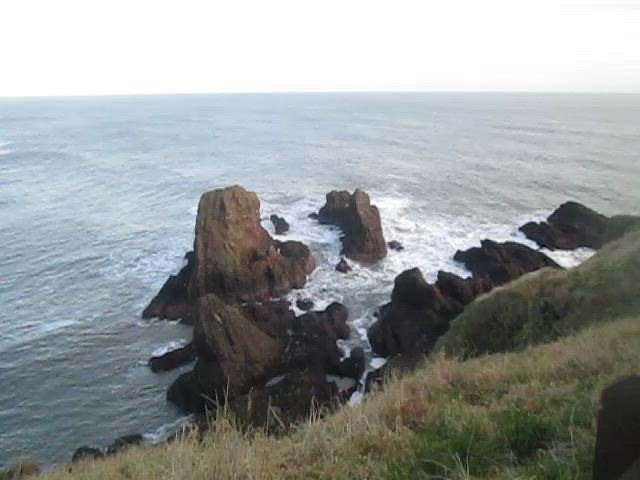
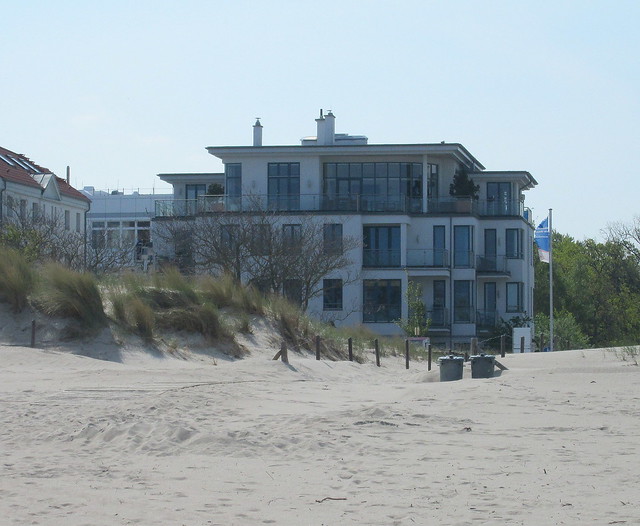
shore line
Back to the town again and you can see those three blocks of high flats which are so visible from Edinburgh and North Berwick. If you look closely you can see the massive yellow crane which is being used in the construction of the new swimming pool, although why we needed a new one is a mystery to me because the old (1980s) pool seems absolutely fine.

Kirkcaldy shore

So, that was Kirkcaldy on one of the hottest March days which we have experienced. Why is it that when it’s a hot temperature we always revert to using Imperial measurements? We go back to those 70 Fs and know exactly what it means, hot to us but mild to other people no doubt. Then when it’s cold we are back to using centigrade and moan that it’s -15 C or whatever!