The Homicidal Colonel by Robert Player

The  Homicidal Colonel cover

The Homicidal Colonel by Robert Player was first published in 1970 and my copy is a first edition Gollancz, I have no idea if it has been re-printed. It’s the first book I’ve read by the author and after I bought it I did question why I had bought a book – the title of which gives the murderer away, but it does work as crime fiction.

This one begins in 1956 but it isn’t long before the story goes back to 1912 and the 21st birthday party of the eldest daughter of the Pangbourne family. They’re a dysfunctional bunch, used to the best things in life as there’s a lot of money in the family. One of them doesn’t see why he should have to share the money with his siblings in the future when their parents are dead. He aims to eliminate the others, but along the way he gets a real taste for murder and branches out.

So although the reader always knows who the murderer is it’s interesting to discover how he’s tracked down and what made him tick. I quite enjoyed it.
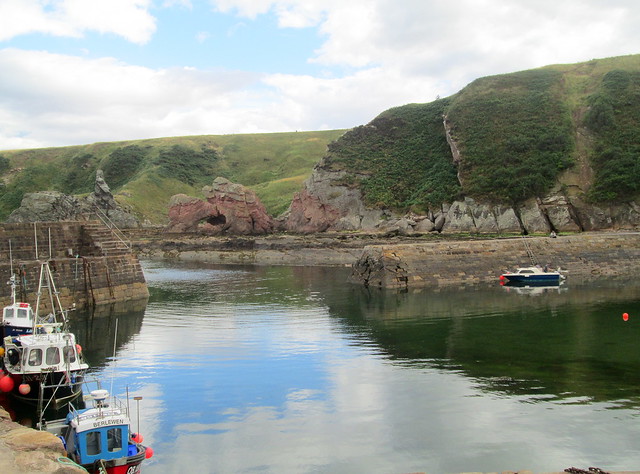
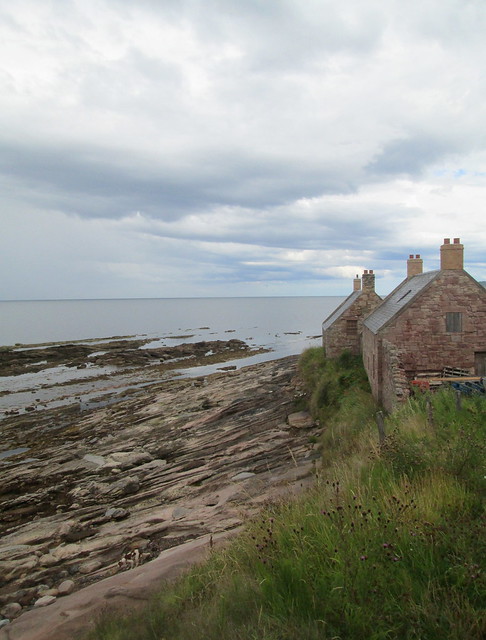
Cove, Scottish Borders

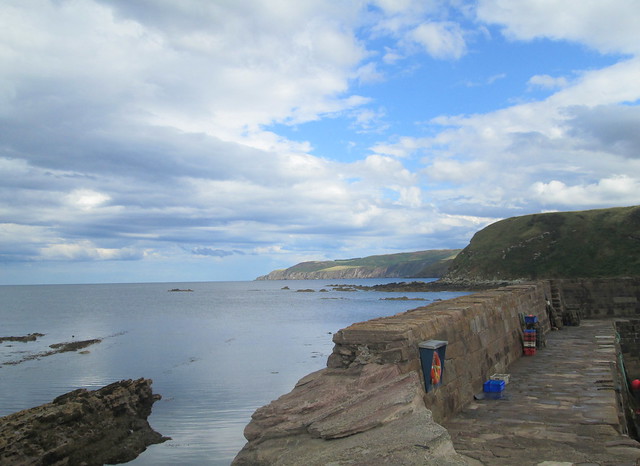
Cove harbour

One day last month we went to visit Eric and his family and that always means a lovely walk to the wee harbour at nearby Cove. The water was so tranquil, but there were no scuba divers around.

cottages at Cove

The cottages are still standing despite no doubt being pounded by storms at times, these are the only ones left of what was once quite a large fishing community.

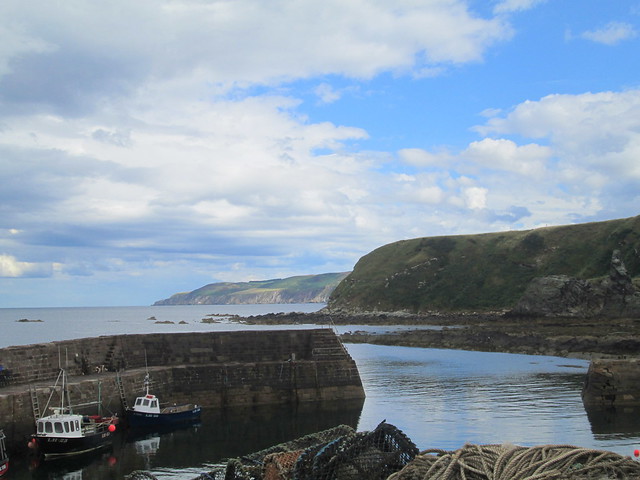
harbour and headland

harbour and headland

This wee harbour is almost like a secret, you really need to know someone who knows the place as you have to walk through a dark tunnel which was created by digging through a hillside. It’s still quite easy to imagine how it must have been when it was home to lots of families though. If you’re interested you can read more about the history of Cove here.

Roadtrip

I’m going off on a bit of a roadtrip for the rest of this week, but I’m scheduling a few blogposts, I just might not be able to reply to comments quickly as I have no idea what the internet access will be like.

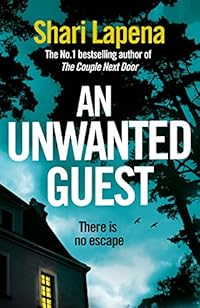
An Unwanted Guest by Shari Lapena

 An Unwanted Guest cover

An Unwanted Guest by Shari Lapena was published this year – 2018. It’s a murder mystery and I thought that I should leave my comfort zone of vintage crime, I sort of wish I hadn’t bothered as this is really just a re-write of Agatha Christie’s And Then There Were None and various others of that ilk. By now it has become a real cliche.

The setting is winter in the Catskill Mountains where several people are making their way to a luxury hotel. They all manage to get there in one piece although one of the cars is involved in a small accident. They’re an eclectic bunch and as many of the staff haven’t been able to get through the snow it’s left to the proprietor and his son to look after everyone.

The weather worsens and when the electricity and telephone lines come down they’re completely cut off. There has never been a signal for mobile phones – so when the murders begin they can’t get help. Who will be next?

There was a slightly different twist right at the end of this book but it wasn’t enough to elevate it to four stars on Goodreads. I can imagine that if you haven’t read a lot of crime fiction, or vintage crime then you would enjoy this one a lot more than I did. I just felt a bit miffed that it’s such a hackneyed tale.

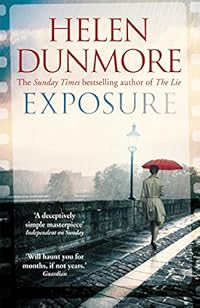
Exposure by Helen Dunmore

 Exposure cover

Exposure by Helen Dunmore was published in 2016. It’s a great read despite the fact that it has an uncomfortable atmosphere, and not just because she was writing about a character who had terminal cancer – as she had too.

The setting is 1960 Cold War London where Paul Callington has a ‘hush-hush’ job at the Admiralty. He’s married with three children and he’s happy with his life. His wife Lily is a part-time teacher and is able to help out with paying for luxuries and despite the fact that he has come to realise that his career has just about come to a standstill he’s not really bothered by it. Paul lacks ambition and in all honesty is a bit dim and lacking in common sense, despite having a decent degree from Cambridge – or possibly because of that!

When his older work colleague and old friend Giles has an accident and ends up in hospital he asks Paul to go to his flat and secretly take a file back to the office – a file that Giles should never have had at home. Loyalty to Giles makes Paul hesitate, he knows he should hand the file to his superiors and he also knows it’ll be hard to replace the file clandestinely.

One stupid decision leads to Paul being arrested as a suspected spy and his wife and family are ostracised and have to leave their schools and home.

Exposure is very like an updated version of The Railway Children in many ways with the three children – two girls and a middle boy and with a capable mother having to move to a rural location, and an innocent father in prison. But the atmosphere is more menacing with the family being in danger from the real spy.

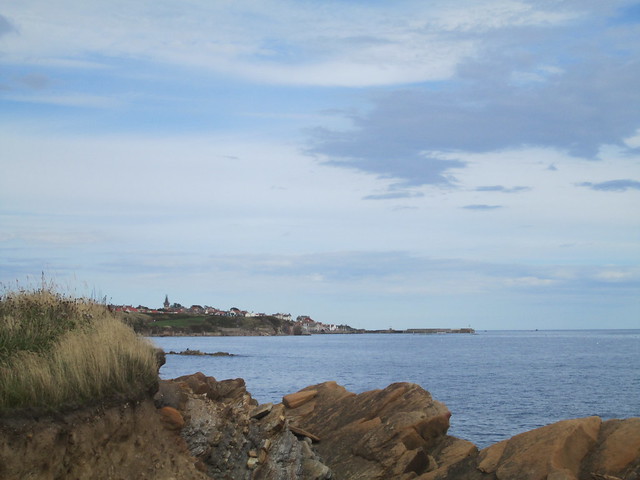
St Monans Windmill and coast in Fife, Scotland

Pittenweem from St Monans Windmill 1

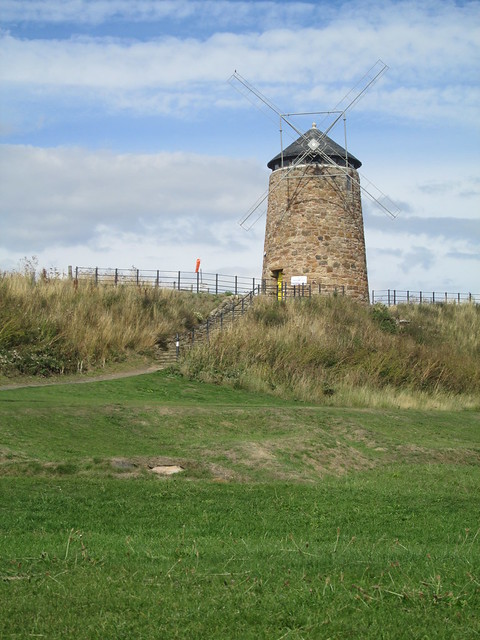
One lovely Sunday in August we went to a local craft/food fair along the coast at St Monans and then took a walk along part of the Fife coastal walk. I took the photo of the village of Pittenweem above from the old windmill at St Monans, which is below. It has been fairly recently refurbished but you don’t seem to be able to get into it.
Windmill
The tide was just about as high as it gets, but there weren’t many boats around, just one yacht and a small fishing boat laying creels/lobster pots.
Rocks  + Yacht

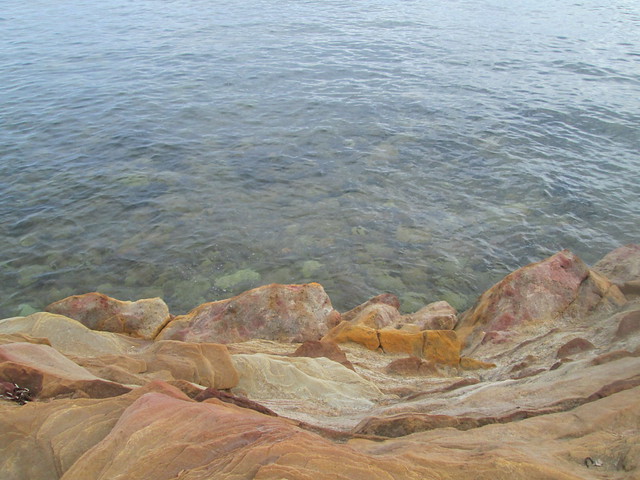
We sat for a while on these beautifully sea worn rocks, watching the patterns of the ripples and waves.
Rocks and Sea
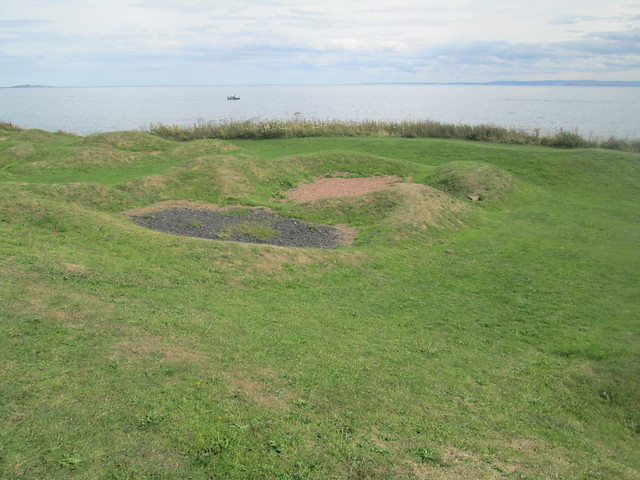
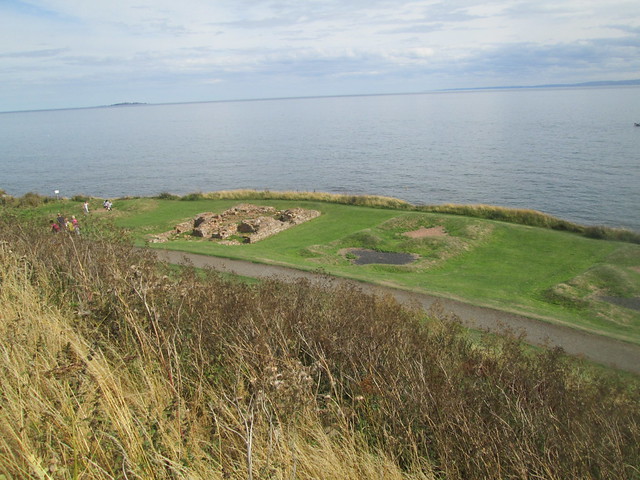
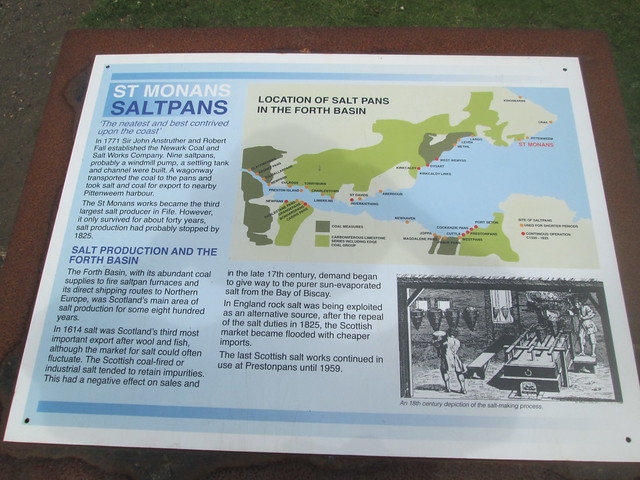
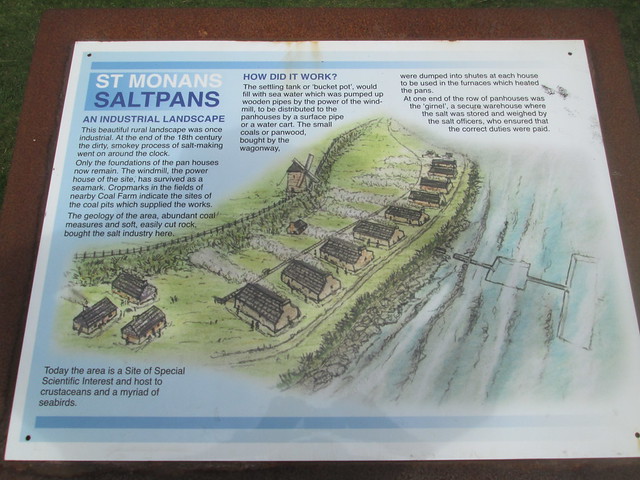
From the windmill you can look down on the remains of the salt pans below. It was quite a complicated and time consuming business. No wonder people were described as being ‘worth their salt’.
Salt Pans

Salt Pans at St Monans

Salt Pan Information Board

Salt Pan Information Board

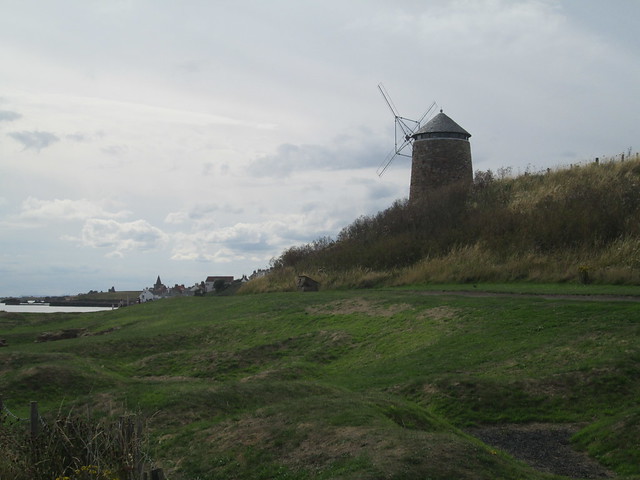
Below is a photo of the windmill with the old fishing village of St Monans in the background. It’s famous for having a ‘squinty’ harbour wall. You can see images of the village here.
Windmill and St Monans

The Green Gauntlet by R.F. Delderfield

The Green Gauntlet cover

The Green Gauntlet by R.F. Delderfield is the last book in The Horseman Riding By trilogy and was published in 1968.

When this book begins World War 2 is still ongoing and although there have been sorrows it hasn’t been nearly as bad for the inhabitants of the Shallowfield valley as World War 1. Many are making a mint from the black market in food and the few valley inhabitants who went off to the war aren’t doing nearly as badly as the previous generation did in the trenches. However stray bombs have ended up landing in some of Paul Craddock’s fields, the civilians are having a worse time than the combatants are.

Paul is now in his 60s but he has always looked after himself and he and his wife Claire are young at heart, in fact Claire at the age of 50 had unexpectedly presented him with her sixth and last child, a son. I found that a bit unlikely as I’ve read that 48 is about the oldest that you can give birth to a healthy child. Another character manages to give birth at the age of 52. If any of you know of any natural births in such old mothers I’d be interested to hear about them.

Anyway back to the book. It’s a great read but with the end of the war comes change and not for the better as Paul discovers too late that many of his children can’t be trusted with the land that he has poured his life into, and post-war development is spreading ever nearer his property. Shady land deals and dodgy local councillors as well as a need for new housing are changing the whole area.

There’s a bit of a disaster but it’s not all doom and gloom and in the end there’s a lot to be optimistic about. I really loved this trilogy.

Flame – Coloured Taffeta by Rosemary Sutcliff

Flame-Coloured Taffeta cover

Flame – Coloured Taffeta by Rosemary Sutcliff is a Puffin book which was published in 1986. It was probably aimed at pre-teen children, but I intend to work my way through all of the author’s books – eventually.

The setting is the mid eighteenth century and the coastal south-west of England between Chichester and Selsey Bill. It was a time of on and off war with France and just five years after the failed attempt by Charles Edward Stewart to get the Jacobites back on the throne of Britain.

Damaris is a twelve year old girl who lives with her father and aunt on a coastal farm, an area which sees lots of smuggling activity, not that they call themselves smugglers, they’re known as Free Traders. Damaris is sure that she heard a gunshot during the night and she’s afraid that one of her local friends might have been shot, so she goes out searching her father’s farmland and discovers a young man, a stranger who has been shot in the leg.

She needs the help of her friend and neighbour Peter to get the wounded man draped across her horse and they take him to their hideout in a tumbledown cottage nearby. He’ll have to share the place with the wounded fox that they’re nursing back to health.

But have they done the right thing, is he a smuggler or is he perhaps a spy from France?

This is a very quick read with just 120 pages and it also has well detailed illustrations by Rachel Birkett.

I enjoyed this one, but then I do like stories featuring smugglers as many people do. I’m not sure if that’s a particularly British penchant/weakness or if it’s more universal. What do you think? Pirates are another weakness of course, maybe it’s just that ‘bad guys’ seem more interesting!

What have I been watching?

I have to say that the new season of TV programmes have been very entertaining. I’ve been enjoying watching The Bodyguard despite the fact that ten minutes into the first episode I turned to Jack and said – If I had realised this was about terrorism I wouldn’t have started watching it. But it dragged me in and I’m beginning to think that Richard Madden who plays the bodyguard police sergeant David Budd would make a great new James Bond. Well the best Bonds are always Scottish!The Bodyguard
Mind you I tend to watch anything with Keeley Hawes in it too.

I’ve also been watching Vanity Fair. I had a bit of a moan when I saw a trailer for this new version, it doesn’t seem long since it was on TV in another version, but I enjoyed the book and I think that Olivia Cooke is a perfect Becky Sharp. As this one is on ITV we’ve been watching it on catchup, that way we avoid most of the adverts.

The Great British Bake Off is a must watch and although I still miss Mary Berry it’s really the personalities of the bakers who are entertaining so I’m sticking with the show.

I wasn’t sure about watching Press and after watching the first episode I’m still not sure about it. It somehow has a very old-fashioned feel to it, a bit like newspapers would have been like in the Fleet Street days, but I’ll watch the next episode anyway.

The Repair Shop is a very gentle programme featuring talented craftspeople who can restore just about anything that’s broken and damaged it seems – whether it’s an old teddy bear or a Georgian table. People seem to get very emotional when they’re re-united with their treasures. It’s just fascinating watching people work and having so much pride in the end results.

On Saturday evening I watched a film that was only made in 2016 called This Beautiful Fantastic – and I loved it. I believe that the whole film is available on You Tube but you can see a trailer below which will give you an idea of what it’s about.

Have you been watching any of these programmes and is there anything good on now that I’ve missed?

Post of Honour by R.F. Delderfield

Post of Honour cover

Whenever I finish reading a book I note it down in a notebook, it makes it nice and easy to keep track of what I’ve read over the years and I can quickly tot up how many I read by male/female authors, how many fiction and non-fiction books. A small pencilled Sc in the margin means I can see almost at a glance how many books by Scottish authors I’ve read that year. I do the same with the non fiction – nf. It would take a lot longer if I only had that information on my computer and had to scroll down all of my book posts.

Anyway, I see from my notebook that I finished reading Long Summer Day by R.F. Delderfield (the first in this trilogy) way back at the beginning of January and I really enjoyed it so I have no idea why it took me so long to get around to reading book two – Post of Honour, I possibly enjoyed this one even more.

At the beginning of the book it’s 1912 and the idyllic country setting of the Shallowford Valley in Dorset is still a rural backwater. Horses are still the mode of transport for the lucky few who have them and Squire Craddock, as the tenants call Paul, is still in love with the area although he’s now married to a different wife as Grace his first love decided that being a Suffragette was more important than being a farmer’s wife and mother. Claire his second wife had ‘set her cap’ at him from the minute she met him and before he married Grace and has triumphed at last.

World War 1 is just about to change everything forever though as so many of the tenants and even Paul himself eventually become involved in the conflict, many of them ending up in the mud and gore of Ypres. As the war comes to an end it transpires that as Paul is still a sleeping partner in the scrap metal company that had been his father’s – he has made a lot of money out of the war. Appalled at the thought of profiting from the deaths of so many people Paul decides to use the money to develop his land and properties to make life better for his tenants.

This makes it sound a dry read but it’s anything but that as there are so many quirky characters and of course their love lives and family relationships are all intertwined. I went straight on from finishing this book to starting the next one – The Green Gauntlet.

Post of Honour ends with the beginning of World War 2 and if you’re interested in the social history of the time then this book will be a great read for you.