Random photos

I must have walked past this window in St Andrews hundreds of times but I only noticed it recently. The buildings are generally very old but this is obviously an Art Nouveau/Arts and Crafts window, somebody did a bit of refurbishment over the years.

Art Nouveau Glass Window

Across the road I noticed the stone owls sitting on the edge of the portico. I think that like many buildings in St Andrews this one is owned by the university, so presumably the owls are symbolic of wisdom and learning.
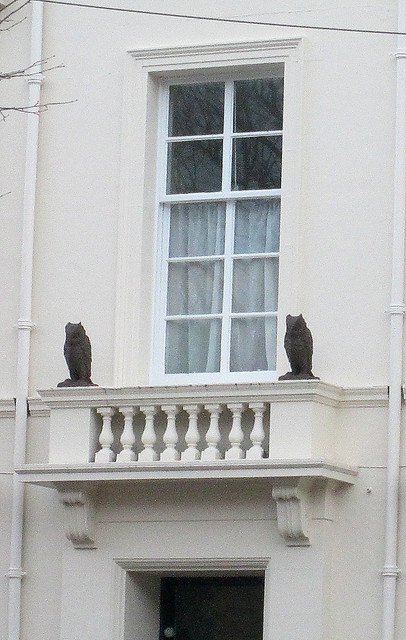
Owls

It’s rare to see an empty street nowadays, they’re usually full of parked cars on both sides of the street, but on their Open Arts Festival in Cellardyke, a coastal village in Fife, the place was deserted of cars for once. The clutch of red balloons being the only evidence of modernity, denoting where an artist was exhibiting work.
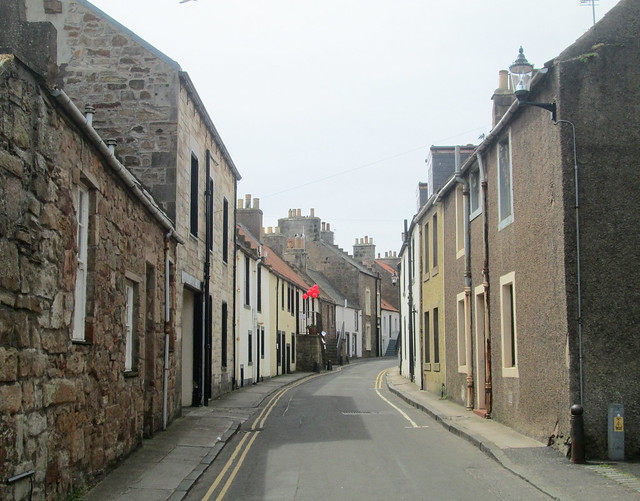
Cellardyke

I took the photo below in the fair city of Perth, the hanging baskets and window boxes were looking so lovely. I think the rather grand looking building was a bank originally – remember them?!
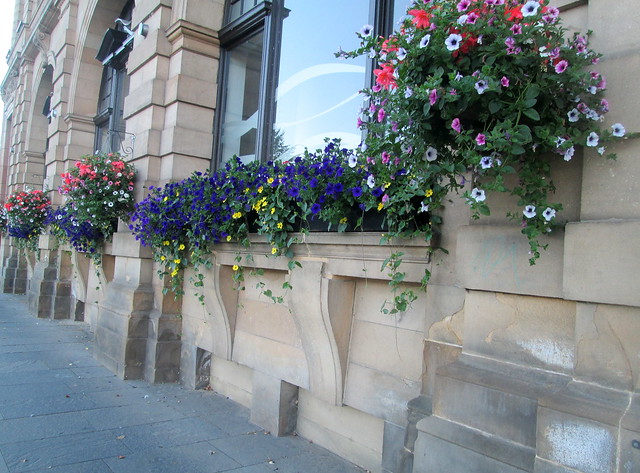
hanging baskets

I have visited the small town of Dunkeld hundreds of times as it’s one of my favourite places, but I had only ever been into the cathedral ruins there. The photo below is of the newer cathedral which is obviously still in use as a place of worship.
Dunkeld Cathedral Stained Glass

The photo below is the view of Dunkeld that you get as you drive over the bridge.
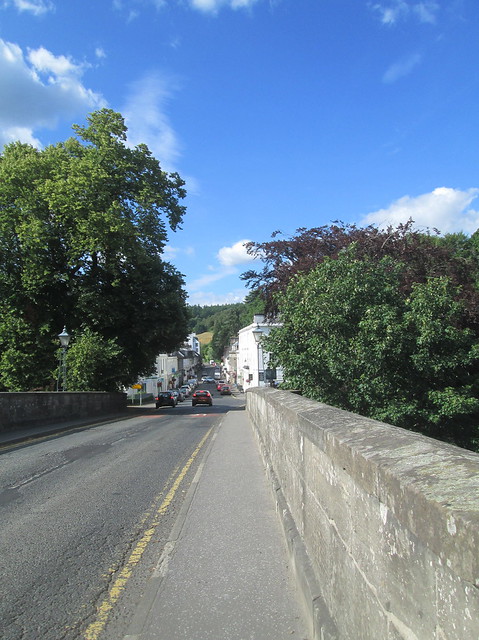
Dunkeld From Bridge over the River Tay

After visiting the cathedral I walked over the bridge to get a photo of the River Tay. I’ve never seen it so low before, there were actually people walking out to the ‘islands’.
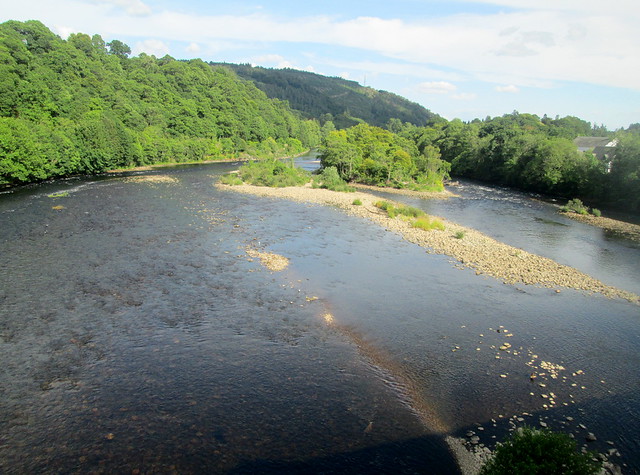
River Tay From Bridge at Dunkeld

I bet it was still cold though!

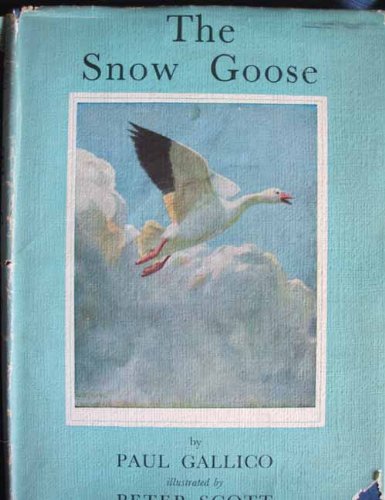
The Snow Goose by Paul Gallico

The Snow Goose cover

I’ve read quite a lot of books by Paul Gallico and I have a feeling that I read The Snow Goose a few decades ago, but when I saw this lovely edition of the book for sale at an antiques fair for all of £3 I decided it had to come home with me. It was first published in 1941, not long after the Dunkirk evacuation.

It’s a very short tale, just 55 pages long but has some lovely illustrations by Peter Scott, the famous wildlife artist who was the son of Scott of the Antarctic. A lot of the illustrations are black and white woodblock prints but there are a few lovely coloured illustrations too.

The story is about a lonely man who lives in an old lighthouse on the Essex coast, he has always felt like an outsider, someone who doesn’t fit in to ‘normal’ society. His problem is that he’s deformed, with a hunchback and also has a disfigured hand. It seems that people are unnerved by his appearance. But the sea birds aren’t judgemental and he forms a bond with a damaged snow goose which is brought to him by Frith a young girl from the nearest village.

When Rhayader the man hears about the British army being stranded on the beaches around Dunkirk he decides to use his very small boat to sail over to France and manages to save a lot of lives by ferrying men on the beaches to the large ships standing off the beaches.

This is a lovely but sad story, it feels like a fairy tale or maybe more closely a parable, and I can imagine it must have been very moving for people reading it when it was first published.

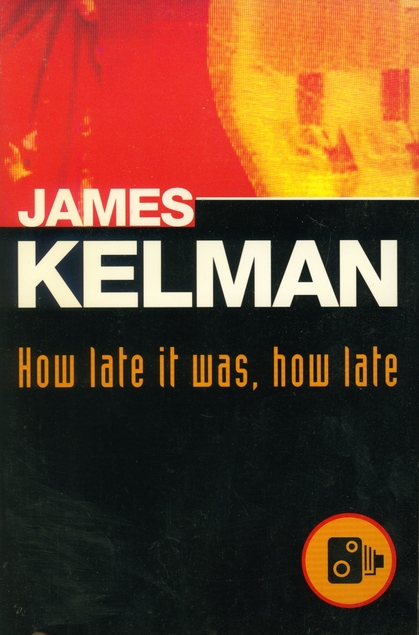
How late it was, how late by James Kelman

How late it was how late cover

How late it was, how late by the Scottish author James Kelman was first published in 1994 and it won the Booker Prize that year. I must admit that I find that amazing as this book is mainly a stream of conciousness and it’s written in a broad west of Scotland dialect – no problem at all for me of course, but even so I almost gave up on this one fairly early on.

If you are bothered by ‘sweary’ words then this one definitely isn’t for you as most of the pages in this book contain the ‘f’ word and even that nuclear bomb of a ‘c’ word. Sometimes there are three ‘f’ words in the one sentence, but I have to say that that is very true to a certain type of character and fits the bill exactly for Sammy.

Sammy is having a terrible time, he had gone out to the pub for a few drinks but had ended up drinking so much that he had lost track of time and there were big blackouts in his memory. He has lost his wallet and his new leather shoes and is wearing someone else’s smelly old trainers – too small for him.

The drink has turned him into a violent nutcase and when he attacks policemen he inevitably ends up being brutally beaten by them , so badly that he loses his sight – not that they believe him about that. A lot of the book is how Sammy copes with this devastating situation. He doesn’t look for any sympathy which is just as well as he doesn’t get any. What worries him more than anything is the fact that his partner Helen is missing. He vaguely remembers that he had a row with her but can’t remember anything else.

It was only the fact that this one won the Booker Prize that encouraged me to keep reading this one and I’m sort of glad that I did because Sammy is a great character who takes all his difficulties with stoicism, but I really didn’t like the ending as it just stops and the reader is left still wondering what happened to Helen, will Sammy’s sight loss be temporary – what happens next? We’ll never know.

I vaguely remember when this book won the prize against all the odds. It stills seems strange that the judges chose a book written in broad Glaswegian.

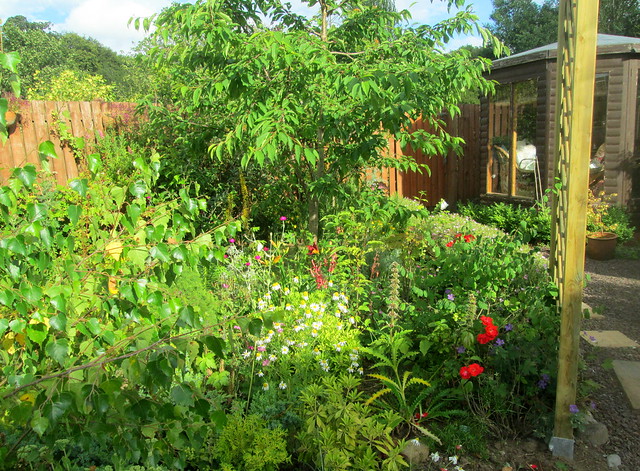
My Garden – Summer 2018

We have had our best summer weather since 1976, that was the summer we got married and I have no idea how well my dad’s roses did that summer, sadly he only lived until 1980 so I can’t ask him how his garden fared in the heat. He was a very keen gardener which now that I think about it must have been an unexpected passion as he lived most of his life in a city flat with no garden.

garden

Anyway, I had thought that the unusual heat we had this year would be just what my plants needed, but although they grew well most of them didn’t bloom as well as usual. The roses were particularly disappointing. I’m greedy where roses are concerned and choose varieties that keep coming back with flushes of blooms throughout the summer and autumn. Despite careful and constant dead-heading my roses only flowered once this summer and they were over very quickly. So quickly that I don’t seem to have got any photos of them at all. It is only September so in theory they might flower again – but I’m not holding my breath, I think they just didn’t enjoy the heat, which I can’t understand as most rose species originate from Asia.

garden, geraniums, astilbe

Flowers quickly drooped in the heat and frazzled, there’s not much shade in this garden – yet.
garden , acer

On the other hand my raspberries did very well this year, so I was surprised when Monty Don mentioned on Gardeners’ World that his crop of raspberries was poor this year. I wonder what his strawberries were like, I had such a glut that we got fed up eating them and I made some into jam.

garden in Fife
The photo below is of the rockery which has been engulfed by a type of potentilla. I bought one plant and it has seeded itself, deciding that the rockery was the perfect spot to settle down in. The bees adored it so I put up with it there but eventually had to set to and dig it up. That was easier said than done for it had enormous thick fleshy roots, especially considering it had only been there for one season. I suspect that they are going to continue to come back and haunt me for some years as I just couldn’t get all the roots out.
my garden in Fife
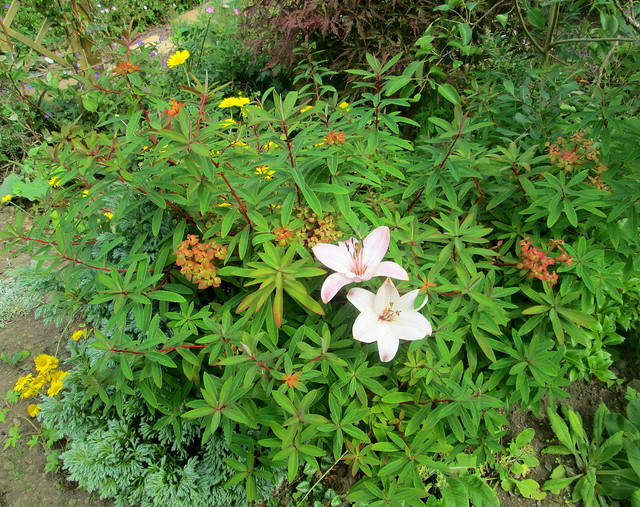
The Euphorbia Fireglow below is another plant that spreads around a lot, and you have to be very careful when you pull it up as the stems and roots secrete a milky liquid which will burn your skin badly. It’s definitely one of the times when wearing gloves is safest.
garden  in Fife

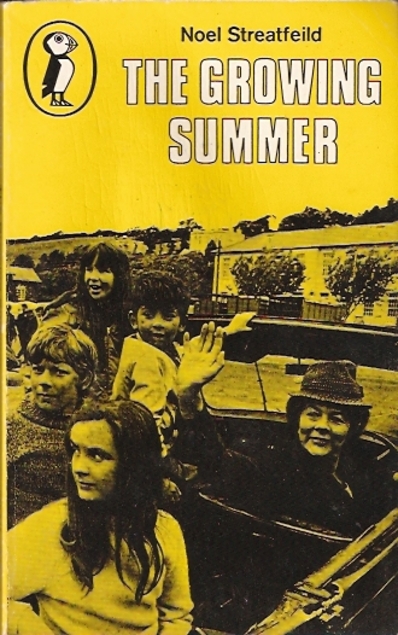
The Growing Summer by Noel Streatfeild

The Growing Summer cover

The Growing Summer by Noel Streatfeild was first published in 1966 but my copy is a 1973 Puffin reprint and has illustrations by Edward Ardizonne. It was serialised for children’s TV in the 1970s.

If you’re a children’s author the first thing you have to do is get rid of the parents quickly because as we all know parents put a dampener on adventures. In no time flat the four children of the Gareth family are dispatched to Ireland to stay with their Great-Aunt Dymphna. Their father had gone to Australia for a year and had become seriously ill there so their mother went out to join him. Dymphna is a complete stranger to them but they have no other relatives to look after them and Dymphna feels it’s her duty to take them in.

They soon discover that she’s very odd, in fact the locals think she’s a bit of a witch. It’s just that Dymphna is really just a wee bit ‘away with the fairies’. She’s steeped in a certain type of children’s literature – Alice in Wonderland, Edward Lear, Kipling, G.K. Chesterton and such and enjoys quoting bits from them.

Dymphna’s house is a big ramshackle place full of broken furniture and ornaments, she loves nothing more than a sale of stuff that nobody else wants, but she thinks that by taking the children in she has done her bit, she expects them to look after themselves, wash their own clothes, buy and cook their food – and as their mother had done everything for them at home they were pretty clueless apart from being able to boil eggs. An unexpected visitor that they have to keep quiet about causes them even more problems.

I enjoyed this one and wish I had seen the TV serial of it which was made by London Weekend Television in 1968.

One of those strange coincidences that crop up amongst readers is that the poem below also featured in the Angela Brazil book (For the Sake of the School) that I read just before reading this one, and I had never come across it before.

Up the airy mountain,
Down the rushy glen,
We daren’t go a hunting,
For fear of little men.

by William Allingham

Victoria Crowe – Beyond Likeness – Scottish National Portrait Gallery, Edinburgh

Another art exhibition that we visited recently was at the Scottish National Portrait Gallery in Edinburgh’s Queen Street. I must admit that I hadn’t heard of Victoria Crowe before, portraiture isn’t my favourite sort of art but her Beyond Likeness exhibition is impressive, and it’s free to view. It’s on until November 18th, so I might even go back for a second look.

Most of the subjects are successful in their own field, but I hadn’t heard of many of them – which says more about me than anything else! Lots of her paintings are the sort that you could look at for ages and still see something new in them the next time.
You can see more images of Victoria Crowe’s work here.

The Red Pony by John Steinbeck

The Red Pony cover

The Red Pony by John Steinbeck seems to have been published originally in book form in 1937, but the first four chapters – or short stories were published in magazines earlier in the 1930s. It’s a slim volume at just 120 pages and the last story is called Junius Maltby and features a man who is a bit of a dreamer, a reader and a philosopher which isn’t helpful if you own a farm and should be working in the fields.

Anyway, back to The Red Pony tales and these were not at all what I expected. The writing is lovely as you would expect and obviously Steinbeck knew horses well, but really the reality of living on a ranch could be brutal at times and he didn’t sugar coat the way of life, so this one isn’t for people who want to avoid what can be the harsh realities of working around livestock.

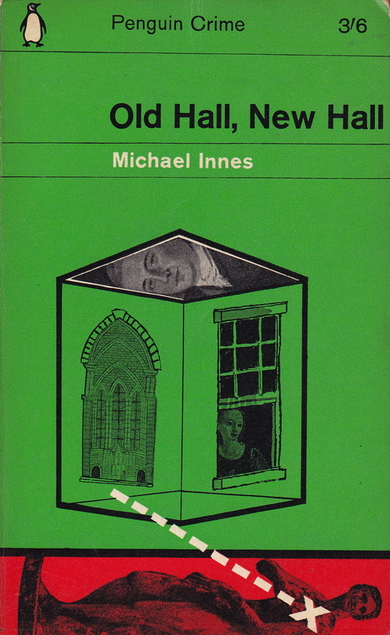
Old Hall, New Hall by Michael Innes

Old Hall, New Hall cover

Old Hall, New Hall by Michael Innes was first published by Gollancz in 1956 but my copy is a 1964 Penguin Crime paperback.

I’m one of those readers who prefers my vintage crime reading to be of the sort where a crime takes place almost immediately. I was to be severely disappointed by that aspect of the book as the author spent an awful lot of time ‘vamping til ready’ – as I call it. Despite that I did enjoy reading this book, I just think that it was wrongly marketed. Michael Innes also wrote under the name J.I.M. Stewart and those books tend to be the ones that are set at a university, in his day job he was a professor of English literature at various universities, ending up at Oxford.

Colin Clout is a young unemployed academic, desperate for work. When he goes back to his old college his luck seems to have turned immediately as he meets Olivia a fabulous looking girl, and then his old professor offers him a chance of the Shufflebotham Fellowship (there are a lot of odd names in this book).

The university is quite a new one and the buildings had belonged to a local landowner originally and some of the previous generations of the Jory family had been rather strange. They now live nearby and it’s thought that there might be some treasure buried somewhere around Old Hall’s grounds. It turns out that the gorgeous Olivia is distantly related to the Jorys and she thinks that her branch of the family have been done out of the treasure – if indeed it exists.

One character is mentioned briefly twice – a deceased dotty Aunt Elizabeth who had apparently been under the impression that she was a barouche landau carriage! She spent her time attracting the attention of gentlemen she judged to be likely to be skilled with reins. What a scream, I so wish she had had a higher profile in this book.

I kept waiting for a crime to occur – as it’s a Penguin Crime paperback, but it never did.

Emil Nolde – Colour is Life, Edinburgh

One day a couple of weeks ago we braved the heavy traffic and crowds of the Edinburgh Festival to visit the Modern Two Art Gallery, mainly so that we could see the Emil Nolde Colour is Life exhibition which is on there at the moment (until 21st October). Sadly you have to pay to see this exhibition, but as Friends of the Gallery we got in free.

I must admit that I don’t think I had ever heard of the German artist Emil Nolde before. His reputation was harmed because in the early 1930s he joined the Nazi party. Possibly he did so in the hope that it would help his career but if so it backfired because Hitler declared him to be a degenerate artist. In fact in that highly popular degenerate artists exhibition that the Nazis put on. Nolde’s works featured more than anyone else. If you’re interested in seeing some of his works and a short film about him have a look here.

I don’t like all of his work but I like the one below of a Nordfriesland landscape

Nolde

There are also a lot of pencil drawings that show how talented he was. You can see more of his paintings here.
Jack blogged about this exhibition here.

For the Sake of the School by Angela Brazil

for the sake of the school cover

For the Sake of the School by Angela Brazil was first published in 1915 but my copy was published during World War 2 as it has that Book Production Economy Standard logo at the front and although there’s no publication date it was a gift to Rose from Jean for Christmas 1943.

I didn’t read any of these books as a child, I was strictly an Enid Blyton Malory Towers/St Clare’s girl which were obviously written along very similar lines as far as morals and behaviour are concerned. Blyton probably just wrote updated versions of Brazil’s books. I suspect that Brazil was better though.

It begins at a railway station as most schooldays’ stories do (Harry Potter). The girls are on their way to The Woodlands which is in a very rural setting in Wales. The two women who own the school are keen on nature and wildlife and the girls are encouraged to get out into the great outdoors as often as possible. In fact they could be regarded as nature worshipers, such is their enthusiasm.

This year Ulyth (new name to me) is particularly excited because Rona the New Zealand pen-pal that she has been writing to for the last two years is arriving as a new boarder. Rona’s mother is dead and she has had a rather rough upbringing by her father who is a farmer in the wilds of New Zealand. Ulyth who has been looking forward so much to meeting Rona is rather shocked by her appearance and lack of manners. She’s keen to drop her pen-pal but is persuaded to take her on as a work in progress and try to make Rona conform more to what is expected of girls from The Woodlands School.

Trials and tribulations ensue, wrong conclusions are jumped to but as you would expect – all is well in the end. I did find the storyline of this book to be more than a bit obvious, but it was still enjoyable and I can imagine that if I read this as a ten year old I would have loved it. I think most if not all of Angela Brazil’s books are available free from Project Gutenberg.

It struck me a couple of times that Angela Brazil wrote as if she was Scottish, according to Wiki her mother was a McKinnel, so possibly they were originally from Scotland – or she had a Scottish nanny. In part of this book someone says that they “put something by in the dresser” – meaning they put something away in the dresser. Very Scottish.