Excellent Intentions by Richard Hull

 Excellent Intentions cover

Excellent Intentions by Richard Hull is a British Library Crime Classics reprint which was first published in 1938.

This book begins with the prosecution in a murder case and so the reader discovers the ins and outs of the death of Henry Cargate – the wealthiest inhabitant of Great Barwick. He was a man who went out of his way to rub people up the wrong way and never missed a chance to throw his weight about and let people know just how well off he was.

During the prosecution and defence the reader has absolutely no idea who is in the dock being tried. I must say that very early on I guessed who the culprit was and I was feeling a bit miffed about it, but literally on the last page the author redeemed himself with an unusual twist, something that apparently Richard Hull made a habit of doing.

The book cover has been taken from a 1930s travel poster for Epping Forest in Essex. It looks lovely, but whenever I hear the words Epping Forest it reminds me that when I lived in Essex in the 1970s I was told that that was where the London gangsters buried the bodies!

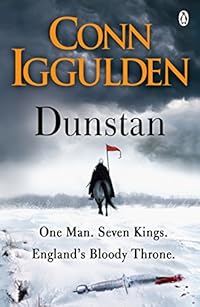
Dunstan by Conn Iggulden

 Dunstan cover

Dunstan by Conn Iggulden was published in 2017 and I was given my copy by a friend who had managed to buy it twice, it’s good to know that other people do that too!

The setting is 10th century England. The king is Athelstan, grandson of Alfred the Great, but the book is Dunstan’s account of his life beginning with his first memories and going on to tell how he and his younger brother were taken to a monastery by their father and left there to get an education. The money paid over by their father is desperately needed by the religious order, but that doesn’t mean that they get special treatment by the brothers. It’s a rough and brutal upbringing, but Dunstan manages to impress the abbot and it’s believed by most in the religious community that Dunstan has been touched by an angel.

He has huge ambition and a love of learning, especially when it comes to architecture and construction and nothing is going to stop him from getting what he wants out of life – but that means he has to become a monk/priest which isn’t something that he’s really cut out for. On the other hand he does have a dislike of women and that ends up impacting on the lives of the other monks who had been allowed to marry in the early Christian Church. It doesn’t make him popular but as Dunstan is happy to sin grievously through his life, being a bit unpopular isn’t going to bother him.

Dunstan ended up being close to kings, seven of them in all and according to this book which appears to be well researched he was very much a flawed character, and that seems very likely to me.

This is a great read, my first by the author but not my last.

Copenhagen, Denmark

I’ve been busy with visitors over the past few days – hence no blogging, and I have such a backlog of things to blog about that I’m cheating a bit and directing anyone who is interested in seeing photos of our recent trip to Copenhagen to Jack’s blog. You can see his Copenhagen blogposts here. He tells me a few more posts are still to come.

I hope to be back to whatever is my normal soon!

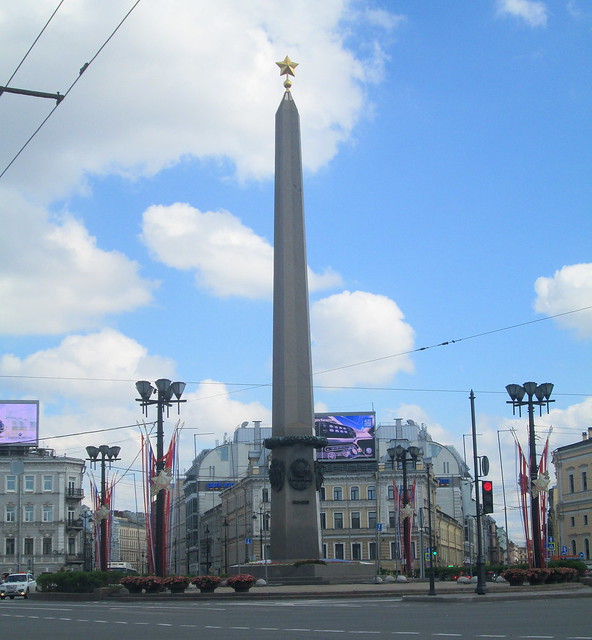
World War 2 War Memorial – St Petersburg, Russia

WW2 Monument, St Petersburg, Russia

Over the last couple of days we’ve had the commemorations of the D-Day landings which were attended by the leaders of the allies and also by the German leader, Angela Merkel. But there was apparently no invite for President Putin, despite the fact that they were definitely our allies and if Hitler hadn’t taken on more than he could handle when he attacked Russia it’s almost certain that we would all be speaking German now. It was a close run thing.

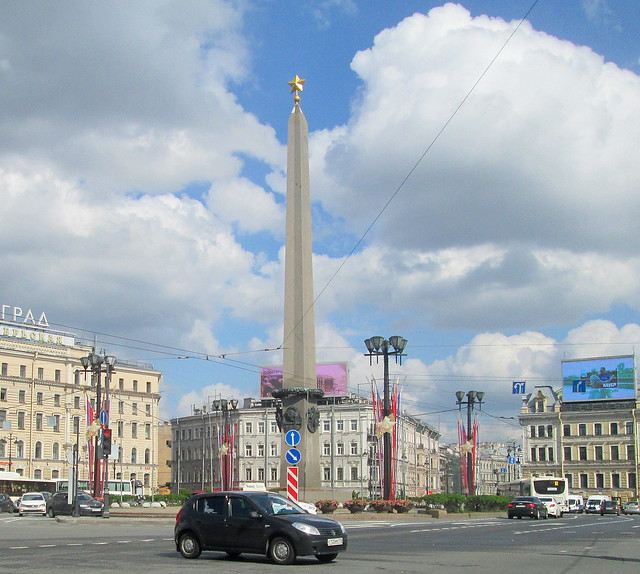
I’m definitely not a fan of Putin, but given the fact that the Soviets lost more people in the war than anyone else, it seems mean and petty to leave them out of the memorial services. So I thought I’d show you a couple of photos of the War Memorial at the top of Nevsky Prospekt which is St Petersburg’s equivalent of Paris’s Champs Elysees or Glasgow’s Sauchiehall Street.

WW2 Monument, St Petersburg, Russia

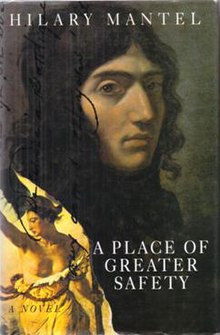
A Place of Greater Safety by Hilary Mantel

 Lady Anna cover

I hadn’t even heard of A Place of Greater Safety by Hilary Mantel when I spotted it in a second-hand bookshop in Innerleithen. I quite fancied the subject matter though, the setting is the French Revolution and it’s a chunkster at 872 pages. I was disappointed for the first 100 pages or so and I did think that Mantel had definitely improved in her historical fiction with Wolf Hall, but this one eventually got going.

This book has an eight page cast of characters at the beginning, which is just as well as it certainly helps the reader to keep things straight. I think we all have a fair idea of what went on in revolutionary France, but this book begins in the 1760s with the early life of the main participants in the grab for power in the 1780s.

Mantel says in her Author’s Note that where possible she used a lot of the characters’ actual words, whether from their written speeches or preserved writing and has woven it into her dialogue.

She also says: I have tried to write a novel that gives the reader scope to change opinions, change sympathies: a book that one can think and live inside. The reader may ask how to tell fact from fiction. A rough guide:anything that seems particularly unlikely is probably true.

I ‘did’ the French Revolution at school but reading this book made it all much clearer to me. I don’t think that my school books mentioned anything about the involvement of the British government who were working to destabilise France as a way of getting rid of King Louis and helped to finance the revolution – but now that I think about it – of course they would have!

This was a great read.

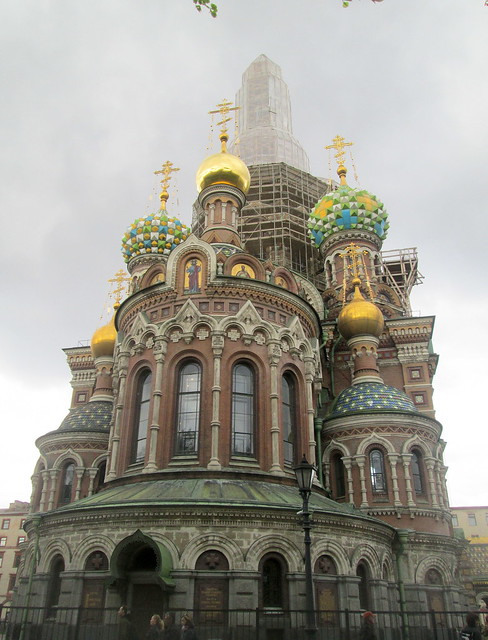
Church on the Spilled Blood, St Petersburg

The Church on the Spilled Blood in St Petersburg is quite something – as you can see. You really couldn’t get further away from the ecclesiastical architecture that prevails in western Europe, in other words – it’s definitely different. Yes that is scaffolding swathing it. It seems that no matter where we are there’s scaffolding hugging whichever building we particularly want to see!

Church of the Spilled Blood 7
And from another angle.

Church of the Spilled Blood 4

This church was built on the site of the assassination of Tsar Alexander II which took place in 1881. A bomb was thrown at him and it went off when it landed at his feet, I believe he lived for a few hours but was never going to survive. You can read about Alexander II here.

Church of the Spilled Blood

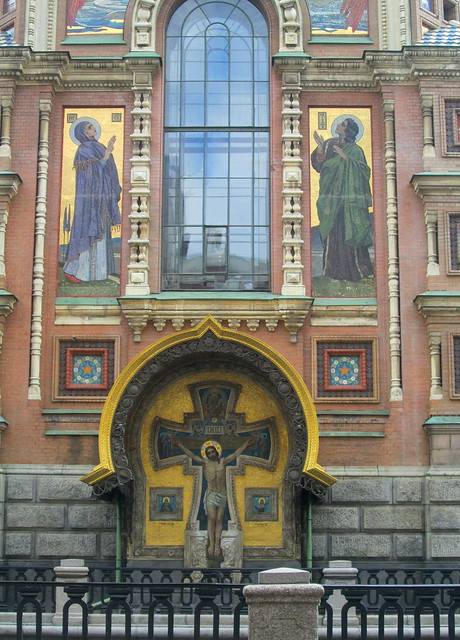
Below is the decoration on one of the sides of the church.

Church of the Spilled BloodSpilled Blood

We didn’t go into the church as Nevsky Prospect was calling to us, we aren’t religious and you aren’t allowed to take photos inside anyway. The outside was stunning enough for me.

Lady Anna by Anthony Trollope

 Lady Anna cover

Lady Anna by Anthony Trollope was published in book form in 1874 but the setting is around 1830. Lady Anna’s mother was socially ambitious and was determined to marry into the aristocracy. Despite dire warnings, especially from her father, she insisted in marrying Earl Lovel who had a reputation for being evil. Not long after their wedding Earl Lovel told his ‘wife’ that she wasn’t actually married to him at all as he already had a wife living in Italy. Their unborn child would be illegitimate. Then he abandoned his ‘wife’ and went to live in Italy. Over the next 20 years Lady Lovel strove to prove in court that she was actually married to Lord Lovel, all that cost a lot of money that she didn’t have.

A local tailor took pity on her and ended up supporting her and her daughter, Lady Anna. The tailor had spent thousands of pounds on the Lovels, to the detriment of his own son. Meanwhile Anna has more or less been been brought up with Daniel the tailor’s son and over the years they’ve become more than friends, Anna has promised to be his wife when she’s of age. When her mother learns of this she’s horrified at the thought of her Lady Anna marrying the son of a mere tailor, despite the fact that that tailor has been supporting them both for years.

Meanwhile Lord Lovel has died intestate so his estate and money should go to his nephew who is keen to marry Anna which would please Lady Lovel, but Anna feels she must keep her promise to Daniel. Lady Anna takes this all very badly as you would expect of someone who has always been a social climber

Whose side was I on? Well, there are lots of clues to the character of Daniel and they don’t bode well for a harmonious marital future for whomever he marries. Daniel is a Radical, the variety that thinks that everyone should have equal rights, except his wife!

Daniel Thwaite was considering the injustice of the difference between ten thousand aristocrats and thirty million of people, who were for the most part ignorant and hungry.

“Mr Thwaite says, “There must be earls and countesses.”

Daniel Thwaite says, “I see no must in it. There are earls and countesses as there used to be mastodons and other senseless, overgrown brutes roaming miserable and hungry.”

Daniel Thwaite says, ” I don’t want my wife to have anything of her own before marriage, but she certainly shall have nothing after marriage – independent of me” For a man with sound views of domestic power and marital rights always choose a Radical.

I believe that Trollope wrote more books featuring these characters – it sounds like Lady Anna may discover that she has made a big mistake.

Markinch Highland Games, Fife, Scotland

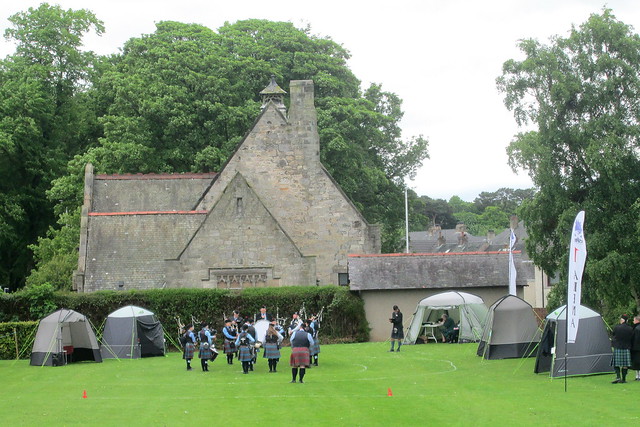
Sunday dawned dreich and damp but it was Markinch Highland Games Day, the first games of the season I think and although it had been raining heavily for the previous few days – the games were going ahead.
Pipe Band

This was the first time I had been to the games and I was really there as I had volunteered to help out with cooking the bacon for rolls, but I got a chance to walk around and see what was going on from time to time.
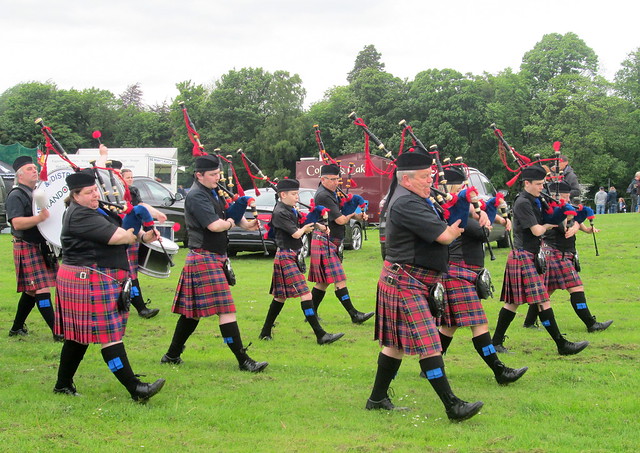
Pipe Band, Markinch
There was a real mixture of age groups involved in the pipe bands and some of them were from local high schools. They had to find corners of the park to tune up and have a bit of a practice before marching to where the adjudicators were waiting to judge them. One of the adjudicators was from America originally and he was still learning the ropes, but he was one of those American-Scots who was more Scottish than the Scots.

Methil Pipe Band

Luckily the rain stayed away most of the time but waterproof capes were worn by some. I hate to think how long it would take to dry out a wet kilt.

Pipe Band , Markinch Highland Games

The photo below is of a man with a gadget which he seemed to be using to test out the pipes of the individual players. It’s a complete mystery to me!
Pipe Band, Markinch

Sadly the Highland dancers weren’t in the park this year, I think they were at the town hall so I didn’t manage to get any photos of them. The Highland Fling used to be my party trick!

In the photo below the man is attempting to throw a 54 pound weight over a very high pole above him. The competitors didn’t seem to be very heavily muscled, in fact they are regularly tested for the illegal use of performance enhancing drugs – as are all of the athletes. I think they just chose some at random but quite a few of them were tested – it’s all so serious.

Weight tossing

Weight tossing

I think this one made it over!
Weight tossing

Or maybe it didn’t. As you can see there was a cycle race going on at the same time, there were an awful lot of cycle races and various different running races as well as tthrowing the hammer, but I missed those.
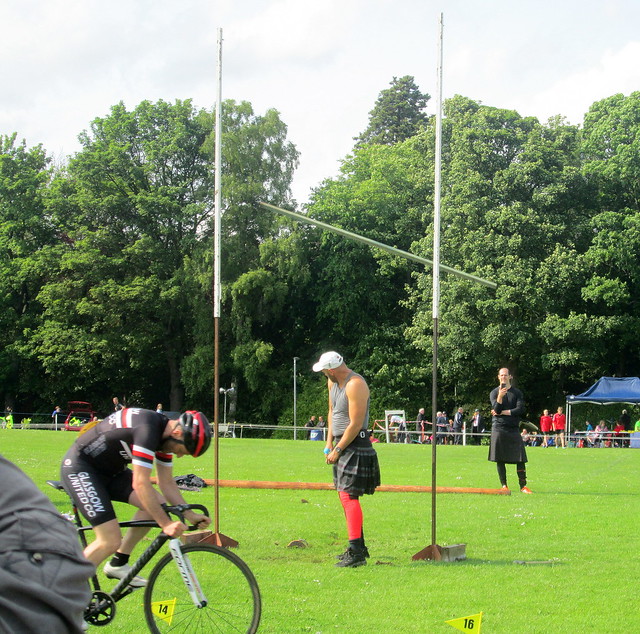
Weight tossing

There were three competitors battling it out in this contest, and I’m not sure which one won.
Weight tossing

There are cabers on the grass in the background but I missed that too, I must have been too busy cooking bacon when that was going on. Anyway, it was a long and tiring day, just watching it all going on, I can’t imagine what it was like taking part in it.

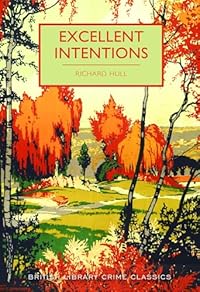
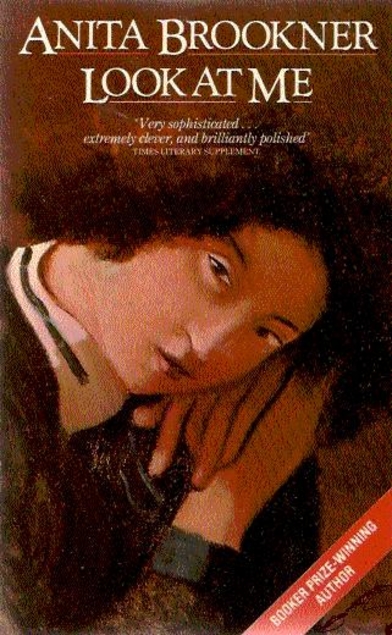
Look At Me by Anita Brookner

Look At Me cover

Look At Me by Anita Brookner which was first published in 1983 is only the second book by the author that I’ve read – the other one being Hotel du Lac of course.

This isn’t a comfortable read and indeed there were many times when I wanted to give Frances – who is telling the story – a right good shaking! Frances has ambitions to be a writer but meanwhile she works in the reference library of a medical institute which is of course frequented by medics. One of them Nick – is your typical entitled type, tall and handsome, he’s untidy and leaves everything for others to clean up after him and generally treat him as the something special that he believes he is, and Frances is happy to pander to him. He’s married to Alix who is a very similar type, except she’s always moaning about how she has ‘come down in the world’. Her father had been bankrupted.

Alix and Nick end up taking Frances up, much to her delight and she ends up spending a lot of time with them. Nick and Alix are the type of couple who need to have an audience rather than just being in their own company – always a danger. They’re also very jealous of the very large central London flat and money that Frances has inherited from her very wealthy parents.

Alix doesn’t work and she’s obviously bored, she enjoys manufacturing arguments with friends, particularly Maria and eventually Alix is thrilled when she realises that Frances has taken up with Nick’s friend James as she had planned. But Alix wants to know all the ins and outs of the relationship, something that Frances isn’t willing to talk about. Alix isn’t happy that she’s being kept out of that relationship and doesn’t have much scope for her manipulative nonsense. It’s inevitable that she’s going to throw a spanner in the works – just to get back at Frances. Frances seems to think that all of her experiences are good copy for any subsequent writing that she’ll publish.

This is a frustrating read as Frances is so slow to see what is going on, and even when she does realise she still isn’t enraged as she should be. This is similar to Barbara Pym’s writing – sad and lonely people abound – and of course it features a library.

The Times Literary Supplement said about it: ‘Very sophisticated extremely clever, and brilliantly polished’.

I really dislike the cover of my edition. It’s a detail from a 1928 painting called Portrait de Madame Rita van Leer by Andre Derain.

St Petersburg – part 2

Winter Palace , St Petersburg, Russia
The green/blue palace is the Winter Palace and it’s just part of the entity that is called the Hermitage. There are six palaces which make up the Hermitage complex. There are so many exhibits in the Hermitage that if you spent only one minute in front of each one it would take you seven years to get around it all. We didn’t even get in due to the queues and wanting to viist other parts of St Petersburg in the short time we were there.

Winter Palace, St Petersburghorse-drawn
You can have a ride in a carriage around the square if you’re that way inclined. I watched people in the carriages taking selfies of themselves while they jogged around – not looking at the actual scene at all!

palace , St Petersburg, Russia

There’s a huge square in front of the complex of palaces which make up The Hermitage. Presumably it was designed like that for military purposes. Kings and Queens have always wanted to inspect their troops I suppose. This was the official residence of the Russian Tsars from 1732 until their demise in 1917. You can see more images here.

Palace , St Petersburg, Russia

There’s a massive column of victory over Napoleon in the square which is now edged by loads of tour buses.
victory monument

There are so many palaces around there, it’s difficult to figure out what they are! We discovered later though that the one below is the General Staff building.

Palace , St Petersburg, Russia

palace , horse statue pediment

The square had obviously been the focal point of the recent 1941-1945 Victory celebrations which we had just missed, and they were busy taking down the banners while we were there.
Palace Square  , banners

After years of reading about Russian history I could hardly believe that I was actually standing in front of the Winter Palace and it really didn’t matter to me too much that I didn’t actually get inside. Although I remember my mother telling me that she had seen a train in a station in Holland which had the destination MOSCOW on the front of it – so if we ever do go back (very unlikely) we’ll go by train and have a week there as that is what is needed to do the place justice.
Winter Palace stitch