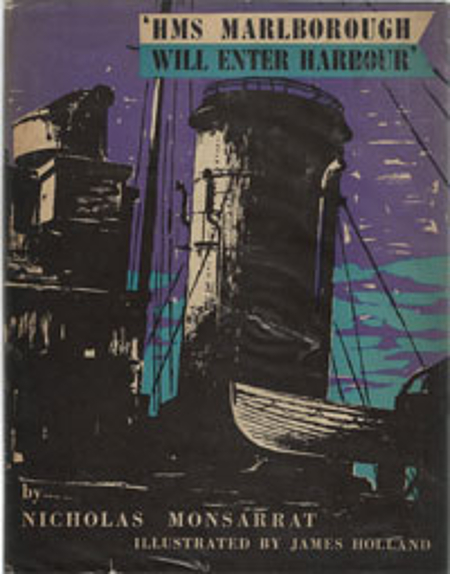
‘HMS Marlborough Will Enter Harbour’ by Nicholas Monsarrat

'HMS Marlborough Will Enter Harbour' cover

‘HMS Marlborough Will Enter Harbour’ by Nicholas Monsarrat is a lovely book which is illustrated by James Holland and was published in 1952. Actually it’s quite hard to believe that my copy is 70 years old, but it is. It’s a quick read with just 92 pages and a lot of illustrations. I didn’t know what it was about when I bought it in Edinburgh, so it was only when I started to read it that I realised that it was about a ship which gets torpedoed by a German U-Boat, so I did an inadvertent book link as I read it straight after reading about the sinking of The Lusitania – Dead Wake.

The book begins: The sloop Marlborough, 1,200 tons, complement 8 officers and 130 men, was torpedoed at dusk on the last day of 1942 while on independent passage from Iceland to the Clyde. She was on her way home for a refit, and for the leave that went with it, after a fourteen-month stretch of North Atlantic convoy escort with no break, except for routine boiler-cleaning.

But 500 miles from home she was hit by a torpedo killing 60 of the men immediately, the nearest land is 250 miles away, things look very black indeed, there’s a huge hole in her hull, is beginning to sink, it’s bitterly cold and their radio is broken and unfixable.

This was a great read, a real tale of adventure and it felt quite personal to me as my father was in the Merchant Navy on the Atlantic convoys AND had been torpedoed several times – but he never spoke about it other than to say that as soon as your ship was lost your pay stopped! As some of the pay was being sent home to a wife or mother that must have been alarming as they wouldn’t have known if they had survived. I would have loved to speak to him about this book but I think maybe he wouldn’t have wanted to go back to that time – even in fiction.

You can see some of the book’s illustrations here.
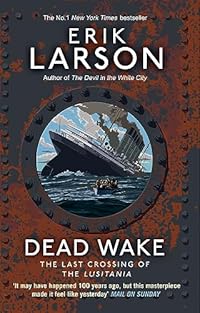
Dead Wake by Erik Larson

Dead Wake by Erik Larson was published back in 2015 and it’s subtitled The Last Crossing of The Lusitania. It’s a great read with the chapters swinging between what was going on on The Lusitania during the last voyage, so that the reader gets to know some of the actual passengers and crew, and the experiences of the crew of U-20 the submarine which torpedoed the ship.

But first we’re told about what was going on in the life of the American President Woodrow Wilson the year before. He had just lost his wife and was thrown into a bit of a depression, but just a few months later he met Edith and was more than somewhat bowled over by her. Throughout this time the US carefully preserved its neutrality, despite many American travellers being caught up in German attacks on ships.

Having ‘done’ World War 1 at school I had been under the impression that it was the sinking of The Lusitania which had brought the Americans into the war, I can’t have been thinking because obviously it was in 1917, two years after the sinking that the US entered the war. I suspect there was much gnashing of teeth among the allies at the attitude of the American President, but it seems that he was busy trying to get Edith to marry him!

Given the lack of care that the ship was given when it entered the more dangerous Irish Sea as it steamed towards its destination of Liverpool, it looks like The Lusitania with its many American citizens on board was being used as a tool to galvanise the President into action – it didn’t work.

There’s also a lot about the movement of U-20 and its Commander Schwieger. I don’t think that life on modern submarines is very different from the WW1 subs, with the lack of space and recycled air, but it is interesting to read of all the movements of U-20, of course they were all logged.

This book is well written and researched and I really felt that I got to know some of the people involved, including the many who had drowned. The author mentions the poem written by “a Canadian physician caring for the wounded at a nearby aid station in Boezinge”. It’s a pity that he didn’t give him a name-check. He was John McCrae, obviously of Scottish descent, you can read his poem In Flanders Fields here.

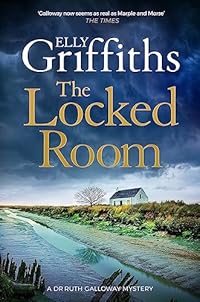
The Locked Room by Elly Griffiths

The Locked Room by Elly Griffiths was published in 2022 and as the book begins the Coronavirus is just beginning to hit the UK. To begin with Ruth has been given the unenviable job of clearing her mother’s personal possessions from what had been the family home in London. Ruth’s father has re-married and his wife of a few years now wants to do some re-decorating, obviously she’s not going to do that around her predecessor’s old clothes. A box of old photographs has thrown up a puzzle for Ruth. Why would her mother have an old photograph of the outside of Ruth’s home, taken in the 1960s? Her mother had never liked Ruth living there, she thought it too remote, but it’s obvious that the cottage had featured in Ruth’s mother’s past somehow, and she had kept it secret.

Back in her beloved Norfolk Ruth soon becomes involved with the excavation of a skeleton, possibly a plague victim. Her students are always keen on that subject, but along comes the first lockdown and most of the students go home to struggle with Zoom lectures.

As Ruth and her daughter Kate begin to feel lonely in their remote cottage they’re cheered up by the arrival of a new neighbour next door, although that does make the frequent visits from Nelson slightly fraught as he is really breaking the lockdown. He’s investigating some apparent suicides, but possible murders, and he’s taking advantage of the fact that his wife is away to spend more time with Ruth.

Despite the fact that two years into the pandemic with the stats being higher than ever in Scotland, I could really have been doing with NOT reading about the pandemic, but I still enjoyed this one.

My garden in Fife, Scotland

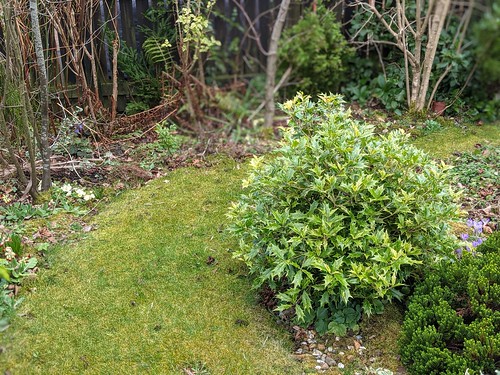
With the weather warming up here my garden has been coming to life, over a couple of days last week I took the photos below. Since then the weather has been even better, this week has felt almost like summer, however for next week the forecasters are saying it will be much colder with wintry showers – I really hope that doesn’t mean snow!

crocuses
crocuses

pulmonaria
pulmonaria

miniature daffodils
miniature daffodils

primula
primula

quince
Quince

snowdrops
snowdrops

viburnum
viburnum

pansies
pansies

garden
my garden

garden
my garden

Since taking the photos I’ve been out doing some weeding and general clearing up after the winter, and more things are in bloom now. There have been an amazing amount of really big fat bumble bees around so I hope that the predicted bad weather for next week won’t be too bad for them!

Murder at Primrose Cottage by Merryn Allingham

Murder at Primrose Cottage

Murder at Primrose Cottage by Merryn Allingham is the third book in her Flora Steele series, but it’s the first one that I’ve read, I would probably have enjoyed it more if I had read the first two. The setting is Sussex and then Cornwall, apparently in the 1950s but to be honest there isn’t much in the way of 1950s ambience.

Flora Steele owns a bookshop in Sussex, but when her friend Jack has to go to Cornwall to research a book that he’s writing she decides to accompany him. Jack writes murder mysteries and when he receives a threatening letter just before they set off for Cornwall, he thinks it might be better if Flora stays at home, but she’s determined to go with him.

The morning after they reach their rented cottage (with separate bedrooms) Flora discovers their landlord’s body in the orchard. The locals are quick to point the finger at Mercy Dearlove, the local witch or ‘peller’, and the police don’t seem at all interested in solving the crime, so Flora and Jack oblige and do it for them, and that obviously throws them into the path of danger.

I think the Cornish setting was quite realistic, there seemed to be quite a lot of rain and I remember that from the one time we travelled to that far end of England, as usual everyone said we should have been there the previous week!

I am of course a bit of a nit-picker when it comes to details in books, so I was annoyed that the author seems to think that grammar schools have fees – they don’t and never have had, you get in by academic merit. I was also puzzled by the use of torch and a flashlight in the same sentence as if they are two different things, when they are the same thing with flashlight obviously being the US word for what we call an electric torch, although nowadays the ‘electric’ bit is dropped. But this is quite an enjoyable read anyway and I would read the next one in the series I think.

My thanks to the publisher Bookouture who sent me a digital copy via NetGalley for review.

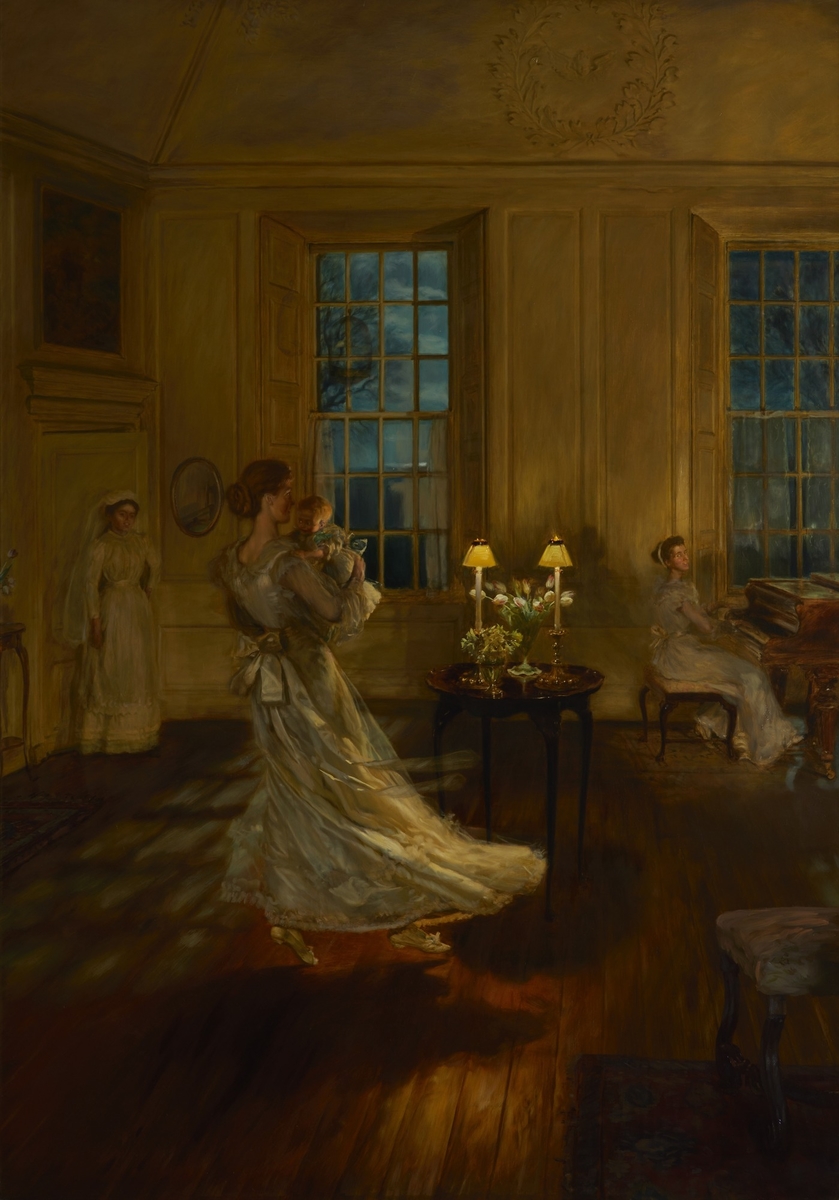
Reflections – John Henry Lorimer Exhibition – City Art Centre Edinburgh

Last Wednesday I realised that there was an art exhibition on at the Edinburgh City Art Centre featuring the work of John Henry Lorimer. He had a wonderful way with light and shadow, but prior to this exhibition I had only really seen his Spring Moonlight before which is probably the most famous painting at Kirkcaldy Art Gallery.

spring moonlight

You can read more about him and the talented Lorimer family here. If you’re interested that link has lots of links to click for more information.

Jack took quite a few photos at the exhibition and you can see them at his blogpost here.

Mullion by Mabel Esther Allan

Mullion cover

Mullion by Mabel Esther Allan was first published in 1949.

The story begins in Liverpool where Mullion has just been accepted for the high school. She is an only child and things have been tough for her and her parents who had married against the wishes of Mullion’s great-grandmother and had subsequently been estranged from her despite the fact that Mullion’s mother had been brought up by her grandmother due to her own parents’ death. But now Mullion’s great-granny has sent a letter inviting them all to her the Island of Polmerryn for the summer, not only Mullion and her parents but her cousins too.

Great grandmother is a sort of Queen of Cornwall, very wealthy and proud, an utter snob who has fallen out with all her relatives over the years, but now she’s over 90 and frail, it’s time to gather her family around again, but the adults decline the invitation and send the children who are thrilled to be visiting a place which has featured in their imagination and dreams, especially for Mullion. It’s a twelve hour train journey from Liverpool to Cornwall, and that is an adventure in itself for Mullion especially as she meets up with her cousins for the first time on the train. They have all been named after places in Cornwall, but have never been there before.

Mullion has heard plenty of tales from her mother about the castle that she had grown up in and her unsuccessful search for a smuggler’s secret tunnel. Obviously the cousins want to continue with the search.

This was an enjoyable read, I love a Cornish setting and the cousins were all likeable – eventually – and everybody learns lessons, even the great-grandmother.

Mabel Esther Allan wrote over a hundred books and I have a feeling that I read some when I was a youngster. I will read more if I fall over them in a secondhand bookshop!

Strangers at the Farm School by Josephine Elder

Strangers at the Farm School cover

Strangers at the Farm School by Josephine Elder was first published in 1940 but the setting is September 1938, the new academic year for The Farm School. There are a lot of changes, the school has become very popular and has almost doubled the amount of pupils that they had. The original pupils aren’t too happy about that, and the new people aren’t terribly impressed with the place at all. Most of them are locals but there are also two Jewish refugees from Germany, a brother and sister.

Johanna and Hans have had to leave their parents in Germany, and in recent years they had had a horrible time because of Hitler’s attitude to Jews, people they had formerly thought of as friends had turned against them, and their father is now in a concentration camp. Their mother had managed to get them on a Kindertransport train to England. But Hans in particular isn’t happy about being at the Farm School and he struggles with the lack of rules after the rigidity of what he has been used to in Germany.

Annis is voted head of the school, and Arthur is not happy about it, he thinks the head should be a boy – him.

“I rather think he’ll want watching,” Kitty said. “He’s the sort of person who thinks it’s all wrong for a girl to be in authority over boys. Kicked up a fuss at first because he had to have lessons from mistresses as well as masters, and in his family the girls have to make the boys’ beds for them, and the boys don’t do anything at all in return. There would be some sense in it if they cleaned the girls’ shoes for them, but they don’t, they loll about in a lordly sort of way.”

I think this is my favourite of the three books in this series. Josephine Elder was so forward thinking for the time the book was written in. Thirty years later my mother still thought that education was wasted on daughters because they “ended up pushing a pram anyway”. My brothers were treated like little household gods while I did all the housework! Can you tell I am still bitter about it?!

Anyway, I suppose the subtext of this book is that people shouldn’t be judged too quickly as often they have talents that are unexpected, particularly the teachers.

I was slightly disappointed that at the beginning of the book young Kenneth’s death (in the previous book) is written as being almost a blessing, because he was mentally handicapped. That attitude was rife in Germany at the time with such people being killed in hospitals as they weren’t deemed to be useful in a country which was fashioning itself as the ‘master race’. But I don’t think most people in Britain would have thought like that.

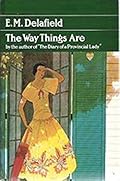
The Way Things Are by E.M. Delafield

The Way Things Are by E.M. Delafield was first published in 1927, but my copy of the book is a Virago Modern Classic which was printed in 1988. It has an introduction by Nicola Beauman.

Prior to reading this book I had read the author’s ‘Provincial Lady’ books and really enjoyed them, this one is along the same lines really although I couldn’t help being reminded of the film Brief Encounter.

Laura is a 37 year old wife and mother, lucky enough to be living in a lovely large house (with garden of course.) I suppose she could be described as being upper middle class, and she is also a successful author. On the face of it she has it all, two healthy sons and an unobjectionable if reserved husband Alfred, but like most women of her class she is beset by that perennial problem – servants. Living deep in the countryside it isn’t the perfect location for servants so they tend not to last long there, or maybe it’s the two young boys Edward and Johnnie that people get fed up with. Laura favours her youngest son outrageously, apparently because he has curly hair and is the naughty one!!

Laura is constantly shattered if she has to deal with her own children even for a short time and dreads the inevitable exit of their Nurse. To be fair she does realise that the ‘women in the village’ have to deal with their children on their own and do all their own housework, instead of just having a life of tennis parties and visiting neighbours as she does.

When Laura’s younger sister Christine arrives to stay she has a young man in tow. Laura thinks it must be serious but it soon appears that Marmaduke Aylford is more interested in Laura and of course as a supposedly neglected wife she’s very flattered.

Having been married for seven years Laura thinks she has never really been in love, although she’s very fond of Alfred. She wants some romance in her life. Silly woman!

Anyway, this is funny in parts but not to the same extent as Delafield’s ‘Provincial Lady’ books.

As an acquaintance of mine once said, “Romance goes out the window as soon as you start washing their socks and pants.” Which was a bit shocking really as she had persuaded a man to leave his wife and three sons for her! Stick to fictional romance – it’s safer.

The Mirror Dance by Catriona McPherson

The Mirror Dance by Catriona McPherson is the 15th book in the author’s Dandy Gilver series and I’ve read them all, but I was a wee bit disappointed with this one. In fact by the time I got to about 70 pages from the end of the book I had lost all interest in the outcome, but I struggled on. I’ll be generous and say that maybe it is all the horrendous news from Ukraine which had an effect on me.

The setting is mainly Dundee and St Andrews. There has been a murder in Dundee. A Punch and Judy man is done to death while Dandy was actually watching his puppet show in a park, despite having a front row view, she didn’t see anyone approaching the puppet booth. How was it possible?

The investigation involves two supposedly rival publishing companies, Doig’s Publishers and D.C. Thomson’s and a possible problem over copyright. There are plenty of twists and turns along the way, in fact maybe too many.

There are a few annoying mistakes, such as the mention of the shop/newspaper, magazine distributor W.H. Smith, which didn’t exist in Scotland until fairly recent years as it was John Menzies which had that business in Scotland. The setting for the book is 1937.

There are some phrases which seem unlikely in Dundee of the 1930s, such as ‘state of the art’. But the mention of cricket not being played in Scotland is just plain wrong. Cricket was very popular in many areas of Scotland and still is. I live near two villages which have cricket pitches which are still in use and one of them won the National Village Cricket Cup in 1985. There’s a cricket pitch and pavillion in Kirriemuir, the birthplace of J.M. Barrie of Peter Pan fame, and he actually donated the ground and pavillion to the town as he was a huge fan of cricket, as was Arthur Conan Doyle, they played it together.

Anyway, possibly I’m being too picky and this series has just run its course for me.