Ordinary Families by E. Arnot Robertson

I bought Ordinary Families by E. Arnot Robertson recently, it was originally published in 1933 but my copy is a Virago.

Someone commented earlier that this was a bit of a love or hate book, but having a quick squint at the few reviews I’ve seen of it, it seems that most people really liked it. For me it was just okay-ish, in parts. I really quite disliked the first third of it. It reads very much like an Arthur Ransome book with all the sailing going on, minus the quirky characters. To be fair though this book was published before Ransome published We Didn’t Mean to Go to Sea, which I read recently, but there is a problem with a lost anchor and chain, exactly as described in the Ransome book, maybe it’s a common sailing problem.

Anyway, the setting is Pin Mill on the Suffolk Marshes and the characters are mainly made up of what is described as three middle class families, but their wealth or lack of it is very uneven with the widowed Mr Quest being very much the wealthiest (dishonestly gained). Lallie Rush is one of four children and lives in the shadow of her very pretty sister Margaret. Lallie is a bit of a tomboy and very young for her age. She’s keen on birdwatching, to begin with. The Cottrells are the other family and they’re rather artistic, or think they are, they seem to know lots of well-known people and tend to look down on the Rush family. There’s such a lot of class snobbery in this book, but what was even worse for me is the lack of likeable characters. Towards the end I sort of warmed to Lallie, at the same time as thinking she was a fool.

Mr Quest is new to the neighbourhood and he sets about building an enormous wall which totally blocks out the view of the river that his neighbours had had. Complaints have no effect, the rich Mr Quest has robbed the Rush family of their magnificent view of the Orwell river.

Mr Rush is a total bore who regales people with his previous adventures, but stays ominously quiet when someone who has actually been to the place he talks about most visits the area, which seems to me likely that he is a teller of tall tales, at the same time as being a builder of bad boats, difficult to sail because of their poor design. The wives are either dead or living for their children

It’s quite a depressing read really as when I thought about it it’s evident that there’s nobody in it who is really happy. All of the couples young and old have just ‘settled’ for various reasons and while I would be the first to admit that you can’t expect perfection all the time and there’s more to marriage and relationships than romance, I found Lallie’s situation at the end of the book to be tragic – and her husband just ghastly, before and after the marriage.

Having just written this I realise that I disliked it more than I thought. Oh well, onwards and upwards.

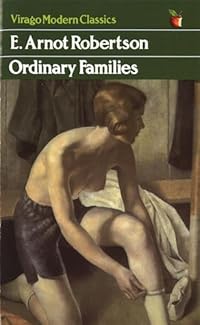
The Virago cover shows a detail from a painting called The Young Rower by Lancelot Glasson, which I’ve actually seen at an exhibition in Edinburgh, but it usually resides at Rochdale Art Gallery.

The Sound of Coaches by Leon Garfield

The Sound of Coaches by Leon Garfield is set in 18th century England. It begins on a winter’s night with a rickety stage coach containing five passengers. There’s only one woman among them, and she’s holding on to a wooden box which seems likely to cause harm to the other passengers in the event of an accident, which seems a distinct possibility. On reaching The Red Lion safely it becomes obvious that the young woman is about to give birth – which she does – and promptly dies. Her son however survives and the coachman and his wife decide to ‘shoulder’ the baby, they have none of their own.

The baby has to have a name and with the help of the four passengers the name Sam is decided on. Over the years Sam is a bit more than a handful and the coachman is a worried man. With no sign of a father or a wedding ring on Sam’s mother’s finger it’s supposed that Sam’s father was a ne’er do weel and as a gun was one of the few things that the mother had had in her box Chichester the coachman fears that Sam will be the same as his real father.

Things go from bad to worse, although this isn’t a grim read, it’s quite funny in parts and has a satisfying ending.

Leon Garfield was very good at creating what seems like a very authentic 18th century atmosphere.

Digging for Victory by Cathy Faulkner

Digging for Victory cover

Digging for Victory by Cathy Faulkner is set in Devon in 1941. Ralph Roberts has just got his papers and will be joining the RAF, Two-Six-Six squadron. His twelve year old sister Bonnie is excited about that, Ralph has always been her hero and she feels that she has to do something for the war effort too. Something more than just growing vegetables.

With Ralph’s bedroom now being empty it isn’t long before the family has a lodger allocated to them. Mr Fisher is in an RAF uniform, but he doesn’t seem to do anything but sit around in the house during the day. When Bonnie’s schoolfriends realise this they begin to bully Bonnie. Her lodger must be a shirker, or maybe even some sort of spy. Mr Fisher never speaks to anyone, so there’s nothing that Bonnie can say in his defense. Her contribution to the war effort doesn’t get any more exciting than trying to grow stuff and collecting rags, she feels such a failure.

Eventually Bonnie realises that Mr Fisher’s work is being done overnight, while most people are asleep. It is of course very important and dangerous work but it’s completely hush hush, so Bonnie still can’t tell her classmates about it. But she and Mr Fisher have become friends and he’s teaching her all about circuitry and electronics, which all helps in the coming emergency.

This book is aimed at 9-12 year olds, and it’s a great way of them learning about World War 2 and the Home Front.

I was lucky enough to be sent a digital copy of this book by the publisher Firefly via NetGalley. Thank you.

Digging for Victory is due to be published on the 4th of May.

Dear Mrs Bird by A.J. Pearce

Dear Mrs Bird by AJ Pearce was very popular when it was first published in 2018 and I tried to borrow it from the library back then – but it never appeared, apparently it was never returned, so when I saw a copy of it in a charity shop a few weeks ago I decided it was coming home with me. Don’t ask me why a WW2 setting is a comfort read for me – it just is. Mind you my mother who was born in the 1920s didn’t read me fairy tales, she told me about wartime experiences, so that probably explains my interest.

The story begins in December 1940 and Emmeline Lake is a secretary in a solicitor’s office, but she dreams of becoming a war correspondent. When she gets an interview at a newspaper she’s absolutely thrilled when she’s offered the job, although she realises that she failed to ask any questions about the work she would be doing. On her first day at her new job she’s mortified to discover that she has given up her good job at the solicitor’s to take work as an office junior on a failing and old-fashioned women’s magazine, the Woman’s Friend.

Mrs Bird is her fearsome boss who thankfully isn’t often in the building as she spends her time doing her ‘war’ work in various organisations. Bur it’s Mrs Bird’s name at the top of the problems page, and readers send their problem letters to her despite it being Emmy who answers them. However Mrs Bird has instructed Emmy to cut up any letters which are ‘unpleasant’. Most of the letters come under that heading because Mrs Bird has such strict views on morality that she regards just about everything as being depraved. Emmy is quite upset about not being able to help the desperate women who are writing in for help, and ends up in trouble with Mrs Byrd.

Along with just about everyone else Emmy was volunteering, doing vital war work in what spare time she had as a telephone operator at the Auxiliary Fire Services, along with her best friend Bunty, it’s a desperate time as it’s the height of the Blitz. As you would expect the war takes a toll on their personal relationships.

This was an enjoyable read although it was a bit predictable at times. I’ll definitely be seeking out the sequels to this one. Interestingly it was apparently the author’s collection of wartime magazines which inspired her to write this – her first book.

Edited to add:
The weirdest thing just happened as just after I published this blogpost I discovered that I actually DID read this book way back in 2018 – but have absolutely no memory of doing so!! Well some books stick longer than others do, but I was so sure that this one had never turned up from the library after I requested it. I still enjoyed it – again.

Jo of the Chalet School by Elinor M. Brent-Dyer

Jo of the Chalet School by Elinor M. Brent-Dyer was first published in 1926 and it’s the second book in the very large Chalet School series, 58 books long in fact.

There are over thirty girls at The Chalet School now and Jo’s sister Miss Bettany is the rather young headmistress. There’s a lot going on in this book as it’s set in the winter term, an exciting time in the Austrian Tyrol with plenty of entertainments for the schoolgirls to get involved in. It’s not so great for the locals though as it’s a lean time for them economically. This results in the school getting a Saint Bernard’s pup, the only one saved from a litter.

The ‘school baby’ also arrives, Robin’s mother has died and as her father has to travel for work Robin is placed in the care of the school, she quickly becomes a favourite.

Miss Bettany launches a campaign against slang, just about none of which we would call slang nowadays. Jo is so annoyed about that and she decides to start speaking as they did in Shakespeare’s time. That’s a bit of a hoot, but otherwise there’s a lot of jeapordy for Jo as she gets ill a few times and has accidents.

I read some of the Chalet School books when I was about ten years old, and I remembered that I felt so cosmopolitan because of the smatterings of French and German in them, but I’ve been enjoying reading them recently for the charm of a bygone age, and sometimes they just hit the spot when things are grim in real life, as they were earlier in the month with the death of our friend Eric.

Firth of Forth, Bridges and South Queensferry

A few weeks ago we drove to South Queensferry on our way home from – I can’t remember where! I thought you might like to see some of the photos I took.

Forth Bridge stitch, Scotland

The photo below is of the Forth Road Bridge which dates from the 1960s and if you look carefully you can just see the white struts of the new Queensferry Crossing behind it.

Forth Bridges, South Queensferry

These photos were all taken from almost exactly the same spot, it’s not often we walk out to the edge of the river, so I don’t think I’ve taken any photos of South Queensferry from this angle.

South  Queensferry , Scotland

The houses aren’t quite so quaint looking from the back as you can see, but the Jubilee Clock stands out well. It was built to commemorate one of Queen Victoria’s jubilees of course.

South Queensferry , Scotland

The tide was out on the Firth of Forth, that always makes things look a bit messy. South Queensferry is where the better off people of Edinburgh used to go for the weekend to escape the smells and muck of Auld Reekie, now it’s just an afternoon jaunt for people.

South Queensferry , River Forth

If you click on the photo below to see it enlarged you will be able to see through the bridge arch an island although it might not look like one to you. The island is warship shaped and I believe that during WW2 they built structures on it which made it look even more like a warship – in fact the Nazis claimed to have sunk this ‘warship’ several times. It was used defensively with men stationed on it as there was a lot going on in this area during the war as the Victorian Forth Bridge which was the only one there at the time was a major target for the Nazis and they had their submarines skulking around too.

Forth Bridge , Firth of Forth, island

If you’re interested you can read a bit about South Queensferry here.

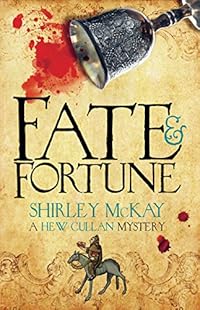
Fate and Fortune by Shirley McKay

Fate and Fortune by Shirley McKay is the second book in her Hew Cullan murder mystery series.

The book begins in the year 1581 in St Andrews and the young Scottish lawyer Hew Cullan has arrived there too late, his father is already dead. Hew is now the owner of the family home, his father had also left a manuscript which Hew is to have published. Edinburgh is calling Hew and indeed unknown to him he has been apprenticed to Richard Cunningham, a well known advocate, but Hew isn’t keen on continuing his career in law. However, when a young fisherwoman is found dead on the beach, with obvious signs of having been raped, Hew is appalled by the attitude of those who should be seeking the culprit. The death of the young girl was apparently of no interest to them, she was of no importance. Hew thinks differently.

But Edinburgh beckons and after a long and eventful journey astride his ‘characterful’ horse Dun Scottis, along the coast to catch a ferry to Edinburgh Hew finds himself in desperate peril. For the first time in his life he realises that he has always been sheltered by the clothes that he wears as his life falls apart when he has to wear the old clothes of a fisherman and he no longer has the automatic respect of those in any kind of authority.

Eventually Hew manages to make his way to the publisher that his father wanted to publish his book. It is run by a young widow determined to keep the business going,

I enjoyed this one even more than the first book in this series – Hue and Cry – so I’m looking forward to reading the next one soonish.

The Big Six by Arthur Ransome – The 1940 Club

The 1940 Club is hosted by Karen of Kaggsy’s Bookish Ramblings and Simon of Stuck in a Book.

For my second 1940 Club book I decided to read The Big Six by Arthur Ransome. The setting is the Norfolk Broads, East Anglia. Some of the dialogue is written in a sort of cod Norfolk accent, which I found slightly annoying at times but got used to it. I lived in East Anglia for a few years.

In this one Pete, Joe, Tom and Bill are enjoying themselves messing around on the river in their boat The Death and Glory. They’re waiting for some other members of The Coot Club to join them, the club was set up to protect nesting birds as at this time bird egg collecting is a popular hobby and not against the law. The children try to educate an elderly man as to why there were no bitterns about now, he couldn’t see that it was because he and others had shot them all!

But someone is going around casting off boats up and down the river and causing mayhem. Fingers are being pointed at the children as the culprits and the whole village seems to have turned against them, even their fathers aren’t sure of their innocence!

As you can imagine this puts the boys in a horrible situation especially when the local policeman Mr Tedder is convinced they are guilty, despite having absolutely no evidence against them, and he doesn’t even bother to carry out an investigation himself.

Things go from bad to worse when shackles are stolen out of a boatyard and immediately Mr Tedder blames the boys and he’s determined to send out a summons to them all.

The other members of The Coot Club Dorothea and Dick arrive and Dorothea immediately gets down to looking for clues as to who the real culprits are. She’s methodical, writing everything down and forming her own Scotland Yard which is where the title of the book comes from, although originally it was the so-called Big Five detectives who formed the actual Scotland Yard.

Mid way through the book the boys have a trip down the river to do some fishing and this was a relief from the uncomfortable atmosphere of the village they had been berthed at. It was a relief to me too as it was quite grim when everyone had turned against the Coot Club, even the far-flung members of the club were against them, or their parents had banned them from the club. I have to say that it was rather obvious who the baddies were.

So this one isn’t a favourite of mine although there is a bit of humour right at the end, however it shows that Ransome was keen to promote the preservation of wild birds, something that wasn’t foremost in people’s minds at the time I’m sure.

Mr Skeffington by Elizabeth von Arnim – The 1940 Club

I was so pleased when I realised that Mr Skeffington by Elizabeth von Arnim was first published in 1940, I just had to read it for The 1940 Club, as it was one of the few books of hers that I hadn’t got around to reading, and I’ve owned this one for over ten years. It was the last book that she wrote, she died the following year aged 74.

Fanny (Lady Frances Skeffington) had married Mr Skeffington a wealthy businessman in her younger days and after several years of marriage she had divorced him as he had a penchant for his young typists. She had always forgiven him in the past but number seven was one too many for her!

Since then she has had a very enjoyable life, she got a very good divorce settlement from Skeffington (Job) and had had a fine time breaking the hearts of various men who had begged her to marry them, but that was never going to happen as she would presumably have lost her alimony and the house she lived in which she still regarded as Mr Skeffington’s as do her many servants. In truth though it has been a rather empty life that she has led, with no children for her to focus on, therefore no grandchildren.

Fanny had been beautiful in her heyday, but now she is approaching her 50th birthday and she isn’t looking forward to it, especially as she has been seriously ill with diphtheria and has even lost a lot of her hair. People who know her can’t manage to hide their shock at the change in her. Her most recent love had been a student less than half her age, but he has dropped her for a young woman, it’s a shock for Fanny.

She begins to reassess her life and her ex-husband begins to haunt her thoughts. She can’t get rid of him, and she begins to visit the men that she had had dalliances with in the past. This has a desperate effect on her ego as they are obviously shocked at how old she looks. She has been going to a beauty parlour to have her face made up and they’ve over-done it. Some people assume that she must be a prostitute, but Fanny has a wonderful capacity to overcome the shocks she’s dealt and is at heart a kind woman. Obviously the men in her past have also changed over the years, but somehow that doesn’t dawn on them. Women are over the hill at a far earlier age than men are, and the 70 year old man from Fanny’s past has in recent years married a woman half his age and has very young children. The prime of a man’s life lasts a long time!

After a lot of grief for Fanny the ending is perfect.

Ageing was something that Elizabeth von Arnim dwelled on, with at least one of her earlier books taking up a similar theme and I suspect that she didn’t cope well with the ageing process, but I’ve always thought that ageing is preferrable to the alternative!!

Leith Hall, Kennethmont, Aberdeenshire, Scotland

Leith Hall, Aberdeenshire

It’s months since we visited Aberdeenshire, but it’s only now that I’m getting around to blogging about our visit to Leith Hall near Kennethmont. The oldest part of the building dates from 1650, but it has been added on to over the centuries. Like many such grand houses it was made into a temporary Red Cross hospital during World War 1.

Leith Hall  hospital plaque, Aberdeenshire

In 1945 Leith Hall was presented to the National Trust for Scotland. As you can see from the photo below it’s a good place to have a snack or some ice-cream.

Leith Hall , Aberdeenshire, Scotland

This house apparently has quite a reputation for being haunted and according to Wiki the writer Elizabeth Byrd and her husband rented 16 rooms in Leith Hall in the 1960s and she later wrote about her paranormal experiences there! The hall is set in a 286 acre estate.

In 1745 the then owner of the hall fought on the Jacobite side, below are some relics of the time.

Leith Hall,Jacobite relics, Aberdeenshire

Strangely there’s a scarf which apparently belonged to Napoleon on show, nice scarf but the photo is blurry as you can see.

Leith Hall , Napoleon's scarf

It’s the gardens that impressed me most though. We had a lovely afternoon here last August on what was a beautiful day, it’s definitely worth a visit if you’re in the Aberdeenshire area. This place isn’t very far from Balmoral, but we decided to leave that for another trip. I sort of wish we had gone then as the Queen was there at the time – for the last time.

Leith Hall  garden, Aberdeenshire

Leith Hall  garden, Aberdeenshire

Leith Hall  garden, Aberdeenshire

Leith Hall  Garden, Aberdeenshire