The Photograph by Penelope Lively

The Photograph

The Photograph by Penelope Lively was published in 2003 and I loved it. I’m becoming quite a fan of Penelope Lively and it’s beyond me why this one doesn’t seem to have won any awards.

Glyn is a widower and an academic who in the past also had a successful career fronting popular TV documentaries. He has never thrown any of his writing out, old lecture notes and scripts are all stored in a big cupboard half-way up the stairs. While looking for something in the cupboard he discovers a photograph, it’s a group photo of old friends but in the background he can see his now dead wife Kath and she has her back to the camera. She’s holding hands with her sister’s husband and it’s obvious that the pair have been having an affair.

Kath and her sister Elaine who was six years older than her, had been orphaned when their mother died when Kath was just sixteen years old. Elaine was already starting out on her career and never gave a thought for the younger girl who had been so close to their mother. The fact that Kath only ever had temporary jobs was seen as her own fault, but she never had the chance to study for anything.

Glyn becomes obsessed, wondering if she had been having affairs with multiple men throughout their marriage. He ends up tracking down old friends and work colleagues of Kath’s, trying to get information from them. From things that they say it seems that the Kath that he knew was quite different from the one that they knew. Yes, Kath was beautiful and had poise and charm, but some people had picked up on her sadness and her beauty was seen as a liability to her. Near strangers knew more about Kath than her closest family did.

When Glyn informs Kath’s sister Elaine that her husband had an affair with Kath it results in meltdown within that marriage as you would expect, but all involved think back to the times when they had been too busy for Kath, they had no time to listen to her as they were all wrapped up in their various careers. Elaine is a very successful garden designer, very well off and for years she has been supporting her husband after his once successful publishing company had folded.

The photograph has started a series of videos playing inside people’s heads as they recall incidents in their past lives and realise that things weren’t at all as they assumed them to be. They wish they had given her time and listened to her. I think we’ve probably all had that experience at some point.

The Photograph is a sad but thought provoking read, I gave it a five on Goodreads.

This book is about

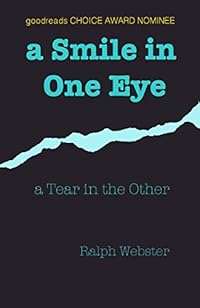
A Smile in One Eye: a Tear in the Other by Ralph Webster

A Smile in One Eye: a Tear in the Other cover

Ralph Webster’s parents had the misfortune to be caught up in the horrendous happenings in Germany that led up to the beginning of World War 2. It was a subject that Webster’s father had been rather reticent about, as so many people are when they have been traumatised by events, but as Ralph Webster and his wife Ginger witnessed the plight of refugees on their recent trip to Europe from the US where they live, it made him think more about his own family’s history. The upshot is this book A Smile in One Eye: a Tear in the Other which I must say is a cracking good read for anyone interested in that era. The author says that most of the story is based on fact, with just a few bits of fiction – to join the dots. He asked me to review the book as his father had found refuge in the west of Scotland as a teenager and was eventually able to join the British army – the Pioneer Corps.

There are two narratives running in tandem in A Smile in One Eye: a Tear in the Other. One relating the experiences of the Wober family in Prussia in the Nazi era as told by Gerhard Wober and the other the told by his son Ralph Webster as his father’s life draws to a close.

The story begins with Gerhard Wober (Webster’s father) describing his family, he’s the youngest and has three very much older sisters. The family is well off, his father is a businessman, selling farm machinery and he also owns a farm. They have several servants who are like part of the family, and life is good, but as time goes on the rise of the Nazi Party was to change all that.

The trouble was that although the Wober family were Lutherans who regularly attended church and the children had all been baptised Lutherans, Gerhard’s mother had actually originally been Jewish, although not a particularly religious one. Gerhard’s father had been adopted and he later discovered that his parents had also been Jewish.

Living in a rural area in Prussia they had been fairly sheltered from what was going on in the cities, but when members of their extended family phoned to warn them what was going on in their town it was no longer possible to ignore the facts. The fact that they had completely assimilated and didn’t think of themselves as Jewish wasn’t going to save them from the horrors. The mayhem of Kristallnacht in 1938 woke them up to the fact that the Nazis weren’t a passing phase. It wasn’t long before the locals joined in with the violence of the National Socialist thugs and the Wober family home was trashed. Obviously unknown to the Wobers there had been a lot of jealousy over the years in some quarters.

It was time to move out. It might be safer in a city and they would have to think about escaping. With everything they had owned having been trashed or confiscated escape wasn’t going to be easy. By this time Gerhard is a teenager and his father’s top priority was to get him out of Germany to safety, but with no money and not having any friends abroad to sponsor him it seemed a forlorn hope.

The fact that as far as the family was concerned they were Lutherans, not Jews, only complicated things further. Taking advantage of the Kindertransport would have meant Gerhard would probably have been fostered to a Jewish family, but his father wanted him to hold on to his Lutheran upbringing.

Eventually Gerhard finds a sponsor and makes it to the west of Scotland where he gets a job working on a farm in Balfron, Stirlingshire – not that far from where I grew up actually.

When war actually breaks out all foreigners in Britain were interned in various places. Those in power naturally worried that some of those people might have been German or Italian spies. Jerry – as Gerhard was now known, was moved to the Isle of Man but when it was decided that he was no threat to Britain he was able to join the British army and do his bit. It was at this point that he changed his name to Webster as it was thought that if those in the Pioneer Corps had been captured by the Germans they would be likely to be killed as traitors.

I found this to be a really fascinating read and for me it answered some questions that I had always had – such as – Why didn’t they all just get out as soon as they realised what the Nazis were like?! But of course it wasn’t that simple.

Ralph Webster contacted me and asked me if I would be interested in reviewing A Smile in One Eye: a Tear in the Other, mainly because of the Scottish connection. His father had always been grateful that he had been welcomed in Scotland, his sponsor had probably saved his life. I had to laugh though when it became evident that the farm workers that he had been working with were obviously rather rough in their speech, as many rural people are. So the Scottish dialect that he learned from them was quite different from the English that was spoken elsewhere in Britain, that must have been quite a shock to him. The blighters might have made an effort for the foreigner as certainly where I was brought up we were all bilingual with one dialect for in the school playground and ‘correct’ speech for in the classroom!

I rarely accept books review requests but the subject matter of this book was right up my street. My thanks go to Ralph Webster for giving me the chance to read his book.

As it happens today – the 9th of November is the anniversary of Kristallnacht – when any Jews who had been in denial about all the restrictions that had been going on in their lives could no longer have any belief that the Nazis couldn’t possibly mean people like THEM – normal law abiding people.

I thought that I knew a lot about this subject but I hadn’t realised that German birth certificates had a space for ethnicity/religion. So it would seem that that information was something that had always been important to those in power, long before the Nazi party reared its ugly head. There was no need for them to wait for jealous neighbours to denounce people as Jews, they had all the information already.

I wonder if German birth certificates still have that information on them. British birth certificates definitely don’t have a space for anything like that, it’s unimportant. It’s the child’s name, birthplace and the parents’ names and address only.

I know that South African birth certificates did/do have space for ethnicity. But that’s another weird country, and midwives in the past have been known to just decide that a baby was of black descent, causing all sorts of problems to the family.

I do wonder though if the nasty anti-foreigner post Brexit and let’s face it – pre Brexit attitudes to foreigners by some people nowadays were at all prevalent in 1930s Britain. Has our relative affluence made some people more hard-hearted towards people fleeing war and mayhem. It makes you think!

This one counts towards the Read Scotland 2016 Challenge.

Classic Penguin Cover to Cover by Paul Buckley

 Classic Penguin Cover to Cover  cover

Classic Penguin Cover to Cover by Paul Buckley is a lovely book – the proverbial feast for the eyes if you’re interested in book cover art. I had no idea that this book had been published, I was just lucky to spot it on display in the library. If you want to look inside it click here.

If you’re at all interested in art and design you’ll find this an interesting read, apart from the book cover designs each one is accompanied by an explanation from the artist on how they got the commission and how they had developed the design.

When I think of Penguin books I invariably have a vision of the classic orange or green Penguin editions and I hadn’t really thought about any others. That’s daft because I’ve bought plenty of Penguin classics over the years from the 1970s onwards that aren’t in the orange and white covers.

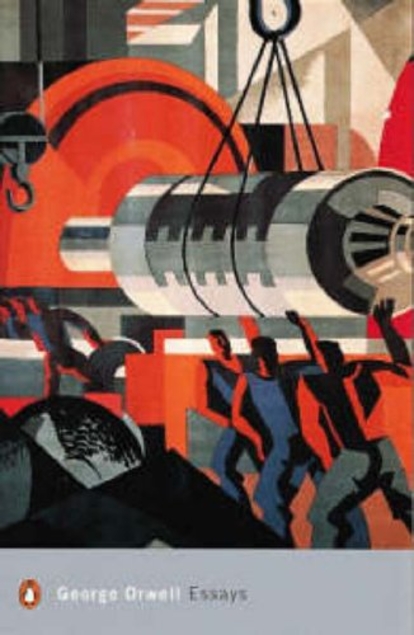
Having seen some gorgeous covers in this book I think I might just have to take a closer look at modern Penguins in bookshops, although I bought this George Orwell book of essays a few weeks ago and it doesn’t feature in this collection which is a shame because I think it’s a great design. The cover is a detail from a poster by Clive Gardiner for the Empire Marketing Board, 1928

Do you have a favourite Penguin design?

Guardian Review links

As usual it was today (Sunday) before I got around to reading the Guardian Review section.

I was particularly interested in this article by Miranda Carter – Dining with death Crime fiction’s long affair with food, about fictional detectives and how food plays a prominent part in the genre. Nero Wolfe, Sherlock Holmes, Poirot. Maigret, Sam Spade, Montalbano … the list goes on. Food was important to them all. Sadly there is no mention of Gamache and the bistro in Louise Penny’s Three Pines series. I do think it’s mainly a male thing though – this lingering on food. The female writers often used food as a means of getting poison into a victim I think. There’s probably a Ph.D thesis in it for someone!

There’s an article about lyrics as literature, inspired by Bob Dylan winning the Nobel prize for literature. You can read it here. I’m not impressed by the committee’s choice this year – what do you think about it?

The wartime diaries of Astrid Lindgren A World Gone Mad – have just been published. You can read a review of it here.

I must admit that I’ve somehow missed the Pippi Longstocking books completely. I’ve been catching up with the children’s classics that I missed out on as a child recently. Should I read Pippi Longstocking? Advise me please!

Furnished for Murder by Elizabeth Ferrars

Elisabeth Ferrars - Furnished for Murder

Furnished for Murder (Murder Room) by Scottish author Elizabeth Ferrars was first published in 1957.

Meg Jeacock and her husband are finding things difficult financially so they decide to section off part of their house and sublet it. It’s not something they’re very keen on doing but needs must. Meg is surprised when she answers her door to a man who is very determined to rent the place, he has been out of the country and has no references but he is happy to pay three months rent immediately and Meg can’t resist, although she knows her husband won’t be too happy about it.

In fact her husband is convinced that their tenant is a dodgy character and it isn’t long before terrible things begin to happen in the neighbourhood.

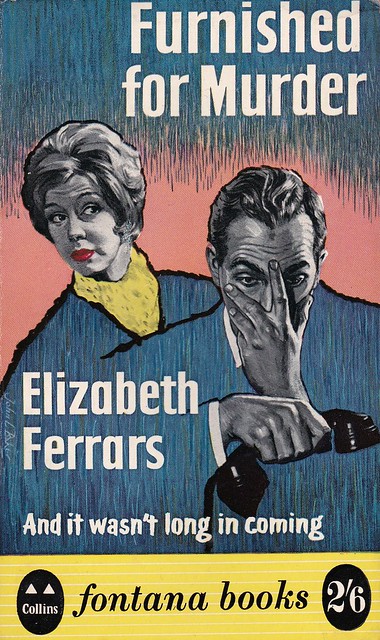
I’ve enjoyed all of the books by Ferrars that I’ve read so far and this one was really good. I think she should be better known than she is. I love the very 1950s cover on my old Collins Fontana paperback version of it which as you can see cost all of 2/6 but that was probably quite expensive back in the day. If you ever stumble across any Elizabeth Ferrars books you should give her a go. For some odd reason she was marketed as E.X. Ferrars in the US.

This one counts towards the Read Scotland 2016 Challenge.

Brexit, dudefood and hygge

Did you hear that the three newest words to be added to the Oxford English Dictionary are:

Brexit – unsurprisingly, and I’m sick to death of the horrible word.

dudefood – apparently food that men like, I’ve never heard the word but it makes me think of a very hot vindaloo curry, what I think of as macho man food.

and …

hygge – pronounced hue-ga. I had heard of that word before, in fact a few weeks ago there was an article in the Guardian about hygge – you can read it here. It’s the Danish art of living cosily. But obviously the word has links with the English word hug. Apparently there are lots of books due to be published on the subject of hygge and I noticed that the word has reached far-flung Aberfeldy as a shop selling woolly hats and socks and such had the word hygge on a card in their window.

I don’t think there’s an equivalent word in English or Scots although I often think of the Scottish phrase ‘coorie doon’ around this time of the year, obviously it means burrowing down, getting nice and comfy on a cold dark night. The idea is similar.

For me coorie-ing doon also includes getting ready for winter. If I had an open fireplace or a wood burning stove I’d no doubt be making sure I had a huge stockpile of wood. In fact I really fancy having a stove just so I would have a good excuse to wood gather.

As it is I make do with buying in emergency tins of soup, just in case we have an awful winter and there are no fresh veggies in the supermarkets. Well it has happened before!

Whatever the season I always have an old shortbread tin full of a selection of chocolate, but it’s particularly important in winter. I wouldn’t get through the cold snaps without chocolate to keep me going.

I have a nice collection of tartan rugs in the living room, essential for coorying into. The adult equivalent of a baby’s comfort blanket.

For me winter means knitting season, my needles are poised for action and I’ll be plundering my wool stockpile soon. I’m flicking through knitting patterns at the moment.

Any night now I’ll be swivelling the top of one of my tables around, doubling the size of the table top, making it just perfect for a 1,000 piece jigsaw puzzle. Winter is jigsaw season and the first one I do will be of a vintage travel poster – anyone been to Eastbourne?!

I can never understand these people who keep their curtains open in the evening, even when there’s snow on the ground and a howling wind. On cold dark nights I love to get the curtains closed as soon as it begins to get dark, shut the night out, get the kettle on and listen out for the biscuits shouting – eat me!

What about you – what’s your idea of winter comfort or hygge?

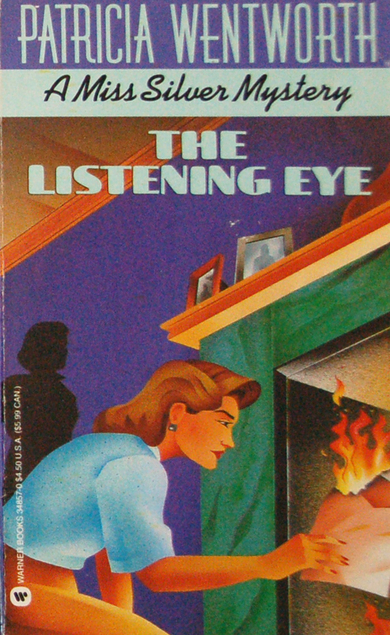
The Listening Eye by Patricia Wentworth

The Listening Eye cover

The Listening Eye by Patricia Wentworth is a Miss Silver mystery and it was first published in 1957.

Miss Paulina Paine is 57 years old and she has been stone deaf ever since a bomb fell very close to her during the war. Paulina taught herself lip-reading very successfully and she hopes it isn’t obvious to people that she is deaf.

However, one of her lodgers is an artist and he has painted her portrait which is being exhibited in a gallery. The artist has titled the portrait The Listener and Paulina has to admit to herself that he has captured an expression on her face that she recognises.

Whilst at the exhibition Paulina lip reads a man who is standing quite far away from her, he thinks that his conversation will be private, never suspecting that a lip-reader was ‘eavesdropping’ on him.

Paulina is aghast at what he has said and quickly leaves the gallery, but when a gallery worker mentions to the man that Paulina is a marvellous lip-reader it puts Paulina’s life at risk. She has inadvertently obtained dangerous information.

As it happens Paulina has a loose connection with Miss Silver and she goes to ask her advice on what she has ‘overheard’. So begins Miss Silver’s involvement in the investigation.

As ever I don’t want to say too much about this one as I don’t want to spoil it for any possible readers, but it’s a good mystery and Miss Silver sorts it all out, whilst knitting a pale blue shawl, multi tasking with class.

Ferrol in Galicia, Spain

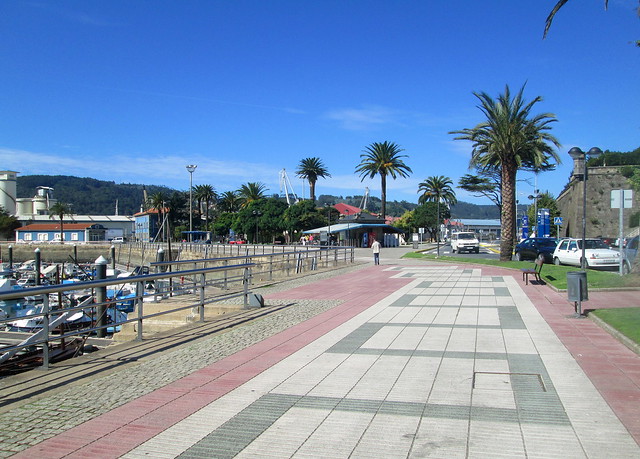
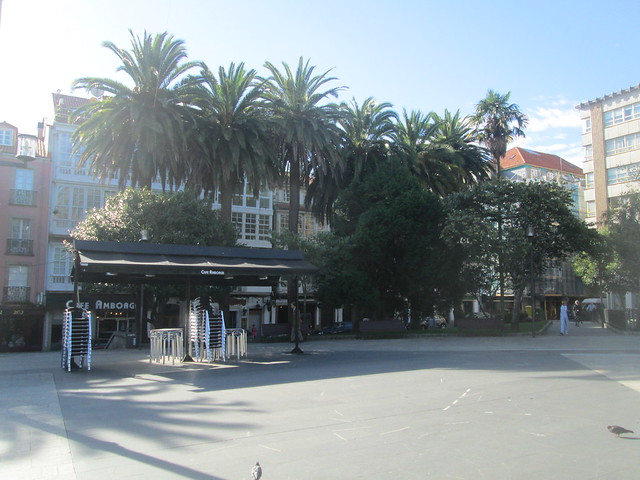
Back to the cruise and after sailing across the Bay of Biscay from Aviles we reached Ferrol in Galicia, north-western Spain. It’s quite a large city, a centre of naval shipbuilding and was the birthplace of the dictator General Franco.

The photo below is of palm trees just on the edge of the docks, so exotic looking to me anyway.

atrees at port

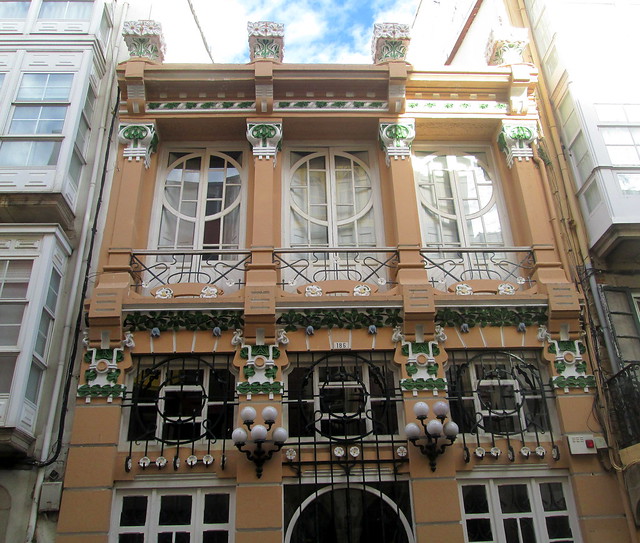
There are some lovely buildings, it all seems prosperous here anyway.
abuilding 3

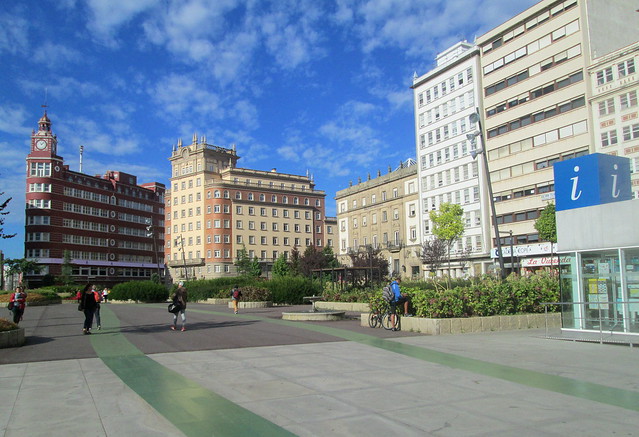
asquare 1

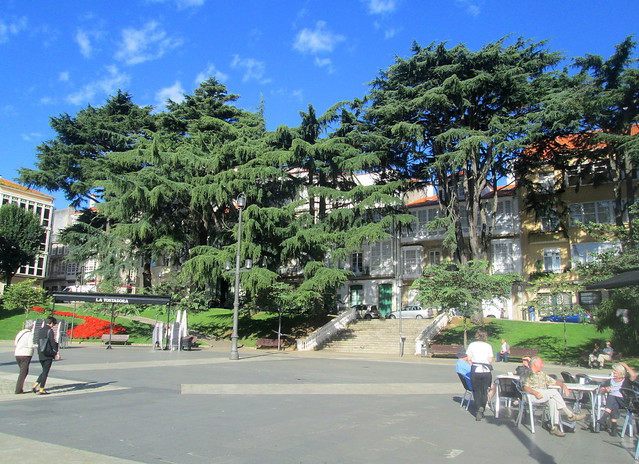
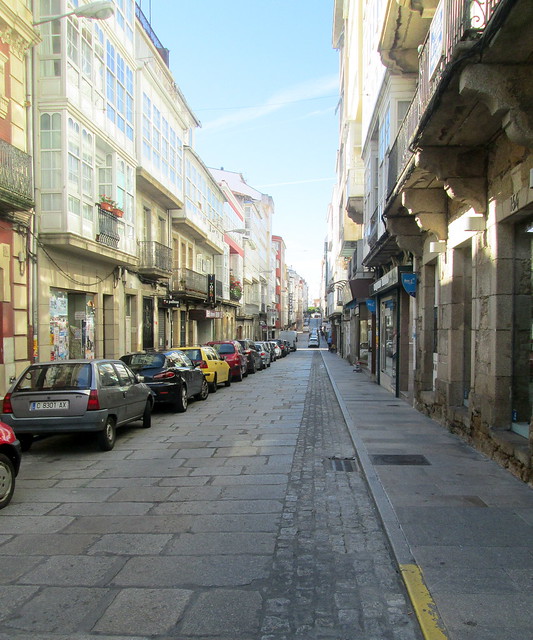
The town is set out in a grid pattern and seems to be mainly pedestrianised and each long street led to separate large squares, often with an ornate building, town hall or some such thing, all very stylish.

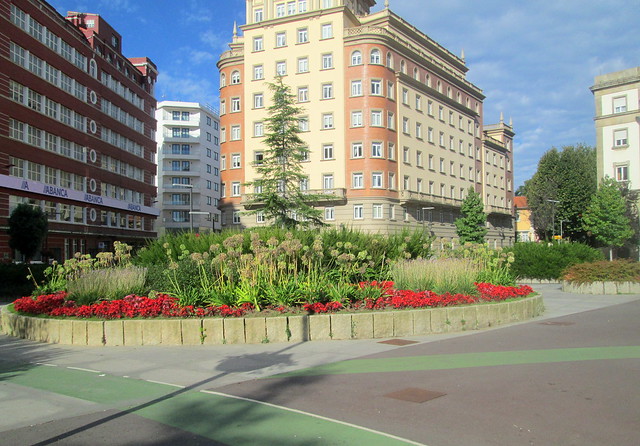
asquare 3

There seemed to be a never ending supply of streets and shops and I was impressed that most of the town squares were beautifully planted, and a lot of them had play areas for children, swings and such. What a great idea, for city dwelling children and for any kids being taken into the town, something they often dread, at least the parents will be able to promise some fun at the play area after being dragged around the shops.

second square 2 trees

asecond square 1 trees

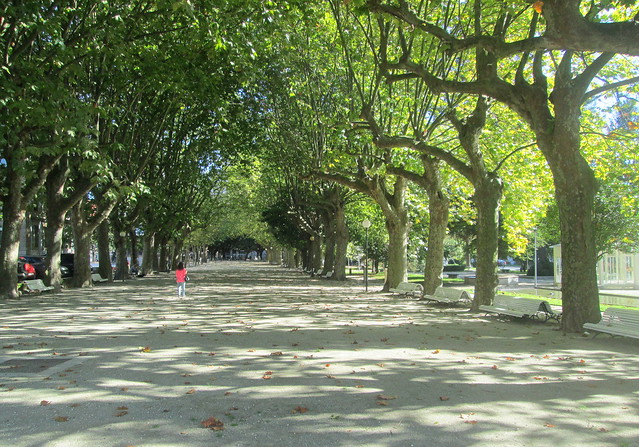
I think tree-lined avenues are a feature of Spain and they do make lovely dappled shade, just what you need in their sunny climate, this one was just a short walk from the city centre.

aavenue of trees

Ferrol was a very vibrant place, lots of locals were carrying multiple carrier bags from stores and boutiques, the place was fairly crowded but suddenly the background hum that probably every city has just disappeared, the streets seemed to have emptied somehow – it was 2 pm – siesta time! Most of the shops shut, apart from eateries. It’s very bizarre this siesta malarkey and I heard Andrew Neil on The Daily Politics mention that the siesta had a bad effect on the Spanish economy, if so it’s about time they gave it up and dragged themselves into the 21st century.

asiesta time

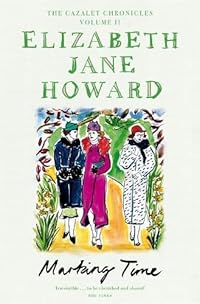
Marking Time by Elizabeth Jane Howard

 Marking Time cover

Marking Time by Elizabeth Jane Howard was first published in 1991 and is the second book in the Cazalet Chronicles.

I found this one to be just as enjoyable as The Light Years, the first book in the series, always a bit of a scene setter. The characters are all maturing nicely, inevitable given the things they’re experiencing.

The older members of the family take a bit of a back seat for a lot of this book as the focus is on the younger generation and how they are coping as the war just begins to bite deeper into every aspect of life.

Rupert’s young second wife Zoe is never going to be the same again after her horrific experience in book one, something so shaming she’s never going to tell anyone about it, but the birth of Rupert’s son has given her something to live for while Rupert is thought by everyone to almost certainly be dead.

Villy has been seriously ill but she and her husband Edward are in denial of the whole illness and heartbreakingly as Villy goes into remission and feels so much better she jumps to the conclusion that her health has turned a corner and she is getting back to normal with nothing to worry about. Edward, her otherwise despicable husband can’t bear to tell her the truth. Their whole marriage has been based on secrets with Villy sticking her head in the sand when she doesn’t want to admit things, either that or she’s just too dim for words.

The families’ London houses have all been more or less shut up for the duration of the war as bombs have been raining down on the capital, damaging the woodyards belonging to the Cazalets, so important to the war effort and their income.

There are secrets aplenty, unrequited love, affairs and annoying unfair prejudices against daughters by mothers. It’s just after that time known as ‘the Phoney War’ when life in Britain went on much as before for the first months of it and rationing for clothes and food hadn’t quite taken hold.

Mind you the Cazalets were rich and the rich were/are always cushioned from the daily deprivations that others have to get used to. Such is life and it’s that sort of reality that makes me feel that Howard has captured the atmosphere of wartime south of England. I’m looking forward to the next in the series which I think is called Confusion.

Joan @ Planet Joan read Marking time recently too and you can read her thoughts on it here.