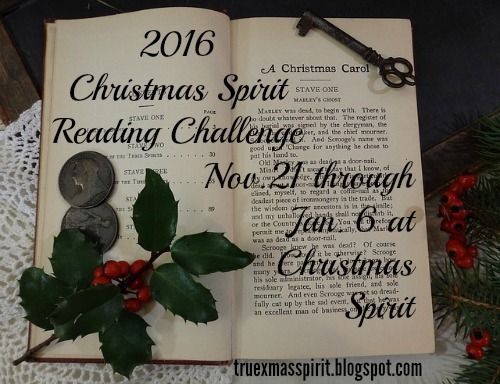
Christmas Spirit Reading Challenge 2016

This year I’ve decided to join in with the Christmas Spirit Reading Challenge for the first time.

It was Judith at Reader in the Wilderness who got me interested in this challenge and the upshot of that is that we are both reading Winter Solstice by Rosamunde Pilcher, it’s a chunkster of course.

Earlier in the year I bought a couple of Christmas themed vintage crimes, saving them up to read around this time:

The Santa Klaus Murder by Mavis Doriel Hay

Crime at Christmas by C.H.B. Kitchin

I usually only read A Christmas Tree by Charles Dickens (the only thing by him I’ve ever read as it happens) in an attempt to get me into the Christmas mood and sometimes it works! You can read it here
.
But I know that Joan at Planet Joan reads A Child’s Christmas in Wales by Dylan Thomas, so I intend to read that this year too. I don’t actually have a copy of that one but it can be read online here. It looks like a very quick read indeed.

I was tempted by the Christmas books on display at the library and I ended up borrowing:

Murder Under the Christmas Tree which features short stories by Ian Rankin, Dorothy L. Sayers, Margery Allingham, Arthur Conan Doyle, Val McDermid, Ellis Peters and More.
and
A Darcy Christmas – A holiday tribute to Jane Austen by Amanda Grange, Sharon Lathen and Carolyn Eberhart. I’ve never heard of any of those authors so it’s a bit of a pig in a poke.

Otherwise I’m thinking about maybe reading a Debbie Macomber book. I’ve never read anything by her but she seems to have written a lot of Christmassy books and I know that Jo at The Book Jotter has enjoyed some Macomber books.

If that lot doesn’t get me into the Christmas spirit there’s no hope for me!

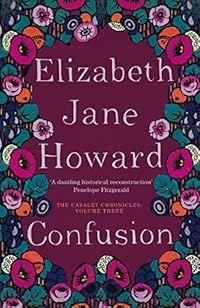
Confusion by Elizabeth Jane Howard

 Confusion cover

Confusion by Elizabeth Jane Howard is the third book in her Cazalet Chronicles, it was first published in 1993. World War 2 is in full swing now and the Cazalet’s lumber business is in trouble because the government is insisting that they pay tax on the wood that was destroyed when their dockside warehouses were bombed in the previous book. But that’s by the by. It’s the personal lives of the family members that fill the book of course.

Louise has married the much older artist Michael Hadleigh, but he’s now in the navy and Michael is still attached to his mother’s apron strings. When he gets leave he spends the time with mummy and it isn’t long before it’s obvious that he has only married Louise so that she can provide him with loads of children – and then he will have plenty of subjects to paint right on hand. Too late Louise realises that he isn’t really interested in women at all, and her mother-in-law is a monster.

I can imagine that some readers might think that the mother-in-law is completely over the top but there are some around that are exactly like that. Believe me!

In fact in Confusion many of the characters are coming to the end of relationships, whether they know it or not.

Despite the fact that the Louise/Michael relationship was getting my blood pressure up and I was planning what I would do to Edward if I were his wife I did really enjoy this book and I’ll be reading the next one in the series Casting Off – early in the new year. I think that Sandra @ A Corner of Cornwall and I are doing a readalong of it.

I’m going to be starting reading Christmas themed books soon in an attempt to get me into the spirit of it all and I’ll be joining the Spirit of Christmas Challenge, but more about that soonish.

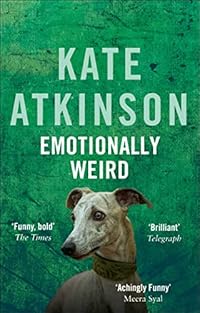
Emotionally Weird by Kate Atkinson

 Emotionally Weird cover

Emotionally Weird by Kate Atkinson was published in 2000. The setting is Dundee, where Atkinson went to university and it’s a series of tales told by various characters. This is a style that the author seems to favour and I can’t say that it’s one that I’m crazy about.

The main story is told by Effie, a student of literature. But her mother Nora also tells her family story and various other students are writing books which feature too, although thankfully never for very long. In fact Nora even reviews the main book, complaining of too many characters and such, so Atkinson is well aware that critics will complain of the flaws in the book. But I suppose she doesn’t see them as flaws.

It’s definitely curate’s egg-ish, meaning of course that the book is good in parts, however, the bits that are good are really very good, in my opinion anyway. It’s very funny in parts.

Here, Dundee’s English Literature department in the early 1970s is depicted as peopled by crazy characters – students and staff, headed by Professor Cousins who isn’t really in the real world at all and takes any chance to have word games. The professor is sure someone is trying to kill him and Effie is sure she is being followed.

Effie’s boyfriend Bob has hardly been to any lectures, he’s in danger of being chucked out of uni and Effie can’t think why she’s still with him.

Chick is a private detective ex-policeman who has fallen on hard times due to his divorce and Effie knows he reminds her of someone, but she can’t think who.

Dogs feature in the story, as they quite often do in Atkinson’s books and they provide some of the humour.

Kate Atkinson was born in the north of England but has lived in Scotland since her Dundee University days and now lives in Edinburgh. In this book she proves how well she has assimilated as she has a good Scots vocabulary and she uses it well.

I read this one for the Read Scotland 2016 Challenge.

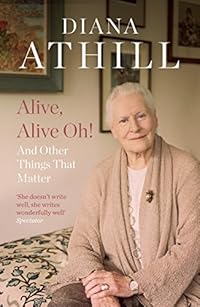
Alive, Alive Oh! by Diana Athill

Alive, Alive Oh! cover

Alive, Alive Oh! by Diana Athill is the first book by her that I’ve read and I enjoyed it so much that I’ll definitely be seeking out her Costa Biography award winning book Somewhere Towards the End.

The book begins with a little introduction which starts: ‘Sometimes I sits and thinks and sometimes I just thinks’: I have forgotten who it is who is supposed to have said that, but it is a good description of a state quite often observed in a retirement home, and considered pitiable.

I knew immediately that that quote came from Winnie the Pooh ( I blame a misspent adulthood!) but I’ve subsequently discovered that L.M. Montgomery apparently used that phrase first.

Anyway by the end of this book Athill does indeed decide to go into a retirement home where you are allowed to just sit and think if that is what you feel like doing. It sounds like a remarkable place, full of interesting people and great staff, if only they were all like that.

The author was very old when she wrote this book, 97 I believe and the thing about very old ladies is that they just don’t care any more, so they just say exactly what they think and that always leads to good entertainment. In conversation with another old folks’ home resident it transpired that they both spent time thinking about all the men they had ever slept with! They found it hilarious of course. I suspect that in that position I would be thinking about all the gardens I’ve ever planned and planted up!.

But this book begins with a chapter about her grandparents’ garden at Ditchingham Hall in Norfolk – a huge property by the sound of it. There were quite a lot of similarities between this book and Penelope Lively’s book A House Unbound, but Athill is much more forthcoming about her private life – love affairs, abortions and a miscarriage later on in life.

This is a slim volume at just 161 pages but she packs a lot into it. Growing up in rural splendour, the war, fashion, post war holidays, books, work – it’s a great read.

You can read a short Guardian interview with her here.

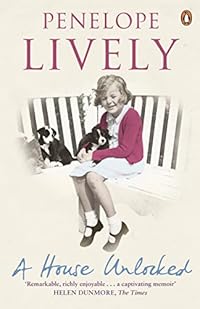
A House Unlocked by Penelope Lively

A House Unlocked cover

I’ve been enjoying reading some of Penelope Lively‘s novels this year so when I saw A House Unlocked sitting in the biography section of the library I just had to borrow it.

Actually I was expecting something quite different from the title of the book, I thought it would be about the house she had grown up in, but the house of the title is her grandparents’ house, a large and very grand place which was run with the help of umpteen servants and gardeners. Lively grew up in Egypt but was sent back to the house for holidays, she was an only child of divorced parents so there were no reminiscences of the things that she and siblings had got up to in the house. She tells the story of the house through objects that were in it, but at times it’s more about social history, as an embroidery sampler stitched by her grandmother reminds her of the evacuees that had stayed in the house during the war. But instead of writing about those specific children Lively chose to explain how the evacuation of millions of children and some women had been achieved, and the consequent shock to all concerned. That may be news to some readers I suppose.

The locals were appalled to discover that all of the city children seemed to have lice and Lively comments that that is something that has changed since her younger days as now even middle-class children have nits, including her grand-children. That was news to me as I’m very thankful that I’ve never had to deal with such things, despite having had two boys. Prevention is best, comb their hair with a fine toothed comb at least four times a day and you’ll have no problems is what I suggest!

The hymn book reminds her of the church and that leads her to go into detail of the statistics of the church attendance of the Church of England over the years, it has dwindled drastically although church going was never in a healthy state, not even in Victorian times. Although she herself is a non-believer, she attends the church more to support the actual upkeep of the building and stop it from being deconsecrated and turned into flats or a wine bar.

I found the parts detailing the garden most interesting, how such a huge place was set out and planted. As she freely admits, if it hadn’t been for the very many Scottish plant hunters of the 19th century lots of the trees and plants would never have arrived in Britain’s gardens and estates.

It wasn’t until almost the end of the book that Lively explains what financed the very comfortable life style. Her family name was Reckit, which I immediately recognised as the well known manufacturer of household cleaning/laundry products such as Reckitt’s Blue, Silvo, Brasso and Robin Starch – do you remember that? It was obviously a very lucrative business although as the family was ‘trade’ they wouldn’t have fitted in with some snooty people’s idea of high society.

Social mobility that came about post World War 2 meant that her husband Jack Lively had been able to get to Cambridge despite being brought up in a council house and in an earlier generation she would have been very unlikely ever to have met him, never mind married him. I found those observations quite depressing as over the last forty years or so things have definitely gone backwards, with first evening classes having to be paid for and more recently university education no longer being free.

So as I said, I found this book to be a wee bit disappointing, I think fiction writers often don’t hit the right spot with me when they turn to memoirs, I suspect some of them hold too much back. But I might be being unfair as I immediately started reading Diana Athill’s book Alive, Alive Oh! after this one and for me that one was much better – but that’s for another day!

The Photograph by Penelope Lively

The Photograph

The Photograph by Penelope Lively was published in 2003 and I loved it. I’m becoming quite a fan of Penelope Lively and it’s beyond me why this one doesn’t seem to have won any awards.

Glyn is a widower and an academic who in the past also had a successful career fronting popular TV documentaries. He has never thrown any of his writing out, old lecture notes and scripts are all stored in a big cupboard half-way up the stairs. While looking for something in the cupboard he discovers a photograph, it’s a group photo of old friends but in the background he can see his now dead wife Kath and she has her back to the camera. She’s holding hands with her sister’s husband and it’s obvious that the pair have been having an affair.

Kath and her sister Elaine who was six years older than her, had been orphaned when their mother died when Kath was just sixteen years old. Elaine was already starting out on her career and never gave a thought for the younger girl who had been so close to their mother. The fact that Kath only ever had temporary jobs was seen as her own fault, but she never had the chance to study for anything.

Glyn becomes obsessed, wondering if she had been having affairs with multiple men throughout their marriage. He ends up tracking down old friends and work colleagues of Kath’s, trying to get information from them. From things that they say it seems that the Kath that he knew was quite different from the one that they knew. Yes, Kath was beautiful and had poise and charm, but some people had picked up on her sadness and her beauty was seen as a liability to her. Near strangers knew more about Kath than her closest family did.

When Glyn informs Kath’s sister Elaine that her husband had an affair with Kath it results in meltdown within that marriage as you would expect, but all involved think back to the times when they had been too busy for Kath, they had no time to listen to her as they were all wrapped up in their various careers. Elaine is a very successful garden designer, very well off and for years she has been supporting her husband after his once successful publishing company had folded.

The photograph has started a series of videos playing inside people’s heads as they recall incidents in their past lives and realise that things weren’t at all as they assumed them to be. They wish they had given her time and listened to her. I think we’ve probably all had that experience at some point.

The Photograph is a sad but thought provoking read, I gave it a five on Goodreads.

This book is about

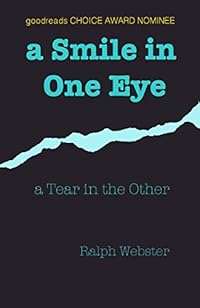
A Smile in One Eye: a Tear in the Other by Ralph Webster

A Smile in One Eye: a Tear in the Other cover

Ralph Webster’s parents had the misfortune to be caught up in the horrendous happenings in Germany that led up to the beginning of World War 2. It was a subject that Webster’s father had been rather reticent about, as so many people are when they have been traumatised by events, but as Ralph Webster and his wife Ginger witnessed the plight of refugees on their recent trip to Europe from the US where they live, it made him think more about his own family’s history. The upshot is this book A Smile in One Eye: a Tear in the Other which I must say is a cracking good read for anyone interested in that era. The author says that most of the story is based on fact, with just a few bits of fiction – to join the dots. He asked me to review the book as his father had found refuge in the west of Scotland as a teenager and was eventually able to join the British army – the Pioneer Corps.

There are two narratives running in tandem in A Smile in One Eye: a Tear in the Other. One relating the experiences of the Wober family in Prussia in the Nazi era as told by Gerhard Wober and the other the told by his son Ralph Webster as his father’s life draws to a close.

The story begins with Gerhard Wober (Webster’s father) describing his family, he’s the youngest and has three very much older sisters. The family is well off, his father is a businessman, selling farm machinery and he also owns a farm. They have several servants who are like part of the family, and life is good, but as time goes on the rise of the Nazi Party was to change all that.

The trouble was that although the Wober family were Lutherans who regularly attended church and the children had all been baptised Lutherans, Gerhard’s mother had actually originally been Jewish, although not a particularly religious one. Gerhard’s father had been adopted and he later discovered that his parents had also been Jewish.

Living in a rural area in Prussia they had been fairly sheltered from what was going on in the cities, but when members of their extended family phoned to warn them what was going on in their town it was no longer possible to ignore the facts. The fact that they had completely assimilated and didn’t think of themselves as Jewish wasn’t going to save them from the horrors. The mayhem of Kristallnacht in 1938 woke them up to the fact that the Nazis weren’t a passing phase. It wasn’t long before the locals joined in with the violence of the National Socialist thugs and the Wober family home was trashed. Obviously unknown to the Wobers there had been a lot of jealousy over the years in some quarters.

It was time to move out. It might be safer in a city and they would have to think about escaping. With everything they had owned having been trashed or confiscated escape wasn’t going to be easy. By this time Gerhard is a teenager and his father’s top priority was to get him out of Germany to safety, but with no money and not having any friends abroad to sponsor him it seemed a forlorn hope.

The fact that as far as the family was concerned they were Lutherans, not Jews, only complicated things further. Taking advantage of the Kindertransport would have meant Gerhard would probably have been fostered to a Jewish family, but his father wanted him to hold on to his Lutheran upbringing.

Eventually Gerhard finds a sponsor and makes it to the west of Scotland where he gets a job working on a farm in Balfron, Stirlingshire – not that far from where I grew up actually.

When war actually breaks out all foreigners in Britain were interned in various places. Those in power naturally worried that some of those people might have been German or Italian spies. Jerry – as Gerhard was now known, was moved to the Isle of Man but when it was decided that he was no threat to Britain he was able to join the British army and do his bit. It was at this point that he changed his name to Webster as it was thought that if those in the Pioneer Corps had been captured by the Germans they would be likely to be killed as traitors.

I found this to be a really fascinating read and for me it answered some questions that I had always had – such as – Why didn’t they all just get out as soon as they realised what the Nazis were like?! But of course it wasn’t that simple.

Ralph Webster contacted me and asked me if I would be interested in reviewing A Smile in One Eye: a Tear in the Other, mainly because of the Scottish connection. His father had always been grateful that he had been welcomed in Scotland, his sponsor had probably saved his life. I had to laugh though when it became evident that the farm workers that he had been working with were obviously rather rough in their speech, as many rural people are. So the Scottish dialect that he learned from them was quite different from the English that was spoken elsewhere in Britain, that must have been quite a shock to him. The blighters might have made an effort for the foreigner as certainly where I was brought up we were all bilingual with one dialect for in the school playground and ‘correct’ speech for in the classroom!

I rarely accept books review requests but the subject matter of this book was right up my street. My thanks go to Ralph Webster for giving me the chance to read his book.

As it happens today – the 9th of November is the anniversary of Kristallnacht – when any Jews who had been in denial about all the restrictions that had been going on in their lives could no longer have any belief that the Nazis couldn’t possibly mean people like THEM – normal law abiding people.

I thought that I knew a lot about this subject but I hadn’t realised that German birth certificates had a space for ethnicity/religion. So it would seem that that information was something that had always been important to those in power, long before the Nazi party reared its ugly head. There was no need for them to wait for jealous neighbours to denounce people as Jews, they had all the information already.

I wonder if German birth certificates still have that information on them. British birth certificates definitely don’t have a space for anything like that, it’s unimportant. It’s the child’s name, birthplace and the parents’ names and address only.

I know that South African birth certificates did/do have space for ethnicity. But that’s another weird country, and midwives in the past have been known to just decide that a baby was of black descent, causing all sorts of problems to the family.

I do wonder though if the nasty anti-foreigner post Brexit and let’s face it – pre Brexit attitudes to foreigners by some people nowadays were at all prevalent in 1930s Britain. Has our relative affluence made some people more hard-hearted towards people fleeing war and mayhem. It makes you think!

This one counts towards the Read Scotland 2016 Challenge.

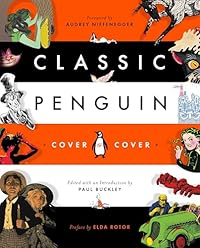
Classic Penguin Cover to Cover by Paul Buckley

 Classic Penguin Cover to Cover  cover

Classic Penguin Cover to Cover by Paul Buckley is a lovely book – the proverbial feast for the eyes if you’re interested in book cover art. I had no idea that this book had been published, I was just lucky to spot it on display in the library. If you want to look inside it click here.

If you’re at all interested in art and design you’ll find this an interesting read, apart from the book cover designs each one is accompanied by an explanation from the artist on how they got the commission and how they had developed the design.

When I think of Penguin books I invariably have a vision of the classic orange or green Penguin editions and I hadn’t really thought about any others. That’s daft because I’ve bought plenty of Penguin classics over the years from the 1970s onwards that aren’t in the orange and white covers.

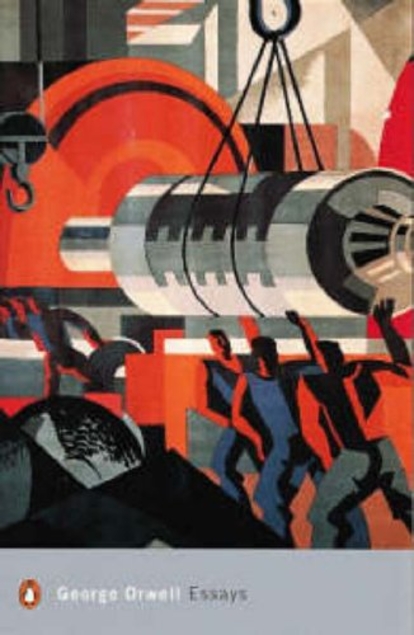
Having seen some gorgeous covers in this book I think I might just have to take a closer look at modern Penguins in bookshops, although I bought this George Orwell book of essays a few weeks ago and it doesn’t feature in this collection which is a shame because I think it’s a great design. The cover is a detail from a poster by Clive Gardiner for the Empire Marketing Board, 1928

Do you have a favourite Penguin design?

Guardian Review links

As usual it was today (Sunday) before I got around to reading the Guardian Review section.

I was particularly interested in this article by Miranda Carter – Dining with death Crime fiction’s long affair with food, about fictional detectives and how food plays a prominent part in the genre. Nero Wolfe, Sherlock Holmes, Poirot. Maigret, Sam Spade, Montalbano … the list goes on. Food was important to them all. Sadly there is no mention of Gamache and the bistro in Louise Penny’s Three Pines series. I do think it’s mainly a male thing though – this lingering on food. The female writers often used food as a means of getting poison into a victim I think. There’s probably a Ph.D thesis in it for someone!

There’s an article about lyrics as literature, inspired by Bob Dylan winning the Nobel prize for literature. You can read it here. I’m not impressed by the committee’s choice this year – what do you think about it?

The wartime diaries of Astrid Lindgren A World Gone Mad – have just been published. You can read a review of it here.

I must admit that I’ve somehow missed the Pippi Longstocking books completely. I’ve been catching up with the children’s classics that I missed out on as a child recently. Should I read Pippi Longstocking? Advise me please!

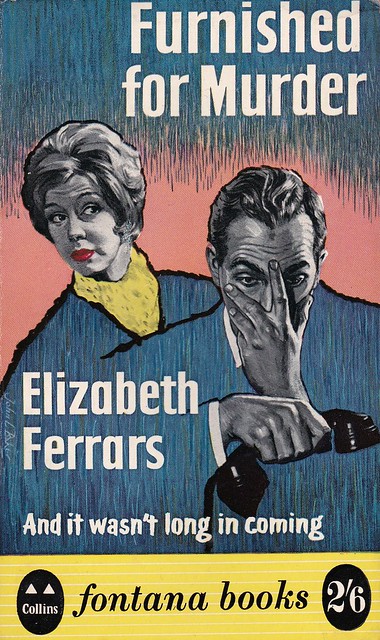
Furnished for Murder by Elizabeth Ferrars

Elisabeth Ferrars - Furnished for Murder

Furnished for Murder (Murder Room) by Scottish author Elizabeth Ferrars was first published in 1957.

Meg Jeacock and her husband are finding things difficult financially so they decide to section off part of their house and sublet it. It’s not something they’re very keen on doing but needs must. Meg is surprised when she answers her door to a man who is very determined to rent the place, he has been out of the country and has no references but he is happy to pay three months rent immediately and Meg can’t resist, although she knows her husband won’t be too happy about it.

In fact her husband is convinced that their tenant is a dodgy character and it isn’t long before terrible things begin to happen in the neighbourhood.

I’ve enjoyed all of the books by Ferrars that I’ve read so far and this one was really good. I think she should be better known than she is. I love the very 1950s cover on my old Collins Fontana paperback version of it which as you can see cost all of 2/6 but that was probably quite expensive back in the day. If you ever stumble across any Elizabeth Ferrars books you should give her a go. For some odd reason she was marketed as E.X. Ferrars in the US.

This one counts towards the Read Scotland 2016 Challenge.