Brexit, dudefood and hygge

Did you hear that the three newest words to be added to the Oxford English Dictionary are:

Brexit – unsurprisingly, and I’m sick to death of the horrible word.

dudefood – apparently food that men like, I’ve never heard the word but it makes me think of a very hot vindaloo curry, what I think of as macho man food.

and …

hygge – pronounced hue-ga. I had heard of that word before, in fact a few weeks ago there was an article in the Guardian about hygge – you can read it here. It’s the Danish art of living cosily. But obviously the word has links with the English word hug. Apparently there are lots of books due to be published on the subject of hygge and I noticed that the word has reached far-flung Aberfeldy as a shop selling woolly hats and socks and such had the word hygge on a card in their window.

I don’t think there’s an equivalent word in English or Scots although I often think of the Scottish phrase ‘coorie doon’ around this time of the year, obviously it means burrowing down, getting nice and comfy on a cold dark night. The idea is similar.

For me coorie-ing doon also includes getting ready for winter. If I had an open fireplace or a wood burning stove I’d no doubt be making sure I had a huge stockpile of wood. In fact I really fancy having a stove just so I would have a good excuse to wood gather.

As it is I make do with buying in emergency tins of soup, just in case we have an awful winter and there are no fresh veggies in the supermarkets. Well it has happened before!

Whatever the season I always have an old shortbread tin full of a selection of chocolate, but it’s particularly important in winter. I wouldn’t get through the cold snaps without chocolate to keep me going.

I have a nice collection of tartan rugs in the living room, essential for coorying into. The adult equivalent of a baby’s comfort blanket.

For me winter means knitting season, my needles are poised for action and I’ll be plundering my wool stockpile soon. I’m flicking through knitting patterns at the moment.

Any night now I’ll be swivelling the top of one of my tables around, doubling the size of the table top, making it just perfect for a 1,000 piece jigsaw puzzle. Winter is jigsaw season and the first one I do will be of a vintage travel poster – anyone been to Eastbourne?!

I can never understand these people who keep their curtains open in the evening, even when there’s snow on the ground and a howling wind. On cold dark nights I love to get the curtains closed as soon as it begins to get dark, shut the night out, get the kettle on and listen out for the biscuits shouting – eat me!

What about you – what’s your idea of winter comfort or hygge?
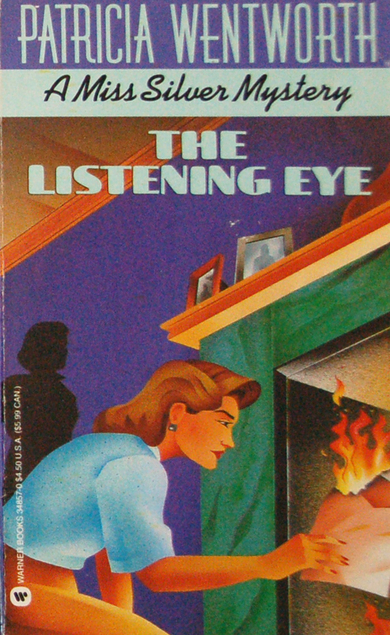
The Listening Eye by Patricia Wentworth

The Listening Eye cover

The Listening Eye by Patricia Wentworth is a Miss Silver mystery and it was first published in 1957.

Miss Paulina Paine is 57 years old and she has been stone deaf ever since a bomb fell very close to her during the war. Paulina taught herself lip-reading very successfully and she hopes it isn’t obvious to people that she is deaf.

However, one of her lodgers is an artist and he has painted her portrait which is being exhibited in a gallery. The artist has titled the portrait The Listener and Paulina has to admit to herself that he has captured an expression on her face that she recognises.

Whilst at the exhibition Paulina lip reads a man who is standing quite far away from her, he thinks that his conversation will be private, never suspecting that a lip-reader was ‘eavesdropping’ on him.

Paulina is aghast at what he has said and quickly leaves the gallery, but when a gallery worker mentions to the man that Paulina is a marvellous lip-reader it puts Paulina’s life at risk. She has inadvertently obtained dangerous information.

As it happens Paulina has a loose connection with Miss Silver and she goes to ask her advice on what she has ‘overheard’. So begins Miss Silver’s involvement in the investigation.

As ever I don’t want to say too much about this one as I don’t want to spoil it for any possible readers, but it’s a good mystery and Miss Silver sorts it all out, whilst knitting a pale blue shawl, multi tasking with class.

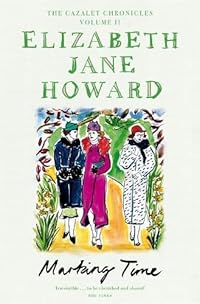
Marking Time by Elizabeth Jane Howard

 Marking Time cover

Marking Time by Elizabeth Jane Howard was first published in 1991 and is the second book in the Cazalet Chronicles.

I found this one to be just as enjoyable as The Light Years, the first book in the series, always a bit of a scene setter. The characters are all maturing nicely, inevitable given the things they’re experiencing.

The older members of the family take a bit of a back seat for a lot of this book as the focus is on the younger generation and how they are coping as the war just begins to bite deeper into every aspect of life.

Rupert’s young second wife Zoe is never going to be the same again after her horrific experience in book one, something so shaming she’s never going to tell anyone about it, but the birth of Rupert’s son has given her something to live for while Rupert is thought by everyone to almost certainly be dead.

Villy has been seriously ill but she and her husband Edward are in denial of the whole illness and heartbreakingly as Villy goes into remission and feels so much better she jumps to the conclusion that her health has turned a corner and she is getting back to normal with nothing to worry about. Edward, her otherwise despicable husband can’t bear to tell her the truth. Their whole marriage has been based on secrets with Villy sticking her head in the sand when she doesn’t want to admit things, either that or she’s just too dim for words.

The families’ London houses have all been more or less shut up for the duration of the war as bombs have been raining down on the capital, damaging the woodyards belonging to the Cazalets, so important to the war effort and their income.

There are secrets aplenty, unrequited love, affairs and annoying unfair prejudices against daughters by mothers. It’s just after that time known as ‘the Phoney War’ when life in Britain went on much as before for the first months of it and rationing for clothes and food hadn’t quite taken hold.

Mind you the Cazalets were rich and the rich were/are always cushioned from the daily deprivations that others have to get used to. Such is life and it’s that sort of reality that makes me feel that Howard has captured the atmosphere of wartime south of England. I’m looking forward to the next in the series which I think is called Confusion.

Joan @ Planet Joan read Marking time recently too and you can read her thoughts on it here.

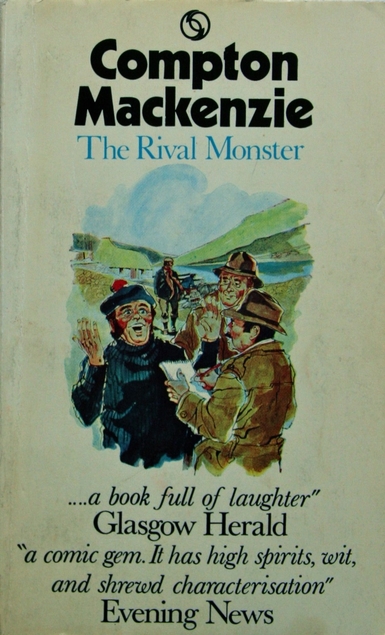
The Rival Monster by Compton Mackenzie

The Rival Monster cover

The Rival Monster by Compton Mackenzie was first published in 1952. The setting is again the Scottish Highlands and Islands, more particularly the islands of Little Todday and Great Todday, the islands made famous by the sinking of a ship full of whisky in his earlier book Whisky Galore. In fact if you intend to read these books you should start with Keep the Home Guard Turning then read Whisky Galore, then Rockets Galore. All absolute hoots.

The Loch Ness monster had been very shy all through the war when the area had been taken over by the military, but more recently there have been several sitings of a terrifying monster with enormous teeth like a hayrake. There’s suspicion that the whole situation has been drummed up to lure tourists up to the islands.

Ben Nevis – the local laird is incensed because he thinks ‘his’ Loch Ness monster has been lured away to an island loch and he vows to bring it back to Loch Ness.

A Glasgow newspaper gets involved when a local claims that he saw the monster being hit by a flying object which is being described by the press as a flying saucer but is supposedly more akin to a flying teapot spout! It’s feared the monster has been killed.

Paul Waggett, the Englishman who fondly imagines he is far superior to any of the locals is of course as delusional as ever and brings a lot of humour to the book. The whole thing is completely nutty, but very well written with Mackenzie having a wonderful feeling for the various dialects used by the characters ranging from the cockney of Mistress Odd who has fallen in love with the islands since her son married one of the islanders, to the differing Scots dialects and Gaelic phrases scattered throughout, luckily there’s a glossary at the back!

I read this one for the Read Scotland 2016 Challenge.

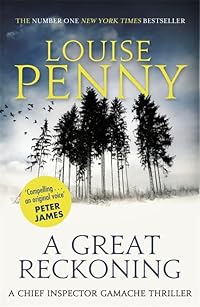
A Great Reckoning by Louise Penny

A Great Reckoning cover

A Great Reckoning by Louise Penny is the latest in her Three Pines series and if you decide to start reading the series then make sure you start at the beginning and read them in order for maximum enjoyment. I’ve come to realise that although I ‘ve enjoyed them all my pleasure in them depends on how much the inhabitants of the village of Three Pines feature in the storyline, the more the merrier as far as I’m concerned.

There’s a mystery involving an old map that has been discovered in the bistro. It’s very strange because the Quebecois village is unusual in that for some reason it appears on no modern maps and has no mobile phone signal, so it must feel a bit like it has fallen off the edge of the word in some ways. But it’s the place that former Chief Inspector Armand Gamache and his wife Reine-Marie have come to love, so much so that they have bought a house there.

Previous investigations have left Gamache damaged both physically and mentally, but he isn’t quite ready to retire from public service yet and after pondering over several job offers he has chosen to be the new commander of the Surete Academy. In recent years that training college has become corrupt and the young recruits are being taught that brutality is normal and that they are above the law.

Gamache is determined to clean the place up but he makes some surprising decisions as to which teachers to get rid of and who to hang on to. Has Gamache bitten off more than he can chew? This is a cracking read.

The story involves village men – boys really who went off to fight during the First World War and who got caught up in the horror that was the Somme. This year – 2016 is of course the centenary of those battles and I’m sure that Louise Penny wrote this book in remembrance of the many Canadians who died there.

We were in Ypres earlier this year and photographed the massive but very moving memorial to the Canadians there, see the photo below.

Canadian War Memorial, Saint-Julien

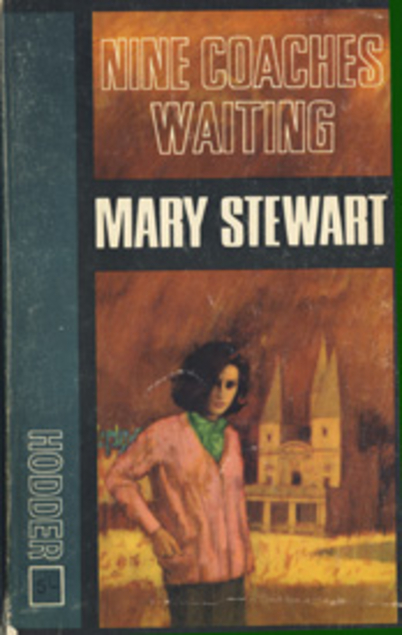
Nine Coaches Waiting by Mary Stewart

Nine Coaches Waiting cover

Nine Coaches Waiting by Mary Stewart was first published in 1958.

The book is a mixture of mystery and romance and has an almost Victorian feel to it as Linda is a young English woman, alone in the world and in need of some way of supporting herself. Linda’s mother had been French and Linda had lived in France in the past so she is a fluent French speaker but when a job opportunity comes up for her and it seems that it is only open to an English woman she decides to hide her ability to speak French.

Linda becomes governess to a young boy Phillippe whose parents have died recently. It means that Phillippe has inherited the family estate as his father was the eldest of three brothers. But Phillippe’s uncle had been in control of the estate for some years as Phillippe’s father had been more interested in his archaeology career which kept him away from the chateau that should have been his home.

It isn’t long before Linda realises that Phillippe’s life is in danger and she picks up various interesting pieces of information as her employers think that she doesn’t speak French.

I always enjoy Mary Stewart’s writing and I found this one to be a page turner, full of suspense and great holiday reading.

The title Nine Coaches Waiting was taken from a Renaissance play by Cyril Tourneur – The Revenger’s Tragedy and although there are twenty-one chapters in the Stewart book nine of them are headed by a coach number with Ninth Coach appearing as the name of the last chapter. The coach chapters all deal with car journeys that are important to the storyline.

I know that someone who reviewed Nine Coaches Waiting on Goodreads was perplexed as to why the book was titled as it is. My copy of the book is a very old paperback so maybe later versions of the book had those chapter headings removed, or maybe that reviewer just didn’t read the book very closely.

I read this one for the Read Scotland 2016 Challenge.

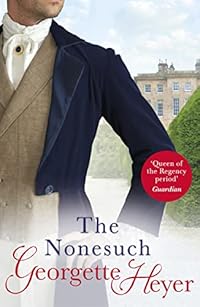
The Nonesuch by Georgette Heyer

Blood and Beauty cover

The Nonesuch by Georgette Heyer is one of her Regency romances – a bit of a romp, but perfect holiday reading. It was first published in 1962 and this one has a lot of similarities with Jane Austen, more so than others of Heyer’s books I’ve read.

Sir Waldo Hawkridge is a wealthy, handsome and fashionable bachelor of thirty-five or six. In his younger days he was well known as a great athlete and he’s still held in high esteem by the younger males in society. In fact they are still emulating the somewhat crazy fashions that Hawkridge made popular years before, although he himself is dressing with much less fussiness in his old age. He was given the nickname of The Nonesuch meaning he was a paragon, nothing and no-one could better him.

In fact most people don’t realise quite what a paragon The Nonesuch is. Although he is wealthy he has an interest in orphans and the poor and when he inherits an estate from a miser of an uncle he decides to turn the house into another orphanage, but it’s all very secret as he doesn’t like to advertise his philanthropy.

Throw in three young male relatives and a bit of love interest, just when The Nonesuch thought he was past such things, it all adds up to an amusing and entertaining read.

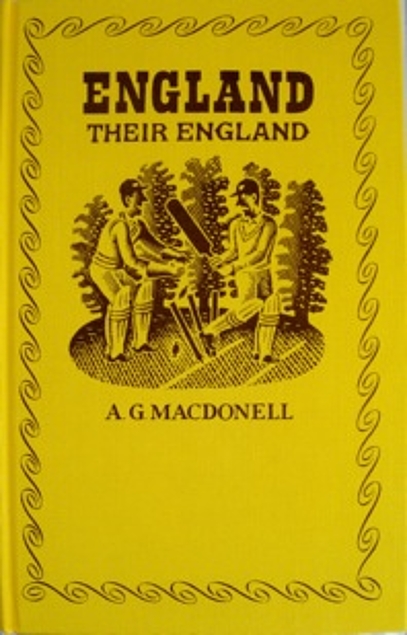
England Their England by A.G. Macdonell

England Their England cover

England Their England by A.G. Macdonell was first published in 1933 and it won the James Tait Black prize that year. My copy is a lovely illustrated Folio Society one. The only other book I’ve read by him was a vintage crime and he did write under various names. My copy is illustrated by Peter Brookes.

The book is set in the early 1920s, Donald Cameron is a young Scot who had been invalided out of the army where he was at the Western Front. When he gets home to Aberdeenshire where his father is a farmer it’s evident that he isn’t much use to his father, and his father tells him to go to England. (Harsh!)

While he was at the front he had met up with a Welshman who had been in publishing. On hearing that Cameron was interested in writing he told Cameron to look him up in London if they ever get out of the war, so that is what he does. The Welshman thinks that a book about the English from a foreigner’s point of view would go down well, and Cameron immerses himself in English society of various sorts as a way of studying them.

His account of a cricket match is apparently the most famous and popular part of this book but for me it was his invitation to a country house Friday to Sunday that was the funniest. Donald was taken in hand by a man who knew how to make an entrance at such a social event. The most important thing was to arrive with masses of luggage which would impress the servants and then receive numerous phone calls from various important persons – all made by Donald’s social advisor of course! It was a hoot.

This is all very much tongue in cheek of course. At the time this book was first published there was a bit of a vogue for such amusing books, by people such as P.G. Wodehouse and Jerome K.Jerome.

I read this one for the Classics Club Challenge, Read Scotland 2016 Challenge and the James Tait Black Challenge – three with one book!

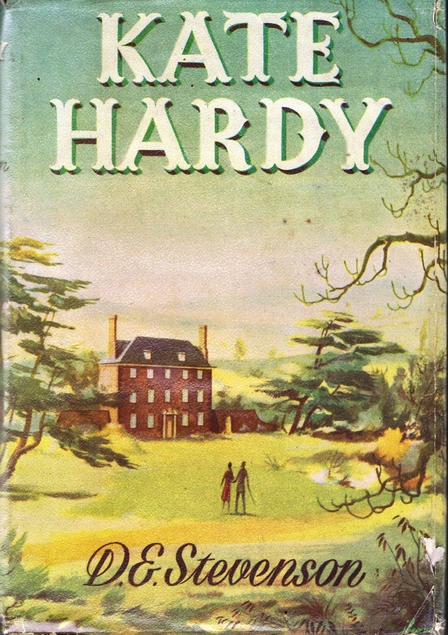
Kate Hardy by D.E. Stevenson

Kate Hardy cover

Kate Hardy by D.E. Stevenson was first published in 1947.

The ancient village of Old Quinings is full of gossip, it’s rumoured that Richard Morven the owner of The Priory, an historic estate, has sold the Dower House. Richard’s wife dies some years before and he sees no need to hang on to the property which has been bought by Kate Hardy, an author in search of a quiet place to write. Kate also has a flat in London but since her older widowed sister and her daughter have plonked themselves on her, with no feelings of gratitude Kate decides to leave them to it in the London flat.

D.E. Stevenson’s writing remind me very much of that other Scottish author O.Douglas – minus the religion, with both of them writing about small communities and usually a young woman moving to a new neighbourhood and having to make a new home for herself amongst strangers.

However there’s a bit more to Kate Hardy which deals with the snobbery and jealousy that some returning soldiers had to put up with when they came back from World War 2 – hoping to just pick up their lives where they were prior to joining the armed forces. It’s a bit of social history and an enjoyable read.

I read this one for the Read Scotland 2016 Challenge.

The Whitstable Pearl Mystery and Murder-on-Sea by Julie Wassmer

 The Whitstable Pearl Mystery cover

The Whitstable Pearl Mystery by Julie Wassmer was a completely random choice from the library. I had never heard of the author before, but it turns out she is a ‘Goodreads’ author – whatever that means.

The setting is Whitstable in Kent, the town is famous for its seafood and Pearl has her own seafood resaturant which is very popular but with her son going off to university she’s finding her life to be a bit empty and decides to try her hand at setting up a detective agency too. She had been a policewoman briefly in her youth, until her unplanned pregnancy kyboshed that career.

This is an enjoyable read with some good characters but the actual mystery part of it isn’t too exciting. I can imagine though that if you know the Whitstable area then you will enjoy the local aspect of it, it seems like an authentic seaside setting. I suppose it comes under the heading of comfort read and we all need them from time to time.

This is Julie Wassmer’s first book but she has been a writer for Eastenders and various other TV programmes in the past. Surprisingly her writing is a bit cliched from time to time, such as using the phrase sun-kissed throat, something that I imagine if I were a writer I would want to avoid. But heigh-ho nothing’s perfect and I went right on to read Murder-on-Sea the second book in this series.

The author lives in Whitstable and is apparently well known for her environmental campaigning.

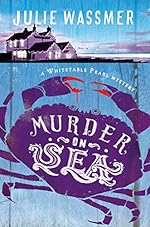
Murder-on-Sea

 Murder-on-Sea cover

Murder-on-Sea by Julie Wassmer is the second book in the Whitstable Pearl Mystery series.

It’s the height of the Christmas season and Pearl is run off her feet at her seafood restaurant, but when nasty anonymous Christmas cards start popping up all over town she decides she has to investigate.

DCI Mike McGuire from Canterbury police ends up taking over the case and things escalate with murders following the cards.

I didn’t enjoy this one quite as much as The Whitstable Pearl Mystery. It didn’t have such a good sense of place and I admit that the entrance of a character called Rev Pru was never going to go down well with me. Do ministers/vicars actually call themselves Rev? and if they do there ought to be a law against it. I know, it’s just one of my many strange personal dislikes.

These books are good light reads that you don’t have to concentrate on to any great extent.