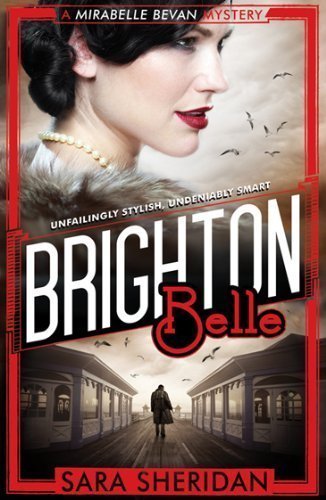
Brighton Belle and London Calling by Sara Sheridan

Brighton Belle cover

Brighton Belle by the Scottish author Sara Sheridan was published in 2012 and it’s the first in a series. The setting is Brighton in 1951.

Mirabelle Bevan had been in a hush hush job during World War 2 but she was desk bound so was never really in the thick of it. She’s now based in Brighton where she’s working with Ben McGuigan helping him to run his debt recovery agency, but Ben is ill with a bad cold so Mirabelle is left to cope on her own. When a client arrives asking for help to recover £400 from a woman he had loaned it to it leads to murder and Mirabelle finds herself using the skills that she had developed during the war. I really liked this one so although I wasn’t looking for another series to keep up with – I intend to do just that.

So next in the series is London Calling. I decided to request these books from the library quickly as they have a horrible habit of getting rid of books, particularly the earlier ones in a series – which is just madness.

The setting is mainly London in 1952 where a debutante has gone missing, last seen in a jazz club. It’s believed that Rose Bellamy Gore left the club with Lindon Claremont who is a young black saxophonist, so when she disappears it’s assumed that he has something to do with it. Lindon gets the train from London to Brighton to get help from his old family friend Vesta who has teamed up with Mirabelle in the debt recovery agency.

Mirabelle persuades Lindon to go back to London and hand himself in to the police, to help with the enquiries, which would be the sensible course of action – but maybe not for a black suspect.

There’s some use of the ‘n’ word in this one, and various other racist elements which I’m sure are very true to the atmosphere of the time, however they are always challenged by Mirabelle, I’m not sure how realistic that would have been, back in the day. Anyway, this was another enjoyable mystery. I really like the characters of Mirabelle and Vesta and the writing so I’ll continue with the series.

Clydesiders at War by Margaret Thomson Davis

Clydesiders at War by Margaret Thomson Davis is the last book in her Clydeside/Gourlay trilogy. The book begins in 1939 and the Gourlay family has just discovered that Wincey’s parents are still alive, it’s all a bit of a shock to them, but worse than that, the international news is not looking good. Surely there can’t be another war with Germany, after all it’s just over 20 years since the end of the ‘war to end all wars’.

Wincey ends up splitting her time between the Gourlays and her own parents, but everyone is busy anyway as Wincey is running the factory which has contracts to make shirts for the army, and everyone else is ‘doing their bit’ nursing, fire watching and such.

I enjoyed this series which is set in the industrial west of Scotland – Glasgow and Clydebank – which were targetted by the Luftwaffe because of the shipyards on the River Clyde. It all feels authentic as the civilians staying at home end up having a worse time of it than their menfolk who are in the armed forces do. Many servicemen survived the war, but their families didn’t.

The Dolls’ House by Rumer Godden

The Dolls’ House by Rumer Godden was first published in 1947 and it was the first book that she had written for children, but my copy is from 1963 and it has some lovely illustrations by Tasha Tudor.

The setting is just after the end of World War 2, when there was a chronic shortage of toys, and the dolls which belong to Charlotte and Emily Dane are having to live in draughty shoe boxes. They dream of living in a proper dolls’ house, especially Mr Plantaganet the father of the family of dolls.

They’re quite a mixed bunch of dolls, some broken and drawn on and Mr Plantaganet has had to put up with the most abuse over the years. He had been a Scottish doll originally, but years ago a child had ripped his bagpipes off him, causing damage. Tottie is the cheapest doll, she is a tiny wooden farthing doll (you got four of them for a penny) and she is the oldest of them and can tell them all of the original owners who were great-aunts of their Emily and Charlotte.

When there’s a death within the extended Dane family there’s the inevitable house clear out and Mr Plantaganet’s wishes come true as Emily and Charlotte are given an old dolls’ house which had been languishing unloved for generations in an attic. The girls set to work and make the house fit for the dolls, everything is wonderful until a very conceited doll arrives from a specialist cleaners, her name is Marchpane and she upsets everything and everyone. She thinks she is above everyone else as she’s made of kid leather and china.

This is a lovely tale which was obviously written to teach children what are the important things in life. There are quite a few adults who could learn a thing or two from it!

I love the cover of this book with its beautiful Georgian house, which even has a dog kennel for the toy dog in the story.

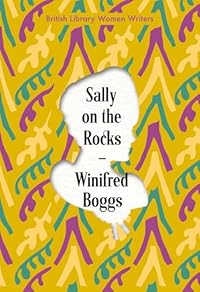
Sally on the Rocks by Winifred Boggs

The setting is early on in the First World War. The village of Little Crampton is home to Miss Maggie Hopkins, she’s a spinster and her hobby is digging up the dirt on anyone she comes into contact with – then broadcasting it to all and sundry. When Mrs Dalton a young widow with a daughter moves into the village she knows that she’ll have to find a husband soon as her money will run out. She sets her cap at Mr Bingley the local bank manager who is reputed to have plenty of money. Maggie Hopkins decides to have some amusement at Mrs Dalton’s expense and writes a letter to Miss Sally Lunton who has been living in Paris, but had lived in Little Crampton earlier as she was a ward of the local vicar Mr Lovelady. At the age of 31 Sally feels she’s on the shelf and will have to find a rich husband soon, so with the war advancing on Paris she decides to head for the safer location of Little Crampton, especially as Maggie Hopkins has written to tell Sally all about the wealthy bank manager who is a bachelor.

This is a great read which has plenty of humour, with the rivals for the bank manager becoming friends in their honesty that neither of them really want him as he’s a fairly unattractive and ghastly man, and is absolutely full of himself, but needs must! They’re both head and shoulders above him intellectually, but as women their life choices are narrow.

Mr Bingley had had one of those mothers who was determined to ward off any woman who might look like taking him away from her. Knowing that she couldn’t live forever and with the future in mind she wrote a huge book of advice for him. THE BOOK which Mr Bingley consults constantly has such advice as: Never marry your social superior; she will look down on you. Never marry your social inferior, you will look down on her. His mother is orchestrating his life from the grave!

Added to that is Maggie Hopkins, a sleuth who thinks nothing of writing letters to people abroad to ferret out what she sees as scandal.

First published in 1915 I was really impressed that Winifred Boggs had written about how the war could devastate a soldier’s life, even if he looked unscathed to the casual observer.

As ever, there’s a lot more to this book than I’ve written about, but I’ll leave that for you to discover, if you fancy reading it.

Many thanks to British Library who sent me a copy of this book for review.

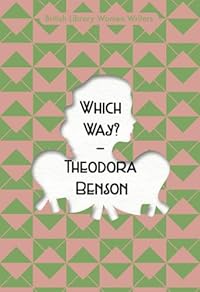
Which Way? by Theodora Benson – British Library blogtour

Which Way by Theodora Benson was first published in 1931 but it has just been reprinted by British Library in their Women Writers series. As usual they have included a short bio of the author, a timeline of the 1930s, and an afterword by Simon Thomas of Stuck in a Book fame.

This novel is described as being experimental, it could quite easily have been titled What If? because that’s what it is really. I’m sure we all look back at times in our lives saying “What if I had made a different decision? How different would things have been?” The first part of the book is about Claudia Heseltine’s childhood, she is quite a difficult little girl, naughty in a cruel way at times. Then came a rather shy, priggish religious phase but when she meets Eileen a girl a year younger than her she improves. The friendship is deemed to be suitable by both sets of parents who also become friends. When Claudia is sent to a finishing school in Paris she sends gossipy letters to Eileen, who isn’t always so quick at replying. By the time Eileen is 19 she is busy with her future, she has met Tommy and he is the one for her, despite family opposition. Tommy is much older, rich, doesn’t work and is a philanderer, and her parents had imagined that Eileen would marry a future prime minister. Eileen knows what she wants though – and gets it.

Next comes Claudia’s first decision, the same paragraph appears three times in the book, and each time she makes a different decision when the telephone rings with an invitation for the weekend, she already has two other invitations which have been sent by letter, her decisions lead to three very different futures for her, involving three different men. As happens with human beings depending on which man Claudia is with her character changes, as inevitably people are influenced by the personality of others that they are close to – or want to end up close to! Thinking about it it is probably that trait which leads to many a divorce as after marriage some people do change entirely – they don’t have to be on their best behaviour any more. It’s all a bit of a lottery!

This was an interesting read although I couldn’t get Fleur Forsyte from Galsworthy’s Forsyte Saga out of my head as I felt that Claudia was a similar type.

Thank you to British Library who asked me to take part in this blogtour and sent me a copy of the book. Some of the other bloggers participating are listed on the graphic below.

B L blogtour

You can check the the British Library Shop for these books or look at #FarMoreThanFiction.

From Shetland with Love at Christmas by Erin Green

From Shetland With Love at Christmas

From Shetland with Love at Christmas by Erin Green is the second of her books with a Shetland setting, it is not my usual reading fare, but I was drawn by the setting of Shetland and that the storyline features a community of crafters who are struggling to turn their wares into a viable and profitable business.

Verity Kendal is a mother of three grown ‘boys’ the youngest being just 18. Verity is 43 and she has decided to have a bit of a gap year. It’s about time that she did something for herself instead of putting everyone else first. Harmony Cottage is her destination, it sits on top of a cliff overlooking the North Sea. Verity hasn’t even talked over her move with her family and she knows that her twin sister Avril is going to be furious with her, but Verity has filled her chest freezer with food for her boys so she isn’t really worried about them.

The story is told by various characters, actually too many characters, but apart from that I was disappointed by the lack of any feel for Shetland, it really could have been set just about anywhere apart from one brief mention of the Northern Lights. It should have been easy to conjure up the atmosphere of such a northerly setting, one where there are only a few hours of daylight during the winter, but that sort of detail was missing. It didn’t even feel like the north of Scotland to me, never mind half-way to Scandinavia, but possibly most readers wouldn’t realise what was missing. I gather that the author did visit Shetland but that doesn’t come across in the book. If you just want a bit of romance and the company of some crafters then you will probably be very happy with the book.

Thank you to Headline and NetGalley who sent me a digital copy of the book.

The Hideaway by Pam Smy

In The Hideaway by Pam Smy teenager Billy runs away from home. He just can’t stand staying there any more, he loves his mother but can’t stand witnessing her abusive relationship with her partner Jeff who has become controlling and violent. When Jeff starts in on Billy’s mother again he is ready, he has a plan.

It’s pouring with rain but Billy leaves home to camp out in an old World War 2 pill box which has been completely camouflaged by ivy over the years. The pill box is in an old graveyard and he thinks he can stay there undetected for ages, but in no time an elderly man has detected his presence, and so begins a friendship between the two.

The tale is told from two points of view, that of Billy, and his mother. She has been totally isolated from her neighbours, so when it’s known that Billy is missing she’s surprised and strengthened by their willingess to help look for him.

My only gripe with this book is that it makes a complicated and dangerous situation seem easy to overcome, with the police being so supportive, something that is even nowadays fairly unlikely. But obviously Pam Smy wanted to write an uplifting and optimistic ending.

I read this one on my Kindle, but I suspect that an actual copy of the book would have been a much nicer experience as the illustrations don’t show up so well in that format I’m sure.

Thank you to Pavilion Books who sent me a digital copy of this book via NetGalley.

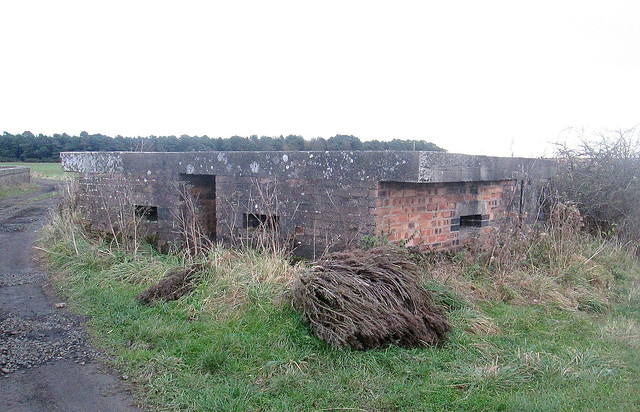
If you aren’t sure what a World War 2 pill box looks like the photo below will give you an idea. This derelict one was built near a railway line in Fife, obviously if the Nazis had managed to get on Scottish soil it would have been used to defend the railway line. When I took this photo it was being used by a farmer for storage. Otherwise it could quite easily have disappeared under ivy and brambles.

Pillbox

Arsenic and Old Puzzles by Parnell Hall

Arsenic and Old Puzzles by Parnell Hall is a Puzzle Lady Mystery, the 14th in that series. I hadn’t heard of the author at all until I read a review of this one fairly recently by a favourite blogger, crucially I can’t remember which one! Thank you – whoever you are.

Anyway, I really enjoyed this book. There are quirky characters, the Puzzle Lady/Cora is a sort of cross between Agatha Raisin and Ruth in Louise Penny’s Three Pines series. Cora has the man mad leanings of Agatha and the irreverence and snarkiness of Ruth, minus her swearing.

Two elderly sisters in Bakerhaven CT take in B&B guests and when one of their guests keels over dead at the table it’s originally assumed that it was natural causes because he was no spring chicken, but the autopsy says differently, Cora knew before that anyway. As things develop it’s clear that someone is replicating the storyline of the classic Cary Grant film Arsenic and Old Lace.

Several bodies turn up, all of them with a sudoku or crossword puzzle either on the body or nearby. As Ruth is supposedly a whizz at both of those types of puzzle she’s expected to solve the whole thing. The book contains sudokus and crossword puzzles which I think are supposed to help with solving the murder.

This is a very light-hearted murder mystery with witty dialogue between some of the characters. I’ll definitely read more by the author if possible.

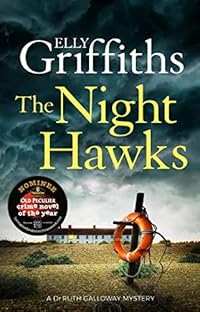
The Night Hawks by Elly Griffiths

The Night Hawks by Elly Griffiths is the 13th book in her Dr Ruth Galloway series. I realised not long after beginning to read this book that I had missed out on number 12 – The Lantern Men – so I’ll have to go backwards and read it as it seems that quite a lot happened in that one. Ruth is now Head of Archaeology at North Norfolk University.

Anyway, The Night Hawks are a group of metal detectorists and while doing their thing on a Norfolk beach they discover what they think might be a Bronze Age weapon hoard, but as they’re digging one of them realises that something has been washed up as the tide comes in. It’s a body, so obviously the police are called in – in the shape of Nelson. Yet again Nelson and Ruth are thrown together as she examines the detectorist’s find and he tries to discover the identity of the body.

I think this is one of the weaker books in this series, I found it to be quite predictable and I was surprised when it’s mentioned that Ruth’s daughter is now eleven years old as she seems a lot younger. Yet again there’s jeapordy for Nelson. I suspect that the author is running out of steam with this series, but I still quite enjoyed it.

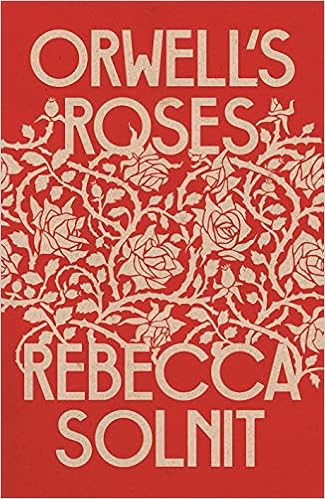
Orwell’s Roses by Rebecca Solnit

I didn’t know what to expect from Orwell’s Roses by Rebecca Solnit, I thought that maybe the title was some sort of metaphor so I was pleasantly surprised to discover that Orwell was a very keen gardener and nature lover, and was particularly fond of roses. In fact he stipulated that he wanted roses on his grave. Apparently there is one scruffy rose on his grave at Sutton Courtenay. I still have a lot of his essays to read and hope to get around to that soon.

Anyway, to the book: It begins with the author travelling by train from London to a small cottage in Wallington, Cambridgeshire to see if the fruit trees and roses that Orwell planted in a garden there in the 1930s were still alive. Orwell had written a meandering essay about planting them, the roses being an absolute bargain from good old Woolworths. Sadly all of the trees had been cut down but there were a couple of his roses still blooming.

Orwell was sent away to a preparatory school at the age of eight, there he was bullied and shamed because he was one of the pupils who was there at reduced fees. From there he was sent to Eton at the age of 13. He acquired the Etonian accent but as a scholarship boy was in the same position as he had been at the prep school, looked down on by the rich boys. Obviously his school experiences led to him writing Animal Farm.

This is a lovely book which wanders around various subjects such as art, war crime trials, the origin of the phrase “Bread and Roses” – something that I must admit I had never even heard of before, his experiences in the Spanish Civil War, the history of the enclosure acts, how the changes affected people, Jane Austen’s Mansfield Park, the plight of Russian peasants, flower production in Colombia and how damaging it is for the people and the environment, the list of subjects tackled seems endless but the author always comes back to Orwell. It ends with

“Orwell’s signal achievement was to name and describe as no one else had the way that totalitarianism was a threat not just to liberty and human rights but to language and consciousness, and he did it in so compelling a way that his last book casts a shadow – or a beacon’s light – into the present. ….
The Work he did is everyone’s job now. It always was.”

Many thanks to Granta Publications for sending me a digital copy of the book via NetGalley.