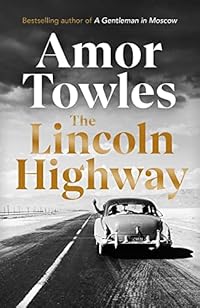
The Lincoln Highway by Amor Towles

The setting of The Lincoln Highway by Amor Towles is 1954 Nebraska, and 18 year old Emmett Watson has just been driven home by a warden. Emmett has just finished serving a year long stretch at a work farm, his punishment for inadvertently killing someone. It isn’t long before Emmett discovers that two of the other inmates have hitched a ride to his home, hiding inside the boot/trunk of the warden’s car.

Emmett had had big plans for his release. With his mother having left home years before and his father’s recent death coupled with the fact that the bank had just foreclosed on the family farm, Emmett has nothing to stop him from chasing his dream of taking his younger brother Billy and driving west to California where he plans to start his own business. Farming isn’t for him.

The unexpected and unwanted arrival of the two inmates who have absconded throws all Emmett’s plans into the air. A lot happens over the next ten days but with remarkable calm he manages to cope with all of the problems that his sometime friends cause him, mainly because Emmett is determined never to act rashly again as that is what had led to him being at the work farm/jail in the first place.

The Lincoln Highway is well written and I enjoyed it, although not as much as the author’s previous books A Gentleman in Moscow and Rules of Civility, both of which I really loved.

I was very happy to be sent a digital copy of this book for review by NetGalley via the publisher Viking. Thank you to both.

1976 Club – A Very Long Way from Anywhere Else by Ursula Le Guin

It’s 1976 Club which is hosted by Simon of Stuck in a Book and Karen at Kaggsy’s Bookish Ramblings.

A Very Long Way from Anywhere Else by Ursula Le Guin is a short novella at just 76 pages and would nowadays be described as YA. It’s a coming of age tale I suppose. Unusually for Le Guin it’s contemporary, she more usually wrote SF and Fantasy books.

Owen is a bright teenager, an only child who enjoys studying, particularly sciences and mathematics, so he’s further ahead at school than most in his year and isn’t really that interested in making friends as he has nothing in common with his classmates. He recognises that he’s an introvert and is quite happy about that. He’s planning to go to an out of state college, maybe to Princeton or MIT, but his parents have different plans for him. They assume he will go to the rather mediocre local state college – just as they did. Owen doesn’t bother to argue with them about it though.

On his 17th birthday they give him a brand new car, but Owen hadn’t wanted a car, that car only represents what could have been an entire years’ living expenses for him when he leaves home to study. Imagine his father’s disappointment with this son who doesn’t want a new car!

A chance meeting with a girl on the bus who is at his school widens Owen’s world somewhat. Natalie is a talented musician who has ambitions to become a composer, particularly as there are no female composers, well none that are known and successful, she plans to change that in the future.

A close friendship and budding romance goes off the rails as modern life seems to put pressure on things to move faster than either of them are really prepared for.

It was an enjoyable if very brief read. Owen is amazed to discover that unknown to him he has had a lot in common with the Brontes as in the past he had also constructed a fictional country of his own called Thorn, it’s a place where he could be in control I suppose. He didn’t write stories about it, but drew maps and wrote about the flora and fauna of his fictional country, then he wrote its history. Natalie loves the idea and decides to write some music for Thorn.

The opening paragraph is:

If you’d like a story about how I won my basketball colours and achieved fame, love and fortune, don’t read this. I don’t know what I achieved in the six months that I’m going to tell you about. I achieved something all right, but I think it might take me the rest of my life to find out what.

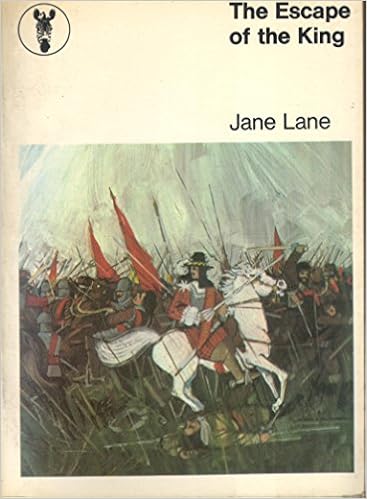
The Escape of the King by Jane Lane

The Escape of the King cover

The Escape of the King by Jane Lane was first published in 1954. I read some of her historical fiction back in the 1970s, but hadn’t read any which were aimed at children as this wee one is. It’s a quick but fairly entertaining read at just 156 pages. Jane Lane started writing books for children when her young son asked her to tell him stories from history.

In The Escape of the King she fills in the gaps between the known history of King Charles II’s flight after his army was defeated at the Battle of Worcester when the much larger rebel army of Oliver Cromwell’s Roundheads trounced the Royalist Cavalier army. Apparently all the events in this book are true and the characters are real. Jane Lane says that she just invented the conversations thoughts and feelings of the people involved.

All the Roundheads are looking for Charles, and when a £1,000 reward is put up for Charles alive or dead it seems like his escape from Worcester is an unlikely prospect, but well disguised as Will Jones – a peasant – and walking by night from safe house to safe house, when necessary hiding in holes that had previously been used by Catholic priests in houses owned by people who had been sticking to the ‘old religion’. He had some very close calls but of course did manage to reach the coast and hitch a ride on a ship to France and safety.

I must admit that I only recently realised that I had imagined his escape wrongly, as in that well-known part of the story when Charles II hid in a tree to avoid capture, I had assumed that it was a hollow tree he was in as it was supposed to be an oak tree, and they can be hollow. Now of course I realise that he was hiding up a tree, within the branches! It’s a mystery to me why teachers always said he was in a tree. In fact I’m sure I even asked a teacher about that at the time and she was the one who thought it might have been a hollow oak – oh well – you live and learn!

The Gourlay Girls by Margaret Thomson Davis

The Gourlay Girls by the Scottish author Margaret Thomson Davis is the second book in her Clydesiders trilogy which was first published in 2000. The setting is Glasgow and it begins with young Wincey witnessing her grandfather’s death. She’s so shocked by it that she runs out of the house and wanders into a neighbourhood that she doesn’t know. She’s soaking wet and bewildered by the time young Florence Gourlay finds her in the street and takes pity on her and so takes Wincey to her own home where she knows her mother will feed her and sort things out.

The Gourlays live a hand to mouth existence in a two room tenement with three generations, the old Gaanny is a ‘greetin faced’ curmudgeon if ever there was one. Her son the father of the family is out of work like most of the men in the area. It’s the 1930s and work is scarce, so the Gourlay females, the mother and three daughters of the family have been taking in sewing to keep starvation at bay, but one more mouth to feed in the shape of Wincey doesn’t seem to be a problem for the motherly Teresa Gourlay.

Wincey’s own family is wealthy and from Glasgow’s west end, so the poverty stricken east end of Glasgow is a revelation to her, but it isn’t long before Wincey feels well-loved and cherished in her new family. That’s something that she never felt within her own family. A sense of shame and guilt over not helping her grandfather when he was dying leads Wincey to opt to stay with the Gourlays instead of making her way back home, the longer she stays missing the harder it is to go back home.

Margaret Thomson Davis could be described as the Scottish version of Catherine Cookson I think. She tells a good story, but isn’t the best writer. Although I enjoyed this book it annoyed me that the author hadn’t managed to write separate voices for all the females, with Teresa the mother’s voice being particularly anonymous, which is surprising as she was supposed to come from the Highlands originally, there was no sense of a Highland accent or dialect.

Otherwise I enjoyed it. The tale begins in 1932 and goes on to the outbreak of World War 2 and with the help of Wincey the Gourlays’ little business has expanded hugely, but that brings problems too.

I’ll definitely continue with this trilogy, the third book is Clydesiders at War.

The Adventures of Miss Barbara Pym by Paula Byrne

The Adventures of Miss Barbara Pym  cover

I read most of Barbara Pym’s books back in the 1970s and enjoyed them, so when via NetGalley I was offered the chance to read The Adventures of Miss Barbara Pym by Paula Byrne I was keen to do so. Not for the first time though where authors are concerned I wished I hadn’t because I found Pym to be quite unlikeable. Paula Byrne has written the book using Pym’s diaries, but as Pym had obviously intended that they would end up in some sort of archive and had an eye on her posterity I can’t help wondering how honest the diary is. Also lots of pages had been torn out, Byrne assumed that those pages were seen as being too revealing on reflection and assumed they were about her sexual exploits – and for those days she was certainly adventurous it seems. She was no virginal spinster, which is fair enough although unusual as at a time when the male students and dons at Oxford had to resort to prostitutes in Oxford or further afield in London, as most women were terrified of getting pregnant. Barbara Pym was literally stalking men that she fancied and falling into bed with them. Some have taken this trait of hers as proof that she was a woman before her time. If you see being a modern woman as being a victim of philandering, arrogant and self-centred men then she was indeed a woman before her time, I think she was just incredibly immature and niave. It would seem that she never got beyond the obsessive crush stage that was so common among the young girls who were starved of male company at the boarding school she attended. She also adopted alternative personas. I can just imagine all those misogynistic dons at Oxford rolling their eyes and commenting to each other that they knew it would be like this when women students were accepted!

In 1934 she went to Germany and became besotted with Hitler, stalking him and frequenting the restaurant she knew he used. Of course she ended up falling for a Nazi close to Hitler, Friedbert Gluck was an SS officer. On her return to the Oxford village she was living in she saluted the local shopkeeper with a Heil Hitler while wearing a black shirt and presumably the swastika pin her Nazi boyfriend had given her. Truly the locals must have wondered whether to laugh or cry. It was only after the outbreak of WW2 that she thought she might have been wrong about the Nazis but she was still hankering after Friedbert. She even had to be advised to expunge the Nazi/German bits in one of her books before sending it to a publisher. She definitely lacked a moral compass!

Sadly she never matured and was still falling for completely unsuitable men in her old age, an almost forty year age gap didn’t seem to bother her. The poor lad! Never much of a looker she was described as looking like Joyce Grenfell (comedienne) but she had a thing for tall, dark handsome men who went on to marry someone else, or else were homosexual. During the war she was living in a shared house with another woman and her two children, the woman was described as her best friend, but when that friend’s philandering husband came to visit his family it didn’t stop Pym from falling into bed with him instead of leaving him to his wife and children. Her poor so-called friend must have thought – et tu Barbara! But of course when he did get a divorce from his wife, he married another woman.

So it would seem that Barbara Pym had no conscience whatsoever when it came to men, sex and Nazism and was a nightmare neighbour as she spied on them to use them as characters in her books, even stalking them when they left their house. Whatever happened to using your imagination?!

Strangely there’s no mention of fear of getting pregnant in this book, that was what stopped most women from sleeping around back then. Pym’s father was the illegitimate result of a seduction between a 16 year old ‘young master’ and a 19 year old housemaid, his mother. Barbara knew about that as her father was quite proud of being a by-blow of a wealthier family. Possibly she thought that if she did get pregnant then it would lead to marriage.

I read most of Pym’s books back in the 1970s and had a re-read of a few of them a decade or so ago and didn’t enjoy them as much as I had when I was younger, although there is some witty dialogue, but it would seem that she was really just recounting things she had overheard people saying.

Im later years Barbara Pym lived in fear of her younger sister Hilary re-marrying as they were living together, and Hilary was really supporting Barbara who earned very little money. There’s a lot more in this book but not much of it is admirable, you’ll have gathered that I was less than impressed by her adventures.

I’ve always wondered about the authors that weren’t championed so vociferously and publicly on TV by Lord David Cecil and Philip Larkin, which is what kick-started her writing career when it was floundering. It’s handy having friends in high places!

Are We Having Fun Yet? by Lucy Mangan

Are We Having Fun Yet? cover

Are We Having Fun Yet by Lucy Mangan has its moments although at the beginning it reminded me far too much of the BBC TV programme Motherhood, without the diverse group of mothers that feature in that so comically. Liz and Richard are I suppose upper middle class – as is everyone else featured, it feels very autobiographical and to be fair anyone who has had children will recognise many of the situations as Liz struggles to deal with domestic angst, her two young children, and a husband who is somewhat semi-detached and in a world of his own.

As ever with this sort of writing it’s the children who are the stars and provide a lot of the humour. As a reader of Lucy Mangan’s articles since she began writing in the Guardian I had trouble separating her personality with that of Liz as it is so similar to her columns.

I found it annoying that Liz is so frazzled by childcare when she has very supportive parents living half an hour away, and that Liz (Lucy) describes herself as being ‘northern’ despite being brought up in the south of England. Having northern parents doesn’t count, where you went to school does!

Having loved Mangan’s Bookworm I found this one to be a bit disappointing and predictable but I suspect that as a granny and an actual ‘northern’ person, if you count Scotland as the north – but so many people don’t – I’m not the target audience.

I received a digital copy of the book via NetGalley. Thank you.

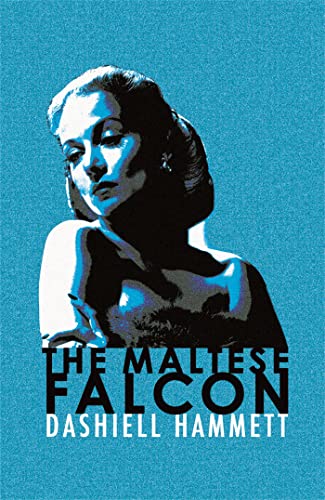
The Maltese Falcon by Dashiell Hammett

 Ballet Shoes cover

The Maltese Falcon by Dashiell Hammett was first published in 1929. I loved this one although I must admit that I love the film even more, it’s the Humphrey Bogart aspect of course, he’s brilliant as Sam Spade. I suspect that everyone knows the tale.

Miss Wonderly (tall and pliantly slender without angularity anywhere) visits the office that Sam Spade shares with his partner Miles Archer. She wants Spade to track down Floyd Thursby, the man who has run off with her younger sister. Archer gets the job of tailing Thursby. It doesn’t end well for either of them.

I love Hammett’s writing style. He puts so much detail in, every movement is mapped. His books must have been a dream to adapt to film. You can see the original film trailer below.

Mail Royal by Nigel Tranter

Mail Royal cover

Mail Royal by the very prolific Scottish author Nigel Tranter was first published in 1989

Lord Gray has been Sheriff of Angus for decades but King James VI has decided to take that sinecure away from him and give the very lucrative sheriffdom to Lord Home. But Scottish sheriffdoms aren’t in the gift of the King, not that that matters because whatever King James says goes.

Lord Gray is desperate to hang on to his only means of getting money and keeping power. He knows that his father had had a hold over King James, it was something to do with secret letters, and Gray is determined to find them so he can blackmail James too. The letters are thought to have been written by Mary, Queen of Scots and must be either embarassing or dangerous for the king.

It’s young David Gray that gets the task of finding the letters. As the illegitimate son of Lord Gray’s younger deceased brother, David gets all the dirty work to do. David’s journey takes him all the way down to London and the royal court that his uncle is so careful to avoid, just in case the King decides to execute him!

I really enjoyed this one, but I’m not sure if it was because I knew every step of the way that David Gray travelled, although he was on horseback. From Broughty Ferry just north of Dundee, to Fife, Haddington, Edinburgh, Dunbar, the fishing village of Cove that we visit, the village that’s lived in by one of my sons, the border towns we know so well. I could picture it all so clearly.

The story includes a romance of course, I think all of Tranter’s books do, and it mentions a few castles that we haven’t got around to visiting – yet!

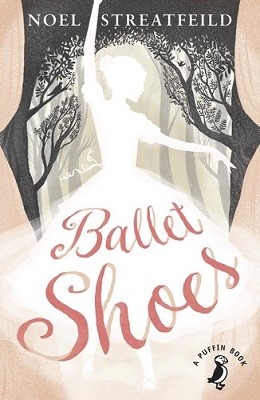
Ballet Shoes by Noel Streatfeild

Ballet Shoes by Noel Streatfeild was first published in 1936.

 Ballet Shoes cover

Matthew Brown is an elderly palaeontologist who spends most of his time travelling the world collecting fossils which he sends to his home in London which is run by his great-niece Sylvia and her old nanny. He manages to pick up three young girls over some time in differing circumstances, the last one being a small baby, and takes them home with him where Nana and Sylvia have the task of bringing them up.

It’s a difficult state of affairs for Sylvia as her uncle, known as GUM, leaves her some money and takes off on his travels again. As the girls (Pauline, Petrova and Posy) grow up the financial situation is very precarious as GUM stays away for years and doesn’t send any more money, for all they know he might be dead as they haven’t even had a letter from him for years.

The girls are all determined to help Sylvia and when they are enrolled in a stage and dancing school they are able to contribute to the family budget. Bizarrely it’s never mentioned that Sylvia might be able to get a job to help out!

I enjoyed this one, the character of Petrova was especially good as she was so different from the usual girls of that time, she was keen on cars and how they worked and was happiest when up to her ears in oil and car parts. Despite having little interest in the performing arts she was still keen to pull her weight and earn money for the family.

I think this is the fifth or sixth children’s book that I’ve read by Streatfeild and she does seem to have been slightly obsessed with the stage and performing. The only one of her books that I have unread in the house is Saplings, one of her books for adults, it’ll be interesting to see what that one is about. Have any of you read it?

My copy of Ballet Shoes is a modern Puffin book. Although these editions have nice clear print I must admit that I generally prefer the designs of the old Puffin books.

Two from Ian Rankin – Rebus

I’m really behind with my book thoughts and as I’ve read two books in Ian Rankin’s Rebus series recently I thought I’d just give them a quick mention.

Set in Darkness was first published in 2000 and it’s the 11th book featuring DI John Rebus. The setting is of course Edinburgh where the very historic Queensberry House is undergoing refurbishment as part of the devolved Scottish Parliament administrative offices. A partially mummified body is found behind a boarded up fireplace. It looks like it has been there since the last work which was undertaken in that area, some 20 odd years ago.

Then there’s what appears to be the suicide of a homeless man, but it turns out that he had hundreds of thousands of pounds. Why was he living on the streets and did he really kill himself? It’s all go when a prospective MSP’s body is found. Somehow they’re all linked. This was a good read and as ever I enjoyed the Edinburgh setting.

Resurrection Men was first published in 2021. This one ranges around Scotland from Edinburgh to Stirlingshire, Perthshire, Fife and Dundee.

Rebus has had a bit of a meltdown and thrown a cup of tea at his boss Gill Templar. The result of that is that he has been sent to Tulliallan, the Scottish police training college for a bit of a refresher course and to have some sessions with a psychologist. Rebus isn’t the only one who has been sent back to school. There’s a group of senior officers who are all there for similar reasons, but it transpires that Rebus has been asked to befriend the others as they’re suspected of being ‘right bad yins’ and Rebus needs to get the evidence. Rebus isn’t sure if he’s being set up by his superiors or if it’s for real, either way it’s a dangerous situation for him. The cold case that they’ve been given to re-open as part of their team building happens to be one in which Rebus was involved, and he’s not happy about that at all.

Meanwhile Siobhan, Rebus’ sidekick is investigating the murder of a wealthy Edinburgh art dealer who had a link with one of the prostitutes in a massage parlour, which in turn might have links with Ger Cafferty, the Mr Big of the Edinburgh dark side.

There’s a lot more to it but, you get the idea I’m sure.

I love that I know all the locations of these books so I’m not sure how much that influences my enjoyment, mind you with the bad guys in this one coming from the west of Scotland I did slightly roll my eyes!