Instructions for a Heatwave by Maggie O’Farrell

 Instructions for a Heatwave cover

Instructions for a Heatwave by Maggie O’Farrell was published in 2013 but the setting is that hot summer of 1976, mainly Highbury in London although the action does switch to Ireland near the end of the book. If you aren’t old enough to remember 1976 you might not know that there was a drought in the whole of the UK, the heat was incredible and the lack of rain meant that there were rules about how much water could be used, hosepipes were of course banned and gardeners emptied their bathwater onto their precious plants to try to keep them alive. Government posters encouraged couples to share baths and showers, that seemed very risque at the time.

Gretta Riordan’s husband Robert has gone missing, it seems he has just walked out and Gretta needs the help of her adult children to track him down. Monica, Michael Francis and Aoife aren’t exactly close, in fact the two sisters haven’t spoken to each other for three years and they all have their own problems but drop everything and make their way to London to find out what has happened to Robert.

Gretta is one of those very annoying women who conduct a constant running commentary on everything, has a conversation with her shoes as she tries to get them on. Basically if it comes into her head it finds its way out through her mouth. Her children have been a disappointment to her, despite her giving them a traditional Catholic upbringing they’ve all lapsed, got divorced or married non-Catholics. Her children eventually discover though that nothing is as it seems in Gretta’s own life.

This is just the second book by Maggie O’Farrell that I’ve read but I do like her writing style. However as a nit picker I was really annoyed that she has one of her characters going into a phone box a couple of times and phoning New York, from London once, and then again from Ireland. O’Farrell was born in 1972 so she may not realise that that sort of thing was just an impossibility back then.

When I lived close to London in 1978-80 I had to use a phone box to phone ‘home’ to Scotland and of course they only had slots for 2p or 10p. By the time you got your 10p in and it dropped into the money box you only had a matter of seconds before having to put the next 10p in. If you wanted to phone abroad in those days, even if you had a phone in your home you often couldn’t pick up the phone and dial, you had to book the call through an operator, and make sure you were at the phone at the correct time otherwise your line was used for the next person in the queue. If you didn’t have a phone you had to go to the Post Office HQ and phone from there. It was all very complicated compared with nowadays.

So I had to suspend my disbelief when one character phoned the US and I found that very annoying, I do like things in fiction to be possible, it’s just bad research really.

Mind you people can’t believe whenever I tell them that when I got married in 1976 there was a two year waiting list to get a phone line into your house and even then it was a ‘party’ line, which meant it was shared with other people in the same town, and if you lifted the receiver and they were already on their phone you could hear their conversation and had to wait for them to be finished. It was very frustrating.

Anyway, I’ve gone way off the subject. Instructions for a Heatwave is an enjoyable read, apart from that glaring impossibility in the storyline and I’ll definitely read more of Maggie O’Farrell’s books in the future.


Daniel Plainway by Van Reid

Daniel Plainway cover

Daniel Plainway or The Holiday Haunting of the Moosepath League by Van Reid was given to me by Peggy when she came over to Scotland last year to visit us. I think that Van Reid’s books are quite difficult to get in the UK.

The setting is 19th century Maine where the members of The Moosepath League become involved in the search for a young boy which leads them into all sorts of daft adventures.

I haven’t read Dickens’ Pickwick Papers but apparently this series is an homage to Mr Pickwick and company.

My favourite character was the ancient army colonel who is given a new lease of life when he becomes involved in the planning of a snowball fight, making good use of his military knowledge of tactics. You see what I mean by daft!

I wasn’t too sure about this book to begin with but it grew on me. It’s a good blend of silliness combined with lots of likeable and quirky characters. I believe this is the third book in a series though so I’ll be looking out for the first two books.

The author Van Reid is also the manager of a Maine bookshop, his family has lived in that state since the 18th century and he bases his stories around actual places which will be recognisable to people who know the areas.

Some fans of his books apparently travel around visiting the places the members of The Moosepath League frequent. It sounds similar to all those people who visit Edinburgh and go to all the places mentioned in Alexander McCall-Smith’s Scotland Street series. It is nice to be able to imagine the places in books exactly as they are in reality, so I can see why people do it.

In Dubious Battle by John Steinbeck

 In Dubious Battle cover

In Dubious Battle by John Steinbeck was first published in 1936 at a time when things in the US were still pretty desperate, before World War 2 kick-started the recovery from the Great Depression. I have to say that I had never even heard of this book, but as I enjoyed reading East of Eden recently I thought I would see what else was available at the library and this one popped up. In Dubious Battle is the first of three books that he wrote on labour issues in California, the other two being of course Of Mice and Men and The Grapes of Wrath. In 1935 Steinbeck had a very tough time of it when he went to New York looking for work that just wasn’t there so he knew first hand how difficult it was for a (non) working man.

In Dubious Battle tackles the issue of itinerant farm labourers, specifically apple pickers. By the time the apple pickers had made their way to the farms by train the rate of pay had fallen. The farm owners are taking advantage of the situation, knowing that the men are just about on their knees.

Jim Nolan is a young man who has had a tough time, beaten by cops and then jailed for vagrancy when he had only stopped to see what was going on at a labour meeting. Whilst in jail his mother dies, the system has just about defeated him. He feels that the unfairness of life has to be re-balanced and so decides to join the Party. It isn’t specified as the Communist Party, I suppose Steinbeck thought the book was going to be controversial enough.

Jim is an intelligent chap and impresses the Party leaders so it’s not long before he is taken to the fruit farm to mingle with the disgruntled workers. The Party wants to make the workers come out on strike so Jim and the others set about manipulating the men and then go to work organising everything. It’s only ever going to end in disaster and the Party bigwigs know that. In reality the Party guys are no more interested in the ordinary working people than the landowners are. The small guy is expendable as far as the Party is concerned.

Apparently Steinbeck was interested in the psychology and behaviour of crowds and how they react to certain situations, he has the Party men manipulating everything and it’s clear that Steinbeck is no more enamoured of the Party members than he is of the landowners.

When vigilantes from the nearest town rear their ugly heads Steinbeck has two characters saying:

“Mac, who in the hell are these vigilantes, anyway? What kind of guys are they?”

“Why, they’re the dirtiest guys in any town. They’re the same ones that burned the houses of old German people during the war. They’re the same ones that lynch Negroes. They like to be cruel. They like to hurt people, and they always give it a nice name, patriotism or protecting the constitution. But they’re just the old nigger torturers working. The owners use ’em, tell ’em we have to protect the people against the reds. Y’see that lets ’em burn houses and torture and beat people with no danger. And that’s all they want to do anyway. They’ve got no guts; they’ll only shoot from cover, or gang a man when they’re ten to one. I guess they’re about the worst scum in the world.”

Amen to that, I love Steinbeck. The next book of his I’ll be reading is A Russian Journal.

De Kruidhof Botanic Gardens, Fryslan, the Netherlands

De Kruidhof 4

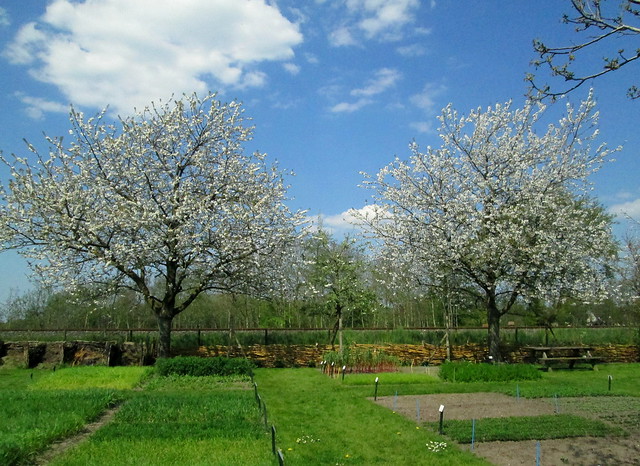
We visited De Kruidhof Botanic Gardens again when we were in the Netherlands last month. The last time we were there it was September and the fruit trees were in full swing, this time the fruit blossom was just beginning to bloom, as you can see.

De Kruidhof 6

These botanic gardens are really lovely, but maybe a bit remote for many people, it was very quiet when we were there, just as it was the last time. They are situated in Friesland, north east Netherlands, quite a rural district. They have a good plant nursery attached to them.

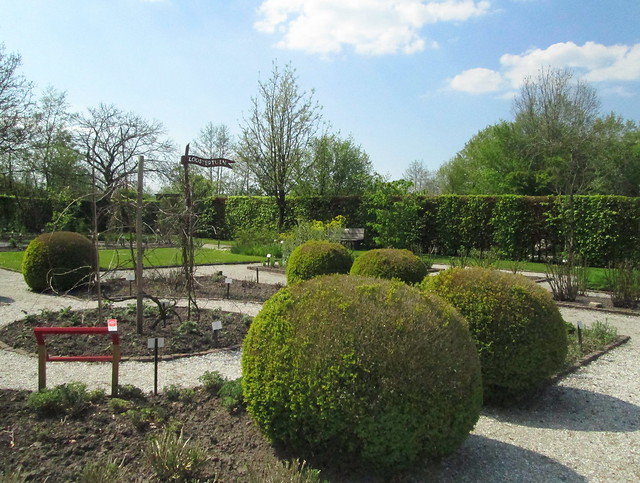
Either the box balls below have been too enthusiatically trimmed, or they’re suffering from box blight as so many of them seem to be in the UK. Mind you someone did tell me that the box blight was just a reaction they have to being constantly cut back, that seems a reasonable hypothesis to me. Don’t be so brutal to your box plants and they’ll probably grow well, mine certainly do, but they could be described as being ‘shaggy’ not sculptured.

De Kruidhof 11

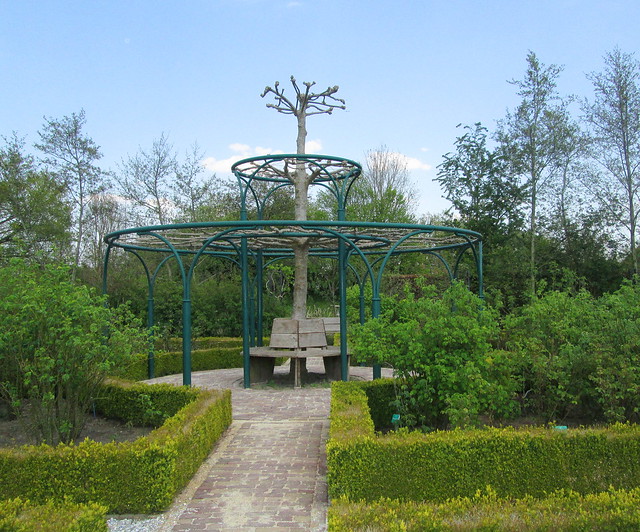
In the Netherlands though they have perfected the art of sculpting trees and the photo below is of a tree which is being trained to fit around the metal structure.

De Kruidhof 1

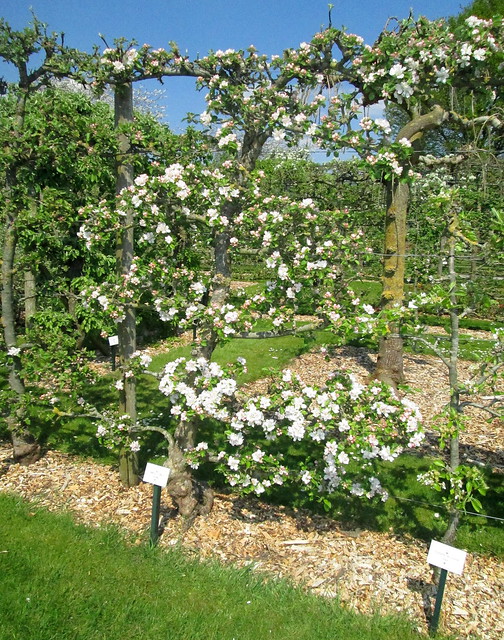
They take tree pruning very seriously. I like naturally growing trees but I also admire the regimented trees too.

De Kruidhof 5

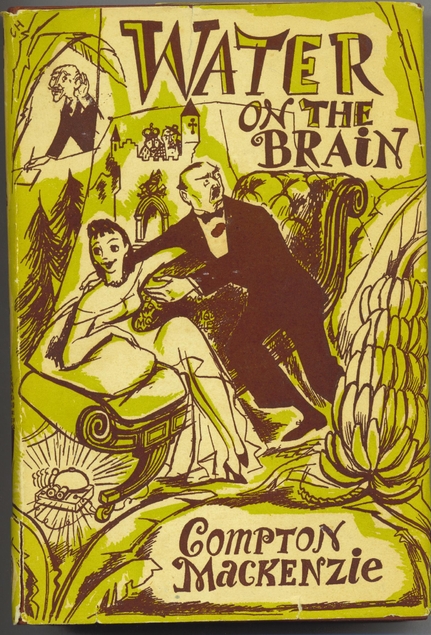
Water on the Brain by Compton Mackenzie

Water on the Brain cover

Water on the Brain by Compton Mackenzie was first published in 1933 but my copy was published in 1954 and the author had added a preface explaining that the book had been written just after his trial at the Old Bailey under the Official Secrets Act. Mackenzie says that in 1933 the book must have seemed like something out of a Marx Brothers film, such was the craziness that those in ‘Intelligence’ got up to. But he thinks that post World War 2 many people who had come into contact with the Intelligence Services would have recognised the types of characters involved.

The book had me laughing out loud quite a lot, it’s a hoot. Of course it counts towards the Read Scotland 2016 Challenge, my tenth Scottish book this year.

The action begins in London where a young army major, Arthur Blenkinsop is living with his wife in a service flat. He had seen action in World War 1 but since then he had been working in Mendacia, a small outpost of the British Empire. That job had come to an end when the local political situation changed, and back in London he is looking for work so he is delighted when he gets a letter from the Director of Extraordinary Intelligence asking him to call at the War Office for an interview.

Major Blenkinsop is such an idiot he’s taken on by Intelligence immediately and sent up to Scotland to try to broker a deal which would mean that the ex king of Mendacia gets into power again. Blenkinsop’s cover is that he is working in the banana business but his wife is suspicious from the beginning and she thinks he is having an affair. She follows Arthur up to the Scottish Hydro in the Highlands where he becomes involved with two elderly sisters who are English but are very aware of their Macadam forebears and are in Scotland for the first time ever. They get completely caught up in it all and believe that there is a plan to bring Home Rule to Scotland and that they can help.

It does indeed become something akin to a Marx Brothers film and as Compton Mackenzie was one of the founder members of the Scottish National Party and the powers in England were worried that it would become something like Sinn Fein in Ireland, it’s not surprising that people were keeping an eye on him.

I read this book and wrote the post quite a while ago and have only just realised that I didn’t get around to actually publishing the post.

EU Referendum

I swore that I wasn’t going to mention anything about the EU referendum here but that scunner of a man Michael Gove has annoyed me so much that I’m sticking my head up over the parapet.

I’m for staying IN Europe although I think that our position in it is far from perfect, but then what is perfect? Every country in the EU has their gripes over it and I really think that they will eventually have to curtail the freedom of movement within the EU and keep it only for people who have skills that are required.

So what enraged me about Michael Gove yesterday? It was the fact that he has dragged his elderly parents into the campaign and what they are saying is just completely WRONG. They are arguing that their family fish merchant business went down the drain in the 1970s due to Britain entering the EU. What rubbish!

As it happens my family had exactly the same business experience of being fish merchants (my grandfather and uncle) – my father had a fruit/veg/flower shop. They all went out of business in the late 1960s, before Britain entered the European Common Market and the reason they went out of business was the huge upsurge in supermarkets at that time.

As a ten year old I witnessed their conversations about being squeezed out of business due to not being able to compete with the supermarket prices. The same thing happened all over the country and small shops like theirs slowly gave up the struggle to compete with the supermarkets, it just wasn’t possible. Some hung on longer than others but as you know an independent food shop is a rarity in a British High Street nowadays and has been for a very long time.

So why is Michael Gove dragging his elderly father into the argument? Gove is quite a bit younger than I am, too young to know what was actually going on – whatever, it was nothing to do with EU fishing rules.

Never forget that Gove was one of the MPs who merrily charged us the British taxpayers for his family’s holidays at very expensive spa hotels and he also “flipped” his mortgage at our expense. If he had been anything close to being a gentleman he would have found a hole for himself and stayed down there, instead of carrying on regardless, like someone who has nothing to be ashamed of. If any of us had stolen like that we would of course have been banged up in jail.

I’m voting IN on the 23rd because I’m sensible enough to realise that you can’t turn the clock back and I know that we will be ‘done over’ by everyone when it comes to making separate trade deals. Even if the OUT vote wins we’ll still have to adhere to all the EU rules to be able to trade with those countries, and we’ll have absolutely no say in anything.

Working conditions will plummet and Gove and company will do what they really want which is to dismantle the welfare state. You can wave bye bye to the National Health Service, and that’s another piece of Brexit duplicity that’s enraging me – they speak as if this mythical £350 million would be given to the NHS. But they KNOW that that is a mythical and in fact just plain non-existent amount of money, and they also know that they intend to whittle away at the health service until that is non-existent too.

I blame David Cameron for this whole debacle, he should have had the guts to stand up to the more eccentric and bullying members of Parliament who howled for this referendum, because the very last thing that this country needs is more instability but that’s exactly what he has given us.

As for Boris Johnson – he’s just on a Boris for PM campaign and if that comes to pass there’s just no hope for any of us.

Earl Hamner Jr 1923 – 2016

I just noticed Earl Hamner’s obituary in Friday’s Guardian, you can read it here if you’re interested. He died in March but I think the Guardian is a bit behind with some obituaries – it has been such a busy year! It was one of those times when I looked and thought – I assumed he was already dead! In case you don’t know, Earl Hamner Jr was the man who created The Waltons, but he did an awful lot more than that.

As a youngster I loved The Waltons, I know it has a reputation for being sickly sweet and schmaltzy but I think if that is your idea of the series then you must never have watched it.

The Walton family is portrayed as a realistic one with the siblings often at daggers drawn with each other, the reality in large families. Even grandma and grampa had a rocky relationship, often not speaking to each other and referring to each other as ‘old man’ and ‘old woman’ in a cutting way. Hamner based The Waltons on his own family’s experiences of life in Virginia in the 1930s.

I must admit that I haven’t read any of his books. Have any of you?

What do you think of The Waltons? I saw a Walton Christmas film recently and I could just sit down and watch the whole series again given the chance. You might call it ‘comfort’ viewing, but there was always some sort of crisis going on and that house is one that I could move into right now. Castles, palaces and the like have never appealed to me as a home.
Walton

It’s a shame this is just a film set.

Naarden, the Netherlands

You might know that we recently went on a trip to the Netherlands and Belgium. The Netherlands was mainly to visit family but midway through our visit we drove to Belgium to visit Ypres and some World War 1 sites.

Anyway, on our last day in Ypres we decided to go into the town and make some serious chocolate purchases. As I’m a chocoholic imagine my horror when we got into town and discovered that everything was shut! Apparently it was Ascension Day, a holiday for everyone, even for the shops catering for tourists.

Worse than that though was the fact that we only had around 90 miles worth of petrol in our tank and the journey back to Holland was a 250 mile long one. The petrol stations were all closed too of course. Who would have thunk it! With visions of running out of juice on a Belgian motorway we set off for the journey back and eventually discovered an open petrol station. Phew.

So, back to plan A – which was to visit the town of Naarden in the Netherlands on our way back. I discovered this town when I was perusing a Dorling Kindersly Eyewitness Travel Guide on the Netherlands, that’s a very good travel series I think, judging by this one anyway.

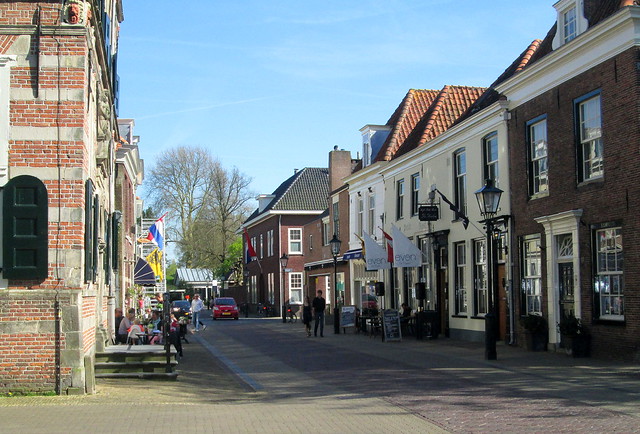
So below is a photo of the town of Naarden which was in full holiday mode, that is – everywhere shut except for the cafes and ice-cream shops, which was a bit of an annoyance as there was a vintage shop I would have gone into had it been open.

Naarden 1

It’s a very nice town, well worth a visit if you’re in that area.

Naarden

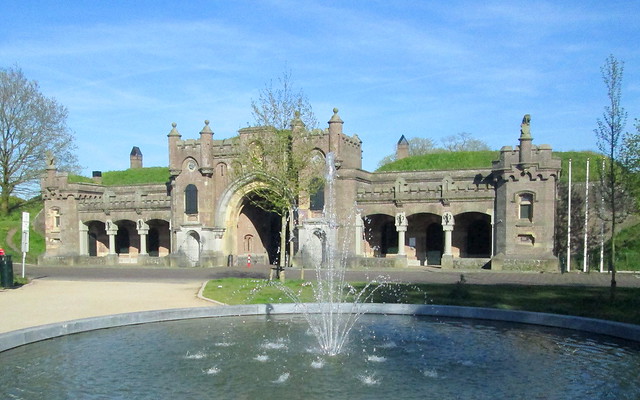
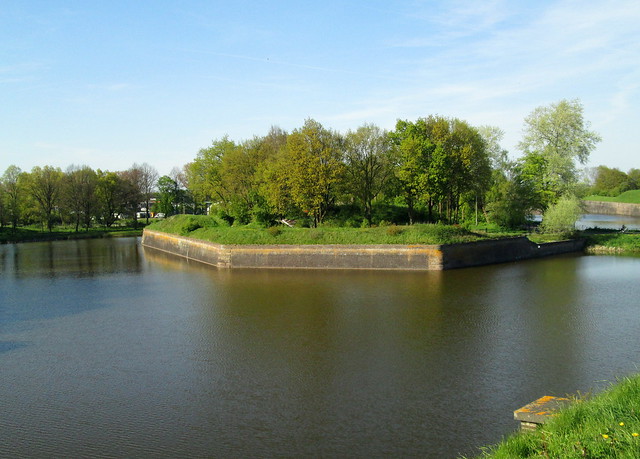
Naarden is the location of an old fort, one of those star shaped ones, designed to withstand attacks from all angles.

Naarden 14

It looks spectacular, especially from the air. Below you can see just one wee bit of it. You can walk all around it but we didn’t have enough time, or energy. It was very hot of course with the Netherlands being the hottest spot in Europe that week.

Naarden 11

Have a look at the images of the fort here. It looks fantastic. The distinctive star shape made it a rallying point for allied bombers during World War 2 – on their way to bomb Germany. It was photos like those that prompted us to visit the town, but I must say that the ice-cream there was lovely – and so cheap compared with back home!

An Autumn Sowing by E.F. Benson

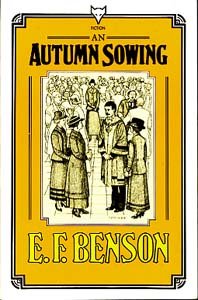
An Autumn Sowing cover

An Autumn Sowing by E.F. Benson was first published in 1917, so three years before his first Lucia book but there are quite a lot of the same elements in An Autumn Sowing. Snobbery and class consciousness figure prominently of course, it’s a good read although if you expect a Lucia type book then you might be disappointed.

Thomas Keeling is very wealthy, he lives in a spacious house in the town of Bracebridge and he is going to be the mayor in the following year. He has made his money through owning a large department store and having a very astute sense of business, but of course it is ‘trade’ so he’s never going to be able to be a member of the County Club where the local aristocrats are, despite being penniless. Mr Keeling is only ever going to be allowed to join the Town Club, fit for people like himself who started out owning just a fish shop.

Thomas Keeling has been disappointed with his marriage and his children, and the one bright spot in his life is his love of books and the fact that he can well afford to have a library of his own, where he indulges in his love of beautiful volumes. Nobody else is allowed into his library, apart from the young man who runs the book department in Keeling’s store. Charles is the closest thing that Thomas has to a friend, not that Thomas would unbend enough to actually have a friend, he’s very much the boss.

When Charles’s sister Norah needs a job she becomes Thomas’s secretary and after a shaky start when she describes Mr Keeling as being a cad a relationship builds up between them through their mutual love of books. Thomas can’t help comparing Norah with his wife and the wife doesn’t come out of it well. He thought that he was marrying above his station when he married the daughter of a P&O captain but in truth she’s a rather vulgar woman in a noveau riche kind of way, filling her home with ghastly folderols, such as a stuffed crocodile which stands on its back legs holding a brass tray – for visiting cards.

This book was never going to have a happy ending but it is really quite funny in that sharp-tongued Benson way and it’s interesting to see so many similarities with the Mapp and Lucia books. There are characters who speak ‘baby talk’, a figurative secret garden, a mayor, royal honours and an extension for the local hospital.

I found it interesting that the secretary was called a typewriter not a typist or secretary and she was expected to bring her own typing machine with her instead of being provided with one. I wonder when they started to be called a typist?

My copy of this book is a 1987 reprint and it’s a shame that it isn’t available on Project Gutenberg as I’m sure that a lot of people would enjoy reading it.

I haven’t read any of Benson’s Dodo books, have you? Would you recommend them?

Knutsford, Cheshire, England

When we drove down south to get the ferry to Holland last month we took our time and did a bit of an English roadtrip on the way there and back. I enjoy visiting places that I’ve heard about, just to see what they’re like – and the next time I hear them mentioned on the road traffic reports on the radio I can picture the place in my mind.

So Knutsford in Cheshire, (which is only around 15 miles from Manchester) was one of the places we visited this time. We did actually drive through it a while ago but didn’t have time to stop, although when we were stopped at traffic lights there I noticed that a building at the side of the road was called Canute House. I had one of those D’OH moments as it was only then that it dawned on me that Knut actually means what we now call Canute, so the town must have been where King Canute used a ford.

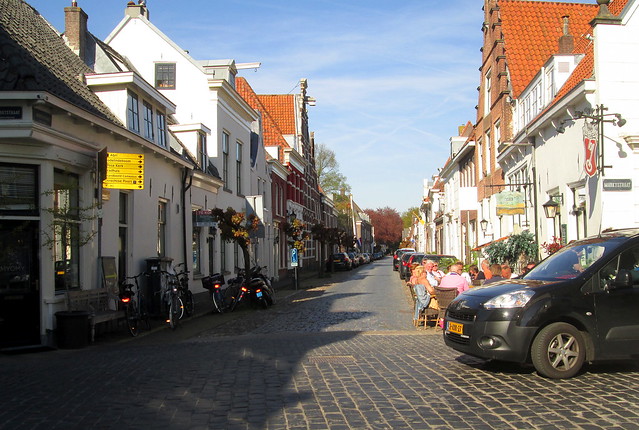
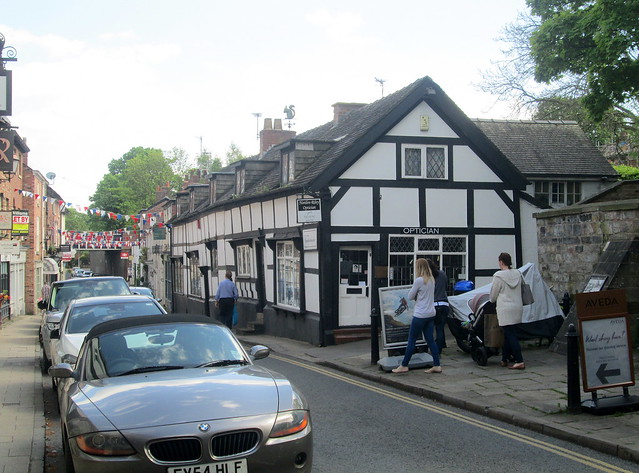
King Street, Knutsford

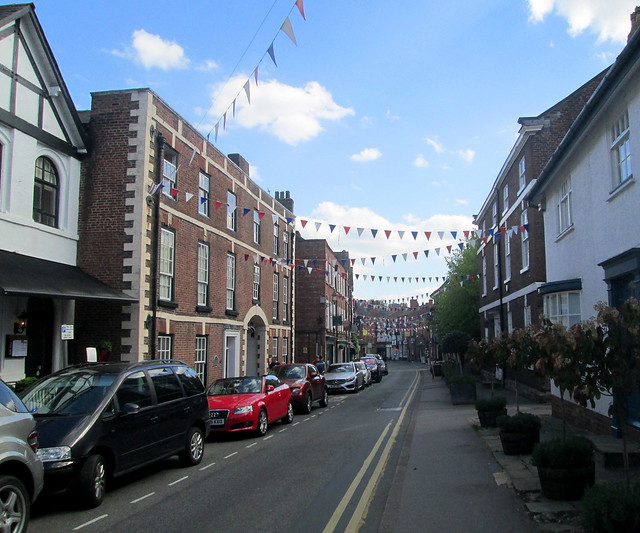
Mrs Gaskell of Cranford fame lived in Knutsford but nowadays it’s apparently popular with top footballers and actors. When we were there they were having a May Day celebration weekend so the bunting was out as you can see, but it was all going on in Tatton Park, the entrance to which is in the town, we didn’t bother going to that though, just a had a walk about the shops which are of the fairly exclusive sort. It’s also our Chancellor of the Exchequer’s constituency, so we’ve now been to visit George Osborne and David Cameron’s backyards so to speak. Both of them need to get out and about more I would say as their constituencies bear no resemblance at all to most of the UK.

Knutsford, King Street again

It’s an interesting wee place, definitely worth having a look around if you find yourself nearby.

If you’re interested you can see more images of Knutsford here.