Beneath the Abbey Wall by A.D. Scott

Beneath the Abbey Wall by A.D. Scott is the third in this murder mystery series which is set in Inverness in the 1950s.

Again we’re back at the offices of a local newspaper – The Highland Gazette. Mrs Smart is a mainstay of the organisation and when she is found dead – murdered – the whole place is thrown into confusion. Mrs Smart more or less ran the place, without them really realising it.

Joanne Ross, one of the reporters, is now separated from her abusive husband, it’s a big step for a mother to have thrown her husband out, in a community where women are supposed just to put up with things.

The police are pretty useless and it’s left up to the newspaper staff to investigate Mrs Smart’s murder. During their probing all sorts of secrets come out, in fact nothing is as it seems, not even Joanne who seems so strong and sensible, it now looks like she is going to make the same mistake she did before. There’s no doubt that her brains turn to mush at the sight of a handsome man, no matter how he behaves towards her.

I enjoyed this mystery and the setting. There are quite a few likeable characters, I had an idea who the culprit was but these books are about more than the crime. They’re about how women were viewed in 1950s Scotland and how attitudes began to change, slowly. I’m looking forward to the next book and finding out what happens with McAllister and Joanne.

Although A.D. Scott doesn’t live in Scotland now she is very definitely a Scot and I read this one for the Read Scotland 2016 Challenge.
Mystery in White by J. Jefferson Farjeon

Mystery in White by J. Jefferson Farjeon was first published in 1937. It is of course one of those British Library Crime Classics and has been very popular with bloggers recently, and rightly so.

Its subtitled A Christmas Crime Story, and I had decided to keep this one to read around Christmas, however the festive season has crept up on me so quickly and silently this year (is it the unseasonally warm weather?) that I almost forgot to read it last week.

I can’t say it got me into the mood for Christmas, which was my original idea for reading it around now, but it is a very good read, quite creepy and atmospheric. Initially I was a wee bit disappointed that the setting is not actually a snowed up train, which is what I thought from the cover.

It has been snowing for days and so it’s not really a huge surprise when a train full of passengers gets stuck in the snow near the village of Hemmersby. After waiting for a long time for something to happen, some of the passengers who have been chatting to each other decide to get off the train and make their way over the fields, hoping to be able to continue their journey home somehow.

The weather is much worse than they had expected and they have to find shelter from the snow, a large country house looms up at them through the blizzard conditions. The front door isn’t locked, fires are blazing away in the hearths, the table is set for tea, and the kettle is boiling away, but there is nobody around. It’s like the Marie Celeste.

There’s a portrait hanging above the fireplace in the hall, it’s of an elderly man and his eyes seem to follow everyone around.

You get the idea, as I said it’s an enjoyable read even although I was slightly disappointed that the story swiftly moved away from the train as I do love a train setting, but then – I’m not averse to an old spooky country house setting either.

The Red House Mystery by A.A. Milne

The Red House Mystery by A.A. Milne was first published in 1922, but I read a Vintage reprint which I managed to get through my library. Of course A.A. Milne is mainly known for his Winnie the Pooh books, which I love and it was only through reading blogs that I realised he had written this murder mystery.

The bloggers had all written glowing reports of The Red House but at first I wasn’t too sure about it. However once I really got into it it turned out to be a right good read. I didn’t manage to guess what had been going on which is always a plus for me as I do try to think ahead and work out the mystery.

The book begins: In the drowsy heat of the summer afternoon the Red House was taking its siesta. There was a lazy murmur of bees in the flower-borders, a gentle cooing of pigeons in the tops of the elms. From the distant lawns came the whir of a mowing-machine, that most restful of country sounds; making ease the sweeter in that it is taken while others are working.

So there we have the country house setting so beloved of mystery readers as well as murderers it seems. The owner of The Red House Mark Ablett fell on his feet when he was a young man as he had been left a large amount of money by a relative. His brother Robert was disgruntled to be left nothing as you can imagine, and the two had been on bad terms for years.

Fairly quickly a murder is committed (always best in my opinion, I hate a long run up to the crime) and one of the house guests and his friend take on the roles of Holmes and Watson in an attempt to solve the crime.

This one has some interesting characters, a good mystery and is well written with witty dialogue which reminded me in parts of Georgette Heyer’s in her murder mysteries.

In some ways it’s a shame that Milne’s Pooh books were so successful as they overshadowed this book and he didn’t write any more mysteries.

Murder Among Friends by Elizabeth Ferrars

Murder Among Friends by Elizabeth Ferrars was published in April 1946 and it’s sometimes titled Cheat the Hangman. It begins at a party which is being given by Cecily Lightwood, the setting is London in wartime and the guests at the party are mainly literary types. They’re all waiting for Aubrey Ritter to turn up, it seems like without him the party is never going to get going. He doesn’t have far to come, in fact he’s living in a flat just upstairs.

Another visitor to the block of flats alerts them to the fact that a murder has been committed. It seems like a very simple case to crack and the culprit is caught and convicted very quickly. But is the verdict correct?

I enjoyed this one which has a good wartime/blackout atmosphere, when it was an advantage to have a heavy drinker with you who could tell you how many steps up every pub had from the pavement, when you went out on a pub crawl.

There’s an interesting cast of characters and clothes are important in the book, with lots of descriptions of what the women in particular were wearing, such as:

Her coat was of a grey Indian lamb, worn over a scarlet woollen dress which was held in round her far from slender waist by a belt of gilded leather. She had a heavy gilt necklace round her throat and chunks of gilt screwed on to the lobes of her ears. With her fair hair done up in a gaudily striped turban, showing on her forehead in a cluster of dishevelled curls, with her fresh, fair skin, blue eyes and soft full lips, gaudily daubed with a few haphazard strokes of lipstick, she was like some magnificent doll, come to exuberant life.

In fact clothes play quite an important part in this book.

This one qualifies for the Read Scotland 2015 challenge as Elizabeth Ferrars was of Scottish descent despite being born in India and she lived in Edinburgh for 20 years.

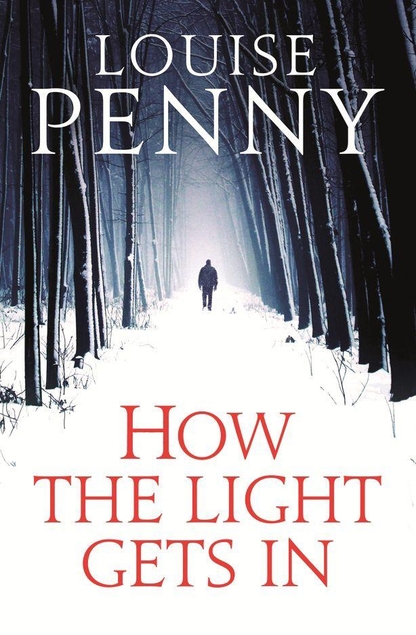
How the Light Gets In by Louise Penny

How the Light Gets In cover

How the Light Gets In by Louise Penny was published in 2013. It’s the ninth book in a series featuring Chief Inspector Armande Gamache of the Surete of Quebec. When I got to the end of it I thought it might be the last in the series but thankfully another couple have been written since this one.

I can’t say too much about this book because I don’t want to spoil it for anyone. The words ‘just brilliant’ are what come to mind – or ‘pure dead brilliant’ in Glaswegian. It isn’t a cosy comfort read in fact it’s quite stressful as just about everyone in the Surete seems to be against Gamache. Henri his German Shepherd dog is keeping him sane it seems.

I’ve been catching up with this series after getting to it late, it was Joan of Planet Joan who recommended the books to me as a great read – how right she was. In fact I think I will be reading the books again eventually, just to get my fix of the village and its weird but somehow very human inhabitants.

Louise Penny also chose to make her detective a decent chap who is very happily married, such a nice change from the usual cliche of a dysfunctional anti-social divorcee which so many other authors seem to prefer.

But it’s not just the characters and the setting which are so addictive, it’s also the twists and turns in the plot. What a page turner!

The Beautiful Mystery by Louise Penny

The Beautiful Mystery by Louise Penny was first published in 2012. Unusually this one has nothing to do with the attractively dangerous village of Three Pines in Quebec. The setting is a remote Gilbertine monastery in the wilds of Quebec. The monastery has been there for hundreds of years, with just 24 monks in residence at any time as the environment couldn’t sustain any more people.

The monastery had originally been set up by monks who had been fleeing the Inquisition but they had always been great singers and Gregorian chants had become almost a religion in themselves. Bizarrely they had had a hit with a record and had made lots of money which had been used to renovate the monastery which had been very basic, with nothing in the way of heating, making life there in the winter very difficult.

But all was not well within the community and murder was committed which is why Armande Gamache and his trusty assistant Jean Guy Beauvoir have been summoned to the remote monastery which is in the middle of a large lake. Nobody other than the monks ever gains entrance to the place and the boatman who ferries them there is confident that he’ll only have to wait a few minutes for them before they end up back at his boat for the return journey. So he’s amazed when they disappear into the building. There are 23 monks in the monastery and one of them is a murderer.

Of course Gamache and Beauvoir get to the bottom of it but Beauvoir is still fragile mentally after a previous case went disastrously wrong and it all comes back to haunt him in this one. Gamache has known for a while that someone within his own force is out to get him and it becomes a wee bit clearer who it is in this book. I did find some bits of it quite predictable though. Top marks to Penny though for her nod to Monty Python – Nobody expects the Inquisition.

Despite the setting I still enjoyed this one, maybe just not as much as the Three Pines books. If you’re going to read them be sure that you start at the beginning, reading them all in order to get the most from them.

The Catherine-Wheel by Patricia Wentworth

 The Catherine-Wheel cover

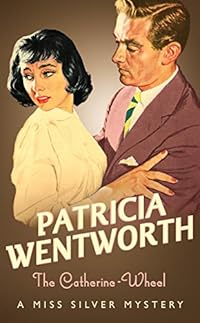
The Catherine-Wheel by Patrcia Wentworth was first published in 1951 and it’s a Miss Silver mystery.

Jacob Taverner is getting on in years and despite the fact that he resembles a tramp in looks he is in fact rather well off. He has no children of his own and his family is not a close one as a generation ago there had been a big family split over money, with the result that the cousins are all strangers to each other. Jacob decides to put an advert in a newspaper asking for descendants of his grandfather to come forward, and several do.

It’s arranged that they will all meet up in an old inn called The Catherine-Wheel which had been owned by Taverners in the past, in fact it still is owned by Jacob, he had leased it out over the years and the lease had recently run out. The inn had been a well known haunt of smugglers in the past and it seems that Jacob is hoping to glean information from his cousins about the location of a secret passage. He’s hoping that their grandparents will have talked to them about it.

Jacob’s advert has drawn the interest of the police and they manage to place Miss Silver in the inn as a guest, if there’s anything shady going on she’ll sniff it out. Sure enough it’s not too long before a murder is committed and Miss Silver is in her element solving the puzzle before the detectives do. Of course she manages to blithely sort it all out whilst knitting a blue dress and matching knickers for her two year old great niece Josephine.

This was a good mystery which kept me guessing. For some reason Wentworth has Miss Silver coughing before she spoke, in fact there were so many ‘Miss Silver coughed’s in the book that I began to wish that someone would give her some Benylin or Covonia, or better still honey and lemon.

All of the men in this book are ghastly in some way, bullying, domineering control freaks who seem to think that it’s their business to order the womenfolk around, be they wives, cousins or sisters. If I had been Miss Silver I would definitely have been thinking – thank goodness I never bothered to get married.

Bury Your Dead and A Trick of the Light by Louise Penny

I was really annoyed with myself because by mistake I read these two Louise Penny books out of order, but in the end it didn’t really spoil things for me.

Bury your Dead was published in 2010. The setting is mainly Quebec City although it does switch to Three Pines occasionally when Beauvoir is sent there by Gamache to do a bit of sleuthing.

A man is murdered in the basement of the library which is a focal point for the English speaking inhabitants of Quebec. It turns out that the body is that of a famously obsessed man who has been searching for the body of the man who founded Quebec.

This one doesn’t rank amongst my favourites of the Gamache series, mainly because I found the rivalry or should I say prejudice between the French Quebecois and the Anglos to be a bit depressing. Also I found it to be too sad, with one of the young members of Gamache’s team not surviving. I know, that’s silly of me as it is FICTION after all.

I enjoyed A Trick of the Light much more, it was published in 2011. Everything is going well for Three Pines inhabitant the artist Clara Morrow, at last her dream has come true and her work is receiving the recognition that it deserves. But everything starts to go wrong on her big day and it only gets worse the day after when a body is found in her garden, where only hours before everyone had been celebrating Clara’s success.

A Trick of the Light is about the nasty business of the art world and also the stresses of marriage when jealousy and fear cause one spouse to do their best to scupper the career of their partner.

I just love the way Louise Penny’s characters are developing. The more I find out about their back stories the better it gets.

A Particular Eye for Villainy by Ann Granger

A Particular Eye for Villainy by Ann Granger was published in 2012 and it’s the first book that I’ve read by the author.

The setting is London in the 1860s and the story is told by Elizabeth Martin Ross and her husband Inspector Ben Ross, taking turns to tell the tale.

Mr Thomas Tapley was a neighbour of the Ross’s, he was an elderly gentleman, it looked like he had seen better days but he seemed friendly enough and harmless. So when he is found in his rented rooms, having been bludgeoned to death there are few clues to go on. But Mrs Ross had seen him on the day of his death and she is quite sure that he was being followed by someone dressed as a clown. She has a particular fear of clowns ( I know the feeling!) and her husband the inspector is inclined to put her suspicion down to her own aversion to clowns.

I quite enjoyed this one although I think it would have been better if I had started reading from the beginning of the series, I think this is the fourth one. I guessed the culprit fairly early on in the book. I’m not sure if I’ll read any others in this series as I have so many books and series to catch up with. I also feel that I should pay more attention to the many unread books of my own which I’ve been neglecting. They’re the bookish equivalent of the cobbler’s weans who went barefoot!

The Late Scholar by Jill Paton Walsh

The Late Scholar cover

The Late Scholar by Jill Paton Walsh and published in 2013 is one of those books in which she has taken the Dorothy L. Sayers characters, Harriet Vane and Lord Peter Wimsey and written a tale, supposedly in the style of Sayers. I read the first one which Walsh wrote, actually she finished a book which Sayers had begun, and I wasn’t too convinced by it as I recall.

But either I’m getting less fussy or this one was better. Set in 1953, Peter is now the Duke of Denver due to the death of his elder brother and part of his duties is to be the ‘visitor’ of an Oxford University college, St Severins.

There has been quite a lot of upset at the college between two warring factions of fellows. Some want to sell a rare book which may have been owned by King Alfred, and some of the writing in it may even be by the king. The other faction want to sell the book so that some land can be bought as a money making opportunity for the college.

The voting for and against has been at a deadlock and it seems that in desperation someone has taken to murder as a way of winning the vote. Harriet and Peter, with the help of Bunter of course sort things out.

Jill Paton Walsh does a good job of writing the characters, albeit they are less witty, mainly because they are now married, the storyline lacks the ‘will they won’t they’ sparkle of the earlier Sayers books. Peter and Harriet are now an old married couple with almost grown up sons, the chase has been long won and Peter doesn’t have to dress up in a harlequin suit again. A shame really as it was fun when Harriet kept turning his offers of marriage down. Especially as a large amount of the female readers would have jumped at the chance to marry someone like him, including Sayers herself.