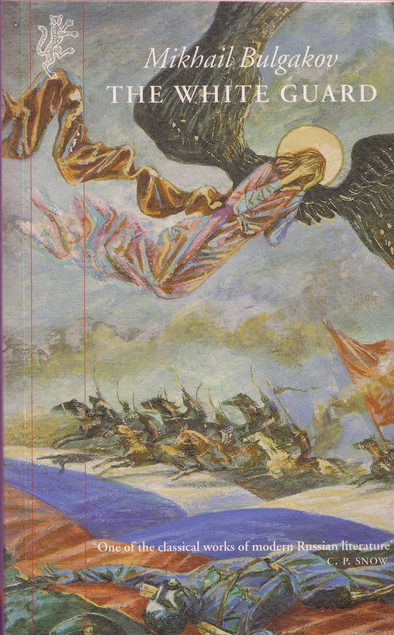
The White Guard by Mikhael Bulgakov

The White Guard cover I was reading The White Guard by Mikhail Bulgakov while on my way to Russia, except I was going to St Petersburg, not Kiev which is the setting of the book which first appeared in serial form in 1925 but wasn’t published in book form in Russia until 1966.

The setting is the city of Kiev in 1918 – the October Revolution. The Turbin family had been well off but they’ve just lost their beloved mother. It’s particularly poignant as her eldest son Alexei had just returned from the front after serving for years in a disastrous campaign in the Tsarist army. At last the whole family is together, but without their mother. There’s a younger brother, Nikolka and a sister Elena who is married to an army captain and also Anyuta the maid all living in the family apartment but it isn’t long before Talberg the husband abandons them, running away to save his own skin, the brothers had never trusted him anyway.

The city is chaotic with the German army roaming around and various other factions trying to grab the power.

The Bolshevik thugs are running around in the city, attacking anyone that they recognise as having been an officer in the Tsarist army, and it’s very easy for the officers to be pinpointed. Criminals are taking advantage of the chaos to blackmail people into giving up their valuables. The apartment becomes a refuge for others sheltering from the violence.

This is a really great read, conveying the atmosphere of danger, fear and panic as the normal rules of society have broken down and nobody has any idea of what the new future is going to hold for them.

Riceyman Steps by Arnold Bennett

Riceyman Steps by Arnold Bennett was one of the books that I read on my Kindle while I was on the Baltic cruise. I actually ran out of ‘real’ books to read on board, that’s because I found it quite boring, cruises are fine if you are keen on stuffing your face a lot, otherwise there isn’t much else to do but read, unless you’re interested in boozing or gambling!

Anyway, back to the book. Riceyman Steps was first published in 1923 and it won the James Tait Memorial Prize that year, which is one of the reasons that I decided to read it as I’m hoping to read as many as those prize winners as I can get my hands on. It is set in London’s Clerkenwell, mainly in a bookshop and attached flat which has been inherited by Henry Earlforward from his uncle. One window looks into The King’s Cross Road and the other onto Riceyman Steps. Henry had had to learn the book business quickly and despite the shop being really dirty and dingy he had a good number of loyal customers for the antiquarian books in stock. Books are piled everywhere, as is dust and as Henry is a terrible miser he only has one electric light, the rest of the building is lit by candles.

There’s a confectioner’s across the road, inherited by Violet who is a widow, and Henry has taken a shine to her. It isn’t really romance he’s after though it’s more the fact that she has a business and he thinks that maybe Violet would take over the cleaning in the shop. That’s a bit optimistic considering they both already share the same young cleaning woman/maidservant in the shape of Elsie. She has trouble with her young man who is a survivor of World War 1 but he suffers from shell shock, which causes huge problems within their relationship. Henry’s chief joy is to spend half an hour picking his teeth with toothpicks after a meal, not that he would ever go to the expense of buying toothpicks. His only other joy is to fashion spent matchsticks into toothpicks – waste not want not!

Violet isn’t really cut out for being a confectioner and when she decides to sell her shop she also decides to marry Henry, after all – he has good living accommodation. But they really know nothing about each other. When Violet decides to employ a firm of cleaners – complete with new-fangled vacuum cleaners to clean the interior of the building as a wedding present to Henry he is absolutely aghast. She had spent £14 on the firm of cleaners and of course everything had been moved. Henry thinks his customers won’t be able to find the books they are looking for.

Henry’s miserliness becomes worse and worse and he cuts back on food and fuel for both of them to starvation levels – with disastrous results. This sounds a bit of a grim read but I enjoyed it and it’s a lesson for all misers everywhere.

Subscribers

You might know that while I was away on holiday for some unknown reason my entire list of subscribers disappeared, it’s an absolute mystery as to why. Luckily there was a backup of it and Duncan has been able to get it back, so we hope that nobody is missing from it. If you had previously subscribed and you still aren’t getting blogpost emails, please resubscribe.

St Petersburg, Russia

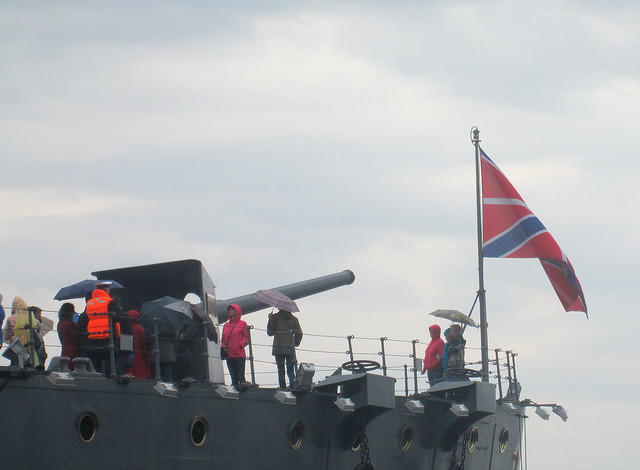
If you know anything about Russian history one thing that you will want to visit in St Petersburg is the Aurora as she fired the blank shot which signalled the start of the Bolshevik Revolution of 1917. Here she is below, moored in the River Neva and just having been given a bit of a makeover, she’s apparently a darker shade of grey than she was formerly.

Aurora

It was possible to get on her but we didn’t fancy the size of the queue.
Aurora flag

There are lots of bridges over the Neva and as you can see – lots of tramlines too.
green domes ,St Petersburg

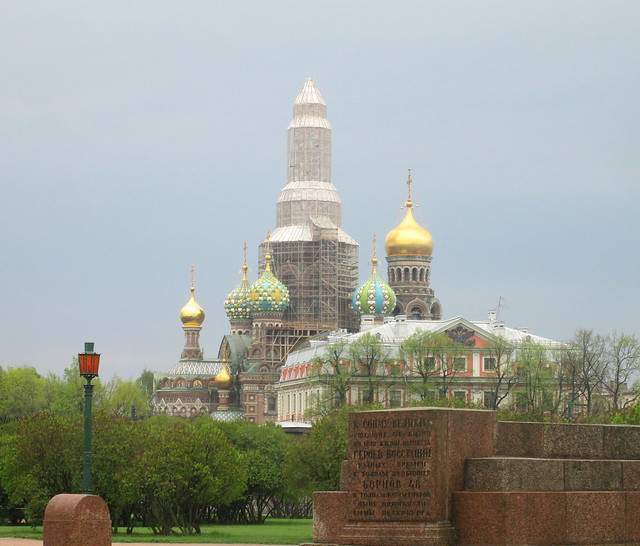
The Church on the Spilled Blood below was built on the site of the assassination of Tsar Alexander II. Apparently you can still see the blood stains, but I suspect that it’s a bit like Holyrood Palace and Rizzio’s bloodstains – a bit faked up. As you can see it’s swathed in scaffolding at the moment.
Church on the Spilled Blood

Church on the Spilled Blood

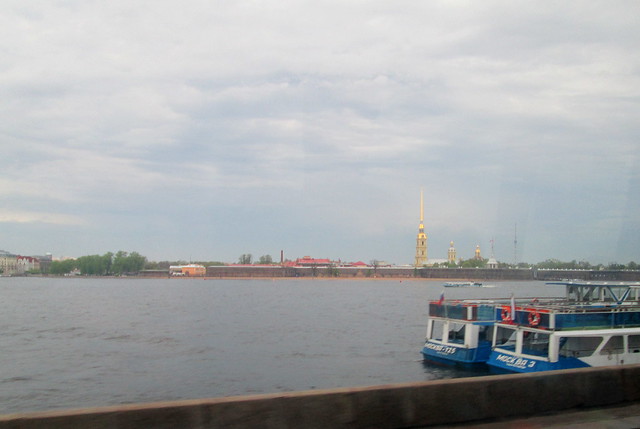
Looking across the Neva again to the Peter and Paul Fortress with the golden spires.
across Neva Peter and Paul

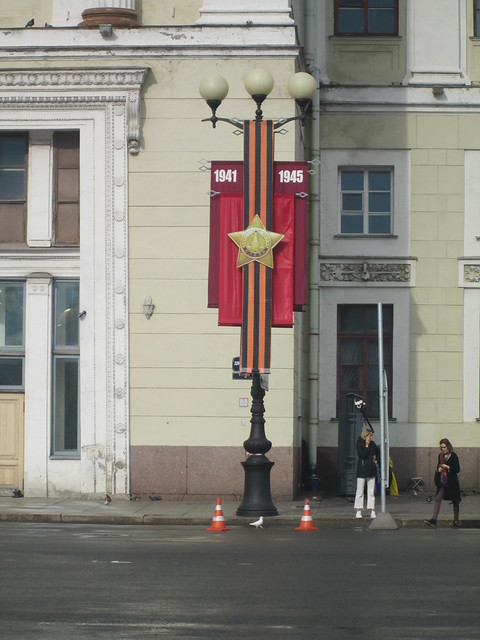
Every direction you look in there are churches or palaces, we believe the one below is the General Staff Building. You can see red banners hanging from posts, very Soviet Union looking. These were to commemorate the anniversary of May, 9th 1945 Victory Day. Unfortunately we just missed the celebrations which were a few days earlier.
Palace , St Petersburg, Russia

Below is a sort of canal which is really part of the Neva I think.
blue bridge canal, St Petersburg, Russia

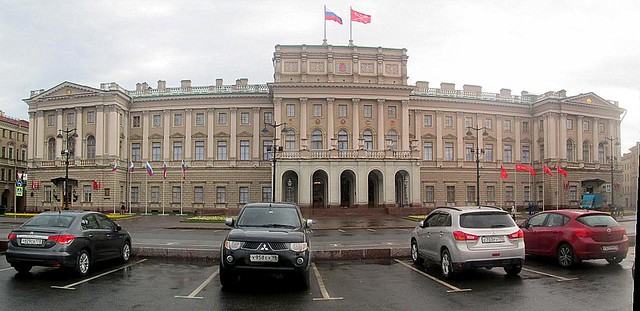
Below is some sort of government building I think. One thing that I really wish I had done before going to Russia was to at least buff up my knowlede of their alphabet, it might have helped a lot.
government building 2 stitch

Below is a photo of an ordinary street in St Petersburg. One thing that I really liked is that the traffic lights have a countdown so you know how long you will have to wait before the lights change again. The ‘green man’ actually speeds up his walking action as the time to cross begins to run out – so helpful I thought!
street in St Petersburg, Russia

Looking at the huge amount of very grand buildings many of which were palaces in St Petersburg it’s very easy to see why they had a revolution. The difference between the haves and the have nots was enormous
1941-1945 banner

Walking Naked by Nina Bawden

 Walking Naked cover

Walking Naked by Nina Bawden was first published in 1981 but my copy is a Virago reprint from 1992. It all feels very autobiographical but I gather that Bawden habitually plundered her own life for use in her novels.

The action takes place on one day. Laura is an author and is happily married to Andrew who is her second husband. He’s successful and socially adept where Laura is awkward and uncomfortable. It begins with Andrew playing a game of tennis with a visiting American business contact, with the wives looking on.

It’s a busy day as next on the agenda is a prison visit to Laura’s grown up son by her previous husband. The son is being charged with drug smuggling, he’s either guilty or a complete idiot. It’s a situation that finds Laura and Andrew feeling powerless, an unusual state for them to be in.

Laura is carrying a lot of baggage from her wartime childhood when she felt abandoned by her mother. Her anxiety manifests itself as a fear and dread that her home is silently being attacked by dry rot and is about to tumble down around her and her family.

But it’s Laura who is telling this tale and she’s a very flawed character, skipping back and forth between the past and the present the reader slowly discovers that Laura isn’t as she has portrayed herself.

This was well written but not a comfy read as it’s dealing with broken families and damaged people.

You can read Bawden’s obituary here

Tallinn, Estonia

Tallinn is the capital of Estonia which used to be part of the Soviet Union. They gained their independence from the USSR in 1991 and from what I can see they seem to be doing rather well on their own. Food for thought for Scots I think!

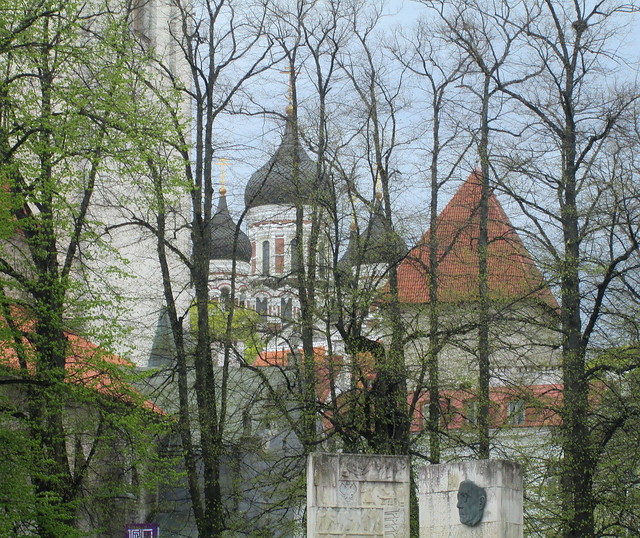
onion domes, Tallinn, Estonia

I’ve always been interested in architecture so buildings feature in most of my photos whenever I go to somewhere new. The onion domes seen through the trees say it all really – so exotic looking compared with the rather boring spires of churches in the UK.

Tallinn church

But the crow stepped gables and red pantiles of the church below are rather reminiscent of old buildings in the east of Scotland. The pantiles in Fife came over as ballast in ships from Holland, I wonder if these ones in Tallinn came from Holland too.
Tallinn church, Estonia

Looking up at the architecture I began to feel like it reminded me of the old film Chitty Chitty Bang Bang.

Tallinn, street, Estonia

building in Tallinn, Estonia

Below is a photo of the ministry of culture building. As you can see it has the beloved European flag flying from it. While we were in the Baltic all of the cities had campaign posters up for the then upcoming European elections. I didn’t see any at all in the UK.

culture ministry, Tallinn, Estonia

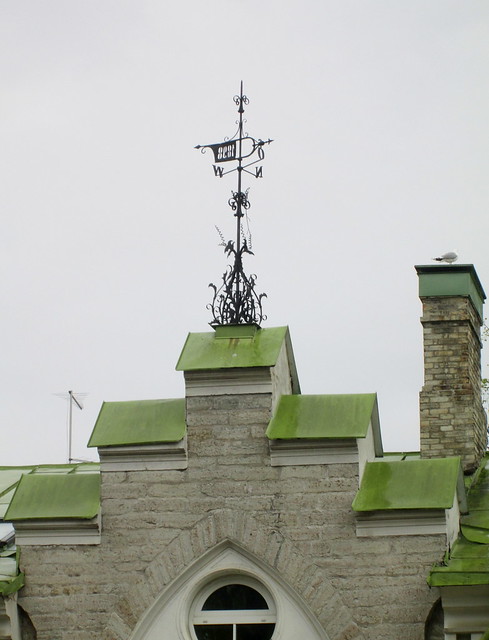
Sadly it began to rain quite heavily towards the end of our day in Tallinn, as you can see from the green roof on this building below, I love the fancy weather vane though.
green roof weather vane, Estonia, Tallinn

But cafe culture doesn’t stop because of a wee bit of rain.

green roof, Tallinn, Estonia

Doors into buildings were often very ornate too as you can see below.
painted door, Tallinn, Estonia

Tallinn is a medieval city and still has a lot of its ancient walls intact, you can walk around on top of them in parts.
wall + towers , Tallinn, Estonia

The old part of the city is very busy with tourists, especially if there’s more than one cruise ship in town but it’s a lovely place to visit – as you can see.

Subscriber problems

Sandra and Valerie commented that they hadn’t been getting my blogposts via email as they should do as they’re subscribers. I had a bit of a delve into Pining’s internals and the upshot is – the subscribers list seems to have disappeared while I was on holiday! The only subscription there is Sandra as she had resubscribed. It’s a mystery to me how things like that can happen. Hopefully Duncan has a backup and he can sort it out eventually – when he has time. Meanwhile if you were a subscriber and by some miracle you are checking in here, maybe you could just resubscribe. Technology can be a real pain in the neck.

On another subject – did you read that Hilary Mantel has at last finished the third book in her Thomas Cromwell trilogy, you can read about it here. It’s to be called The Mirror and the Light. I got quite excited by that news as it has been an eight year wait, sadly it isn’t over yet as it won’t be published until March 2020. I don’t suppose it’ll be that long in coming.

Emily of New Moon and Emily’s Quest by L.M. Montgomery

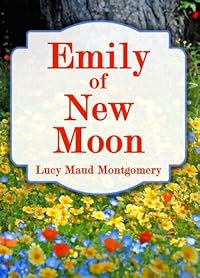
 Emily of New Moon cover

It was only after I started reading Emily Climbs by L.M. Montgomery that I realised that I was reading the second book in a trilogy – not ideal, but I did enjoy it. When Joan mentioned that the whole set was available for the Kindle for just 49p, it was a no-brainer, even although I’ve bought hardly any books for my Kindle as I tend to use it for classic books that are free as they’re so ancient.

So I caught up with Emily of New Moon which tells the sad story of how Emily was orphaned after the death of her beloved father. Her parents had run off to get married and more or less been disowned by their families but her mother’s family stepped up to give Emily a home albeit with great reluctance, drawing straws to see who in the family of elderly aunts and uncles would be unfortunate enough to have to take on the burden of Emily’s upbringing.

It falls to Aunt Ruth and Aunt Elizabeth of New Moon to take Emily in. It’s a strict Presbyterian household which means no frivolous fun is allowed and life is grim, especially as poor Emily has to share a bed with her eldest and most austere aunt who even disapproves of Emily writing her stories and poems which are condemned as being lies.

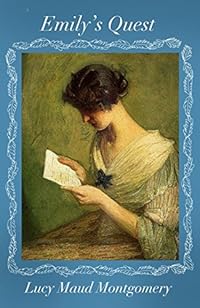
 Emily's Quest cover

In Emily’s Quest she has managed to persuade her relatives to allow her to go to college, but she has to promise not to write any fiction for the three years that she’ll be there. The older Emily doesn’t seem to be quite as charming, she’s grown out of the puppy stage I suppose and has to think of training to earn a living. Eventually she is allowed to resume writing fiction and Aunt Ruth is amazed to discover that Emily can actually make money at it – that’s not to be sniffed at at all. Emily is pursued by all sorts of men but she disappoints her family by turning down her cousin’s offer of marriage – they’re hoping to marry her off within the family as her cousin will inherit New Moon eventually and it seems an easy way to solve the problem of Emily’s future. Thankfully she has other ideas. The idea of cousins marrying gives me the shudders.

These books were a perfect read for me tucked away in my cabin whilst sailing the Baltic Sea which was so flat and steady I often had to look out of the window to see if we were still actually sailing!

RHS Chelsea Flower Show

I had actually decided last year that 2019 would be the year for me to visit the Chelsea Flower Show but – we went on that Baltic cruise instead. Luckily we did get home just in time to enjoy watching Chelsea on TV. I have to say though that this has been the least impressive year that I can remember. I adore trees and there are certainly a lot of them at Chelsea this year and I love lots of different shades of green but for me that should be balanced by beautiful colours.

Whether the flowers are what some people would regard as genteel and muted tones, or a more exuberant explosion of colour is a matter of taste, I’m a bit greedy and love both styles, but I feel a bit colour deprived having viewed the show gardens this year, admittedly I haven’t managed to view all of the gardens as I’ve been trying to catch up with post holiday clothes washing and getting stuck into my own garden.

If you haven’t been able to see the TV coverage you can still see many of the gardens here.

I did love the garden that the Duchess of Cambridge helped to design it was obviously a winner with children, but I didn’t like the M&G Garden by Andy Sturgeon, I hated all that burnt wood. I do like the Welcome To Yorkshire garden, probably because of all the stonework and the cute wee house.

Do you have a favourite?

Calum’s Road by Roger Hutchinson

Calum's Road cover

Calum’s Road by Roger Hutchinson is a fairly well known tale withing Scotland anyway as I recall Calum MacLeod being interviewed on TV years ago. Calum had been hoping for years that a road would be built linking his house in the north of the island of Raasay with the southern part, but the powers that were at that time in Inverness Council obviously had no intention of financing the project. Calum eventually set about building the road himself, no mean feat as he had to dig out trees, heather and massive rocks in what was a very rough and twisting terrain. The MacLeod house was the last one to still be inhabited in that area, all of the neighbours had moved away, but Calum owned his home so that wasn’t an option for him. Raasay is an island which is situated between the Isle of Skye and the Scottish mainland.

Calum was undoubtedly a great character of determination with amazing strength and resilience. He was furious at the way people like himself were treated as he could see his own way of life and the Gaelic culture dying out. With the local school being closed down it meant that his daughter had to go away as a boarder with very little in the way of care being taken on by those in authority. It meant an end to family life.

I don’t think I enjoyed this one quite as much as others might have. It is very repetitive at times with the exact same long conversation appearing as many as three times for some peculiar reason. Although I can see that for Calum and his wife a good road surface was a boon, I can’t help thinking that yet another road can’t really be a plus for a place that sounds idyllic and until then unspoilt.

Towards the end of the book it’s mentioned that Calum said that the day before he had counted 17 cars in the car park, and that was something he seemed to be very proud of as those cars were only there because he had gone to the trouble of building the road. I couldn’t help feeling sad that yet another beautiful wilderess had been spoiled and polluted in the name of advancement.