Rye, East Sussex – again

The Landgate, Rye dates from around 1339 when the powers that were in Rye decided that they need a gate and walls to protect Rye from the sporadic invasions from the French, who managed to burn the whole place down, with only a few stone buildings remaining. We were there early before the shops opened to get this photo sans traffic.

Rye Gates, East Sussex

But as you can see there were still plenty of cars about. Rye seems to have been captured by the French and settled by them several times. We’re all a bunch of mongrels on these British Isles between the Viking invasions and the Norman, Saxon and Angles too, there’s really no such thing as a ‘foreigner’. Not that you would believe that if you witnessed how many times we had to repeat ourselves whilst in England, despite not having strong accents – which is more than could be said for many of the people questioning us! It reminded us of why we only stuck it out in the south of England for a couple of years. I must say that I’ve never NOT been able to understand any accent if the person is speaking English – even if they originate on the other side of the world, so it puzzles me how anyone can be so insular.

The Landgate, Rye, East Sussex

From there it’s a fairly short walk, albeit uphill to Ypres Tower which is nothing to do with the battle in France in WW1. This was used as a prison until the middle of the 1800s for both men and women. Only in comparatively recent times were the sexes separated. The mind boggles at that!
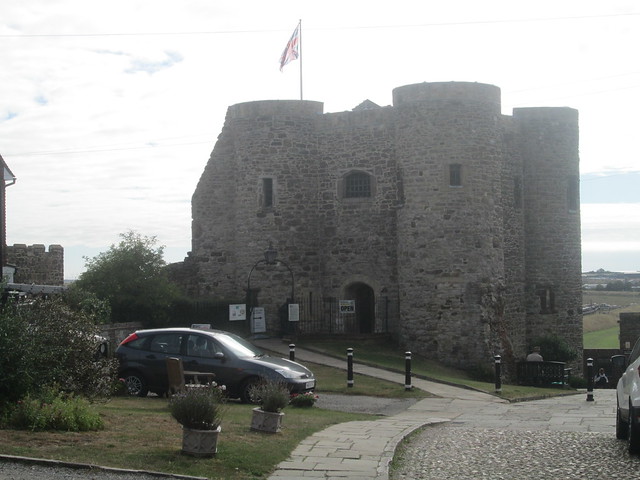
Ypres Tower, Rye, East Sussex

The view in the photo below is the side which would have been nearest the sea.
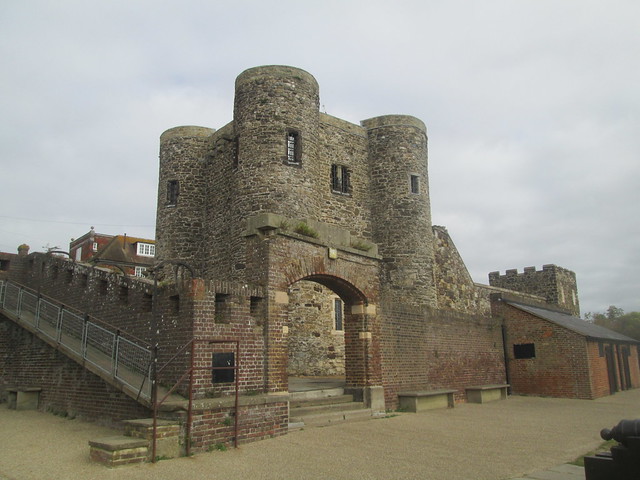
Ypres Tower, Rye, East Sussex

People who didn’t ‘deserve’ to be imprisoned might just be stuck in the stocks for a length of time where they might be targeted by people who weren’t so unlucky. They wouldn’t have been throwing tomatoes at them I’m sure.

Ypres Tower , (stocks), Rye, East Sussex

From the top of Ypres Tower you can see one of the local rivers which will lead to the sea, eventually. The sea has receded about two miles since Roman times I believe.

view from Ypres Tower, Rye, East Sussex

I think that the presence of three rivers in Rye probably goes some way to explaining how popular the town is as so many people love messing about in wee boats on rivers.
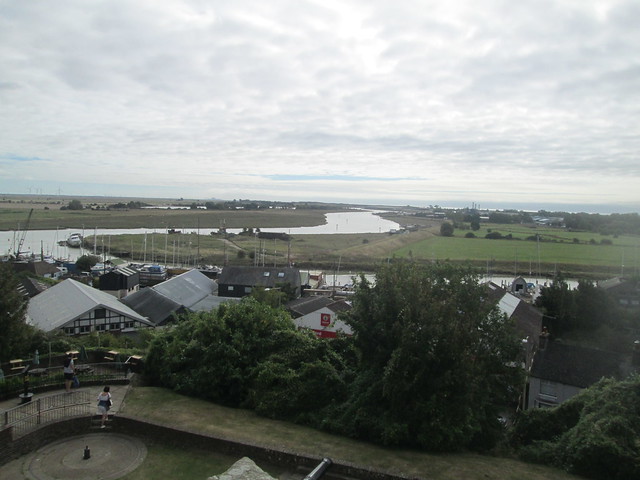
view from Ypres Tower , Rye, East Sussex

The tower in the photo below is what was the women’s prison when they were eventually separated from the men. It’s not very big so I hope there weren’t that many of them.

view from Ypres Tower (Women's prison), Rye, East Sussex

A narrow lane from the castle/tower takes you to The Castle Inn which no doubt supplied plenty of beer to the prisoners over the years. Smugglers who were due to be hanged were taken there for their last two flagons of beer.

Ypres Castle Inn, Rye, East Sussex

The footsteps at the lock by Ronald Knox

The footsteps at the lock cover

The footsteps at the lock by Ronald Knox was first published in 1928, but it’s available on Project Gutenberg Canada as an ebook for free here. My copy is a Penguin Crime paperback from 1964.

This book features two young cousins Derek and Nigel who have a bit of a family resemblance which confuses some people when they are both at Oxford, but they have very different personalities. Derek is the eldest and will inherit £50,000 when he’s 25, but he has a dangerous lifestyle of alcohol and drug use which makes it quite likely that he won’t make it to 25. The money will go to Nigel if Derek dies before his 25th birthday, that’s quite a motive for murder and when Derek disappears Nigel is obviously under suspicion.

I think that Ronald Knox writes along the same lines as Freeman Wills Crofts, heavy on detail and timing, a very male style of crime writing which I don’t always have patience with. I’ll give this one three stars on Goodreads.

Waterstone’s book purchases

I rarely buy new books which I’m slightly ashamed of, but so many of my favourite authors are out of print so secondhand bookshops are much better hunting grounds for me. But we had a trip over the border to Chester during our recent stay in north Wales and I found myself wandering into Waterstone’s.

A ‘dump bin’ at the end of an aisle drew my attention and I couldn’t resist raking through the books in it, it felt like a surprise Christmas to me!

I ended up buying five gorgeous books all for either £3 or £1 as the prices had been cut and cut again. I’m just glad that the people of Chester turned up their noses at them!

HOME by Orla Kiely – complete eye candy if you’re interested in home decor and design.
home

Tile Envy edited by Deborah Osburn – a book of the most gorgeous and unusual ceramic tile designs.

tile envy

Bandstands of Britain by Paul Rabbitts – I love bandstands, especially the Victorian and Edwardian ones and it’s so sad that many of them have been demolished when they should have been conserved as things of style and beauty.

bandstands

Ride a Cock Horse and Other Nursery Rhymes, illustrated by Mervyn Peake – one to add to my collection of children’s illustrated books.

https://i.gr-assets.com/images/S/compressed.photo.goodreads.com/books/1411605037l/23258613.jpg

The Paper Cell by Louise Hutcheson – this is from the Contraband Pocket Crime Collection, it’s a pig in a poke for me but I have high hopes of it.

The Paper Cell

It is just as well that I don’t live near Chester otherwise I imagine my book buying would really get out of control!

Rye in East Sussex, England

Rye in East Sussex, England, is one of the Cinque Ports and is a lovely place to visit for a few days, I’m not sure what it would be like to live there permanently though as it seems to be one of those places that attracts more than its fair share of tourists – albeit of the more genteel variety. I’ve just googled Rye which I should of course have done before visiting the place because surprise surprise – I didn’t know it all. Anyway the link above is just to the Wiki page as East Sussex also seems to have more than its fair share of bloggers who have written about Rye, I didn’t want to choose between them.

It’s a small medieval town which used to be on the coast but the sea is now two miles away as over the centuries the sea has receded and what used to be the sea is now Romney Marsh. The town still feels coastal though, probably because there are three rivers, the Rother, the Tillingham and the Brede. Rye was a centre for smuggling due to the high taxes on so many goods and one of the smuggling gangs met in The Mermaid Inn. I was amused to see that the house opposite The Mermaid Inn is called The House Opposite. Quirky names seem to be all the rage for houses here, another one was called The One Next Door. I should have written them all down as I’ve forgotten them now.

Unusual shaped windows seem to be a feature of many of the houses.
Timbered house, Rye

triangular window, Rye

Apart from Henry James and E.F. Benson lots of authors were attracted to the place including Rumer Godden, Stephen Crane, H.G. Wells, Joseph Conrad, Ford Madox Ford, Monica Edwards, Radclyffe Hall, John Christopher, Malcolm Saville. Joan Aiken was a native of Rye, Sir Paul McCartney and Spike Milligan lived there as did the artist Paul Nash. I wondered why Captain Pugwash featured in the Museum but apparently his creator John Ryan was a resident of Rye although he was born in Edinburgh. Rye is a very popular place to live.

The house below was the artist Paul Nash’s home.

Paul Nash's House, Rye

The house below was used as Mapp and then Lucia’s house in the TV series I’m sure.
Mapp and Lucia's  House, Rye

St Mary’s Church below also featured in Mapp and Lucia.
St Mary's Church, Rye

I’m sure the street below which is just at the church also featured a lot in the TV series with Quaint Irene painting the weatherboarding at one point.

hilly street, Rye

Below is The Mermaid Inn from the back, you can easily imagine it being a favourite meeting place for smugglers.

Mermaid Inn Arch, Rye

I would definitely visit Rye again, if I can brave the horror that is the M25 motorway again. We rarely got above eight miles an hour!

Maurice by E.M. Forster

Maurice cover

Maurice by E.M. Forster was written way back in 1913 and 1914 but it wasn’t actually published until 1971, the year after the author died. The reason for that is the subject matter as no publisher would have dared to publish it when it was written. The blurb on the back says: Maurice is perhaps E.M. Forster’s most poignant exploration of a theme evident in nearly all of his novels, the eternal struggle between passion and convention.

The book begins with Maurice just about to leave his prep school which is set in England in the Edwardian period. As Maurice grows up and goes to Cambridge he realises that he’s attracted to other males and specifically an older student Clive Durham. On the surface Clive is a bit of a maverick, but it only goes so far and having spoken to Maurice about ‘the Greeks’ and having a bit of a crush on each other Clive subsequently pulls away from any physical relationship and seems to grow out of his homosexual tendencies – or just conforms to what is expected of him.

Poor Maurice is bereft, he doesn’t really have any other friends and when he does eventually ‘share’ with a man it’s with a servant that he meets at a country house weekend. Almost immediately Maurice is appalled at the danger that he has put himself in, leaving himself open to blackmail by someone from a lower class. Presumably he thought that as his new friend isn’t a ‘gentleman’ he can’t be trusted.

Visits to a doctor ensue with Maurice hoping for some sort of cure, but the doctor ends up advising him to go and live in France or Italy where they don’t have a law against homosexuality.

This is a good read and I can only think that the people on various places on the internet who complain that Forster should have been brave and published it when he wrote it back in 1913-14 have no idea what life was like for homosexual men back then and don’t know what happened to Oscar Wilde.

Lamb House in Rye, East Sussex, England

Lamb House, Rye, East Sussex

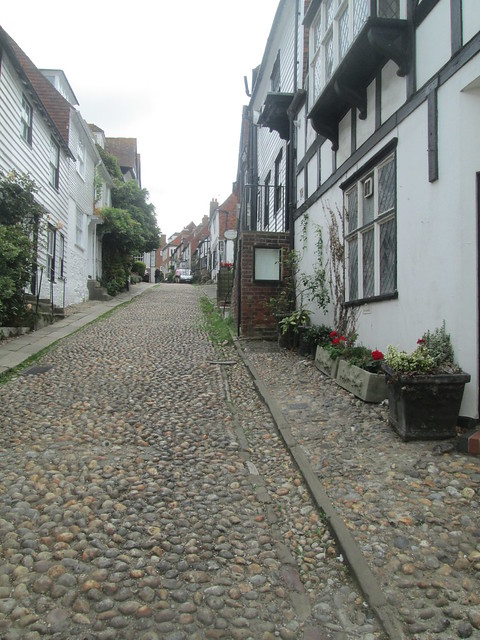
Since I realised that the Mapp and Lucia books by E.F. Benson were set in Rye in East Sussex I’ve wanted to visit the place, especially as Rye was the location for the TV dramatisations. I certainly wasn’t disappointed as it’s a lovely place albeit one that has more than its fair share of tourists but that’s to be expected I suppose although I was surprised that there were so many German visitors around, I wonder why, is it the Mapp and Lucia aspect? Or maybe it’s Henry James. Both authors lived in Lamb House which used to be the home of the mayor of the town many years ago. It’s difficult to get a good photo of some of the buildings as the streets are so narrow.

The staircase in Lamb House is nice but nothing out of the ordinary really.
Staircase, Lamb House, Rye,

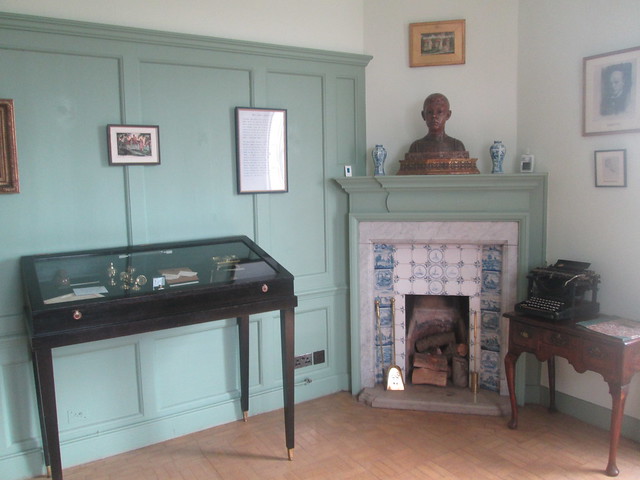
The study below is on the right hand side as you enter the front door. The cabinets are full of Henry James and E.F. Benson books, I had no idea that Benson had written so many.

Lamb House, Rye

Lamb House, Rye

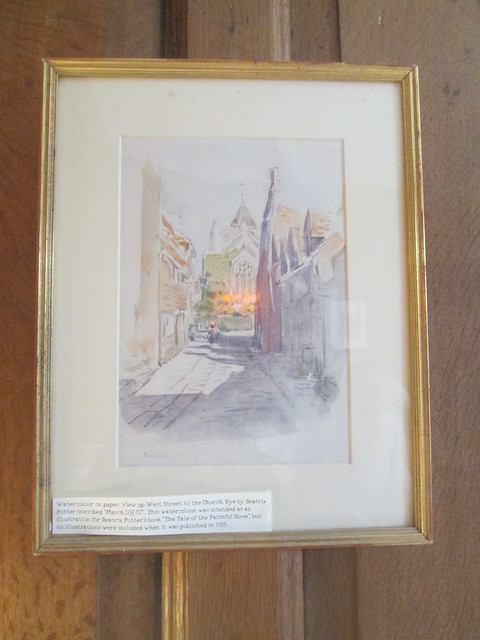
The drawing room below is on the left hand side as you go through the front door and is bigger. There’s a drawing by Beatrix Potter on the wall.
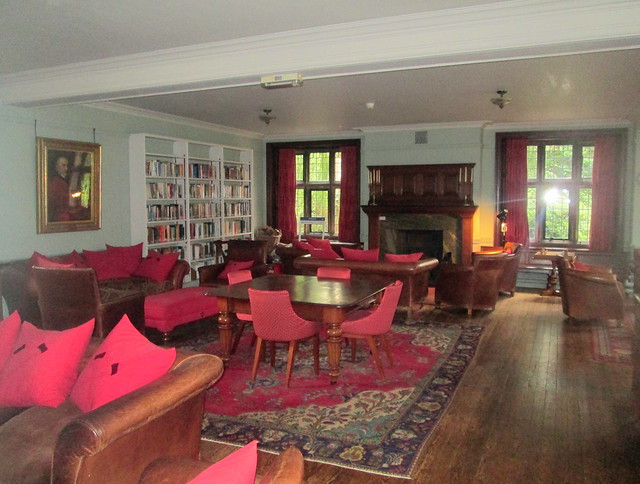
Lamb House, Beatrix Potter

There’s also a framed L.P. of Land of Hope and Glory whose words were written by Arthur Benson, E.F.’s brother.

Lamb House, Rye

Henry James had always admired the house but never thought it would come on the market so when it did he snapped it up and lived there happily for decades. When Henry James died his family agreed to lease the house to E.F. Benson so between the two the house has hosted lots of visits from other writers over the years, but now it belongs to the National Trust and is a popular tourist destination.

The dining room is at the back of the house with doors which lead out to the garden.

Lamb House, dining room, Rye

A lot of entertaining must have gone on in these rooms over the years.
Rye, Lamb House, Henry James,

Only one bedroom is open to the public and it’s quite sparse, but I do love the corner fireplaces in Lamb House.

Lamb House, Rye,

It isn’t a particularly large house and not all of the rooms are open to the public, but I can see why those men both wanted to live in it as it would be a comfortable home and the garden is beautiful, but I’ll leave those photos for another day.

Of course E.F. Benson did end up being Mayor of Rye, for three terms I believe so he must really have thrown himself into the whole community. I don’t think he will ever have had to look far for his characters!

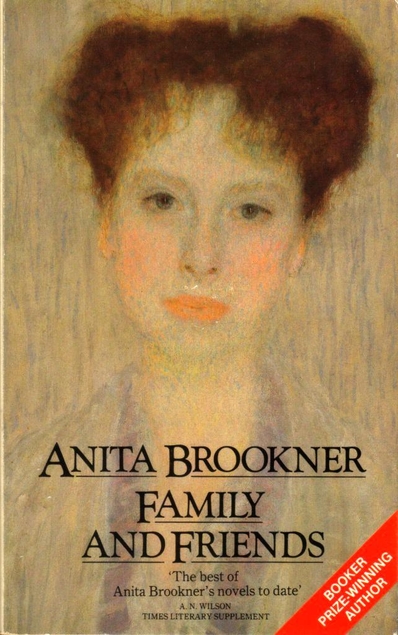
Family and Friends by Anita Brookner

Family and Friends cover

Family and Friends by Anita Brookner was published in 1985 and it’s a slim volume at only 187 pages – but my god – what a slog I found it to be.

For me this book reads more like a collection of notes and jottings about a family, which has never been worked up into a satisfying read. The whole thing is written in a curiously detached style which makes it impossible for me to to care about any of the characters who are all fairly unlikeable, not that that is really the problem.

The family of the title belongs to Sofka the widow of a successful businessman. She has two sons and two daughters and the book is about them, but as they are all quite remote from each other, it’s just an account of what they did – at the beginning we’re looking at a photograph, and it felt like we never got away from a photo, it’s flat and static. There’s absolutely no dialogue.

It is exactly what my mother used to do when she was alive. She went into great detail telling you all about people that you didn’t know, would never meet and never wanted to meet. I think she did it to fill a void, she didn’t like any breaks in conversation and a companionable silence was alien to her. I suspect that if anyone other than Anita Brookner had submitted this book to a publisher it wouldn’t have got far, but those magical words ‘Winner of the Booker Prize’ go a long way.

However, I seem to be in the minority with this one as many others seem to have loved it, or maybe they were dazzled by the author’s name. I’m not the only one who thought this was a dud though.

Gladstone’s Library, Hawarden, Wales

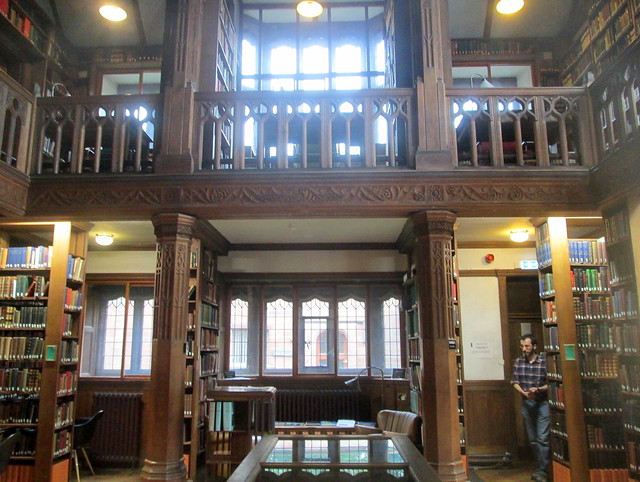
Inside Gladstone’s Library at Hawarden in Wales is very similar in feel to Sir Walter Scott’s library at his home in Abbotsford. Although that one is quite a bit older than Gladstone’s they both have a Gothic atmosphere.

The lower part is the Reading Room and that is where most of the non-theology books are shelved.

reading room lower floor

As you can imagine, with so many old books there’s that lovely scent that comes with them. Apparently the glue and leather of old bindings gives off a smell similar to vanilla as it ages, whatever it is it’s a pity they can’t bottle it.

Gladstone's cabinet and Reading Room windows

To get upstairs you have to go up a teeny weeny spiral staircase.
reading room lower stairs

The roof bones or trees if you prefer must have got damp at some point as in parts they are white with water damage. Not surprising given the building is over 100 years old. It costs £2,500 a week to keep the place standing so it’s no wonder that the costs are fairly steep for the accommodation.

Gladstone's Library, reading room ceiling supports

areading room book shelves
I’m well used to handling old books and being in amongst a lot of them, but it’s always a treat to be in their company.

And I was surprised to see a wee Mauchline (wood) covered book on the shelves, I think nowadays people usually put them in display cases, it was decorated with a fern design, very Victorian.
Gladstone's Library reading room Katrina

So there you have it – Gladstone’s Library, just over the Border into Wales, not far from Chester, and they seem to have a lot of events going on, although I suspect they’re mainly of the religious variety.

Gladstone’s Library, Hawarden, Flintshire, Wales

Gladstone's Library stitch

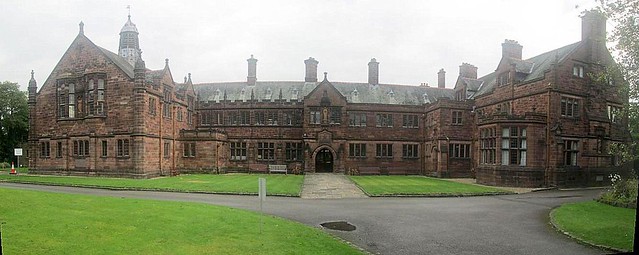
Gladstone’s Library at Hawarden in north Wales was actually built after William Ewart Gladstone’s death, it was planned by his children to house their father’s collection of books which had been living in what was called locally the ‘tin tab’ which was one of those corrugated iron structures which were built by little mission churches all over Britain about 100 years ago. The ‘tab’ was of course short for tabernacle. Below is a photo of it, although this seems quite a bit larger than the tin tabs that I remember seeing years ago.

original Gladstone's Library 1

After Gladstone’s death £9,000 was raised by a public appeal to build a more solid permanent home for the books and it was enough to build the rather grand looking building at Hawarden. It’s the only residential library in the world I believe. There are 26 bedrooms as well as conference rooms. This is Britain’s only Prime Ministerial Library and it’s an apt memorial to the four times Prime Minister.

Theology seems to have been Gladstone’s main interest, but he was ahead of the times really and collected books on religions other than Christianity. However there are also lots of books on Shakespeare, politics, poultry keeping, fruit growing …. all sorts of books.

I seemed to be one of the few residents who was actually interested in looking at the books and one evening I had the entire place all to myself. I must admit that it was quite a thrill to be given my own key to the place for after hours use.

Reading Room Key, Gladstone's Library

If you are thinking about going to this place as a resident don’t expect luxury accommodation, it’s pretty spartan but the food is good, no waitress service though, just grab a tray as you would in a canteen.

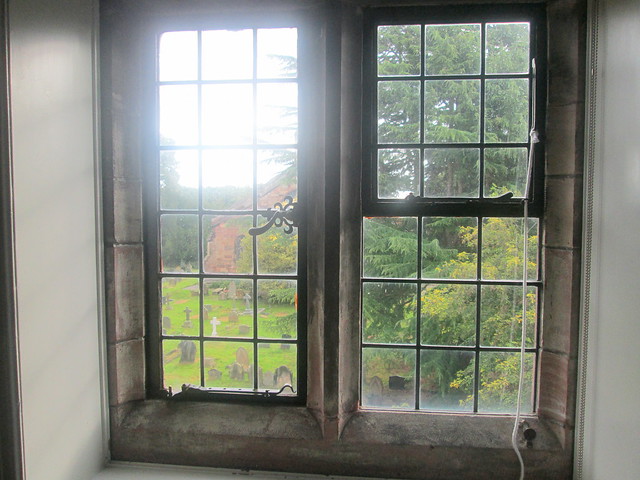
As you can see below, the view from our bedroom window was of the dead centre of town!
Gladstone's Library bedroom 2

The outer doors are very Victorian in that Gothic way.
Corridor at Gladstone's Library

In the drawing room which is called the Gladstone Room there are some shelves of modern books which you can take to read in your bedroom.
Gladstone Library, drawing  Room

You can also do a jigsaw puzzle if you’re so inclined.
Gladstone Room
It must be cosy in the winter when the fire is lit.
Gladstone Room

I’ll show you photos of the actual Reading Room/Library tomorrow.