Recent trip – Gladstone’s Library and Rye

Over the last week or so I’ve been gallivanting around parts of the UK, specifically spending three nights at Gladstone’s Library at Hawarden in north Wales. Then on to the south of England – Rye in East Sussex for a couple of nights before going on to Ashby de la Zouch in Staffordshire which is around about the English midlands. Lastly one night in Gateshead in the north of England to visit friends. I enjoyed being away and having a change of scene but it’s lovely to be back home again. Of course, books were bought, but I’ll tell you about those later.

I must admit that I had never even heard of Gladstone’s Library when I was given the mini break as a 60th birthday treat, but since then it seems to be popping up everywhere, even being on TV’s Flog It apparently. Our bedroom decor leaned towards the spartan and the rooms don’t have a TV but they do have a radio if you can’t stand not knowing what’s going on in the news. However as a resident you do get access to the books in the library. I was disappointed when I realised that about 80% of the books are on theology – not a favourite subject for me. However as it turned out there were a few books about the sedition trials of 1794 so I was able to do some interesting research on William Skirving, that distant ancestor of mine who was transported to Australia. As a bookworm it was quite a thrill to be given my own key to the library which is locked at 5 o’clock and when I was in there after hours I was the only one there! Most of the other guests were acquainted with each other and seem to have been church groups or choirs. In the blurb on the place it says that clergymen get a discount. I wonder how much as it’s quite a lot more expensive than places of a similar standard accommodation wise.

I’ve wanted to go to Rye for years as I love E.F. Benson’s Mapp and Lucia books and Rye is the setting although in the books it’s called Tilling, named after the River Tillingham which flows through Rye. The town is as quaint as you could wish and it’s easy to imagine the place being awash with smugglers as it was in times past. The American writer Henry James loved the town and eventually managed to buy Lamb House which had been the home of the mayors up until he bought it. He lived there for 25 years and when he died E.F. Benson leased the house from the James family until his death. So the house has been frequented by hordes of writers over the years as they each had friends who also wrote. Lamb House now belongs to the National Trust and the house and garden are definitely worth a visit.

Photos of Gladstone’s Library and Rye will be forthcoming – when I get organised.
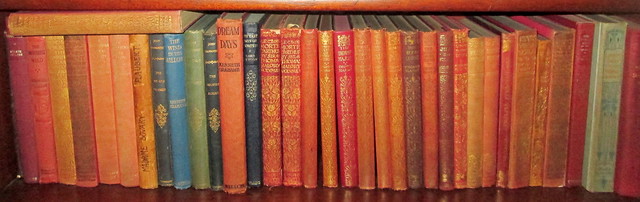
Yet more books

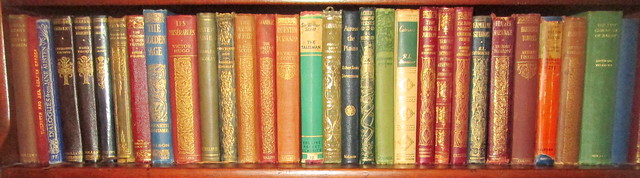
This bookcase is known as ‘your Dad’s’ bookcase as it belonged to Jack’s parents. The books are a mixture of old ones I bought and some from the previous generations, some are school prizes from as far back as 1905.

Katrina's Books

There are a lot of old favourites here.

Katrina's Books

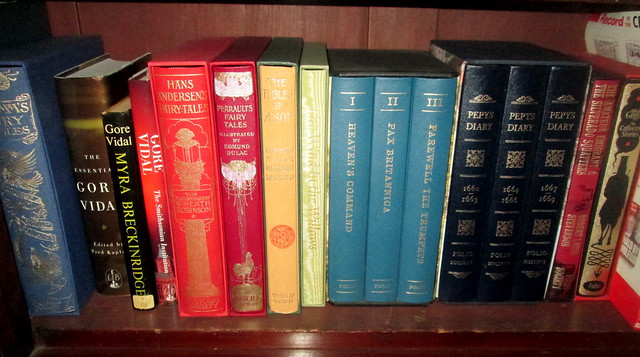
More of my bookshelves

Continuing a wee keek at some of my bookshelves.

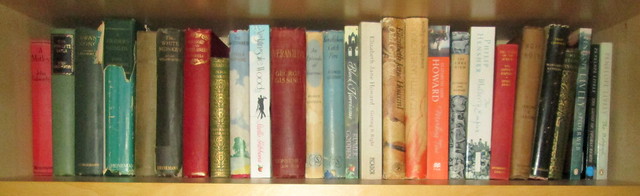
I realised that this shelf which is in the sun room contains a couple of Rumer Goddens, but the rest are upstairs. When we moved house I swore I would sort out all my books alphabetically, but it isn’t happening, mainly because I have so many of them that I fit them in wherever I can, depending on height.

My Books

The shelf below ranges from Beverley Nichols to Nevil Shute, all favourites.

Katrina's Books

Some of my bookshelves

I’m going to be offline for a week or so, so I thought you might like to get a squint at just a few of my bookshelves meantime. I’m actually in the process of cataloguing all of my fiction books on computer, so that I can have a list of them all at my fingertips on my phone. I hate standing in a bookshop and wondering if I already have a copy of a book, it’s so difficult to keep track of them all and doublers do occur. I’m sure you know that feeling! I hate that Virago changed the design of their books, I so much prefer the plain old green ones. An old copy of High Wages sneaked in here, it’s a quandary, should I shelve books by publisher or author?

Virago Books

These books are the top two shelves in the bookcase nearest my side of the bed, within easy reach. I bet you own a lot of these ones too.
Katrina's Books

A Woodland Walk

A couple of weeks ago we headed out for a woodland walk in Balbirnie, taking a route less well travelled by us as it can get a wee bit boring stravaiging along the same paths all the time. Dust down your virtual walking shoes and accompany me!

Balbirnie path

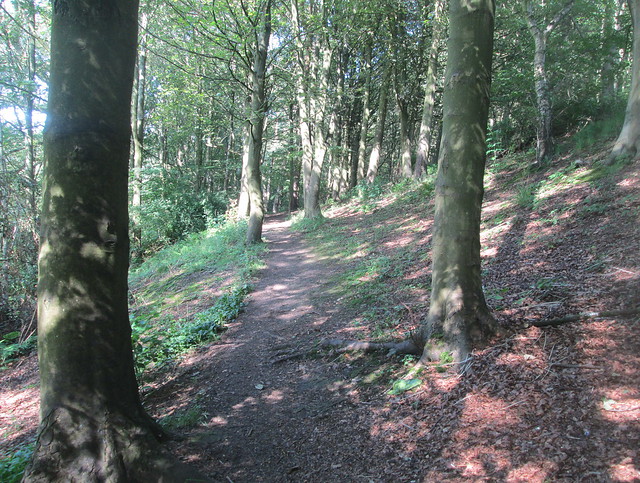
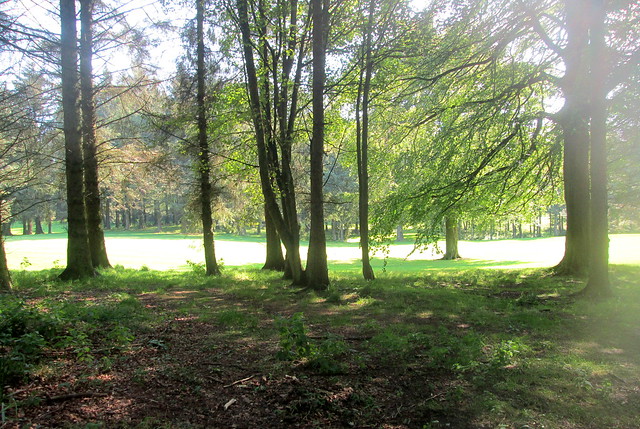
It was a hot day but setting off through the woodland it wasn’t long before the dappled shade and greenery brought some respite from the humidity.

Balbirnie woodland, Markinch, Fife

Back into strong sunlight, it looks like these trees are dead but the tops are nice and green looking.

Balbirnie Woodland, Markinch, Fife

You’re never far from a golf course in Fife and the Balbirnie course can be seen through the trees below. Someone told me that there are 53 18-hole golf courses in Fife and nobody has ever bothered to count the 9-hole courses – I can believe it!
Balbirnie golf course, Markinch, Fife

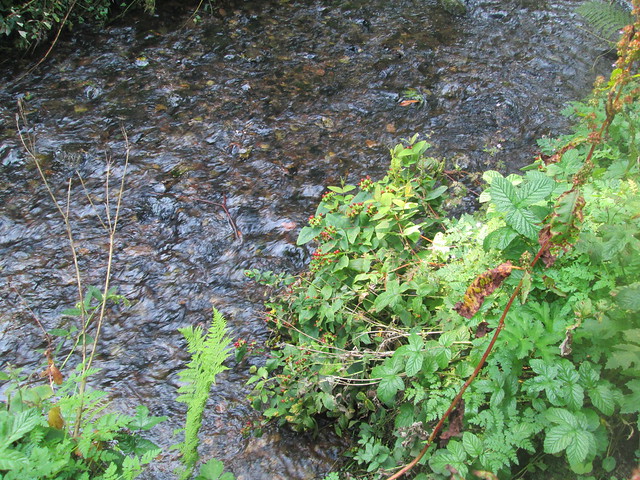
I always stop to scrutinise the burn when I reach it, living in hope of seeing some fish, but I’ve only seen a couple over the five years I’ve been that I’ve been looking.
Balbirnie burn, Markinch, Fife

Apparently it’s something to do with the lack of gravel on the bottom that means there’s nowhere for fish to lay their eggs. The environmental people are hoping to sort that out eventually.
Balbirnie burn side, Markinch, Fife

However I did spot this frog, so dark and completely unlike any others I’ve seen before. I saw a movement out of the corner of my eye and thought it was a piece of bark falling off the tree but it turned out to be this frog who realised he had been spotted and was in a tough spot, so I quickly snapped this photo and left him or her in peace.

Balbirnie frog, Markinch, Fife

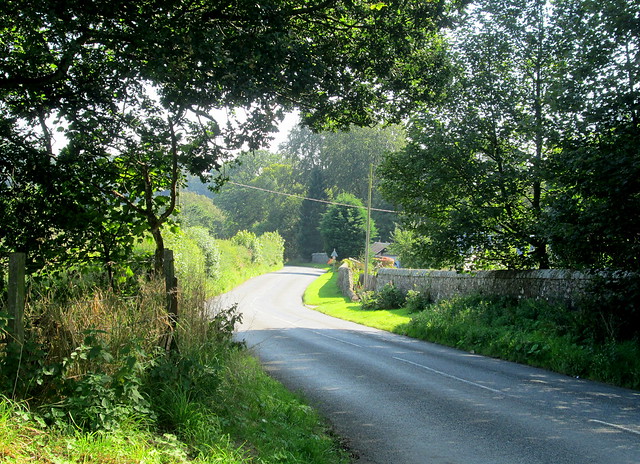
A rural road skirts the woodland, leading to the for me anyway romantically named village of Star of Markinch.

Fife road , (Star Road)

I hopped across the road to get a better view of the fields. It looks like the harvest has been quite a good one.

Fife Field  stitch

Back over the road again and into the woodland.

Stobcross road , Fife

I had only seen one redwood tree before but coming from a different direction I saw it was actually two planted very closely together, it seems strange.
redwoods, Balbirnie Woodland, Fife

Some doctors here have taken to prescribing patients suffering from anxiety and stress a woodland walk, instead of medication. ‘Bathing’ in forests is becoming quite trendy – and it works I think. I hope you’ve enjoyed this relaxing woodland walk. We did anyway!
Balbirnie woodland, Markinch, Fife

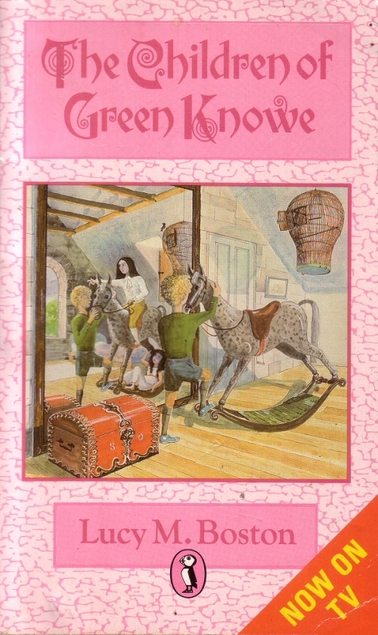
The Children of Green Knowe by Lucy M. Boston

The Children of Green Knowe cover

I’m still catching up with children’s classics that I missed out on when I was a child and someone in the blogosphere mentioned The Children of Green Knowe by Lucy M. Boston as being one of their favourites, so when I saw a copy of it just a week later in a secondhand bookshop in Ellon, Aberdeenshire it seemed like serendipity. This book was first published in 1954.

I have to say though that I don’t think I was in the right mood to read this book as other people seem to rave about it and I thought it was just okay. I will continue with the series though as the fourth book in the series won the Carnegie Medal and I’m trying to work my way through that lot.

Green Knowe is an old house and it belongs to Tolly’s great grandmother. Tolly’s mother is dead and his father and step-mother are in India. Poor Tolly is at boarding school and doesn’t even get to see any family over the holidays, so visiting his great grandmother for the first time is rather nerve-wracking. But she’s a lovely old lady and tells Tolly all about the previous generations of children who have lived in the house. The spirits of the children – and a horse – still inhabit the place, Tolly can hear them and eventually he can see them too and he’s able to play with them.

Green Knowe is based on Lucy M. Boston’s own home in Hemingford Grey, a village in Cambridgeshire and I believe it and the garden she created are open to the public. She was a student at Somerville College, Oxford in 1915 but left to become a nurse at the front in France. She didn’t begin her writing career until she was over 60. I think her memoirs might be a lot more interesting. She wrote Perverse and Foolish about her wartime experiences and Memory in a House is about her renovation and restoration of her house.

You can see images of The Manor at Hemingford Grey, the original of Green Knowe here.

Bombs on Aunt Dainty by Judith Kerr

A Lovely Way to Burn cover

I enjoyed reading Judith Kerr’s When Hitler Stole Pink Rabbit so much that I decided to read the sequel as soon as I could get it from the library. In Bombs on Aunt Dainty, Anna (Judith) is now a teenager and living in London with her parents and older brother Max. The city is full of refugees who have escaped from the Nazis and you can imagine their depression as they all gathered around radios listening to the news of the German army swarming through country after country and seemingly only kept at bay from England by that very narrow channel. A lot of the ‘enemy alien’ men were taken away and interned on the Isle of Man and as Max discovered, even the people of German extraction who had gone to school in England were deemed to be possible dangers to the security of the country, despite them being some of the first victims of the Nazis.

This is another lovely read with Anna growing up and discovering her talent for drawing, and infatuation with her drawing teacher. As soon as Anna and her brother Max got to England they seemed to feel that they had reached home. They didn’t feel like that about Switzerland or France where they had lived for quite some time, until they didn’t feel safe there any more. They both assimilated so well that people didn’t even realise they were German, but their parents struggled with the poverty that they had never been used to and the complete change in their circumstances. Even when the Nazi bombs began to blitz London they stayed put until they were completely bombed out and a lack of money was a constant worry.

All through the book it’s obvious that the English were admired greatly. I can’t help wondering what happened to the traits that engendered such admiration, they’re not at all in evidence nowadays.

I was annoyed by the constant use of the word England when what the author meant was Britain and even worse was that the many allied forces didn’t get a mention at all, as if it was only England who fought against the Nazis when of course it was also fought by New Zealand, Australia, Canada, South Africa, India, Russia and of course eventually the USA. However using England when they meant Britain was a habit that people of a certain generation got into.

If you like a wartime setting you’ll enjoy this one. Now I’ll have to track down the next book – A Small Person Far Away in which Anna apparently goes back to Berlin after the war. I imagine it wasn’t for long though.

Pitmedden Garden, Ellon, Aberdeenshire

We visited Pitmedden Garden when we were in Aberdeenshire recently. It’s a place that I have wanted to visit for something like 40 years after watching the early days of the Scottish gardening programme The Beechgrove Garden, because one of the presenters – George Barron – was the head gardener at Pitmedden then.

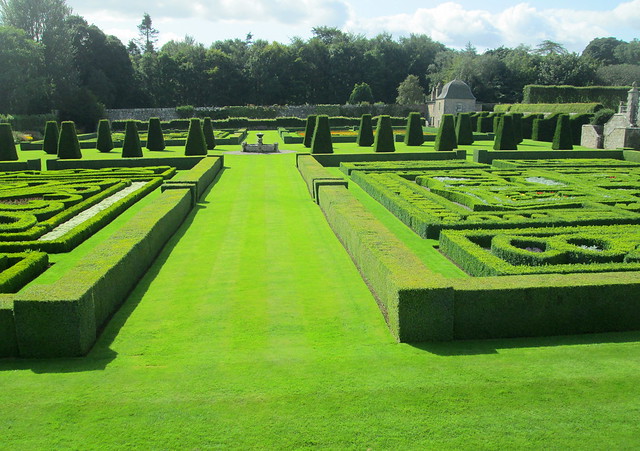
Pitmedden Garden, Ellon, Aberdeenshire

Apparently I took 42 photographs while we were there, but I’ll just show you a few of them just now, to give you an idea what it’s like if you’ve never been there.
Pitmedden Garden, Ellon, Aberdeenshire

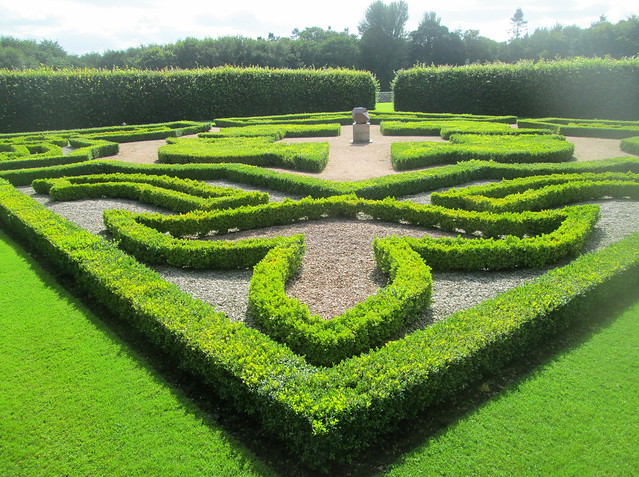
Pitmedden Garden, knot garden, Aberdeenshire

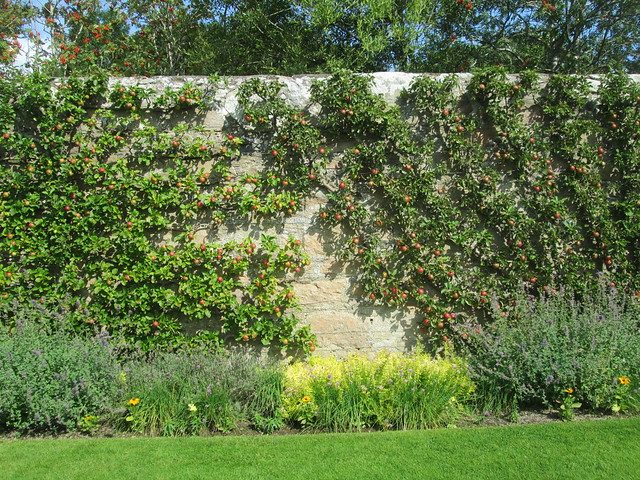
The garden is a wonderful knot garden with over six miles of clipped box and yew hedges as well as a fairly recently replanted orchard. Most of the trees in there are too new to have much of a crop, but the older trees which are trained against the tall stone walls were well laden.

apples, Pitmedden, Aberdeenshire

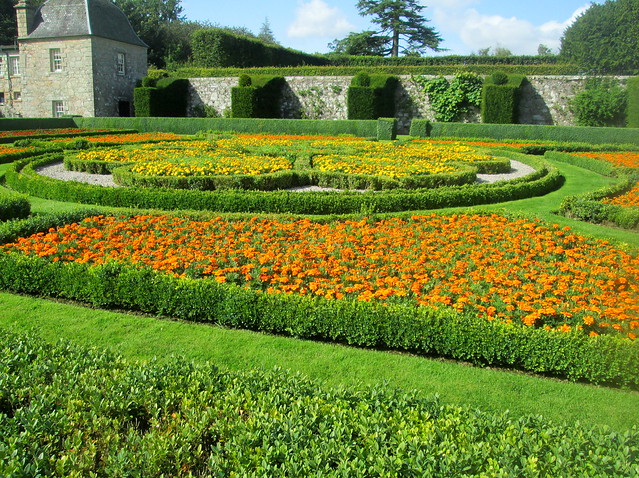
One of the great things about this garden is that despite the fact that its ‘bones’ are set in the intricate box patterns, it will still be ever changing as the spaces are planted up with seasonal bedding plants. The area in the photo below was filled with several different sorts of marigolds. I love the topiary yew buttresses aginst the walls in the background too.

Pitmedden Garden, Ellon, Aberdeenshire

It isn’t all formal though, there are some lovely overflowing mixed herbaceous borders too.
mixed border, Pitmedden Garden, Aberdeenshire

We were there quite early on a Saturday morning and almost had the place entirely to ourselves. It’s definitely worth visiting if you’re in Aberdeenshire.

Below is a You Tube video of the beginnings of Beechgrove Garden and you can see George Barron and Jim McColl chatting away, George had a lovely Aberdonian accent which wasn’t something I had heard much of back then. Occasionally he slipped into the ‘Doric’ but not often enough for my liking!

Swallows and Amazons by Arthur Ransome

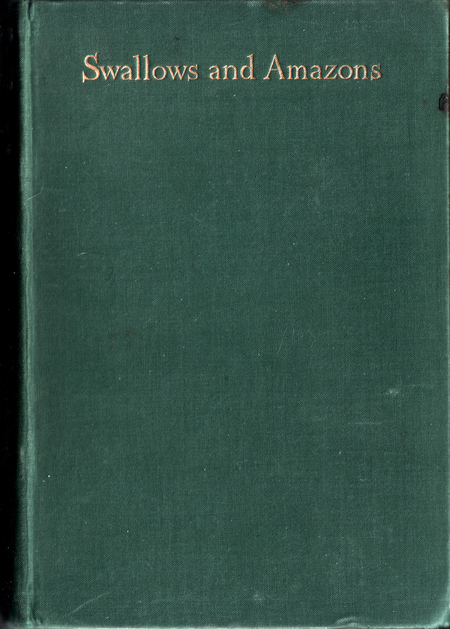
Swallows and Amazons cover

Swallows and Amazons by Arthur Ransome is the first book in the series which is set in the Lake District, I believe it was Coniston Water and Lake Windermere that inspired Ransome to write these books. I’m fairly sure that I read one donkey’s years ago but after we visited Coniston around this time last year I thought I would start at the beginning of the series again. This book was first printed in 1930 but my copy dates from 1942 and according to the inscription it was given to Frank for his birthday on 27th of August 1943.

The Walker children John, Susan, Roger and Titty (what possessed the author?) are in the Lake District for the summer holidays. Their mother is busy with the new baby and father is away, but has given the children permission to sail to one of the islands in the lake and camp out there. Mother gets out her sewing machine and makes a couple of tents and the children are well stocked up with food and equipment. They’re dab hands at sailing too and manage their borrowed dinghy Swallow professionally.

Sailing towards the island they sail past a houseboat, complete with a small cannon, a green parrot and a man that they name Captain Flint. He doesn’t seen at all friendly. The island seems perfect but there’s evidence of previous inhabitants with a pile of wood and the remains of a fire.

It isn’t long before another boat turns up, it’s called Amazon and is skippered by two girls who live locally. Nancy and Peggy fly a pirate flag and are up for adventures. John is impressed by their sailing knowledge and it isn’t too long before they’re all friends. It turns out that Captain Flint is really their Uncle and up until this year he had been good fun, but since he has started to write a book about his travels he has changed into a curmudgeon and sees the children as his enemy.

There’s a bit of a mystery going on but really the charm of this book is that you can’t help wishing that you too are by a lake with a wee boat to sail around in, visiting various islands and just getting away from it all.

It was different times though and I imagine that if parents allowed four of their children aged from 7 to 12 to sail off and fend for themselves social services would have something to say about it!

I believe that in the modern reprints of these books the character of Titty has her name changed to Kitty. I’m wondering what Titty was supposed to be short for – maybe Felicity of Verity but presumably in 1930 it wasn’t deemed to be faintly not nice for a wee girl.

Sometimes when I read books I have a particular piece of music going through my head, for this one it was of course Deacon Blue’s Dignity.