The Revolving Door of Life by Alexander McCall Smith

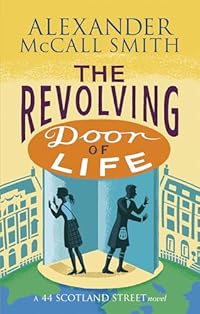
 The Revolving Door of Life cover

The Revolving Door of Life by Alexander McCall Smith is the latest in his 44 Scotland Street series. I didn’t enjoy the previous one as much as I had some of the others, but this one was better I think.

Bertie is still only seven years old, I reckon that that is the third book in which he is still seven. At the end of the previous book Bertie’s mother Irene has gone on a trip to the Persian Gulf and she has somehow ended up being taken captive in a sheik’s harem there. Irene is a very pushy and truly ghastly sort of female Edinbugger, a keen devotee of the child psychologist Melanie Kline and that has led to her trying her best to emasculate poor wee Bertie – perish the thought that he should want to do anything ‘boyish’ or even wear anything normal such as blue jeans. Bertie must wear pink dungarees. Her long suffering husband Stuart is enjoying the respite and fears that Irene will find her way back to Edinburgh all too soon. Meanwhile his mother has come to help him look after his two sons – Bertie and Ulysses.

The lack of Irene is probably why I enjoyed this book more as she is so annoying. As ever there are moral decisions to be taken by many of the characters in the book. Such as – is it fair game to set up someone you know to be a gold-digger in order to rid your father of her attentions? Everybody makes the correct choices and everything is hunky dory – if only real life were like that!

Bertie’s ambition is to move to Glasgow as soon as he legally can – and he thinks that is when he is 18, at this rate he’s never going to reach there which is a real shame because I would love it if McCall Smith continued the series in Glasgow at some point.

I read this one for the Read Scotland 2016 Challenge, my 35th or possibly 36th.

The Santa Klaus Murder

The Santa Klaus Murder cover

I know that lots of bloggers have been reading The Santa Klaus Murder by Mavis Doriel Hay and because I have a copy of it and intended to read it around about Christmas time I didn’t read any of their reviews, so I have no idea what they thought of it.

I have to say that although I fairly happily read the book right to the end I was very disappointed by the story because the culprit turned out to be who I thought it might be almost from the very beginning.

I found the whole book to be very predictable. I’ve read quite a few of these British Crime books this year, some have been good but with others the best bit has definitely been the cover art. Speaking of which, I really like the cover of this one. I’d be quite happy to move into that house.

What about you, have you read The Santa Klaus Murder and were you disappointed by it too?

Read Scotland 2016 Challenge

I’ve really enjoyed doing the Read Scotland Challenge this year and I’m definitely doing it again in 2017. I managed to read thirty-five books by Scottish authors or with a Scottish setting or link. I’ve been fairly strict with myself though as I’ve just finished reading a book by an author who according to the back blurb now lives in Glasgow, but there was nothing Scottish in her book so I’m not counting that one at all.

I’m going to be compiling a list soon of some of the Scottish books I plan to read in 2017. It’ll include a few classics by Sir Walter Scott and R.L. Stevenson and I think some other people doing the challenge will be doing a readalong at some point, RLS’s The Black Arrow has been mentioned as a possibility, it’s a historical adventure set at the time of The Wars of the Roses. It’ll be different anyway!

1. Beneath the Abbey Wall by A.D. Scott
2. The Factory on the Cliff by A. G. MacDonell
3. Lament for a Maker by Michael Innes
4. Night and Silence by Aline Templeton
5. A Life, Josephine Tey by Jennifer Morag Henderson
6. Fatty O’Leary’s Dinner Party by Alexander McCall Smith
7. Murder at the Loch by Eric Brown
8. The Moon King by Neil Williamson
9. Touch Not the Cat by Mary Stewart
10. Instructions for a Heatwave by Maggie O’Farrell
11. Water on the Brain by Compton Mackenzie
12. Fair Helen by Andrew Greig
13. Cork on the Water by Macdonald Hastings
14. The Hangman’s Song by James Oswald
15. Wildfire at Midnight by Mary Stewart
16. Crossriggs by Jane and Mary Findlater
17. A God in Ruins by Kate Atkinson
18. The Game of Kings by Dorothy Dunnett
19. Life After Life by Kate Atkinson
20. Murder of a Lady by Anthony Wynne
21. Candleshoe by Michael Innes
22. Nine Coaches Waiting by Mary Stewart
23. The Land the Ravens Found by Naomi Mitchison
24. England Their England by A.G. Macdonell
25. Kate Hardy by D.E. Stevenson
26. The Revolving Door of Life by Alexander McCall Smith
27. The Rival Monster by Compton Mackenzie
28. Furnished for Murder by Elizabeth Ferrars
29. A Smile in One Eye a Tear in the Other by Ralph Webster
30. Emotionally Weird by Kate Atkinson
31. After the Dance by Iain Crichton Smith
32. Queens’ Play by Dorothy Dunnett
33. Winter Solstice by Rosamunde Pilcher
34. Dandy Gilver and A Most Misleading Habit by Catriona McPherson
35. Glasgow Interiors by Helen Kendrick

Glasgow Interiors by Helen Kendrick

Glasgow Interiors cover

Glasgow Interiors by Helen Kendrick is a beautifully produced book with lovely photographs by Neale Smith – of all sorts of Glasgow buildings interiors, it was one of the many books I got last year for Christmas and I’ve been dipping into it throughout the year, so it has taken me until now to reach the end.

The interiors featured include the small but perfectly formed art deco University Cafe in Byres Road, a great place to go for an ice cream and the fish suppers from their take-away next door are the best I’ve ever tasted – and I’ve tried a fair few chippies in my time. That’s the smallest interior I think, most of the others are very grand indeed and quite a lot of them have changed use over the years – from private homes or churches to hotels, restaurants or wine bars.

I now have a long list of places to visit whenever we go to Glasgow in the future as I want to see some of the glories in reality.

The most popular designs in Victorian Glasgow are art nouveau and even the common closes/stairways of tenement buildings often have wonderful tiled walls, with the doors also having beautiful stained or leaded glass window panels in them, very stylish, but something that I really took for granted when I was younger. It’s only recently that I realised that Edinburgh Victorian tenements don’t have the same elegant style, they just have plain painted walls and doors. Glasgow has always had a lot more style than Edinburgh – in the surroundings and the people!

Charles Rennie Mackintosh’s work doesn’t feature in this book though. It’s explained that there are already many books dedicated to his designs which is fair enough.

I read this book for the Read Scotland 2016 Challenge. It’s my number 35.

Guardian Review links

I’ve really enjoyed the few Maggie O’Farrell books that I’ve read fairly recently, so I was interested in reading her article My working day ‘A book has its own engine that is always running somewhere at the back of your mind’ You can read the article here.

There’s an article by A.S. Byatt which you can read here.

There’s a new TV drama about the Bronte sisters coming on soon and Sally Wainwright talks to Tracy Chevalier about the siblings here.

If you can stand to read anything about politics you might find this article interesting. Siri Hustvedt is writing about feminism, the arts-science divide and misogyny in the presidential election.

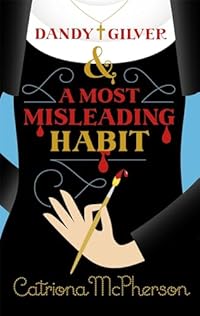
Dandy Gilver and A Most Misleading Habit by Catriona McPherson

 Dandy Gilver and A Most Misleading Habit cover

Dandy Gilver and A Most Misleading Habit by Catriona McPherson is the latest in the Dandy Gilver series that I’ve been enjoying over the past few years.

The setting is Scotland, the bleak moors of Lanarkshire, and Dandy is called in to investigate a break out of inmates at a remote mental hospital on Christmas Eve 1932, and a fire that broke out the same night at a nearby convent.

Of course Dandy’s side-kick Alec is helping out as usual although he isn’t able to do much of the investigating in the convent, he concentrates on the mental hospital.

I don’t think this book is as successful as the previous ones, a lot of it just feels so wrong given that it is a convent in the early 1930s. Everyone is just too happy and it is just too unrealistic with the orphanage attached to the convent being full of well-loved children, unlikely even within a sort of freelance convent as it is. There were so many mentions of ‘sister’ in it, it was even mentioned by Alec in the book that he was tired of the word, or something to that effect. I suppose I’m just not that fond of a convent setting.

There wasn’t much in the way of banter between Dandy and her maid Grant, or even between Dandy and Alec although her husband Hugh played a larger part in this story and he’s a good character I think so that was welcome.

I will definitely read the next one in the series though.

I read this one for the Read Scotland 2016 Challenge.

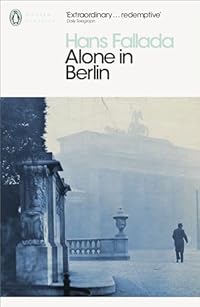
Alone in Berlin by Hans Fallada

 Alone in Berlin cover

Alone in Berlin by Hans Fallada was a completely random choice by me at the library. The book was first published in 1947 and although it’s a Penguin Modern Classic, I had never heard of it.

What a read it is! Given the subject matter it is obviously not a comfy read in fact it’s really quite horrific in parts, especially when you realise that a lot of it was based on actual happenings.

The setting is Berlin in 1940. It’s a city full of fear, run by thugs and gangsters in various uniforms, with spies everywhere. Many of the people are Nazi Party members, often just so they can get a decent job, but then they are expected to contribute so much money to various Nazi funds. It’s quite similar to the austerity that the British government likes to control those of us in the UK with – only worse.

But some of the people are tired of living in fear and when Otto Quangel’s soldier son is killed it’s the last straw for him. He has to do something to fight against the Nazis and decides that the best thing he can do is write postcards criticising the Nazis and the war and leaving them around Berlin, thinking that they will be passed around by whoever finds them. His wife Anna thinks that they should be doing more than that but as he would be executed if he was caught she agrees that it is enough and ends up helping him.

Sadly almost all of the postcards are handed in to the Gestapo as soon as they are found. Everyone is too terrified to have something like that in their possession. Gestapo Inspector Escherich has the job of tracking down the perpetrator, and his superiors aren’t impressed that it is taking him so long to do it, he’s living in fear of being sent to a concentration camp if he can’t find the culprit.

Meanwhile the other inhabitants in their tenement block are brought into the story. Mrs Rosenthal is an old Jewish woman, on her own now since her husband was taken away by the Gestapo. The Persickes are red hot Nazi thugs, drunken and violent and keen to get their hands on Mrs Rosenthal’s possessions.

Alone in Berlin tells how the Nazis got a grip on the German people in 1933 and by the time they started taking over other countries their own people were also well under control. Of course lots of them were very enthusiastic Nazis but those who weren’t had to keep their heads down, otherwise they would lose them!

It had never occurred to me before that while people in the UK were having to live with harsh rationing, a lot of Germans were enjoying the good life as so much stuff had been looted from the countries that they were over-running.

This is a great read but Hans Fallada got the idea for it from an actual couple who did exactly what Otto and Anna had done, and came to a similar end – a horrible thought.

The author had quite a wild life himself, with alcoholism and drug addiction. I’ll definitely be seeking out his other books.

This book is a Penguin Modern Classic so I read this one for the Classics Club.

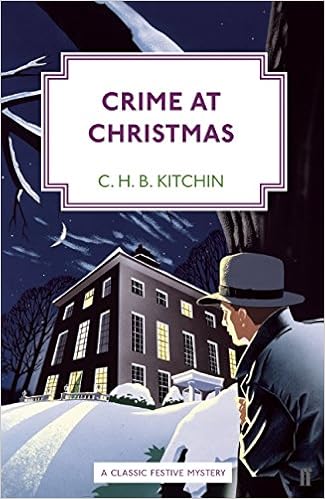
Crime at Christmas by C.H.B. Kitchin

Crime at Christmas cover

Crime at Christmas by C.H.B. Kitchin was first published in 1934. I had never read anything by this author before so had no idea what to expect. I ended up enjoying this book, the author is quite witty, but there is a real sense of deja vu and plus ca change as one of the main characters is a stockbroker and just as now stockbrokers and bankers weren’t exactly admired. Yes it seems that nothing ever does change for the better in this world of ours.

It’s a murder mystery set in a large house but not in the country, in fact Beresford Lodge backs on to Hampstead Heath in London, one of several large houses in the area although the nearest one is empty and derelict.

Malcolm Warren, a stockbroker, has been invited to spend Christmas there, it’s a party of close friends and relatives. During a silly party game Malcolm trips up and badly hurts an arm and wrist, the shock makes him sick and after being looked at by a doctor Malcolm takes to his bed.

He’s in for an even nastier shock though as during the night a body has landed on his room’s balcony and so begins the mystery.

I enjoyed this book although I think it did rely too much on coincidence. At the end of the story there is a question and answer section where the author explains any questions that a reader might have about it. It wraps up any loose ends.

The blurb on the back says:

‘Kitchin’s knowledge of the crevices of human nature lifts his crime fiction out of the category of puzzledom and into the realm of the detective novel. He was, in short, ahead of his time.’
H.R.F. Keating

I read this book for the Christmas Spirit Reading Challenge.

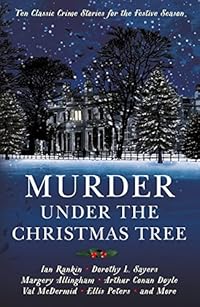
Murder Under the Christmas Tree – short stories

 Murder Under the Christmas Tree cover

Murder Under the Christmas Tree is a compilation of short stories by well known authors, all set around about Christmas – as you would expect.

The first story is The Necklace of Pearls by Dorothy L. Sayers. I’m quite a fan of Sayers but I have to admit that I was a wee bit disappointed with this one as I guessed the solution fairly quickly.

The other contributers are Ian Rankin, Margery Allingham, Arthur Conan Doyle, Val McDermid, Ellis Peters, Edmund Crispin, G.K. Chesterton, Carter Dickson and Ngaio Marsh. The sleuths include Holmes, Lord Peter Wimsey, Cadfael, Father Brown, Rebus and others you will recognise.

It’s quite a collection of authors and I’m sure there’s something for everyone here, well everyone who enjoys a good murder around the festive season – as I do!

I read this book for the Christmas Spirit Reading Challenge.

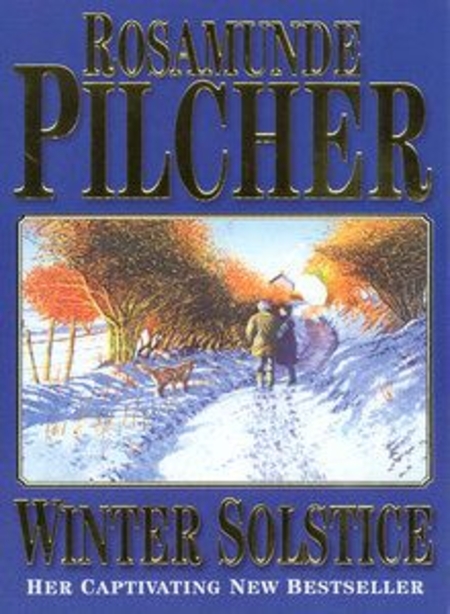
Winter Solstice by Rosamunde Pilcher

Winter Solstice by Rosamunde Pilcher was first published in 2000 and it was the last book that she wrote as she retired from writing then although she lived for for quite a few years after that.

I’ve read quite a few of Rosamunde Pilcher’s books and I suppose they come under the category of comfort read, although in this one there is a tragedy, but it doesn’t involve any characters that the reader gets very involved with.

Elfrida has retired and moved from London to a small cottage in Hampshire where she intends to supplement her income by making cushions and home furnishings and selling them on to a posh London shop. She makes a good job of settling into her new life and making good friends in the area, she has a gorgeous rescue dog called Horace as a companion, but there’s no doubt that the one person who is most important to Elfrida is her neighbour Oscar, but he’s already married with a young daughter.

Circumstances lead to Oscar having to move back to the north of Scotland where he had been brought up and Elfrida gives up her comfortable life to join him there, and so begins a sort of tour of various houses in that area. In fact I felt that it was a bit like reading one of those glossy homes magazines. Some of the properties mentioned were definitely in need of refurbishment and others were very desireable indeed.

I feel that Pilcher had decided to modernise her writing a bit for the new millenium. One of the main characters is a woman who has had a long term affair with a married man and it has come to an end. I can’t be sure, because it’s quite a while since I read any other Rosamunde Pilcher books but I don’t think she had previously had a main character who had had an affair with a married man. I think in most romances a woman like that would have been seen as a bit of a wicked witch and not the main character.

In fact towards the end of this book something happens (you know me, I don’t want to say too much) and probably a lot of people would think that it is just too unlikely but – hold on to your hats girls – some husbands/widowers DO replace their wives after only a couple of months of their death, well they do in Kirkcaldy anyway. I know, I have said too much! Anyway, Winter Solstice is an enjoyable jaunt from Hampshire via London and on up to the wilds of Creagan which is north of Inverness in the Highlands of Scotland, and you can go on a tour of the places mentioned in the book, have a look here if you’re interested. There’s romance a-plenty too.

You can see some images of Creagan here.

I read this one for the Christmas Spirit Reading Challenge 2016 and also for the Read Scotland 2016 Challenge