Balmaha, Loch Lomond, Scotland

Balmaha, Loch Lomond, Scotland

It’s just over a month since we travelled over to the west of Scotland to visit a Doors Open weekend, we managed to fit in a visit to Loch Lomond too. The photos here are of Balmaha which is a place that I had never visited before despite growing up nearby. It’s a dead end as there’s one road in and out!

My idea of heaven would be to be puttering around on the loch, even in a rowing boat, but one of these ones might be better at my age. It’s a good long while since I rowed my cousins around on Loch Long. I got the job of rowing as I was the country cousin and they were the city kids. Actually it was 50 years ago and when I think about it now I go quite cold as I don’t think any of us could swim and in those days nobody used life-jackets.

Balmaha, Loch Lomond, Scotland

It was September the ninth and the place was full of visitors, it was a golden evening and quite warm, probably the last day of summer weather, I had my sun hat on. It’s an awful lot chillier now. The tourist information page recommends arriving by boat as parking your car can be difficult, but we managed with no problem, I imagine that in the summer months it will be heaving with people.

Balmaha, Loch Lomond, Scotland

At the Balloch side of Loch Lomond in the photo below there were people doing various water sports. Sadly people drown every year in the loch, it’s very cold and I think that shocks people, even good swimmers.

Loch Lomond, Scotland

You can see lots more images of the area here.

Dyce Symbol Stones, Saint Fergus’s Church, Aberdeenshire, Scotland

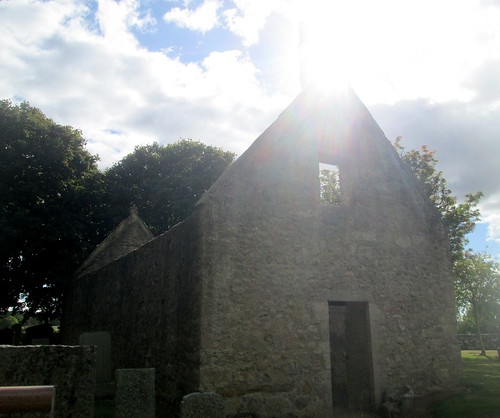
We visited several standing stones and symbol stones while we were in Aberdeenshire recently, including the stones at the ruin of Saint Fergus’s Church in Dyce.

Dyce Symbol Stones  info board, Aberdeenshire

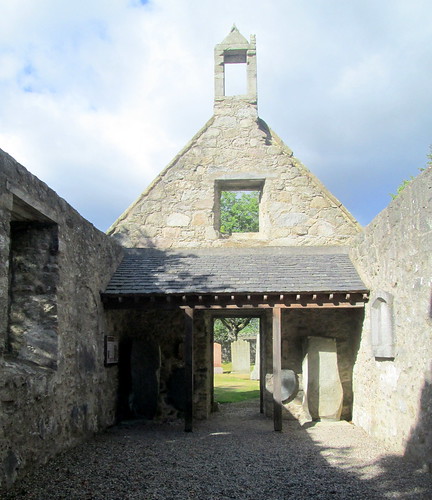
As you can see from the photo below it was a sunny day, the stones are just behind the front wall which you can see below.

Dyce Symbol Stones St Fergus's Church

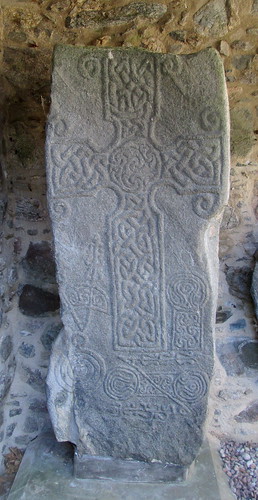
They’ve built a wee canopy to keep the worst of the weather off them. The church itself dates from the 13th century, but the Pictish symbol stones date from the 800s and they’re in remarkably good condition.
Dyce Symbol Stones , St Fergus' Church, Aberdeenshire

Dyce Symbol Stones , Aberdeenshire, Pictish

Dyce Symbol Stones, Pictish, Aberdeenshire
Dyce Symbol Stones, Aberdeenshire, Scotland

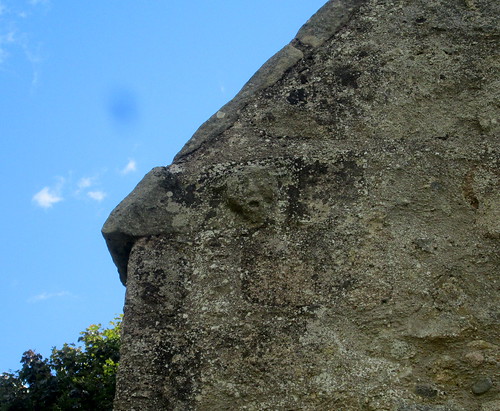
Before the 13th century church there was probably a wooden church on the site which would have had these stones as decoration, there’s also part of a broken font. We weren’t the only people looking at the stones, there was a lovely man who was a retired stonemason and he had worked on the church years before, so he pointed out things of interest to us, incuding the ‘green mannie’ on the corner of the building which you can just see in the photo below, he had actually discovered it when he was repointing the church, you might have to click to enlarge it. I always think of the green man as being a Celtic symbol, but he was also popular in England I believe, supposed to be a good luck symbol.

Dyce Symbol Stones Green Man

They certainly chose a beautiful location for the church as just across the road from it is the River Don in the photo below, there are just a few houses in this area, what a great view they wake up to in the morning!

Dyce River Don, Aberdeenshire

Dyce River Don, Aberdeenshire

Dyce River Don, Aberdeenshire

Jupiter Artland, Edinburgh

A couple of weeks ago we celebrated our 46th wedding anniversary (I know, but I was a child bride!) and we couldn’t think of anything better to do than to spend the afternoon at Jupiter Artland, which is an outdour sculpture park by Edinburgh. It was a hot day, and we hadn’t had any rain for quite a while but as you can see the Charles Jencks landforms below are holding up quite well to the drought.

Jupiter Artland, Charles Jencks Landforms

In the distance you can just see the three bridges which span the Firth of Forth in the photo below.

Three Bridges from Jupiter Artland

I must admit that I’m not that enamoured with some of the art on offer here but it’s a lovely place to walk around and when it got too hot we just headed for the surrounding woodland for the shade. I wasn’t too impressed with this ‘bomb’ below, but each to their own.
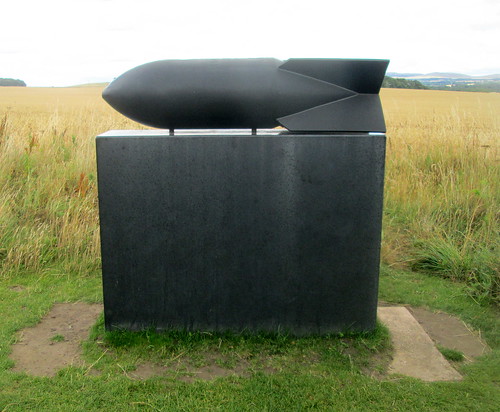
Jupiter Artland, Bomb Sculpture

I didn’t really think much of the Tracey Emin sculpture below either, but Jack quite liked it. He took some of these photos.
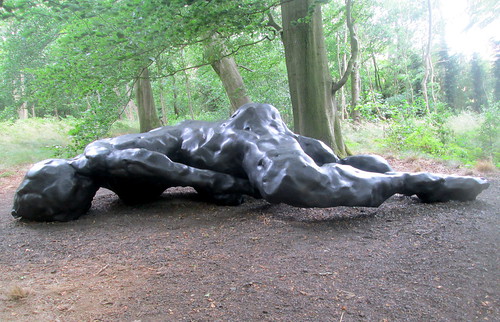
I Lay Here For You at Jupiter Artland

You won’t be surprised to know that I was more impressed by the garden which surrounds what was the separate ballroom of the ‘big hoose’ where the owners of the Artland still live.

Jupiter Artland Ballroom Garden

The ballroom houses some of the Tracey Emin paintings, you can see some here but the link is really better for showing the inside of the ballroom. The artwork is ‘parental advisory’, and Emin seems to have just one thing on her mind at the moment, these paintings are all very recent, done after her radical cancer surgery.

Below is the garden gate. I love the design of the grass intersected by paviors.

Ballroom Garden gate, Jupiter Artland, Edinburgh

And through the gate you can see one of those lit up signs similar to the ones at Modern 1 and 2 in Edinburgh. I find those ones a bit depressing.

You Imagine What You Desire, Jupiter Artland

Ballroom Garden, Jupiter Artland, Edinburgh

And below is the ballroom building which at the moment houses part of their Tracy Emin exhibition, we didn’t stay long, but as ever admired the interior decor.

Ballroom, Jupiter Artland, Edinburgh

The ceiling looks like an intricately iced wedding cake, upside-down.

, Edinburgh

I did quite like the very large metal structure below which is called Firmament. For some reason there are no information boards about the artworks but there was on the map we were given at the entrance. Firmament is by Antony Gormley. There are info boards in areas where art used to be located but has been moved on, telling what used to be there.

Firmament, Jupiter Artland, Edinburgh

Way off in the distance we could see a tower and it turned out to be the rose walk below. It’s made of wood, I don’t know how well it’s going to weather Scottish winters, but it looks very elegant now. It would be a lovely place to get married I think. Oops, I’m in this one which Jack took.

Jupiter Artland, The Rose Walk,

All of the roses are white but you can’t really see them in the photos.

Jupiter Artland, The Rose Walk, Jupiter Artland

The heleniums below were enjoying the heat and sunshine. This path surrounds the pond.

Helenium , Jupiter Artland, Edinburgh

We had a walk around the nature pond, if you look carefully you should be able to see the swans with their three cygnets.

Pond 2 Swans, Jupiter Artland

Jupiter Artland is on the outskirts of Edinburgh and is close to the flightpath for the airport. Below I managed to capture an aeroplane on my phone, as it flew over the Jencks landform.

Landform + Plane, Jupiter Artland

Then it was time for lunch at the cafe, which was very good. It was the perfect way to celebrate 46 years of annoying each other!

Wideford Hill Chambered Cairn, Orkney

While we were on Orkney we wanted to visit Wideford Hill Chambered Cairn, it took a bit of finding and when we did find a signpost it pointed up to what was a very stoney and bumpy twisty turny track for what seemed like ages, I feared for our new car! Eventually we reached a wee car park and the signpost there said the cairn was a half mile walk from there. Hmmm, it wasn’t. It might have been half a mile as the crow flies but as we didn’t have wings that was no help to us! It must have been at least two miles on a very dry springy peaty, but at times stoney track, up hill and down dale and all at a slant! I was very impressed that our octogenarian friend managed it all so well – so was she! It was a beautiful day though, it was just a bit worrying that we never seemed to be reaching our destination, but as you can see from the photo below the view was fine.

From Wideford Hill, Orkney

Below is the information board. Click to enlarge it if you need to.

Wideford Hill Chambered Cairn, Orkney, neolithic

As you can see there’s a metal cover protecting the tomb, it has to be pushed back to gain entrance. Originally, when this tomb was built over 5,000 years ago the entrance would have been at ground level and you would probably have had to crawl through it.

Wideford Cairn, Orkney, neolithic tomb,

Wideford Chambered Cairn, Orkney, neolithic

Then there’s a metal ladder leading down to the floor of the cairn/tomb. Getting over the edge was a bit scary for me as the gap seemed quite big, but Jack just stepped over onto it, I made sure I had something to hang onto until my feet were firmly on a rung!

Wideford Chambered Cairn Ladder

It’s really a very small chambered tomb, the middle of it anyway, there are three side chambers which are bigger. We took a torch with us and I crawled halfway into one, but I wouldn’t go right in, too scary with all those tons of stone above you! But the bones that used to be in the chambers are long gone, it had been robbed by the time it was excavated in the 1800s. Jack didn’t go in either. There is a torch available in a wee cupboard outside the cairn, if you haven’t brought your own.

Inside Wideford Cairn, Orkney

Inside Cairn , Wideford, Orkney

Inside  Wideford Cairn, Orkney

On the walk back to the car I took more photos of the surrounding scenery, below is a stitch of three of them. The water you can see is a branch of the North Sea called the Bay of Firth.

From Wideford stitch, Orkney

Skara Brae, Skaill Bay, Orkney, Scotland

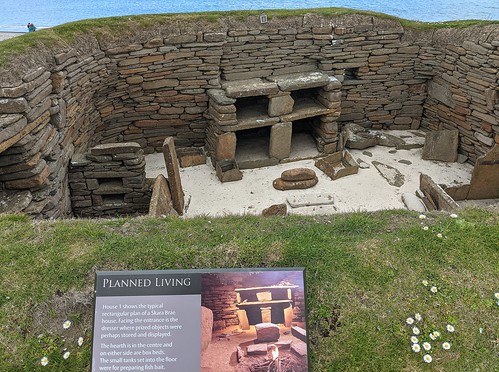
One place that I suspect everyone visiting Orkney makes for first is Skara Brae, a 5,000 year old neolithic settlement which was uncovered after a huge storm in 1850 displaced the sand that had been hiding it for thousands of years. It does look very like The Flintstones with the furniture being made of stone. I rather like the ‘sideboard’ which is situated opposite the front door, pride of place.

Skara Brae, Orkney, neolithic dwelling, Scotland

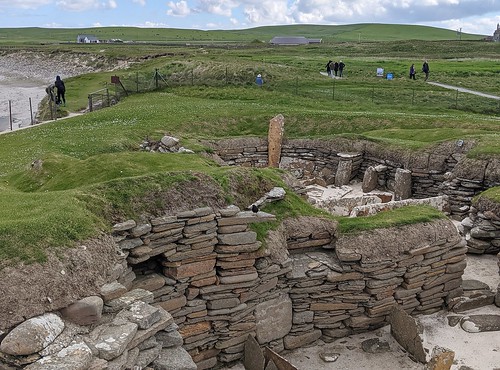
There are the remains of several different buildings, one of which seems to have been a workshop.

Skara Brae, neolithic dwelling, Scotland

There is a reconstruction of a house on the site too, but it’s dark and was full of people (quiet scary nowadays) so it wasn’t possible to take photos. But you can see some photos here.

Skara Brae, neolithic dwelling, Orkney, Scotland

Skara Brae, Orkney, neolithic dwelling, Scotland

Skara Brae, neolithis settlement, Orkney, Scotland

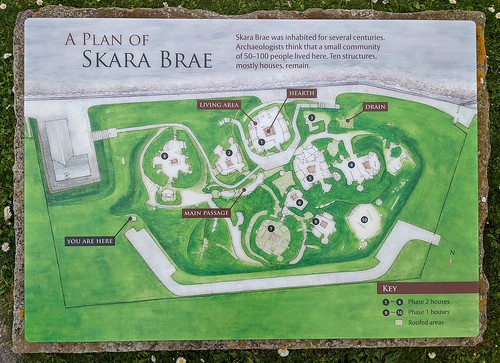
Skara Brae Map, Orkney, Scotland, plan

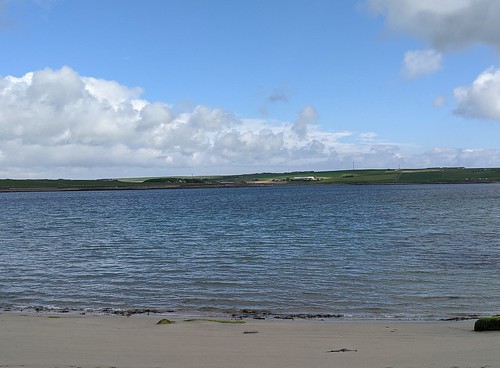
As the site is right on the edge of the sea it’s only a matter of time before it’s lost completely as the rough weather will eventually overcome the area and wash it all away, I wonder how much has already been lost.

Bay of Skaill, Orkney, Scotland

Brough of Birsay, Orkney, Scotland

Mainland Orkney from Birsay

While we were on Orkney on holiday recently we decided to revisit the island of Birsay as the last time we were there we had just stepped foot on it when the heavens opened and we were blasted with horizontal torrential rain – with not one bit of cover, so we just stood there and got soaked to the skin. It took three days for our clothes to dry out! The photo above is of mainland Orkney from Birsay, as you can see the landscape is unusual with no trees to be seen.

When I took the photo below I made sure that I was at least six feet from the edge of the cliff, thinking to myself that if I did trip I wouldn’t be likely to skid more than that, but the day after we left Orkney it was on the news that some poor soul did fall off one of the cliffs, no doubt as he was trying to get a good photo! He died of course as the cliffs in Orkney are among the highest in the UK – if not the highest.

Sea, cliffs on Birsay, Orkney, Scotland

The reason why we went to what is correctly called the Brough of Birsay was to see the Pictish, Norse and medieval remains there. It’s really just the outlines of the buildings that you can see but it’s all very picturesque with the drifts of Thrift flowers in bloom.

Brough of Birsay, Viking remains

It was incredibly busy this time. Birsay is a tidal island so you have to wait until the water has drained away before you can cross over on a causeway – by foot of course. At least the first time we went there we had the entire island to ourselves.

Viking remains , Brough of Birsay, Orkney, Scotland

Viking remains, Brough of Birsay, Orkney, Scotland

We walked up to the lighthouse which is where I took the photo of the cliffs and from there you can get a good view of the cliffs at Marwick Head – in the photo below.

Marwick Head from Birsay

I’m glad we managed to see the place in sunshine this time.

Marwick Head, Orkney, Scotland

We wanted to revisit the cliffs at Marwick Head, especially as it was such a stunningly clear and bright day weather-wise. The cliffs are full of nesting seabirds which you should be able to see if you click on the photo to enlarge.

Marwick Head

The photo below is of Marwick Bay with the island of Hoy in the background. Unfortunately we didn’t go to Hoy because the museum we wanted to visit was closed for refurbishment. Orkney was very busy during both World Wars as a strategic defence guarding access to the North Atlantic and the Home Fleet’s base in adjacent Scapa Flow.

Marwick Bay and Hoy ,Marwick Head

We were there at the right time for the Thrift flowers though. They bloom all around the cliffs.

Marwick Head, Thrift flowers, Orkney, Scotland

Marwick Head cliffs, Orkney

As you can see below there’s a massive tower at the top of the cliffs. It’s a memorial to Lord Kitchener, he drowned in the sea just off Marwick Head when the ship he was on – HMS Hampshire – hit a mine during World War 1, in 1916. You can read about it here. He was one of 737 who died when the ship went down. It does seem like some sort of payback for all the young men that he sent to their death via his ‘Your Country Needs You’ posters.

Marwick Head,Kitchener Memorial

Marwick Head , Orkney, Scotland

Apparently the next landfall from here is North America!

Marwick Head, Orkney, Scotland

I turned around and took the photo below from Marwick Head looking inland, just to let you see what the scenery is like. Orkney is definitely different from mainland Scotland, some people love the gentle looking hillocks, and certainly a lot of incomers have moved there from elsewhere but I don’t think I could ever live there for too long as I really miss trees. It’s a strange barren landscape that has no trees. There are a few dotted around in sheltered spots but they are almost all field maples/sycamores, they are probably the only ones that will survive the fierce winds.

Orkney, from Marwick Head

There are loads of rabbits in this area, with rabbit holes all over the place, which makes it qute dangerous as you certainly don’t want to catch your foot in one and take a header over the cliff! There are notices around telling you not to feed the rabbits as they are a menace, but there were dogs in the vicinity so they didn’t hang about for long when we were there – hence no bunny photos.

fromMarwick Head , Orkney, Scotland

Falkland Palace Gardens, Fife, Scotland

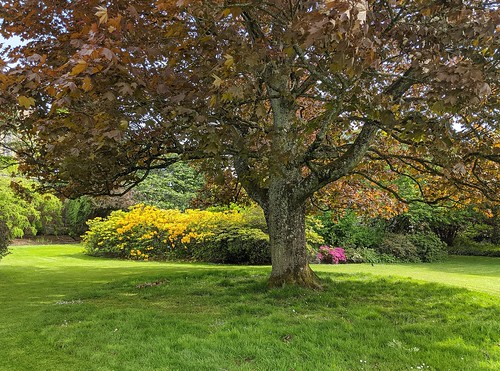
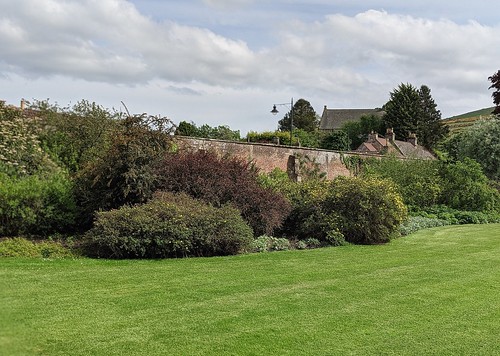
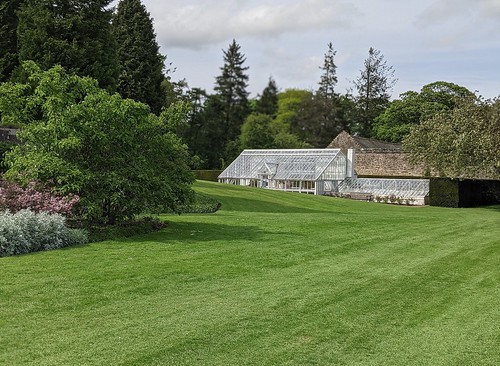
On the 18th of May we made a quick viisit to nearby Falkland Palace, I had wanted to see what the orchard looked like as the apple blossom in my garden was looking pretty, I thought the palace orchard would look fab, but their apple trees bloom far earlier than the ones in my garden. After realising that I vaguely remebered that I had discovered that the last time I tried to see the blossom! I must remember to visit earlier next year! Anyway, I enjoyed mooching around the other parts of the gardens, taking these photos.

Falkland Palace ,garden, shrubs

Falkland Palace gardens, Fife, Scotland

Falkland Palace Trees, Fife, Scotland

Falkland Palace Wall + Plants, Fife, Scotland

In the distance below you can see one of the Lomond hills, I’m never sure whether it’s the east or west Lomond.

Falkland, Orchard Lawn + Palace

Falkland Palace Lawn + Greenhouses

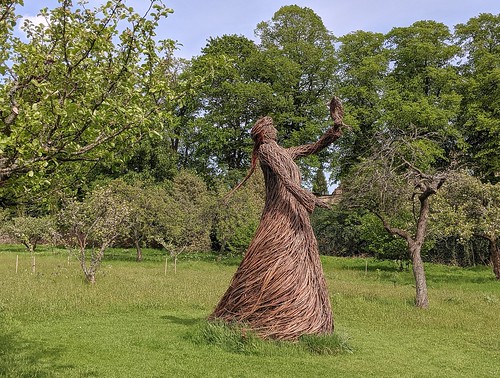
Back at the orchard there’s a huge sculpted wicker woman, she’s wearing well as she has been there for a number of years now.

Falkland Palace, Wicker Woman + Palace

I think possibly she’s meant to be Mary, Queen of Scots as she was very fond of Falkland Palace, she did a lot of hunting around the area and would have flown birds of prey.

Wicker Woman, Falkland Palace, gardens, Fife, Scotland

But the birds that I was interested in were the swallows, or maybe they’re swifts, I’m never quite sure. I wanted to see if there were many nesting in their usual place at the palace Real/Royal Tennis court. There were just a few to be seen, usually all of the nests are occupied. There are none to be seen around where we live, so that’s two bad years in a row they’ve had here. If you look carefully at the photo below you should just be able to see a teeny wee bird perched on the left of the roof support.

Swallow, Falkland Palace, Fife

Falkland Palace, Tree + Steps

The lilacs were looking particularly pretty and fresh.

Flowers , Lilacs, Falkland Palace garden, Fife, Scotland

As you can see it was a lovely sunny day. The garden was very busy and at the beginning we were having a hard time dodging other people, we’re still being very cautious which I think is sensible given that the Covid numbers are rising again in Scotland. That’s surprising given that it’s summer (supposedly) and people are outside more. It seems to be coming in three monthly waves now and just about everybody I know has had it.

Anyway, I hope to have photos on here of our Orkney trip soonish, amazingly we had great weather again, well great for Scotland, it wasn’t exactly warm but at least it wasn’t wet.

Balvaird Castle, Perthshire

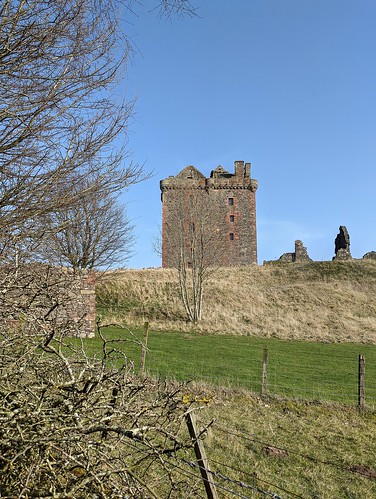
Balvaird Castle

Last week we had wonderful weather, it felt more like June than March, so we grabbed the day and drove to Balvaird Castle which is just about ten miles from where we live. It lies off the A912 road about halfway between Gateside and the Bein Inn in Glen Farg. There were two other vehicles parked by the farm gates at the bottom of the track which leads to the castle, it’s a fairly steep walk from there, but not a very long one.

Balvaird Castle, Scottish tower house, medieval castle, Murray, Perthshire

It’s thought that the castle dates from around 1495, built for Sir Andrew Murray, but over the years it has been extended and altered, as you would expect. Apparently it was owned by the Murray family until 2017 and then it was bought by an American, however it is maintained by Historic Scotland. The original Murray owners ended up moving to Scone Palace – they went up in the world it would seem but I must say that I prefer this setting to that of Scone Palace.

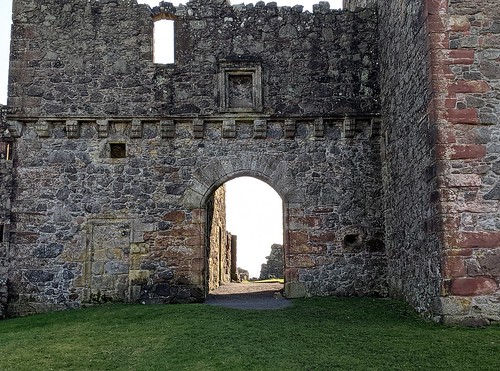
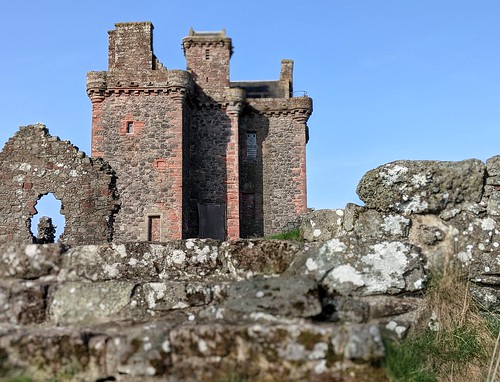
Balvaird Castle, Scottish tower house, Murray, medieval castle, Perthshire

It’s a lovely setting for a home though and the views of the surrounding countryside from the windows must be quite spectacular, unfortunately, it isn’t possible to get into what is left of the castle although you can walk around the ruined parts. If you’re inclined to picnic then it would be a good location for one.

view from Balvaird Castle, Perthshire, Scotland

There’s the gable end of a cottage ruin in the photo below, I suspect that most of the stone it was built with has been robbed to build the nearby wall and the stone to build the cottage was robbed from the castle!

view from Balvaird, Perthshire

aview from Balvaird  Castle, scenery, Perthshire, Scotland

view from Balvaird Castle, Perthshire, Scotland

If you look right in the middle of the photo below you will be able to see the top of some roofs, beautiful trees and a walled garden, presumably it’s the home of whoever farms the land, it looks like my idea of heaven.

aview from Balvaird Castle, Perthshire, Scotland

The roofs are towards the right hand side below. As ever, click on the photos to enlarge them.
aview from Balvaird Castle, Perthshire, Scotland

aview from Balvaird Castle, Perthshire, Scotland

Balvaird Castle , Scottish tower house, medieval castle, Perthshire

from The Guardian Books section and Visit Scotland

It’s absolutely yonks since I shared a Guardian books link. I was particularly interested in The Books of My Life bit as this week it featured Penelope Lively, a writer I’ve really enjoyed in the past. You can read it here. I was interested to read that she too has been disappointed when re-reading what had been favourite books in the past, but sometimes she falls back in love with them again. I don’t know if I could be bothered with having another go though – considering how many books I still want to read for the first time.

There’s also a section on some of the books due to be published this coming year which you can read here if you’re interested.

If you happen to be more interested in what’s going on in Scotland you might enjoy looking at the Visit Scotland site. Even if you can’t travel here you can enjoy seeing what’s going on and maybe plan a trip for the future.