The Masterpiece by Emile Zola

The Masterpiece by Emile Zola was first published in 1886. My copy was translated by Thomas Walton in 1950 and I must say that I doubt if anyone else could have done a better job. It’s the fouteenth novel in Zola’s Rougon Macquart series, and it’s a great read. I read this one for Back to the Classics Challenge and The Classics Club.

The Masterpiece is Zola’s most autobiographical novel, he based the main characters – a group of artistic friends on some of his own friends and himself. The artist Cezanne was his friend and there must have been plenty of artistic discussions between the two over the years, so Zola would have had plenty of copy to choose from I’m sure. The character Sandoz is based on Zola.

The main character Claude is a serious young artist, his friends think he has great talent and it’s only a matter of time before he becomes his generation’s Delacroix with his art being hung in The Salon and winning prizes. Claude is developing a new style called ‘Open Air’ (Impressionist). However he makes life difficult for himself, painting on enormous canvases and never being happy with his work, never knowing when to stop. His ideas which start off well somehow always go awry and when he does manage to get a painting accepted by The Salon it’s only in the gallery of the ‘refused’ artworks, where everyone laughs at his efforts. However some years later one of his friend’s steals that composition and changes it slightly and the resulting painting and the artist are lauded.

Zola concentrates on Claude’s story and his wife Christine, but his friends are a sculptor, journalist, architect and of course a novelist, and their lives and how they interact with Claude are also a big part of the book.

Germinal has always been my favourite in this series but this one ran it a close thing, although I must warn anyone thinking of reading it – especially in these angst-ridden pandemic times – that it vies with Thomas Hardy for shock and darkness. However there are some lovely descriptions of Paris, especially at night, Claude was in love with the city.

There’s an introduction by the translator Thomas Walton, obviously not to be read until you’ve finished reading the book, but as it happens the one passage that I had marked to quote is in his introduction.

Sandoz (Zola) is speaking to Claude:

“Has it ever struck you that posterity may not be the fair, impartial judge we like to think it is? We console ourselves for being spurned and rejected by relying on getting a fair deal from the future, just as the faithful put up with with the abomination on this earth because they firmly believe in another life where everyone shall have his deserts. Suppose the artist’s paradise turned out to be as non-existent as the Catholic’s, and future generations proved just as misguided as the present one and persisted in liking pretty-pretty dabbling better than honest to goodness painting! …. What a sell for us all, to have lived like slaves, noses to the grindstone all to no purpose!”

Such is life!

I bought my copy of this book in a charity shop in North Berwick one hot summer’s day a few years ago in the glory days of travel. I can’t say that I like the cover though. It’s an Ann Arbor paperback, The University of Michigan Press, and I bought about five other Zola books along with it, all similarly very far from home.

Coriolanus by William Shakespeare

Coriolanus

In 2020 I didn’t read many books from my Classics Club list (2), in fact it was only the spin books that I read, so this year I thought I would start to chip away at the fewer than 20 that I have left to read from my second list of 50 classic books. So I decided to read Coriolanus by William Shakespeare which I knew nothing about. I picked it up a few hours after watching the insurgents live on CNN as they beat their way into the US Capitol building and it felt just a wee bit spooky with
Act First Scene 1 Rome. A street. Enter a company of mutinous Citizens, with staves, clubs and other weapons.Then they proceeded to march on The Capitol!

Those plebeians – the common people – were revolting over a lack of affordable grain, people were starving while others hoarded grain and made huge profits.

Caius Marcius (Martius) is a top officer in the army and he is absolutely full of himself, according to him he has saved Rome countless times over the years. His mother Volumnia is ambitious for her son and wants him to become a consul, but Marcius really despises the ordinary Romans and doesn’t hide the fact so he’s very unpopular with the citizens. Marcius tells the rioters that they don’t deserve any bread as they’ve never given any service in the army. He’s incensed when two of the rioters are rewarded with seats in the Senate.

News of a war having broken out with the neighbouring Volscians means that Marcius leaves to lead the Roman army in battle. When Marcius wins the war and news comes of his many brave deeds he’s given the title of Coriolanus after the town of Corioloni.

When back in Rome Coriolanus is encouraged to become a consul, but he needs to curry favour with the people which means he has to feign humility, he tries but his real character asserts itself and the upshot is that he is banished from Rome altogether.

In his fury Coriolanus teams up with his old enemy Tullus Aufidius of the Volscians and together they march on Rome. While Coriolanus and Aufidius are camped outside the city walls the Romans are in a panic, as is the army, and two of Coriolanus’s old friends go outside the walls to plead for mercy – to no avail. But when his mother Volumnia pleads with him to make peace he relents. This treachery infuriates Aufidius and Coriolanus can’t stop himself, he’s still bragging about how many people he has killed, which isn’t at all sensible as he’s in the company of a lot of Volscians – the relatives of the people he had killed. It doesn’t end well for Coriolanus!

And so another Shakespeare play bites the dust in these strange times, and there were some even stranger parallels between the two Capitols of Rome and Washington. The boasting and arrogant character of Coriolanus is very reminiscent of Trump, but that’s as far as the similarities go as Trump could never be called brave and at bottom he seems to have despised people who didn’t dodge the army which is the opposite of Coriolanus’s attitude.

My copy of this book is a very old leather bound one with no publication date, but it is inscribed, May N Haxton 25/12/06, so presumably it was a Christmas gift in 1906.

I read this one for the Classics Club and Back to the Classics.

Death in Venice by Thomas Mann

 Thomas Mann cover

Death in Venice by Thomas Mann was first published in 1913 and translated from the German by H.T. Lowe-Porter.

Gustave Aschenbach is a successful hard working writer, living in Munich. He had been allowed to add the word ‘von’ to his name, almost raising him to aristocracy. In his younger years he had done a lot of travelling but that had tailed off as he got older and he had hardly left Munich in recent years. On impulse he decides to travel to Venice, a place he had loved in the past.

This is a tale of obsession as when Aschenbach reaches his hotel in Venice he is entranced by the sight of a young blond boy, beautiful and elegant and obviously the only much pampered boy in his family which consists of three older sisters and their mother. Aschenbach can hardly take his eyes off the boy who is dressed beautifully in contrast with his very plainly dressed sisters. The mother is festooned with ‘well-nigh priceless pearls’. The family comes from Poland and Aschenbach eventually discovers that the boy’s name is Tadzio.

Aschenbach gets into the habit of settling himself on the beach where he can have a good view of the family, and his interest is eventually noticed by the mother who calls Tadzio away when he strays too close to where Ascenbach is sunning himself. When Aschenbach can’t see them he walks aroudn the city looking for them, and even follows them around when he finds them.

During all this time visitors are beginning to leave Venice and aren’t being replaced by others, but Aschenbach is too steeped in his obsession to notice. Eventually even he can’t ignore the frequent wafts of carbolic acid that he can smell in the air, but the hoteliers and businesses are in denial, they don’t want to lose the few customers who haven’t already left. Too late Aschenbach is told of the Asiatic Cholera which had begun in the delta of the Ganges and wafted its way through many countries before reaching Italy. Plus ca change – as they say!

This little novella is the first that I’ve read by Thomas Mann, but won’t be the last as he’s such a good writer but I must admit that I started reading this one in bed and decided that it wasn’t bedtime reading, so I started it again in the morning and read it in a couple of sittings. I still felt that it didn’t really get going until Aschenbach reached Venice, which didn’t take long.

I’m assuming that everyone has seen the 1971 film of the book starring Dirk Bogarde, which is why I’ve recounted the whole story, but it’s really just the bare bones of it and it didn’t matter that I already knew the ending, it’s in the title after all. The film is a bit different though.

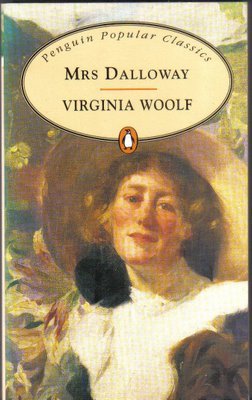
Mrs Dalloway by Virginia Woolf

 Mrs Dalloway cover

Mrs Dalloway by Virginia Woolf was first published in 1925 and I never really intended to read it as I’m not a big fan of the stream of consciousness style of writing, but surprisingly I did like it. A friend had had to study it for her degree and she loaned me her copy of the book, however it wasn’t to her taste at all.

The story takes place within one day when Mrs Dalloway (Clarissa), who is an upper-class middle aged woman married to a politician and living in London, is busy getting ready to host a party in her home, it’s just a few years after the end of World War 1.

Clarissa loves walking around Westminster, it’s a lovely day which reminds her of being at Bourton, her childhood home and as she goes to buy flowers for her party her mind wanders back to those days and her past lover Peter Walsh whom she had refused to marry. She thought he would be coming back from India soon, retired. He had had so many plans but in the end had done nothing much with his life. Surprisingly when Clarissa gets back home Peter Walsh is waiting for her. It’s not a successful meeting, Clarissa was obviously correct to turn him down. On the other hand, Peter had always said that Clarissa would be a wonderful society hostess and she seems to have fulfilled that expectation, but perhaps it’s Clarissa’s talents in that direction that have contributed to her husband’s success as a Member of Parliament.

The focus switches to Septimus Warren Smith and his wife Rezia. They’re in London to visit a well known doctor, Sir William Bradshaw. Septimus is suffering from shell-shock due to his wartime experiences and Rezia is hopeful that he can be cured. Their own doctor keeps saying that there is nothing wrong with Septimus, but his behaviour alarms his wife and the servant and Septimus shouts for his dead friend Evans and has conversations with him. It’s not going to end well.

It’s an odd book to write about, but I did enjoy it, unexpectedly, and the party? Well, in the end it was a success of course.

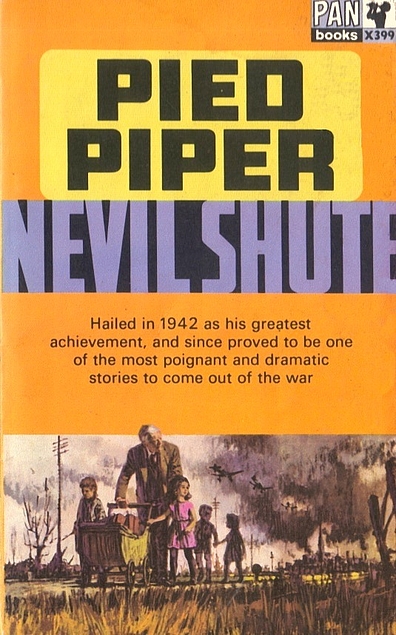
Pied Piper by Nevil Shute

 Pied Piper cover

Pied Piper by Nevil Shute was first published in 1942 and the subject is World War 2, I generally love books about the war that were written at the time, and I loved this one.

The story begins in a London club where an air raid is in progression. Two members get into conversation, John Howard is 70 years old and he tells the much younger club member – a naval officer – of his recent exploits in France. John Howard had gone to France to have a fishing holiday but to his horror the Nazis began their unbelievably fast march through European countries and before long they were in France. John had to get home to England – fast. But a couple of English guests in his hotel ask him if he could take their small children with him when he goes back home, they think that will be much safer for them. The children’s parents are diplomats and intend to travel to Switzerland on their own.

Things start to go awry almost immediately when one of the children falls ill and so begins a suspenseful journey with John Howard gathering more children along the way and having to join the vast numbers of refugees on the roads as the Luftwaffe bombed and strafed them. What should have been a simple train journey home to blighty turns into a complete nightmare when the trains are unavailable as the French army runs from the advancing German army.

Considering the subject matter I can hardly believe that it has taken me so long to get around to reading Pied Piper, I think I enjoyed this one even more than The Chequer Board which had been my favourite. I now want to tread his book Most Secret (1945) as it also has a wartime plot. Have any of you read that one?

I had to laugh at the author’s portrayal of the French rural/country people as being money grabbing and avaricious – nothing changes, that has been exactly our experience of them over the years on various holidays.

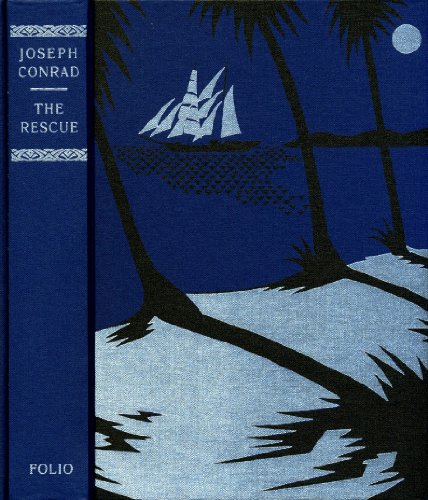
The Rescue by Joseph Conrad

1920 club

The Rescue cover

As we have a complete set of lovely Folio Joseph Conrad books I decided to read The Rescue by Joseph Conrad for the 1920 Club, apart from that, it was slim pickings on my bookshelves for that particular year.

Prior to reading this one I had only ever read one other book by Conrad – Lucky Jim – and I wasn’t too thrilled by that one as I recall although it was probably at least 15 years ago that I read it. Anyway, I must admit that I found the first two thirds of The Rescue to be a bit of a turgid slog. I consoled myself by reminding myself that not every book can be as non stop-action packed as a Dorothy Dunnett book, so I ploughed on.

Eventually things did speed up. The setting is the Malay Straits where Tom Lingard is sailing his ship The Lightning, he makes a good living trading in the area. The Lightning is approached by a boat seeking help. Their yacht has run aground on a mudflat and when Lingard boards the yacht he meets with its owner Mr Travers, he is obviously a snob, very rich and is suspicious of Lingard. He’s sure he’s some sort of pirate and is rude towards him. But Mrs Travers who is much younger than her husband is very attractive as far as Lingard is concerned, the feeling seems to be mutual. When Travers and his guest d’Alcacer leave the yacht to stretch their legs on the sandbank they are stranded on they end up being kidnapped by a local tribe. There’s been trouble among the tribes, and in the recent past Lingard had befriended the chief of another tribe, and had sold him arms.

Travers and d’Alcacer are in danger of being murdered and Lingard goes to where they are being held captive in an effort to get them released, despite the fact that he’s completely smitten by Mrs Travers, and her husband is such an unpleasant man. Mrs Travers is tasked with delivering a message to Lingard but for some reason she fails to do so. It all gets very messy.

There’s an introduction by Captain Richard Woodman at the beginning which of course I read after finishing the book. It enlightened me as to why The Rescue felt almost like it had been written by two different writers. Apparently Conrad began to write the book in 1900 but half-way through it he came to a standstill and just couldn’t progress with it. He gave it up and went on to concentrate on The Nigger of the ‘Narcissus’ which was a huge success, but he didn’t go back to The Rescue until 1915, and only then as his agent had nagged him to finish it. He still couldn’t do it and it was only in 1918 that he tried again and eventually saw his way around the writing problem he had – by then it was TWENTY years after he had given up on it half way through. That’s obviously why the pace picked up two thirds through the book, really he should have gone back and re-written the parts that were twenty years old.

This book is very much of its time and the ‘n’ word appears quite a lot. All the way through the book though I was amazed by the writing as Conrad wrote his books in English, a language that he didn’t even begin to speak until he was in his 20s. His first language was Polish, but he must have had a real talent for languages, he even uses a Scots word in this book.

I might read another of his books at some point in the future, but not anytime soon.

The Winter’s Tale by William Shakespeare

 The Winter's Tale cover

The Winter’s Tale by William Shakespeare has come in for a lot of criticism over the centuries since it was first published in 1623. The problem seemed to be that it didn’t fall into a distinct category. It’s a bit of a mixed bag, part tragedy, part comedy and part romance. Plus you definitely have to suspend your disbelief at times in the story, otherwise the plot just seems to be far too unlikely.

Leontes, King of Sicilia, and Polixenes, the King of Bohemia, were great friends in childhood and after many years apart Polixenes visits Leontes in Sicilia. After nine months in Sicilia Polixenes is keen to go home to see his son Prince Florizel, Leontes is reluctant to give him up, but is unable to persuade him to stay on. Not willing to take no for an answer Leontes persuades his wife Queen Hermione to twist Polixenes’s arm – and she succeeds, presumably because Polixenes finds it more difficult to say NO to the heavily pregnant Hermione, and he doesn’t want to seem impolite.

However Leontes is immediately suspicious of this change of mind and decides that his friend and wife must have been having an affair, and that the child that Hermione is carrying isn’t his. Very quickly Leontes’s love for his friend turns to hatred and the man that he had praised to the skies becomes number one enemy and Camillo, a Sicilian lord is ordered to kill Polixenes. But Camillo warns Polixenes and they both sail off to Bohemia.

Furious at this escape Leontes turns his wrath on Hermione and ends up throwing her in prison, where she soon gives birth to a daughter. In an attempt to soften Leontes’s heart Hermione’s friend Pauline takes the baby to the king but it has the opposite effect and he orders Pauline’s husband Lord Antigonus to take the baby away and abandon her in the wilds.

Leontes had sent messengers to the Oracle at Delphos to find out if Hermione had been unfaithful to him, but meanwhile Hermione is put on public trial, during the trial the report from Delphos is read out and it says that Hermione and Polixenes are completely innocent and that Leontes won’t have an heir until his abandoned daughter is found. Leontes refuses to believe any of that, but when news reaches the court that his son and heir Mamillius has died due to the stress at the treatment handed out by his father to his mother Hermione faints. Pauline tells Leontes that Hermione is dead and he’s wracked with grief over the loss of his wife, son and baby daughter.

I would definitely say that this part of the story comes under the category of tragedy. Now for the romance.

While all this has been going on Antigonus has taken the baby to the coast of Bohemia and has given her the name of Perdita which apparently Hermione had asked him to name her in a dream he had. Perdita meaning lost. Perdita is found by a shepherd and his son and as there is a cloth bundle containing gold and jewels with her they realise that the baby comes of noble blood.

Sixteen years pass and King Polixenes’s son Prince Florizel has fallen in love with Perdita of course! They plan to get married without asking for Polixenes’s permission but the King knows what is going on and he and Camillo disguise themselves and go to the feast at which the betrothal will take place. Furious at his son’s subterfuge Polixenes threatens the old shepherd and Perdita with death and orders Florizel never to see Perdita again. The young couple run off and set sail for Sicilia, accompanied by the old shepherd and his son and helped by Camillo who then tells Polixenes where they have gone, hoping that the king will follow them to Sicilia and take Camillo with him.

Meanwhile, in Sicilia Leontes is still in mourning for Hermione. His courtiers have tried to persuade him to re-marry in order to get an heir to the kingdom, but Pauline tells him that no other wife will match up to Hermione. When Prince Florizel and Perdita arrive in Sicilia Leontes is very happy to see them, especially as Florizel claims to be on a diplomatic mission from his father. But very quickly Polixenes and Camillo arrive and it isn’t long before everyone realises that Perdita is actually the long lost daughter of Leontes and Hermione. Leontes is thrilled to have his daughter back and of course the two kings will be happy to have their offspring married to each other. Everyone goes off to Pauline’s country house where there is a newly made statue of Hermione, but while Leontes is weeping at the sight of his dead wife the statue moves – YES – Hermione is alive!

And that’s that. There is romance and some comedy and the real tragedy is the waste of time – the 16 years in which Leontes mourned for a wife he thought to be dead and of course the loss of Mamillius due to his father’s suspicious and jealous mind. As human beings don’t change over the centuries the psychological aspect of this story is one which is repeated often.

There is a certain POTUS who seems to have that problem, when people are doing what he wants them to do they are just wonderful, terrific people, but as soon as the possibilty of a perceived disloyalty is suspected – all hell breaks loose!

The Winter’s Tale isn’t a favourite of mine, but I was glad that I read it in an Oxford World’s Classic edition as it has an interesting introduction and lots of notes.

Lady Anna by Anthony Trollope

 Lady Anna cover

Lady Anna by Anthony Trollope was published in book form in 1874 but the setting is around 1830. Lady Anna’s mother was socially ambitious and was determined to marry into the aristocracy. Despite dire warnings, especially from her father, she insisted in marrying Earl Lovel who had a reputation for being evil. Not long after their wedding Earl Lovel told his ‘wife’ that she wasn’t actually married to him at all as he already had a wife living in Italy. Their unborn child would be illegitimate. Then he abandoned his ‘wife’ and went to live in Italy. Over the next 20 years Lady Lovel strove to prove in court that she was actually married to Lord Lovel, all that cost a lot of money that she didn’t have.

A local tailor took pity on her and ended up supporting her and her daughter, Lady Anna. The tailor had spent thousands of pounds on the Lovels, to the detriment of his own son. Meanwhile Anna has more or less been been brought up with Daniel the tailor’s son and over the years they’ve become more than friends, Anna has promised to be his wife when she’s of age. When her mother learns of this she’s horrified at the thought of her Lady Anna marrying the son of a mere tailor, despite the fact that that tailor has been supporting them both for years.

Meanwhile Lord Lovel has died intestate so his estate and money should go to his nephew who is keen to marry Anna which would please Lady Lovel, but Anna feels she must keep her promise to Daniel. Lady Anna takes this all very badly as you would expect of someone who has always been a social climber

Whose side was I on? Well, there are lots of clues to the character of Daniel and they don’t bode well for a harmonious marital future for whomever he marries. Daniel is a Radical, the variety that thinks that everyone should have equal rights, except his wife!

Daniel Thwaite was considering the injustice of the difference between ten thousand aristocrats and thirty million of people, who were for the most part ignorant and hungry.

“Mr Thwaite says, “There must be earls and countesses.”

Daniel Thwaite says, “I see no must in it. There are earls and countesses as there used to be mastodons and other senseless, overgrown brutes roaming miserable and hungry.”

Daniel Thwaite says, ” I don’t want my wife to have anything of her own before marriage, but she certainly shall have nothing after marriage – independent of me” For a man with sound views of domestic power and marital rights always choose a Radical.

I believe that Trollope wrote more books featuring these characters – it sounds like Lady Anna may discover that she has made a big mistake.

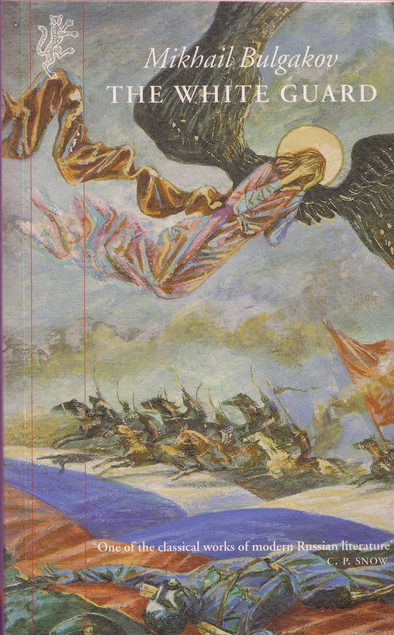
The White Guard by Mikhael Bulgakov

The White Guard cover I was reading The White Guard by Mikhail Bulgakov while on my way to Russia, except I was going to St Petersburg, not Kiev which is the setting of the book which first appeared in serial form in 1925 but wasn’t published in book form in Russia until 1966.

The setting is the city of Kiev in 1918 – the October Revolution. The Turbin family had been well off but they’ve just lost their beloved mother. It’s particularly poignant as her eldest son Alexei had just returned from the front after serving for years in a disastrous campaign in the Tsarist army. At last the whole family is together, but without their mother. There’s a younger brother, Nikolka and a sister Elena who is married to an army captain and also Anyuta the maid all living in the family apartment but it isn’t long before Talberg the husband abandons them, running away to save his own skin, the brothers had never trusted him anyway.

The city is chaotic with the German army roaming around and various other factions trying to grab the power.

The Bolshevik thugs are running around in the city, attacking anyone that they recognise as having been an officer in the Tsarist army, and it’s very easy for the officers to be pinpointed. Criminals are taking advantage of the chaos to blackmail people into giving up their valuables. The apartment becomes a refuge for others sheltering from the violence.

This is a really great read, conveying the atmosphere of danger, fear and panic as the normal rules of society have broken down and nobody has any idea of what the new future is going to hold for them.

Chronicles of Carlingford by Mrs Oliphant

Chronicles of Carlingford by the very prolific Scottish author Mrs Oliphant is a Virago publication which consists of two novellas – The Rector and The Doctor’s Family, originally published in 1863. There’s an introduction by Penelope Fitzgerald.

The blurb on the back of this book compares Margaret Oliphant with Jane Austen, George Eliot and Anthony Trollope’s Barsetshire Chronicles. I would include Mrs Gaskell too.

The Rector is only 35 pages long, the setting is mid 19th century Carlingford which is a small town close to London. A new rector/minister is coming to the town and his parishioners are anticipating what sort of preacher he will be. Surely he won’t be as low church as the last rector. He had gone to the canal and preached to the bargemen there – that didn’t go down at all well with his snooty congregation. Most of them are hoping for something a bit more stylish – and preferrably a bachelor as there are several unmarried ladies apparently in need of a husband. The new rector has spent the last 15 years cloistered in All Souls and this is his first living. He may be a great theologian but he’s absolutely at sea when it comes to human nature and dealing with his parishioners.

Difficult or awkward men seem to have been Oliphant’s forte. There’s no doubt she had plenty of experience of them within her own family, and in fact she came to believe that her managing and competent character contributed to the weakness in her menfolk.

The Doctor’s Family is 157 pages long. Young Doctor Rider has just moved to a newly built part of Carlingford, he doesn’t know it but that is not going to do his business any good. The old established Carlingfordians look down on that area. His older brother had gone to Australia under some sort of cloud and he had married and had a family out there. Things didn’t go any better for him in Australia – well – he is a drunkard – so he had come home and was living at his young brother’s expense.

Dr Rider had decided that although he wanted to marry a young woman he couldn’t afford to look after his brother and a wife and children, so he had given up hope of marrying at all. Imagine his horror when his brother’s wife and children and her sister turn up and billet themselves on him!

Even worse – it turns out that his brother’s wife is feckless and doesn’t even take any notice of their badly behaved children, and for some reason she blames her brother-in-law for the situation that she and her husband are in.

This one is much stronger I think, but they’re both well worth reading and have moments of comedy as well as frustration at enraging characters.

I read this one for the Back to the Classics Challenge 2019